On This Page
Description
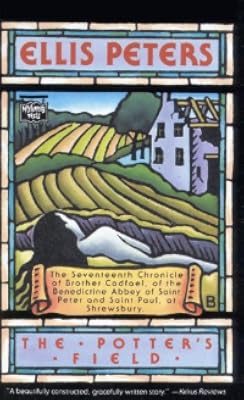
When a newly plowed field recently given to the Benedictine Abbey of Saint Peter and Saint Paul yields the body of a young woman, Brother Cadfael is quickly thrown into a delicate situation. The field was once owned by a local potter named Ruald, who had abandoned his beautiful wife, Generys, to take monastic vows. Generys was said to have gone away with a lover, but now it seems as if she had been murdered. With the arrival at the abbey of young Sulien Blount, a novice fleeing homeward from show more the civil war raging in East Anglia, the mysteries surrounding the corpse start to multiply. show lessTags
Recommendations












Member Reviews
Summary: The Potter’s Field, a gift to the abbey, turns out to be a mystery rather than gift when a plow turns up a woman’s body with long black hair.
King Stephen has suffered another reverse in his war with Maud. Geoffrey de Mandeville, one of Maud’s men, has escaped Stephen’s siege at Cambridge and is laying waste the Fen country. Though distant from Shrewsbury, King Stephen may call for Hugh and his men at any time. And a refugee from Geoffrey’s attacks will play an important role in this story.
Locally, the abbey has just received a gift of a field that had once been part of the Longner estate. It is known as the Potter’s Field, for the rich clay soil by the river formerly used by a potter who is now a brother in the show more abbey. Brother Ruald, hearing the call of God, left his work, and more significantly, his wife. In her last bitter conversation with Ruald, Generys, his wife, told him she had another lover. Shortly after, she disappeared, presumably with that man.
That’s all called into question when the brothers begin plowing the upper part of the field. The plow turns up a skeleton with long hair. In her hands, she is holding a cross made of twigs. Her body bears no mark showing how she died. But burial in an unmarked and unblessed grave suggests someone wanted to conceal her death. But who is she, and who buried her? And was that person responsible for her death? These are the questions Abbot Radulfus, Cadfael, and Hugh Beringar try to resolve. Meanwhile, since her body had been found on abbey land, she is given a proper burial in the abbey cemetery.
Ruald, who seems so happy in his calling, is under suspicion, if the body was indeed that of Generys. But a visitor, an escapee from Geoffrey’s seizure of the Benedictine abbey at Ramsay, arrives bearing the news to Abbot Radulfus. Yet he is no stranger. Rather Brother Sulien Blount is the younger brother of the Lord of Longner Manor. He had sought out the monastery after his father Eudo went to serve with King Stephen, and died in battle.
When he learns of the body found in the field, he says it can’t be Generys. On his way to Shrewsbury, he stays with a jeweler in Petersborough, and sees a ring that he recognizes as that of Generys. The jeweler says she had sold the ring in company with a man in the last three weeks–a fugitive from Geoffrey but very much alive. Brother Ruald is happily in the clear, though stricken with the trouble he has caused his wife. Meanwhile, Sulien returns home to his dying mother Donata, taking the time to resolve doubts about his vows.
Suspicion next turns to Britric, a pedlar known to have stayed in the potter’s shed once it had been abandoned. The previous year, he had a woman, Gunnild, with him. This year, he was alone. Could it be her body? Could Britric have killed her? He is held, but once again Sulien provides the alibi, having found Gunnild, serving as maid to a young woman, Pernel, who definitely is interested in Sulien, who has renounced his vows.
The investigation is back at square one…or is it? It seems a bit too convenient that Sulien is the one providing alibis for Ruald and Britric. Is he the one with the connection to the woman in the field and does he know who she is? The answer, and how it comes to pass, caught me by surprise. Peters masterfully spins this tale. show less
King Stephen has suffered another reverse in his war with Maud. Geoffrey de Mandeville, one of Maud’s men, has escaped Stephen’s siege at Cambridge and is laying waste the Fen country. Though distant from Shrewsbury, King Stephen may call for Hugh and his men at any time. And a refugee from Geoffrey’s attacks will play an important role in this story.
Locally, the abbey has just received a gift of a field that had once been part of the Longner estate. It is known as the Potter’s Field, for the rich clay soil by the river formerly used by a potter who is now a brother in the show more abbey. Brother Ruald, hearing the call of God, left his work, and more significantly, his wife. In her last bitter conversation with Ruald, Generys, his wife, told him she had another lover. Shortly after, she disappeared, presumably with that man.
That’s all called into question when the brothers begin plowing the upper part of the field. The plow turns up a skeleton with long hair. In her hands, she is holding a cross made of twigs. Her body bears no mark showing how she died. But burial in an unmarked and unblessed grave suggests someone wanted to conceal her death. But who is she, and who buried her? And was that person responsible for her death? These are the questions Abbot Radulfus, Cadfael, and Hugh Beringar try to resolve. Meanwhile, since her body had been found on abbey land, she is given a proper burial in the abbey cemetery.
Ruald, who seems so happy in his calling, is under suspicion, if the body was indeed that of Generys. But a visitor, an escapee from Geoffrey’s seizure of the Benedictine abbey at Ramsay, arrives bearing the news to Abbot Radulfus. Yet he is no stranger. Rather Brother Sulien Blount is the younger brother of the Lord of Longner Manor. He had sought out the monastery after his father Eudo went to serve with King Stephen, and died in battle.
When he learns of the body found in the field, he says it can’t be Generys. On his way to Shrewsbury, he stays with a jeweler in Petersborough, and sees a ring that he recognizes as that of Generys. The jeweler says she had sold the ring in company with a man in the last three weeks–a fugitive from Geoffrey but very much alive. Brother Ruald is happily in the clear, though stricken with the trouble he has caused his wife. Meanwhile, Sulien returns home to his dying mother Donata, taking the time to resolve doubts about his vows.
Suspicion next turns to Britric, a pedlar known to have stayed in the potter’s shed once it had been abandoned. The previous year, he had a woman, Gunnild, with him. This year, he was alone. Could it be her body? Could Britric have killed her? He is held, but once again Sulien provides the alibi, having found Gunnild, serving as maid to a young woman, Pernel, who definitely is interested in Sulien, who has renounced his vows.
The investigation is back at square one…or is it? It seems a bit too convenient that Sulien is the one providing alibis for Ruald and Britric. Is he the one with the connection to the woman in the field and does he know who she is? The answer, and how it comes to pass, caught me by surprise. Peters masterfully spins this tale. show less
The remains of a woman are uncovered as an unused field is being plowed. Was she the estranged wife of a man who recently took vows to become a monk? The weave is tangled in this one, indeed, and I wasn't sure whodunit until the end, when I discovered how wrong I was. Good twisty mystery.
As I read this book, I realized I should have read the series in order. However, then I would never had read this one, since I don’t have most of them. Oh, well. Since I read #19 last, I had some major spoilers for The Potter’s Field, but I enjoyed it anyway. One thing I loved was all the red herrings—and being able to recognize them for red herrings. The book kept me turning pages, as I could hardly wait to figure out who killed the woman, as well as who she was. And why had she been buried the way she was? I love the mix of murder mystery (gentle enough to read before bed) with the monastic setting, and a light romance.
Six-word review: Peters gets a belated second wind.
Extended review:
There's a freshness about Ellis Peters's seventeenth chronicle of Brother Cadfael that hasn't been seen in a while. Perhaps it's that the principal characters (other than the continuing characters of the series) depart a little bit from the mold that's become customary; or maybe it's that the setup, although no less bizarre than some of the others, feels a little more as if it had proceeded from some plausible series of events and a little less as if Peters had been consorting with plot ninjas.
At any rate, I enjoyed this one a degree or two more than expected--and of course I expected to, having found the author completely reliable for a comfort read when I need one. I'm show more heartily sorry to be so close to the end. It's tempting to go ahead and laud The Potter’s Field with four stars; but I can't, quite, in view of how tough I've been on so many other things. Let's call this a 3.7.
I consider a synopsis to be completely irrelevant. It's a Brother Cadfael mystery. I knew what I was getting. Like a Pepperidge Farm cookie right out of the package, it was just what I wanted at the time. show less
Extended review:
There's a freshness about Ellis Peters's seventeenth chronicle of Brother Cadfael that hasn't been seen in a while. Perhaps it's that the principal characters (other than the continuing characters of the series) depart a little bit from the mold that's become customary; or maybe it's that the setup, although no less bizarre than some of the others, feels a little more as if it had proceeded from some plausible series of events and a little less as if Peters had been consorting with plot ninjas.
At any rate, I enjoyed this one a degree or two more than expected--and of course I expected to, having found the author completely reliable for a comfort read when I need one. I'm show more heartily sorry to be so close to the end. It's tempting to go ahead and laud The Potter’s Field with four stars; but I can't, quite, in view of how tough I've been on so many other things. Let's call this a 3.7.
I consider a synopsis to be completely irrelevant. It's a Brother Cadfael mystery. I knew what I was getting. Like a Pepperidge Farm cookie right out of the package, it was just what I wanted at the time. show less
This review is written with a GPL 4.0 license and the rights contained therein shall supersede all TOS by any and all websites in regards to copying and sharing without proper authorization and permissions. Crossposted at WordPress, Blogspot & Librarything by Bookstooge’s Exalted Permission
Title: The Potter's Field
Series: Brother Cadfael #17
Author: Ellis Peters
Rating: 3 of 5 Stars
Genre: Mystery
Pages: 248
Format: Digital Edition
Synopsis:
Cadfael's Abbey trades a field with another Abbey and in the process of plowing it, turn up the remains of a woman.
A newly minted monk at Shrewsbury took the vows against his wife's wishes and she disappeared, thought to have run off to Wales with a lover. Now the suspicion is on him. Until a show more novitiate turns up with a story about seeing the woman just a couple of weeks ago, with her ring to prove it. Then another woman is shown to have disappeared and her lover is arrested. The same novitiate proves that the woman is alive and sets the scoundrel free.
It all turns out that the woman was the monk's wife but she died due to the novitiates father and mother. It wasn't murder and there was no foul play. It was complicated enough that even Hugh Beringar says that God will sort out everyone's motives.
My Thoughts:
I found this to be one of the more complicated mysteries, mainly because of the various motivations and lack of malice aforethought. And yet I certainly can't agree with the author's thoughts, presented through Cadfael, Hugh and the Father Abbot, that everything was ok in the end. There was no justice. The mother of the novitiate did cause the death of the wife of the monk, even if hatred wasn't involved.
These last couple of Cadfael books I have found myself disagreeing with the author more and more about how justice gets carried out and just what is the law. If you cause someone else's death, even if they agree to it, that is still killing someone. The price of a life is the life of the one who took it or, if there was no forethought and hatred, banishment for life. Someone who pre-meditates and then carries out a killing is not someone who deserves to live. That is a cancer that must be cut out, not a cold that gets treated with soft tissues and extra fluids.
Mercy misplaced or misapplied is as bad as no mercy at all.
★★★☆☆ show less
Title: The Potter's Field
Series: Brother Cadfael #17
Author: Ellis Peters
Rating: 3 of 5 Stars
Genre: Mystery
Pages: 248
Format: Digital Edition
Synopsis:
Cadfael's Abbey trades a field with another Abbey and in the process of plowing it, turn up the remains of a woman.
A newly minted monk at Shrewsbury took the vows against his wife's wishes and she disappeared, thought to have run off to Wales with a lover. Now the suspicion is on him. Until a show more novitiate turns up with a story about seeing the woman just a couple of weeks ago, with her ring to prove it. Then another woman is shown to have disappeared and her lover is arrested. The same novitiate proves that the woman is alive and sets the scoundrel free.
It all turns out that the woman was the monk's wife but she died due to the novitiates father and mother. It wasn't murder and there was no foul play. It was complicated enough that even Hugh Beringar says that God will sort out everyone's motives.
My Thoughts:
I found this to be one of the more complicated mysteries, mainly because of the various motivations and lack of malice aforethought. And yet I certainly can't agree with the author's thoughts, presented through Cadfael, Hugh and the Father Abbot, that everything was ok in the end. There was no justice. The mother of the novitiate did cause the death of the wife of the monk, even if hatred wasn't involved.
These last couple of Cadfael books I have found myself disagreeing with the author more and more about how justice gets carried out and just what is the law. If you cause someone else's death, even if they agree to it, that is still killing someone. The price of a life is the life of the one who took it or, if there was no forethought and hatred, banishment for life. Someone who pre-meditates and then carries out a killing is not someone who deserves to live. That is a cancer that must be cut out, not a cold that gets treated with soft tissues and extra fluids.
Mercy misplaced or misapplied is as bad as no mercy at all.
★★★☆☆ show less
It's been a long time since I watched this episode of the Brother Cadfael series on Masterpiece Theater so I was surprised at the end. Hoodwinked again! This whole series brings me so much joy. A body was found buried in a potter's field. There didn't appear to be any foul play, but it was clear she must have been murdered otherwise she would have been given a proper Christian funeral. Brother Cadfael and Hugh Berringer must figure out who the woman is and who killed her there. There are lots of men who look guilty, so the pair will have to use all their cunning to uncover their truth. Give me more!
A body is found buried in a field recently donated to the Abbey. But who was she? Why was she buried in unconsecrated ground? Had she been murdered?
One of the best and most intriguing of the Brother Cadfael mysteries. As usual, great subsidiary characters in a heady combination of mystery, historical novel, and romance.
One of the best and most intriguing of the Brother Cadfael mysteries. As usual, great subsidiary characters in a heady combination of mystery, historical novel, and romance.
Members
- Recently Added By
Lists

Historical Fiction
889 works; 91 members

Crime and Mysteries to Read
746 works; 31 members
500 Great Books by Women
507 works; 60 members

al.vick-parents books
301 works; 1 member

Books Read in 2022
5,168 works; 114 members
Author Information

154+ Works 58,493 Members
Ellis Peters is the pseudonym for Edith Pargeter, who was born in Horsehay, Shropshire. She was a chemist's assistant from 1933 to 1940 and participated during World War II in the Women's Royal Navy Service. The name "Ellis Peters" was adopted by Edith Pargeter to clearly mark a division between her mystery stories and her other work. Her brother show more was Ellis and Petra was a friend from Czechoslovakia, thus the name. She came to writing mysteries, she says, "after half a lifetime of novel-writing." Her detective fiction features well-rounded, knowledgeable characters with whom the reader can empathize. Her most famous literary creation is the medieval monk Brother Cadfael. The blend of history and the formula of the detective story gives Peters's works their popular appeal. As detective hero, Brother Cadfael remains faithful to the requirements of the formula, yet the historical milieu in which he operates is both fully realized and well textured. Peters received the Mystery Writers of America's Edgar Award in 1963 and the Crime Writers Association's Silver Dagger Award in 1981. (Bowker Author Biography) show less
Some Editions
Awards and Honors
Awards
Notable Lists
Series

Belongs to Publisher Series
Work Relationships
Is contained in
Common Knowledge
- Canonical title
- The Potter's Field
- Original title
- The Potter's Field
- Original publication date
- 1989
- People/Characters
- Hugh Beringar; Brother Cadfael; Brother Richard (Sub-Prior); Abbot Radulfus
- Important places
- Shrewsbury, Shropshire, England, UK (12th century)
- Important events
- Nineteen Year Winter (1135 | 1154)
- Related movies
- Cadfael (1994 | IMDb); The Potter's Field (1998 | IMDb)
- Epigraph
- [None]
- Dedication
- [None]
- First words
- Saint Peter's Fair of that year, 1143, was one week past, and they were settling down again into the ordinary routine of a dry and favorable August, with the corn harvest already being carted into the barns, when Brother Matt... (show all)hew the cellarer first brought into chapter the matter of business he had been discussing for some days during the fair with the prior of the Augustine priory of Saint John the Evangelist, at Haughmond, about four miles to the northeast of Shrewsbury.
- Last words
- (Click to show. Warning: May contain spoilers.)But God's justice, if it makes no haste, makes no mistakes.
- Original language
- English
Classifications
Statistics
- Members
- 1,926
- Popularity
- 11,064
- Reviews
- 27
- Rating
- (3.85)
- Languages
- 12 — Czech, Dutch, English, French, German, Greek, Italian, Japanese, Korean, Polish, Spanish, Portuguese (Portugal)
- Media
- Paper, Audiobook, Ebook
- ISBNs
- 48
- UPCs
- 2
- ASINs
- 23