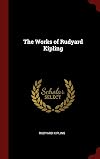
The Works of Rudyard Kipling
by Rudyard Kipling 
On This Page
Description
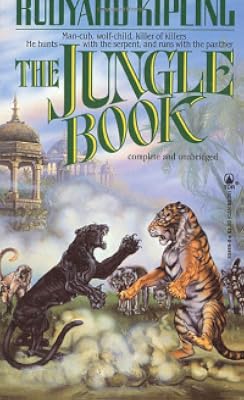
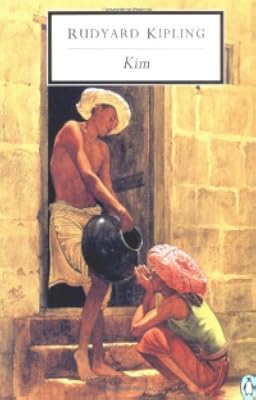
"The Works of Rudyard Kipling: One Volume Edition" is an extensive collection that showcases the early works of the celebrated British author, Rudyard Kipling. Best known for iconic creations like "The Jungle Book," "Kim," and the "Just So Stories," Kipling's broader oeuvre, often overshadowed, is rich with detailed depictions of colonial India and acute observations of the British Empire's complex social and political fabric. This anthology delves beyond Kipling's famous novels and short show more stories, bringing to light his less explored essays, poems, and articles. Kipling's writing is marked by themes of adventure, imperialism, and the clash of civilizations, delivered through a narrative style renowned for its vivid imagination and engaging tone. Offering a comprehensive view of Kipling's early career, this collection is not just a treasure trove of literary works but also a window into the British literary landscape at the dawn of the 20th century. It is an indispensable resource for anyone seeking to understand the full breadth of Kipling's impact on literature and cultural history. show lessTags
Recommendations

















Member Recommendations
by anonymous user
Member Reviews
Somebody down below this entry (didn't leave a name, and that's good) said (he or she?) can't bear to read Kipling's poetry because he sometimes lapses into what we might call "baby talk". I say that's perfectly true. Kipling does indeed burble and coo when addressing the very young. So I'm 70 years old, a man grown, a former sergeant of Marines, and I burble and coo when I talk to my loving cat, Sam (who probably is smarter than most human infants).
But I wonder if the anonymous writer has read the Kipling lines that combat solders often quote:
"When you're wounded and left on Afghanistan's plains,
And the women come down to cut up what remains,
Just roll to your rifle and blow out your brains,
And go to your God like a soldier."
That sure show more doesn't sound like sissy stuff or baby talk to me. What it tells me is that Kipling had been there. Kipling saw it all and felt what he saw. He was a tough old buzzard.
Some folks don't like Kipling. As for me, I love everything I've read by Kipling thus far, and I wish Rikki Tikki Tavi would come and sleep with me and my cat Sam in our bed. Kipling wrote some of the most astounding fiction I've ever read. Those who don't like Kipling should try George MacDonald Fraser. If you think Kipling was a liar, try Flashman's account of the Sepoy Mutiny, the Rani of Jhansi or of the battle at Cawnpore Well. WOW!
If you think George MacDonald Fraser was a liar, you should know he crawled through the jungle on his belly and fought the Japanese banzai boys from one end of Burma to the other. Every once in a while, though, he liked to stop, build a fire, and "brew up". He died a couple of years ago and the world is a lesser place for that. Most of what he wrote is outrageously funny even for being some of the grittiest stuff I've ever read.
Fraser is (was) a rare talent. So was Mr. Kipling. show less
But I wonder if the anonymous writer has read the Kipling lines that combat solders often quote:
"When you're wounded and left on Afghanistan's plains,
And the women come down to cut up what remains,
Just roll to your rifle and blow out your brains,
And go to your God like a soldier."
That sure show more doesn't sound like sissy stuff or baby talk to me. What it tells me is that Kipling had been there. Kipling saw it all and felt what he saw. He was a tough old buzzard.
Some folks don't like Kipling. As for me, I love everything I've read by Kipling thus far, and I wish Rikki Tikki Tavi would come and sleep with me and my cat Sam in our bed. Kipling wrote some of the most astounding fiction I've ever read. Those who don't like Kipling should try George MacDonald Fraser. If you think Kipling was a liar, try Flashman's account of the Sepoy Mutiny, the Rani of Jhansi or of the battle at Cawnpore Well. WOW!
If you think George MacDonald Fraser was a liar, you should know he crawled through the jungle on his belly and fought the Japanese banzai boys from one end of Burma to the other. Every once in a while, though, he liked to stop, build a fire, and "brew up". He died a couple of years ago and the world is a lesser place for that. Most of what he wrote is outrageously funny even for being some of the grittiest stuff I've ever read.
Fraser is (was) a rare talent. So was Mr. Kipling. show less
A compilation of Kipling's stories, novels, and verse. Shows him at his best.
Ratings
Members
- Recently Added By
Author Information

2,466+ Works 91,187 Members
Kipling, who as a novelist dramatized the ambivalence of the British colonial experience, was born of English parents in Bombay and as a child knew Hindustani better than English. He spent an unhappy period of exile from his parents (and the Indian heat) with a harsh aunt in England, followed by the public schooling that inspired his "Stalky" show more stories. He returned to India at 18 to work on the staff of the Lahore Civil and Military Gazette and rapidly became a prolific writer. His mildly satirical work won him a reputation in England, and he returned there in 1889. Shortly after, his first novel, The Light That Failed (1890) was published, but it was not altogether successful. In the early 1890s, Kipling met and married Caroline Balestier and moved with her to her family's estate in Brattleboro, Vermont. While there he wrote Many Inventions (1893), The Jungle Book (1894-95), and Captains Courageous (1897). He became dissatisfied with life in America, however, and moved back to England, returning to America only when his daughter died of pneumonia. Kipling never again returned to the United States, despite his great popularity there. Short stories form the greater portion of Kipling's work and are of several distinct types. Some of his best are stories of the supernatural, the eerie and unearthly, such as "The Phantom Rickshaw," "The Brushwood Boy," and "They." His tales of gruesome horror include "The Mark of the Beast" and "The Return of Imray." "William the Conqueror" and "The Head of the District" are among his political tales of English rule in India. The "Soldiers Three" group deals with Kipling's three musketeers: an Irishman, a Cockney, and a Yorkshireman. The Anglo-Indian Tales, of social life in Simla, make up the larger part of his first four books. Kipling wrote equally well for children and adults. His best-known children's books are Just So Stories (1902), The Jungle Books (1894-95), and Kim (1901). His short stories, although their understanding of the Indian is often moving, became minor hymns to the glory of Queen Victoria's empire and the civil servants and soldiers who staffed her outposts. Kim, an Irish boy in India who becomes the companion of a Tibetan lama, at length joins the British Secret Service, without, says Wilson, any sense of the betrayal of his friend this actually meant. Nevertheless, Kipling has left a vivid panorama of the India of his day. In 1907, Kipling became England's first Nobel Prize winner in literature and the only nineteenth-century English poet to win the Prize. He won not only on the basis of his short stories, which more closely mirror the ambiguities of the declining Edwardian world than has commonly been recognized, but also on the basis of his tremendous ability as a popular poet. His reputation was first made with Barrack Room Ballads (1892), and in "Recessional" he captured a side of Queen Victoria's final jubilee that no one else dared to address. (Bowker Author Biography) show less
Rudyard Kipling has a Legacy Library. Legacy libraries are the personal libraries of famous readers, entered by LibraryThing members from the Legacy Libraries group.
Work Relationships
Common Knowledge
- Canonical title*
- The Collected Poems of Rudyard Kipling
*Some information comes from Common Knowledge in other languages. Click "Edit" for more information.
Classifications
Statistics
- Members
- 227
- Popularity
- 143,601
- Reviews
- 2
- Rating
- (4.30)
- Languages
- English, Swedish
- Media
- Paper, Ebook
- ISBNs
- 14
- ASINs
- 14