On This Page
Description
'You read her, laughing, and want to do your best to protect her characters from any reality but their own' New York Times It is summer 1939 and the social event of the year is about to take place: Rose Birkett, a flighty beauty with a penchant for breaking engagements and hearts, is finally getting married, and the whole village - especially her parents - breathes a sigh of relief. By autumn, however, summer weddings seem a distant memory as war reaches Barsetshire. While the younger show more generation throws itself into the war effort with cheerful aplomb, older residents remember the last war keenly, and are fearful. When an entire London school of evacuees arrive, as well as a number of refugees, the village rallies round to accommodate them. Some inhabitants, though, fail to welcome the newcomers with open arms. First published in 1940, this is a humorous and poignant picture of wartime in a rural community. show lessTags
Recommendations























Member Recommendations



Member Reviews
This has not been re-released with Angela Thirkell’s other early Barsetshire novels (I managed to get a 90s large print edition through interlibrary loans) so I had an inkling that it wasn’t her strongest book.
It is set during 1939. It opens with the wedding of the daughter of the headmaster of Southbridge School - from Summer Half - and then once war breaks out, the school hosts an evacuated school from London.
One of the things I’ve appreciated about Thirkell is that she is insightful about her characters’ flaws and foibles, often amusingly so, but she also treats her characters with a certain gentleness - although her characters can be irritating or silly, they’re not defined by that. But in Cheerfulness Breaks In, she turns show more her attention to those who are outsiders to the English village - evacuees and refugees - and her humour is undermined by her reliance on stereotypes and perhaps by a lack of sympathy.
Thirkell’s novels usually limit themselves to focusing on a particular community or circle of acquaintance, with characters from other books making brief appearances. Rather than following this pattern, Cheerfulness Breaks In acts like a sequel, more interested in catching up with old characters than spending time with new ones. This means it is not a satisfactory standalone with a tight, coherent narrative - but since I knew those familiar characters from previous books, I was very happy to spend more time with them. Especially the lively, independent Lydia Keith, my main reason for wanting to read this, who is kept at home by an ailing mother.
I also liked the characters’ comments about feeling frustration at not being able to contribute more to the war:
“Look here,” said Lydia. “It’s perfectly foul for anyone to be themselves just now, but it’s about all one can be. I expect the Dean feels frightfully rotten too and would much rather be killed like St Thomas a Becket but he can’t, so has to do without. I feel pretty sick myself at doing nothing when Delia and Octavia are on night duty for weeks at a time and Mrs Brandon is having a houseful of children and Noel doing something secret in uniform and Colin, that’s my brother, training artillery in camp like anything - oh, and everyone doing something. You really aren’t the only one, Tommy. Anyway, the Dean must have a secretary [...]”
Even though it is less successful and delightful than Thirkell’s others, I’m glad I read this. show less
It is set during 1939. It opens with the wedding of the daughter of the headmaster of Southbridge School - from Summer Half - and then once war breaks out, the school hosts an evacuated school from London.
One of the things I’ve appreciated about Thirkell is that she is insightful about her characters’ flaws and foibles, often amusingly so, but she also treats her characters with a certain gentleness - although her characters can be irritating or silly, they’re not defined by that. But in Cheerfulness Breaks In, she turns show more her attention to those who are outsiders to the English village - evacuees and refugees - and her humour is undermined by her reliance on stereotypes and perhaps by a lack of sympathy.
Thirkell’s novels usually limit themselves to focusing on a particular community or circle of acquaintance, with characters from other books making brief appearances. Rather than following this pattern, Cheerfulness Breaks In acts like a sequel, more interested in catching up with old characters than spending time with new ones. This means it is not a satisfactory standalone with a tight, coherent narrative - but since I knew those familiar characters from previous books, I was very happy to spend more time with them. Especially the lively, independent Lydia Keith, my main reason for wanting to read this, who is kept at home by an ailing mother.
I also liked the characters’ comments about feeling frustration at not being able to contribute more to the war:
“Look here,” said Lydia. “It’s perfectly foul for anyone to be themselves just now, but it’s about all one can be. I expect the Dean feels frightfully rotten too and would much rather be killed like St Thomas a Becket but he can’t, so has to do without. I feel pretty sick myself at doing nothing when Delia and Octavia are on night duty for weeks at a time and Mrs Brandon is having a houseful of children and Noel doing something secret in uniform and Colin, that’s my brother, training artillery in camp like anything - oh, and everyone doing something. You really aren’t the only one, Tommy. Anyway, the Dean must have a secretary [...]”
Even though it is less successful and delightful than Thirkell’s others, I’m glad I read this. show less
This ninth entry in Thirkell's Barsetshire series was a delightful light read, perfect for summer, and for a time in my life when I didn't want anything weighty. Cheerfulness Breaks In centers around many of the same characters in Summer Half, three years later. There are three books in between, but I'd already read those (out of order -- horrors!), and it was quite fun to catch up on the characters' lives, and see that some of the annoying ones had matured into decent adults. Set at the outbreak of World War II, there's a certain amount of snobbery and bigotry towards non-English people. Thirkell is frequently criticized for this; I believe her writing represented popular opinion at the time and readers would have found her satire show more funny. Fortunately, it appears as short "witty" comments more than long passages, and I could just move swiftly on. The plot is pretty fluffy, as Thirkell chronicles the comings and goings of various Barsetshire inhabitants as they get involved in the war effort. And it's a pretty obvious setup for the ultimate marriage of two couples, which is satisfying even though you can see it coming almost from page 1. Even though all of that was wrapped up quite nicely, Thirkell surprised me in the final pages with both a significant sad event and a cliffhanger ending. Fortunately I have the next few books already on my shelves. show less
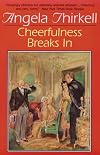
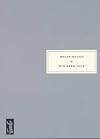
The cover of this Barsetshire novel tries very hard to make it sound like a romance novel: "Another girl's wedding leads her marriage-shy bridesmaid to love . . . she found herself caught up in a maelstrom of emotion that, no matter how she tried to fight, simply had to be love." Well, there is a wedding, and there is a bridesmaid who's less than keen on marriage but finds herself falling in love in the aftermath of the wedding. But those stories are all only threads of the larger story going on here. And the tone is nothing like what the cover tries to make out it will be.
This is the story of a community of people and how all of their lives intersect and influence one another. And at heart it's a social commentary which comments on show more love (among other things), rather than a romance. And that's fine with me. I'd heard nothing but good things about Thirkell, so when, after a lot of fruitless looking first, I finally came across fifteen or so of her Barsetshire books in a used book shop, I scooped them all up. And I was feeling a bit so-so about that purchase when I read the tag-lines and back cover material when I got them home. I don't mind a good romance story every once in a (great) while, but fifteen of them? That would probably satisfy my slight desire for romance novels for thirty or forty years. So I was quite pleased to find that Cheerfulness Breaks In was really nothing of the sort.
The commentary is sharp, and often humorous--sometimes gently so and sometimes not. The characters feel real, both because Thirkell develops them well and because of the way she moves among the various Barsetshire families, staying with one for awhile and then leaving them for another. This movement creates a strong sense that the characters' lives go on even when we're not looking at them, and we often see evidence of that "going on" when earlier characters pop back into the novel through someone else's story. I can't say I was completely swept up into Cheerfulness Breaks In, but I did enjoy it, and I do want to read more about Barsetshire and its inhabitants. And I dare say it won't take me thirty or forty years to do so. show less
This is the story of a community of people and how all of their lives intersect and influence one another. And at heart it's a social commentary which comments on show more love (among other things), rather than a romance. And that's fine with me. I'd heard nothing but good things about Thirkell, so when, after a lot of fruitless looking first, I finally came across fifteen or so of her Barsetshire books in a used book shop, I scooped them all up. And I was feeling a bit so-so about that purchase when I read the tag-lines and back cover material when I got them home. I don't mind a good romance story every once in a (great) while, but fifteen of them? That would probably satisfy my slight desire for romance novels for thirty or forty years. So I was quite pleased to find that Cheerfulness Breaks In was really nothing of the sort.
The commentary is sharp, and often humorous--sometimes gently so and sometimes not. The characters feel real, both because Thirkell develops them well and because of the way she moves among the various Barsetshire families, staying with one for awhile and then leaving them for another. This movement creates a strong sense that the characters' lives go on even when we're not looking at them, and we often see evidence of that "going on" when earlier characters pop back into the novel through someone else's story. I can't say I was completely swept up into Cheerfulness Breaks In, but I did enjoy it, and I do want to read more about Barsetshire and its inhabitants. And I dare say it won't take me thirty or forty years to do so. show less
Another delightful audio, and a lovely return to Barsetshire, the fictional county created by Anthony Trollope and lovingly sustained by Angela Thirkell. Though I've read only two of Ms. Thirkell's novels (listened, actually; the other one is The Brandons), I find them "just the thing." They are great fun, wickedly funny, and full of social commentary and mild romance. Think early 20th century Jane Austen. They also remind me of the Greek expression about a smooth river - we often use this expression in music, too, where the surface is smooth and legato, but what's happening underneath the surface (or in the accompaniment) is lively and quick or even turbulent. Nothing much ever happens plot-wise in these novels, but the book is show more bubbling with interesting characters, polite discussions where much is said by remaining unsaid, and a fascinating dynamic between all of the characters. This is a wartime novel, which delightfully captures the mood and excitement of the English countryside at the outset -- the villages rev into high gear to shelter evacuees, the young nurses complain about boring cases of measles while longing for gruesome war trauma, and the men fervently hope to suffer the glory and nobility of being blown to bits, or frozen to death, or perhaps even torpedoed and drowned. From my 21st century vantage point, all of the earnestness is both admirable -- the characters tirelessly throw themselves into the fulfillment of national duty -- and heartbreaking. A complex counterpoint to a light and funny novel. show less
I do love Angela Thirkell's work, her imagined county of Barsetshire and the residents thereof. This is one of the first books in the extensive series to be set during World War II and as such it captures the feel of the early days of the war, at least as it was seen from rural village England. In this installment of the story, Rose Birkett finally gets married to the relief of her family who figured they'd have the care of her selfishly flighty self forever. Other village girls take up wartime efforts, working in local hospitals and caring for evacuee children while settling into engagements with the men so soon to be leaving. There's no muss, no fuss about the courtships or indeed the characters themselves.
Thirkell is an ace at show more portraying the British stiff upper lip so evident in times of stress and she pokes fun at many of her characters, having them lament the lack of good patients at the hospital and thrill at the thought of catastrophic injuries. She presents the London children in all their dirt and coarseness but makes it evident that the ladies of the village have no intention of facing reality in their dealings with the urchins. As the series reader has come to expect, Thirkell's biting wit is just as evident in this war time novel as it is in previous novels. Her characters are a delight with whom to spend time and the reader is easily engrossed in their daily lives. Thirkell is, as always, a writer of domestic fiction par excellence. A reading experience to savour, I look forward to the rest of the series, especially since this book in particular ends with a terrible cloud hanging over it (and enough information to know the outcome despite its perceived ambiguity). If you're not yet reading Thirkell's delightful books, why ever not? show less
Thirkell is an ace at show more portraying the British stiff upper lip so evident in times of stress and she pokes fun at many of her characters, having them lament the lack of good patients at the hospital and thrill at the thought of catastrophic injuries. She presents the London children in all their dirt and coarseness but makes it evident that the ladies of the village have no intention of facing reality in their dealings with the urchins. As the series reader has come to expect, Thirkell's biting wit is just as evident in this war time novel as it is in previous novels. Her characters are a delight with whom to spend time and the reader is easily engrossed in their daily lives. Thirkell is, as always, a writer of domestic fiction par excellence. A reading experience to savour, I look forward to the rest of the series, especially since this book in particular ends with a terrible cloud hanging over it (and enough information to know the outcome despite its perceived ambiguity). If you're not yet reading Thirkell's delightful books, why ever not? show less
This is the first of the wartime Barsetshire novels, opening in summer 1939 and covering the period of the “Phoney War” and up to Dunkirk. The context is rather like Waugh’s Put out more flags, with the people of Barsetshire learning to cope with evacuees, air-raid precautions, and the beginnings of rationing, whilst various characters of different backgrounds and opinions have to adjust to the new conditions. Thirkell shifts the focus skillfully back and forth between the older generation - who remember 1914 and expect the worst - and the young people preoccupied with getting into war service of one sort or another and - more than ever - with pairing-off. There are some good jokes, a couple of splendid set-pieces (the evacuees’ show more Christmas party is a classic bit of description), some splendid new characters (I especially enjoyed Miss Hampton and Miss Bent) and old friends. Altogether rather more to enjoy than in some of the following books, where the patriotic cheerfulness gets undermined by Thirkell’s bitterness about what she saw as damaging changes in the structure of traditional (conservative) English society. show less
Now it's time to take a Thirkell break. For two reasons: one, that ending just about killed me; two, because there were multiple times when I wanted to kill her. An increasing charm of the series has been catching up with earlier leads. Setting all the stories in the one county makes updates feel natural. But her focus on already introduced characters means she's got to matchmake among those who were formerly comic bits. Like real wartime weddings I suppose, people are paired off more by proximity and timing than any natural affection developed slowly over the novel. Of course, this also means that sad events will happen to characters I've become quite fond of, which is even sadder.
Now the other thing. At the first book one of my show more delights was the attention to the minor, mostly working-class characters. Thirkell hasn't devoted as much page time to the help since then. While she was clearly playing for laughs, it only seemed fair, because everyone came in for mockery. This book though has justified class prejudice by making it nearly universal among the gentry. The cottagers are salt of the earth, possibly only to make the evacuees look worse by comparison. But that's not all: there are refugees who awful. And other foreigners who are awful. Oh hell, she's made her available young women pretty awful too, and their suitors are even awfuller. show less
Now the other thing. At the first book one of my show more delights was the attention to the minor, mostly working-class characters. Thirkell hasn't devoted as much page time to the help since then. While she was clearly playing for laughs, it only seemed fair, because everyone came in for mockery. This book though has justified class prejudice by making it nearly universal among the gentry. The cottagers are salt of the earth, possibly only to make the evacuees look worse by comparison. But that's not all: there are refugees who awful. And other foreigners who are awful. Oh hell, she's made her available young women pretty awful too, and their suitors are even awfuller. show less
Members
- Recently Added By
Lists

Favourite Virago Modern Classics
183 works; 38 members
Author Information

47+ Works 8,515 Members
Series

Belongs to Publisher Series
Virago Modern Classics (658)
Common Knowledge
- Canonical title
- Cheerfulness Breaks In
- Original publication date
- 1940
- People/Characters
- Lydia Keith; Noel Merton; Rose Birkett; Geraldine Birkett
- First words
- To all those who had admired and disliked the lovely Rose Birkett it appeared (with the greatest respect for the Royal Navy) quite inevitable that she should marry a naval man.
- Quotations
- "He [the Billy]'s too strong for Mother and me", said Miss Phelps. "That's because you wear those ridiculous trousers", said Miss Hampton.... "I can't think why you don't wear them," said Miss Phelps. "They're a wonderful eco... (show all)nomy. Two pairs last me a year, except for the few weeks of summer." "Well, I know exactly what I'd look like," said Miss Hampton, "neither a man nor a woman".
- Last words
- (Click to show. Warning: May contain spoilers.)"Whatever it was I'd love Noel just the same."
Classifications
Statistics
- Members
- 259
- Popularity
- 124,901
- Reviews
- 10
- Rating
- (4.02)
- Languages
- English
- Media
- Paper, Audiobook, Ebook
- ISBNs
- 11
- ASINs
- 9