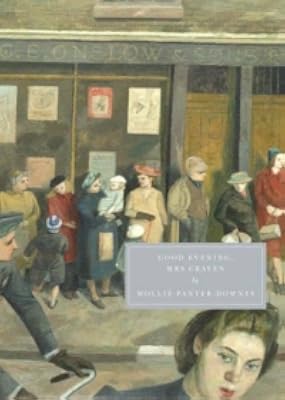
Good Evening, Mrs. Craven: The Wartime Stories of Mollie Panter-Downes
by Mollie Panter-Downes
On This Page
Description
Until now, Mollie Panter-Downes's stories, originally published in The New Yorker, have been unavailable in English. They explore most aspects of British life during WWII in great detail.Tags
Recommendations


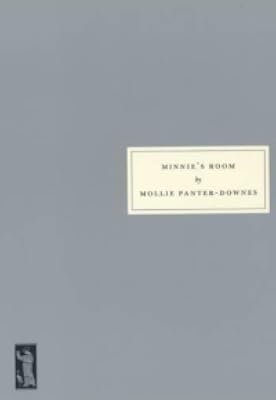
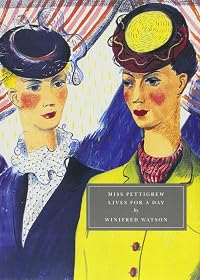
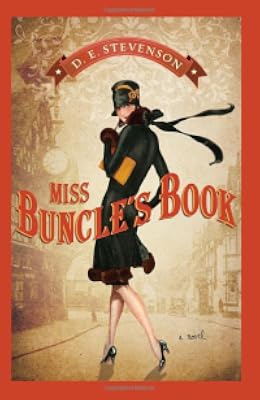





















Member Recommendations

KayCliff Ladies gallantly coping with wartime in ladylike ways

KayCliff Cooping cheerfully with wartime

souloftherose Both are collections of short stories which show how the lives of the middle-class in Britain were changed by WWII. Mrs Miniver covers the period leading up to the outbreak of war whilst Good Evening Mrs Craven covers WWII itself.
Member Reviews
If you really hate short stories... you should read this anyway.
I myself am not a terrific fan of short stories - I read Flannery O'Connor's [b:The Complete Stories|284996|The Complete Stories|Flannery O'Connor|https://i.gr-assets.com/images/S/compressed.photo.goodreads.com/books/1557999886l/284996._SY75_.jpg|886814] last year and figured that would do me until 2025 or so. Then I got this surprise in the mail (a gift from my husband, chosen by the lovely people at Persephone Books based on my previous purchases), and now I want to immediately read [b:Minnie's Room: The Peacetime Stories of Mollie Panter-Downes|1683769|Minnie's Room The Peacetime Stories of Mollie Panter-Downes|Mollie show more Panter-Downes|https://i.gr-assets.com/images/S/compressed.photo.goodreads.com/books/1348318119l/1683769._SX50_.jpg|1680371].
These stories were just so good. In each of them is a picture of the effects of WWII on the English who were at least a few, and in some cases, quite a few steps removed from the actual fighting. For example, the "Mrs. Craven" of the title, who is not a Mrs. at all but a mistress, and who worries that she'd never hear of it, should Mr. Craven be injured or worse, killed. As with nearly every Persephone I've read so far, I'm amazed that this book and its author are not more widely known.
This is the 8th book that Persephone published, and, coincidentally, the 8th that I've read. show less
I myself am not a terrific fan of short stories - I read Flannery O'Connor's [b:The Complete Stories|284996|The Complete Stories|Flannery O'Connor|https://i.gr-assets.com/images/S/compressed.photo.goodreads.com/books/1557999886l/284996._SY75_.jpg|886814] last year and figured that would do me until 2025 or so. Then I got this surprise in the mail (a gift from my husband, chosen by the lovely people at Persephone Books based on my previous purchases), and now I want to immediately read [b:Minnie's Room: The Peacetime Stories of Mollie Panter-Downes|1683769|Minnie's Room The Peacetime Stories of Mollie Panter-Downes|Mollie show more Panter-Downes|https://i.gr-assets.com/images/S/compressed.photo.goodreads.com/books/1348318119l/1683769._SX50_.jpg|1680371].
These stories were just so good. In each of them is a picture of the effects of WWII on the English who were at least a few, and in some cases, quite a few steps removed from the actual fighting. For example, the "Mrs. Craven" of the title, who is not a Mrs. at all but a mistress, and who worries that she'd never hear of it, should Mr. Craven be injured or worse, killed. As with nearly every Persephone I've read so far, I'm amazed that this book and its author are not more widely known.
This is the 8th book that Persephone published, and, coincidentally, the 8th that I've read. show less
" 'Don't think I'm being stupid and morbid,' she said, 'but supposing anything happens. I've been worrying about that. You might be wounded or ill and I wouldn't know.' She tried to laugh. 'The War Office doesn't have a service for sending telegrams to mistresses, does it?'
"He frowned, because this sounded hysterical ... With an effort, she remembered that he loved her because she was not the kind of woman to make scenes ..."
"Wartime was a period of intense and varied creativity for Mollie Painter-Downs. She was in her prime and bristling with the writer's powers of perception.
"Her best short stories do not depend on conventional action-driven plots because their sphere is psychological, emotional and social. They are brief, dramatic -- show more and comic -- testimonials to the ordinary English women who did not fight in the war, but lived through it as acutely as any soldier."
~~front flap
Vignettes more than short stories -- most 5 pages long, or less. But woven with amazing accuracy into the emotions of the women portrayed -- always evocative, always of a woman who you might know. Compelling and thought provoking, and well worth the read. Or the reread. show less
"He frowned, because this sounded hysterical ... With an effort, she remembered that he loved her because she was not the kind of woman to make scenes ..."
"Wartime was a period of intense and varied creativity for Mollie Painter-Downs. She was in her prime and bristling with the writer's powers of perception.
"Her best short stories do not depend on conventional action-driven plots because their sphere is psychological, emotional and social. They are brief, dramatic -- show more and comic -- testimonials to the ordinary English women who did not fight in the war, but lived through it as acutely as any soldier."
~~front flap
Vignettes more than short stories -- most 5 pages long, or less. But woven with amazing accuracy into the emotions of the women portrayed -- always evocative, always of a woman who you might know. Compelling and thought provoking, and well worth the read. Or the reread. show less
Superb war time stories set among those Keeping the Home Fires burning while the menfolk were away..
The wealthy, struggling along minus servants; those forced to share a home with friends or evacuees; sewing parties; a wife preparing for her husband's departure..
Originally written for the American audience of the New Yorker, these are quite superb; humorous, touching and well observed.
Could anything beat this description of an unlovely working class evacuee infant:
"The baby, sitting impassively in its mother's arms, wore a dirty red knitted cap in which it oddly resembled a wizened old sans-culotte, a mummified Marat with a snotty nose."
Brilliant writing.
The wealthy, struggling along minus servants; those forced to share a home with friends or evacuees; sewing parties; a wife preparing for her husband's departure..
Originally written for the American audience of the New Yorker, these are quite superb; humorous, touching and well observed.
Could anything beat this description of an unlovely working class evacuee infant:
"The baby, sitting impassively in its mother's arms, wore a dirty red knitted cap in which it oddly resembled a wizened old sans-culotte, a mummified Marat with a snotty nose."
Brilliant writing.
Good Evening, Mrs Craven is a wonderful selection of short stories written by Mollie Panter-Downes as articles for The New Yorker during WWII. The stories focus on middle-class women and how they were affected by the war, whether it's trying to say goodbye to a husband leaving for active service, opening your home to receive evacuees or a mistress worrying about whether she would ever find out if her lover is hurt or injured. The selection of stories are arranged chronologically which gives a good sense of the changing mood and worsening conditions in England throughout WWII. Some are funny, some sad, but each one feels as if Mollie Panter-Downes has managed to lift a curtain and allow the reader a brief glimpse of her characters' lives show more before the curtain falls and they carry on. I think what I'm trying, rather clumsily, to say, is that all the characters and situations she wrote about felt very real to me, and I felt like I'd been given a real glimpse into what life was like for certain groups of people during WWII. And, of course, the Persephone edition is a joy to read. show less
An excellent collection of stories about normal, mostly middle class people during World War II. There is no action, no romance, no bombs are falling; just everyday stress and tedium on the Home Front. A few of the stories deal with evacuees and other unwelcome guests, some are about women parting with their husbands or lovers, some are about sewing parties. The characters live with loneliness, fear, and hunger, and carry on.
Although that all sounds very depressing, it really isn't. Some of it is sad, some is hopeful, and some is funny. In 'Date with Romance'(1939), a woman reunites with an old boyfriend, who keeps talking about his stomach problems: "With difficulty escaping from Gerald's stomach, which seemed to pursue the show more conversation like some particularly active octopus, they chatted about theatres." In 'Mrs. Ramsay's War'(1940), a woman is burdened with an invasive houseguest: "Her roguish eye implied that without her restraining chaperonage Mrs. Ramsay would be helling around Sussex, probably in the nude." This kind of humour is more prevalent in the earlier stories.
One of the most notable things I found in some of the stories was an awareness of the huge social changes that were happening. Not just the immediate wartime upheaval, but the long-term changes to the social order. In 'Year of Decision' (1944), a husband who has spent the war in an office job reflects: "Yes, everybody was in the same boat all right, although it sometimes seemed to Mark that Janet and the rest of their class were making unnecessarily heavy weather of it by refusing to recognise that they were bang in the middle of a social revolution." One of my favourite stories is 'Cut Down the Trees' (1943) about an elderly lady whose big house has been taken over by the army. Mrs. Walsingham adapts to all the changes in her home, and accepts a simpler lifestyle, while her equally elderly maid fights change and believes everything will go back to the old ways after the war.
I recommend this book to anyone with an interest in life during the war years. show less
Although that all sounds very depressing, it really isn't. Some of it is sad, some is hopeful, and some is funny. In 'Date with Romance'(1939), a woman reunites with an old boyfriend, who keeps talking about his stomach problems: "With difficulty escaping from Gerald's stomach, which seemed to pursue the show more conversation like some particularly active octopus, they chatted about theatres." In 'Mrs. Ramsay's War'(1940), a woman is burdened with an invasive houseguest: "Her roguish eye implied that without her restraining chaperonage Mrs. Ramsay would be helling around Sussex, probably in the nude." This kind of humour is more prevalent in the earlier stories.
One of the most notable things I found in some of the stories was an awareness of the huge social changes that were happening. Not just the immediate wartime upheaval, but the long-term changes to the social order. In 'Year of Decision' (1944), a husband who has spent the war in an office job reflects: "Yes, everybody was in the same boat all right, although it sometimes seemed to Mark that Janet and the rest of their class were making unnecessarily heavy weather of it by refusing to recognise that they were bang in the middle of a social revolution." One of my favourite stories is 'Cut Down the Trees' (1943) about an elderly lady whose big house has been taken over by the army. Mrs. Walsingham adapts to all the changes in her home, and accepts a simpler lifestyle, while her equally elderly maid fights change and believes everything will go back to the old ways after the war.
I recommend this book to anyone with an interest in life during the war years. show less
Generally, I’m not a big fan of short stories. However, when it comes to Persephone books, I make an exception. (If you are unfamiliar with Persephone books, they print titles usually by women that have fallen by the wayside over time. They are distinguishable by their grey covers and era-appropriate printed end papers, or by the painted covers of the classics, such as this one). I like that Persephone books have been carefully chosen and reviews of the books printed by them generally get good reviews. Plus, they look so lovely on the shelves! To cut a long story short, I received several Persephone books for my birthday from my parents and I’m savouring my way through them.
I chose to read Number 8, Good Evening, Mrs. Craven because show more I could pick up and put down the short stories without missing too much – or so I thought. These lovely stories, originally published in The New Yorker over the years of World War II, are strangely addictive. I say strangely because they are about the minutiae of daily life with the shadow of war hanging over activities. There’s the gentleman hosting an awkward dinner party that hopes for a bombing raid and the shocking gossip that is told during a get-together to make bandages and socks for the soldiers. The stories also reveal the changes in Britain’s class structure over the war – a well-off older woman takes in a young family from London with embarrassing confrontations while a mistress is left lost when her lover goes to war. I read these stories (usually 10-12 pages long) in chunks – two, three or four stories at a time. Panter-Downes captures the moment perfectly and so succinctly that I loved reading about the rich characters and their predicaments.
The stories are sandwiched between two of Panter-Downes’ ‘Letters from London’ – a letter to tell American readers and expats what was going on in London at the moment, from rationing to bombing and then trying to live a normal life! These were just as fascinating to me, and I’d love to read more (but I can’t find a collection – hint, Persephone?)
A unique collection of life in English homes during the war; this is a gem of a collection. Highly recommended!
http://samstillreading.wordpress.com show less
I chose to read Number 8, Good Evening, Mrs. Craven because show more I could pick up and put down the short stories without missing too much – or so I thought. These lovely stories, originally published in The New Yorker over the years of World War II, are strangely addictive. I say strangely because they are about the minutiae of daily life with the shadow of war hanging over activities. There’s the gentleman hosting an awkward dinner party that hopes for a bombing raid and the shocking gossip that is told during a get-together to make bandages and socks for the soldiers. The stories also reveal the changes in Britain’s class structure over the war – a well-off older woman takes in a young family from London with embarrassing confrontations while a mistress is left lost when her lover goes to war. I read these stories (usually 10-12 pages long) in chunks – two, three or four stories at a time. Panter-Downes captures the moment perfectly and so succinctly that I loved reading about the rich characters and their predicaments.
The stories are sandwiched between two of Panter-Downes’ ‘Letters from London’ – a letter to tell American readers and expats what was going on in London at the moment, from rationing to bombing and then trying to live a normal life! These were just as fascinating to me, and I’d love to read more (but I can’t find a collection – hint, Persephone?)
A unique collection of life in English homes during the war; this is a gem of a collection. Highly recommended!
http://samstillreading.wordpress.com show less
Good Evening Mrs. Craven is a collection of 21 short stories that Mollie Panter-Downes wrote for The New Yorker during the war years. Although she was English and lived in Surrey for most of her life, her work both as a short story writer and as a journalist has been virtually forgotten in England; and yet she was a prolific writer, writing over 800 pieces for The New Yorker during her career.
Mollie Panter-Downes’s stories are vignettes that focus on short moments in the day of average Britons during the war. None of these people is particularly remarkable, but they live in extraordinary times, and how they cope with that is what’s so fascinating about this collection. From country housewives serving on Red Cross committees and show more housing evacuees, to young working women surviving the London Blitz, to a spinster who fantasizes about the food she can’t have, to an old Major who looks forward with relish to the fighting (even though he can’t join in), these stories are funny and poignant at the same time.
The characters in these stories are very loosely connected to one another, and only one appears more than once (Mrs. Ramsay, the housewife, whose reflections on her circumstances are brilliantly funny; I wish Panter-Downes had written more stories featuring her). The most moving of these stories is the title story, “Good Evening Mrs. Craven,” in which a mistress (mistakenly called Mrs. Craven by a maitre d’ at a restaurant) has to mourn her lover in secret. These stories have been published here in the order that they were published, and throughout the book you can see the war unfold. Although each story is only a few pages, the characters are very well rounded; in fact, there’s so much material here that the author could have written a full-length novel centering around any one of them. I don’t normally read much in the way of short stories, but this collection is top-notch. show less
Mollie Panter-Downes’s stories are vignettes that focus on short moments in the day of average Britons during the war. None of these people is particularly remarkable, but they live in extraordinary times, and how they cope with that is what’s so fascinating about this collection. From country housewives serving on Red Cross committees and show more housing evacuees, to young working women surviving the London Blitz, to a spinster who fantasizes about the food she can’t have, to an old Major who looks forward with relish to the fighting (even though he can’t join in), these stories are funny and poignant at the same time.
The characters in these stories are very loosely connected to one another, and only one appears more than once (Mrs. Ramsay, the housewife, whose reflections on her circumstances are brilliantly funny; I wish Panter-Downes had written more stories featuring her). The most moving of these stories is the title story, “Good Evening Mrs. Craven,” in which a mistress (mistakenly called Mrs. Craven by a maitre d’ at a restaurant) has to mourn her lover in secret. These stories have been published here in the order that they were published, and throughout the book you can see the war unfold. Although each story is only a few pages, the characters are very well rounded; in fact, there’s so much material here that the author could have written a full-length novel centering around any one of them. I don’t normally read much in the way of short stories, but this collection is top-notch. show less
Members
- Recently Added By
Lists

Short Story Collections and Anthologies
261 works; 42 members

1940s
221 works; 25 members

Books about World War II
241 works; 22 members

THE WAR ROOM
813 works; 24 members

Persephone
148 works; 3 members
Author Information

13+ Works 1,386 Members
Some Editions
Series
Belongs to Publisher Series
Common Knowledge
- Canonical title
- Good Evening, Mrs. Craven: The Wartime Stories of Mollie Panter-Downes
- Original publication date
- 1999
- Important places
- London, England, UK
- Important events
- World War II; The Blitz
- First words
- Mrs Ramsay dressed for her lunch with Gerald Spalding in a mood of fine old nostalgia, well crusted on the top and five years in the wood.
The publication of these short stories marks sixty years since the outbreak of the Second World War. (Preface) - Quotations
- Yes, everybody was in the same boat all right, although it sometimes seemed to Mark that Janet and the rest of their class were making unnecessarily heavy weather of it by refusing to recognise that they were bang in the midd... (show all)le of a social revolution. (from "Year of Decision")
Her roguish eye implied that without her restraining chaperonage Mrs. Ramsay would be helling around Sussex, probably in the nude. (from "Mrs. Ramsay's War") - Last words
- (Click to show. Warning: May contain spoilers.)Sometimes they do all three.
- Original language
- English
Classifications
Statistics
- Members
- 543
- Popularity
- 54,703
- Reviews
- 25
- Rating
- (4.24)
- Languages
- English
- Media
- Paper, Audiobook, Ebook
- ISBNs
- 4
- ASINs
- 3