On This Page
Description
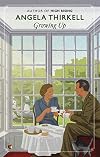
'Charming, very funny indeed. Angela Thirkell is perhaps the most Pym-like of any twentieth-century author, after Pym herself' Alexander McCall Smith It is wartime in Barsetshire, and so much has changed. Belier's Priory is now a hospital for wounded soldiers, and Sir Harry and Lady Waring have moved to the servants' quarters, where they make the best of it - so much more practical than the large, draughty house! Soon, their niece Leslie, who has a hush-hush job with the navy, comes to show more recuperate: her nerves are frayed from overwork and a close call with a torpedo. When the Warings are then asked to house an intelligence officer and his wife, they reluctantly agree. They cannot know what a much-needed tonic Noel and Lydia Merton will prove to be. With the Priory being both the Waring residence and the army hospital, it becomes the hub of activity for all of Barsetshire. show lessTags
Recommendations
























Member Recommendations
Member Reviews
I'm still working my way through the Barsetshire books, but I had trouble finding this particular one, so I didn't read it in order. Having advanced a few books further along the line before doubling back to 1943 with this one, I would say that this must be just about the last one where her reactionary political attitudes - although clearly present - don't intrude too strongly into the story.
It's basically a heart-warming, morale-boosting tale of the rural gentry bearing up under the hardships of wartime and setting us all a good example, but between the lines there's also clear evidence of the effect of wartime stress on the home-front, with parents and sisters trying to cope with the lack of news from their loved ones serving show more they-don't-know-where. Behind the comedy, there's some real, heartfelt anguish.
As always with Thirkell, a lot of the pleasure comes not from the main romantic storyline, which is strictly functional (due to the wartime shortage of men, there's not much scope for introducing any doubts about who will be hitched up this time), but from her wonderfully acute observation of the bizarre ways quite ordinary people can bring out the hidden complexity inherent in the most everyday situations. No-one does domestic servants better than Thirkell, and her elderly men are every bit as comic as those of Dickens and P.G. Wodehouse.
This novel has wonderful opening and closing sequences celebrating the glories of the Great Western Railway and describing the life of the splendid split-level station at Winter Overcotes; it also has the unusual distinction of introducing two memorable minor characters better known for their starring roles, a couple of years later, in Evelyn Waugh's Brideshead Revisited: the dreadfully lower-middle-class Captain Hooper (who reappears in Brideshead under his own name) and the formidable retired Nanny, Mrs Adams (Waugh's Nanny Hawkins). Well, there was a war on and writers had to economise...
(I've commented elsewhere on the poor quality of some of the Moyer Bell reprints of Thirkell: it's pleasing to be able to say that this one is very good. The few errors in the text look more human- than computer-generated, so are probably the result of wartime publication problems in the original rather than issues with the OCR process. There is one design oddity: the chapter headings have small, blurry illustrations that have been cropped arbitrarily out of an image showing women in a park with a pram: this seems to be the cover image for some versions of the book, but not the one I have, which has a cover image showing three girls in black and white dresses behind a wrought-iron gate. This substitution makes the chapter heading crops oddly enigmatic!) show less
It's basically a heart-warming, morale-boosting tale of the rural gentry bearing up under the hardships of wartime and setting us all a good example, but between the lines there's also clear evidence of the effect of wartime stress on the home-front, with parents and sisters trying to cope with the lack of news from their loved ones serving show more they-don't-know-where. Behind the comedy, there's some real, heartfelt anguish.
As always with Thirkell, a lot of the pleasure comes not from the main romantic storyline, which is strictly functional (due to the wartime shortage of men, there's not much scope for introducing any doubts about who will be hitched up this time), but from her wonderfully acute observation of the bizarre ways quite ordinary people can bring out the hidden complexity inherent in the most everyday situations. No-one does domestic servants better than Thirkell, and her elderly men are every bit as comic as those of Dickens and P.G. Wodehouse.
This novel has wonderful opening and closing sequences celebrating the glories of the Great Western Railway and describing the life of the splendid split-level station at Winter Overcotes; it also has the unusual distinction of introducing two memorable minor characters better known for their starring roles, a couple of years later, in Evelyn Waugh's Brideshead Revisited: the dreadfully lower-middle-class Captain Hooper (who reappears in Brideshead under his own name) and the formidable retired Nanny, Mrs Adams (Waugh's Nanny Hawkins). Well, there was a war on and writers had to economise...
(I've commented elsewhere on the poor quality of some of the Moyer Bell reprints of Thirkell: it's pleasing to be able to say that this one is very good. The few errors in the text look more human- than computer-generated, so are probably the result of wartime publication problems in the original rather than issues with the OCR process. There is one design oddity: the chapter headings have small, blurry illustrations that have been cropped arbitrarily out of an image showing women in a park with a pram: this seems to be the cover image for some versions of the book, but not the one I have, which has a cover image showing three girls in black and white dresses behind a wrought-iron gate. This substitution makes the chapter heading crops oddly enigmatic!) show less
A sort-of-sequel to Cheerfulness Breaks In, which is in turn a sort-of-sequel to Summer Half. Lydia and her husband are staying with Sir and Lady Waring, while Lydia’s husband works at a nearby camp. Also working at the camp is a family connection of Lydia’s (her brother’s former colleague, Philip Winter). Also staying with the Warings is their niece, Leslie, who is recovering from a breakdown due to overwork and worrying about her brother, who is in the Navy.
Not very much happens. The characters deal with inconveniences caused by the war or by neighbours’ foibles or by domestic mishap. They catch up on the latest news of others in their wider community (all of whom are characters from Thirkell’s previous books). There’s an show more unsurprising romance. This is not Thirkell’s strongest (although I liked it better than Cheerfulness Breaks In). Yet because I’ve read Thirkell’s previous books and I already cared about several of the characters, and because I find Thirkell’s style amusing, I was very happy to read this. I particularly liked the close bond between Lydia and her brother (and that Thirkell understands that this is what sibling relationships are sometimes like), and the way Sir and Lady Waring both, quietly, worry about each other working too much and about each other’s comfort.
In Growing Up I think Thirkell is struggling somewhat with the question of what to do with her boisterous schoolgirls once they grow up. These are young women who are confident, curious, unconventional and enthusiastic about their work, and there’s a slight mismatch between who these characters are (judging from what they do) and what Thirkell implies that they should want. She seems to assume that of course they will happily set their work aside to become wives and mothers, without really considering her characters’ personalities. I don’t mean to suggest that they should all be eschewing, or else disinterested in, marriage and babies -- it’s the of course that I object to. I’d find it more convincing if some of them took a less conventional approach to the marriage-and-babies thing, or if there was more acknowledgement that this was a choice rather than the only possible desirable future for them.
I feel like Thirkell almost gets this, as if there’s an inconsistency somewhere in her work. But it’s subtle, and all things considered I find it interesting to observe rather than irritating.
“I say, Tommy,” she said, “you’re ever grown-upper than I thought.”
“Not nastily, I hope,” said Mr Needham anxiously.
“Of course not. Very, very nicely,” said Lydia. “Only I do feel a bit as if everyone was grown up now and I wasn’t.”
“I always thought you were frightfully grown-up,” said Mr Needham. “You always knew what to do. [...] But I don’t suppose anyone feels really grown up inside.”
“What would you call really grown-up?” asked Lydia.
“Knowing about income tax and things, and being a chairman of committees, oh and all that,” said Mr Needham vaguely. show less
Not very much happens. The characters deal with inconveniences caused by the war or by neighbours’ foibles or by domestic mishap. They catch up on the latest news of others in their wider community (all of whom are characters from Thirkell’s previous books). There’s an show more unsurprising romance. This is not Thirkell’s strongest (although I liked it better than Cheerfulness Breaks In). Yet because I’ve read Thirkell’s previous books and I already cared about several of the characters, and because I find Thirkell’s style amusing, I was very happy to read this. I particularly liked the close bond between Lydia and her brother (and that Thirkell understands that this is what sibling relationships are sometimes like), and the way Sir and Lady Waring both, quietly, worry about each other working too much and about each other’s comfort.
In Growing Up I think Thirkell is struggling somewhat with the question of what to do with her boisterous schoolgirls once they grow up. These are young women who are confident, curious, unconventional and enthusiastic about their work, and there’s a slight mismatch between who these characters are (judging from what they do) and what Thirkell implies that they should want. She seems to assume that of course they will happily set their work aside to become wives and mothers, without really considering her characters’ personalities. I don’t mean to suggest that they should all be eschewing, or else disinterested in, marriage and babies -- it’s the of course that I object to. I’d find it more convincing if some of them took a less conventional approach to the marriage-and-babies thing, or if there was more acknowledgement that this was a choice rather than the only possible desirable future for them.
I feel like Thirkell almost gets this, as if there’s an inconsistency somewhere in her work. But it’s subtle, and all things considered I find it interesting to observe rather than irritating.
“I say, Tommy,” she said, “you’re ever grown-upper than I thought.”
“Not nastily, I hope,” said Mr Needham anxiously.
“Of course not. Very, very nicely,” said Lydia. “Only I do feel a bit as if everyone was grown up now and I wasn’t.”
“I always thought you were frightfully grown-up,” said Mr Needham. “You always knew what to do. [...] But I don’t suppose anyone feels really grown up inside.”
“What would you call really grown-up?” asked Lydia.
“Knowing about income tax and things, and being a chairman of committees, oh and all that,” said Mr Needham vaguely. show less
I sometimes read book reviews that call someone a modern Jane Austen, and I never really agree with it. But... when Angela Thirkell is good, she is really, REALLY good, and in the midst of reading one of her best works (so far) I'd almost be inclined to heap the Jane-Austen encomium on her.
I love reading Angela Thirkell's books when I am by myself, to allow me the freedom of chuckling and hooting aloud whenever I take a notion. She can be gloriously funny. And just a few pages later, so pensive and gentle that you feel a little misty.
Anyway, in this book we are placed firmly in the middle of World War II. Lydia and her husband Noel (already introduced in previous books; Lydia is deservedly a favorite character of other reviewers) come show more to stay with the Warings while Noel is posted on some type of military duty.
The Warings' niece Leslie is also at the house, recovering from a string of nerve-wracking incidents related to her own war work.
Then Philip Winter, a colonel in the army and a previously known friend of Lydia and Noel, shows up. Readers may already be familiar with him as a schoolmaster who is now slightly older and wiser. He carries Leslie's suitcase from the train station one evening, and this begins their acquaintance. It continues, with many stops and starts, and doubts and fears, over the rest of the novel.
Since several of the characters were introduced in earlier books, the title of this one is appropriately "Growing Up." Lydia reflects a few times over the course of the book on how her friends from her teen years are maturing, and one of the pleasant surprises is how much she herself has grown up and yet somehow remained the same. She is still decisive, straightforward, and about as subtle as a hurricane, but she has somehow also acquired dignity and some self-control. This adjustment is credited at least partially to her husband Noel, who's a bit older than she is, and whom she loves madly.
The funny bits are mostly in the last half. Love it when Mrs. Morland, the extremely self-doubting and fairly incoherent author, comes to give an edifying lecture to the convalescing soldiers.
I think I have reached the point in Thirkell novels where, since so many of her characters are recurring, or at least related by marriage to other characters, I no longer feel like there are too many people. It's becoming easier to fix their roles in mind... although my handy dandy Angela Thirkell encyclopedia does help.
It's fun, though, realizing that you already know a character who has just popped in for a few pages, and you react to them before they even open their mouth. "Oh, NO, not Mrs. Spender!!!!!!" and you feel like telling the other characters, "Just try not to make eye contact. She's a loony." show less
I love reading Angela Thirkell's books when I am by myself, to allow me the freedom of chuckling and hooting aloud whenever I take a notion. She can be gloriously funny. And just a few pages later, so pensive and gentle that you feel a little misty.
Anyway, in this book we are placed firmly in the middle of World War II. Lydia and her husband Noel (already introduced in previous books; Lydia is deservedly a favorite character of other reviewers) come show more to stay with the Warings while Noel is posted on some type of military duty.
The Warings' niece Leslie is also at the house, recovering from a string of nerve-wracking incidents related to her own war work.
Then Philip Winter, a colonel in the army and a previously known friend of Lydia and Noel, shows up. Readers may already be familiar with him as a schoolmaster who is now slightly older and wiser. He carries Leslie's suitcase from the train station one evening, and this begins their acquaintance. It continues, with many stops and starts, and doubts and fears, over the rest of the novel.
Since several of the characters were introduced in earlier books, the title of this one is appropriately "Growing Up." Lydia reflects a few times over the course of the book on how her friends from her teen years are maturing, and one of the pleasant surprises is how much she herself has grown up and yet somehow remained the same. She is still decisive, straightforward, and about as subtle as a hurricane, but she has somehow also acquired dignity and some self-control. This adjustment is credited at least partially to her husband Noel, who's a bit older than she is, and whom she loves madly.
The funny bits are mostly in the last half. Love it when Mrs. Morland, the extremely self-doubting and fairly incoherent author, comes to give an edifying lecture to the convalescing soldiers.
I think I have reached the point in Thirkell novels where, since so many of her characters are recurring, or at least related by marriage to other characters, I no longer feel like there are too many people. It's becoming easier to fix their roles in mind... although my handy dandy Angela Thirkell encyclopedia does help.
It's fun, though, realizing that you already know a character who has just popped in for a few pages, and you react to them before they even open their mouth. "Oh, NO, not Mrs. Spender!!!!!!" and you feel like telling the other characters, "Just try not to make eye contact. She's a loony." show less
One of my favorite Thirkell books, this one is set during the war years (about three years in) and features some of my favorite characters, notably Lydia Merton. Lydia and Noel have moved in with Sir Harry and Lady Waring at Beliers Priory, which itself has been turned into a hospital for soldiers. The Waring's niece, Leslie, is back from her demanding wartime job to recover from a physical and psychological breakdown after being torpedoed crossing the Atlantic. Meanwhile, Philip Winters, schoolteacher-turned-officer, is posted to a hush-hush location nearby.
The novel is steeped in the culture and everyday life of the Home Front, focusing in particular on what it was like for the women and non-mobilized men who were left keeping things show more going and worrying about their relatives overseas. Leslie's beloved brother Cecil is at sea and hasn't been heard from for a while, Lydia's brother Colin is about to be sent off to unrevealable locations, and even those who are posted in England or Scotland know it's a matter of time before they're sent off as well. Meanwhile, rationing of everything means making do at every turn.
Thirkell's classist and xenophobic tendencies are held in check here for the most part, and when things seem particularly fey or twee, the characters usually comment on it (Cold Comfort Farm is a touchstone). The title refers to the maturing of characters we've seen in earlier novels, from Lydia and Philip to Octavia Crawley and Tommy Needham. And as usual, Thirkell does not neglect the older generations: Mrs. Morland makes a very funny cameo appearance, as does Lord Stoke, and the Warings get considerable and sympathetic page time.
What I particularly like about Thirkell's best novels is the way she is able to conjure an era which, while admittedly airbrushed of any major conflicts between groups and classes, does convincingly reflect some of the best of the people of that time. It certainly provides some comfort to read today, when we are seeing too much of the worst of people of our time. show less
The novel is steeped in the culture and everyday life of the Home Front, focusing in particular on what it was like for the women and non-mobilized men who were left keeping things show more going and worrying about their relatives overseas. Leslie's beloved brother Cecil is at sea and hasn't been heard from for a while, Lydia's brother Colin is about to be sent off to unrevealable locations, and even those who are posted in England or Scotland know it's a matter of time before they're sent off as well. Meanwhile, rationing of everything means making do at every turn.
Thirkell's classist and xenophobic tendencies are held in check here for the most part, and when things seem particularly fey or twee, the characters usually comment on it (Cold Comfort Farm is a touchstone). The title refers to the maturing of characters we've seen in earlier novels, from Lydia and Philip to Octavia Crawley and Tommy Needham. And as usual, Thirkell does not neglect the older generations: Mrs. Morland makes a very funny cameo appearance, as does Lord Stoke, and the Warings get considerable and sympathetic page time.
What I particularly like about Thirkell's best novels is the way she is able to conjure an era which, while admittedly airbrushed of any major conflicts between groups and classes, does convincingly reflect some of the best of the people of that time. It certainly provides some comfort to read today, when we are seeing too much of the worst of people of our time. show less
Angela Thirkell’s Barsetshire novels are set in an early/mid-20th century version of Anthony Trollope’s fictional English county. Thirkell pokes fun at provincial life, human nature, and even the impact of current events (in this case, World War II). There is always a romance or two, and they always end happily. These novels will not tax your brain, which makes them perfect for summer reading or times when you just aren’t up for anything strenuous.
Although the Barsetshire novels can generally stand alone, I most enjoyed Growing Up for its connections to previous books. The principal characters appeared as children or teens in previous books, and are now young adults early in careers and married life. Lydia Keith Merton, who was a show more rather brash teenager, has mellowed and conducts herself admirably as houseguest to the local gentry. Tony Morland makes an appearance and demonstrates he is no longer the abominable little boy of the early books. Most of the young men are off serving in the war, but a few are billeted at the local hospital or home on leave (because how could we have romance otherwise?).
The plot is loosely constructed to support the romantic storyline. It’s almost like an episode of Seinfeld, in that nothing much really happens but it’s really enjoyable and ends well. show less
Although the Barsetshire novels can generally stand alone, I most enjoyed Growing Up for its connections to previous books. The principal characters appeared as children or teens in previous books, and are now young adults early in careers and married life. Lydia Keith Merton, who was a show more rather brash teenager, has mellowed and conducts herself admirably as houseguest to the local gentry. Tony Morland makes an appearance and demonstrates he is no longer the abominable little boy of the early books. Most of the young men are off serving in the war, but a few are billeted at the local hospital or home on leave (because how could we have romance otherwise?).
The plot is loosely constructed to support the romantic storyline. It’s almost like an episode of Seinfeld, in that nothing much really happens but it’s really enjoyable and ends well. show less
"Growing up" is the twelfth book in Angela Thirkell's Barsetshire series, which stretches from 1933 through 1961. Since they were more or less written in real time (she popped out about one of them a year to feed her family), they provide an interesting portrait of small-town Britain during this period of time, written without the benefit of hindsight. GU was published in 1943, so contains a lot about the mundane difficulties of war-time living -- transportation is an eternal problem owing to petrol shortages, the government is trying to be hush-hush about things that everyone knows anyway and people are waiting desperately for news from soldiers and prisoners of war. Nonetheless, GU has very funny parts (Sir Harry's ways of show more communicating being one of them) and the satisfaction of boy getting girl in the end (Readers of AT will know that this is not a spoiler.) show less
Read during: Summer 2002
More fun from Angela Thirkell. Country life during WWII with some characters I remembered from Northbrige Rectory (including a cameo by the amazing Mrs. Spender), a dash of romance and other fluffy but fun entertainment.
More fun from Angela Thirkell. Country life during WWII with some characters I remembered from Northbrige Rectory (including a cameo by the amazing Mrs. Spender), a dash of romance and other fluffy but fun entertainment.
Members
- Recently Added By
Lists

Favourite Virago Modern Classics
183 works; 38 members
Author Information

47+ Works 8,508 Members
Series

Belongs to Publisher Series
Virago Modern Classics (659)
Common Knowledge
- Original publication date
- 1943
- People/Characters
- Lydia Merton; Noel Merton; Sir Harry Waring; Lady Waring
- Important places
- Barsetshire
- First words
- To the youth of England, except to that small and misguided section who prefer model aeroplanes to model railways, the station at Winter Overcotes, as all students of Barsetshire know, represents History and Romance in their ... (show all)highest form, for here is one of the few remaining survivals of the main or high level line crossing the low level or local line.
- Last words
- (Click to show. Warning: May contain spoilers.)"Because I couldn't bear to be a traitor," said Lydia, and went on brushing her shining dark hair in pensive contentment.
Classifications
Statistics
- Members
- 250
- Popularity
- 129,910
- Reviews
- 7
- Rating
- (4.07)
- Languages
- English
- Media
- Paper, Ebook
- ISBNs
- 7
- ASINs
- 11