On This Page
Description
Barsetshire in the latter years of the Second World War is a peaceful and gossipy place, but there has been one lively change. A girls' school, evacuated from London, has taken over Harefield Park. Miss Sparling seems to be the perfect headmistress: she dresses as a headmistress should and is an easy and erudite conversationalist. Her new neighbours like her and her pupils respect her, but there is something missing from her life; something which - though she never dreamt it when she arrived show more - perhaps Barsetshire can provide... show lessTags
Recommendations


















Member Recommendations
thorold Sarah Burton and Miss Sparling may be poles apart in political terms, but it's fun to see how much Thirkell's idea of a headmistress overlaps with Holtby's, despite that.

Member Reviews
Rating: 3.5 happiness-inducing stars of five
The Book Description: In the midst of World War Two, the Beltons of Harefield Park find themselves "living on overdrafts to an extent that even they found alarming." It seems they may have to sell the family estate- for which, during wartime, there is little demand.Their prayers are answered, however, in the unlikely form of Miss Sparling, the dauntless headmistress of the recently evacuated Hoisers' Girls' Foundation School, who just happens to be looking for a country mansion to let. THE HEADMISTRESS, first published in 1945 and long unavailable, is typical Thirkell: charming, witty, and refreshingly urbane.
My Review: Anthony Trollope originated Barsetshire, the fictional uber-English show more county, in a series of novels that include The Warden and Barchester Towers (two of my favorites in that series). He created a constellation of memorable characters, whose essential reality came from the *shudder* Dickensian ink-pot of broad strokes and deft shadows. The series is still read today by significant numbers of fans. It's only 160 years later...pretty good going for a hack writer!
Angela Thirkell began writing books set in this Barsetshire alternate reality when she was but a lass of nineteen. She continued to mine the mother lode until her death at seventy-one-ish. Her characters, from families either alluded to in the original or simply made up, are as true and real as Trollope's own. Her observations are clear and pointed, her language is limpidly simple and direct, and all in all her books are a great pleasure to read...if you like this sort of thing.
I do.
This entry into her series presents a wartime Barsetshire that, like all of England, is undergoing a massive reorientation of its social compass. It's like the pole shift that the Earth throws itself every so often...north isn't north anymore, it's east then west then south-by-southwest, and nowhere is there a fixed point to steer by. Thirkell's eponymous headmistress, Miss Sparling, sees the confusion around her, and steers by her own strong internal compass. It makes her a delightful character to follow, and within the novel itself, makes her a welcome addition to the closed world of county society in Harefield.
Why should modern readers, sixty-five years on, read a book like this, by a nearly forgotten second-rank commercial writer of a bygone style? Because, dear readers, this era like that one is a time of great social change and we can all take comfort in the efforts our forebears made to resist, accommodate, and understand (often all three at once) the titanic reorientations going on around us. I suspect that the reason change makes humans so miserable is that we refuse to acknowledge the storehouse of help our ancestors piled up for us in the form of myths, stories, and legends. All storytelling involves change, resistance to it, and consequences.
So I recommend to those disoriented by the gradual/sudden shifting of the culture that they read this, and the other, Barsetshire novels, and view them as self-help books in aid of managing their own responses to a changing world.
Besides, they're delightful to read! show less
The Book Description: In the midst of World War Two, the Beltons of Harefield Park find themselves "living on overdrafts to an extent that even they found alarming." It seems they may have to sell the family estate- for which, during wartime, there is little demand.Their prayers are answered, however, in the unlikely form of Miss Sparling, the dauntless headmistress of the recently evacuated Hoisers' Girls' Foundation School, who just happens to be looking for a country mansion to let. THE HEADMISTRESS, first published in 1945 and long unavailable, is typical Thirkell: charming, witty, and refreshingly urbane.
My Review: Anthony Trollope originated Barsetshire, the fictional uber-English show more county, in a series of novels that include The Warden and Barchester Towers (two of my favorites in that series). He created a constellation of memorable characters, whose essential reality came from the *shudder* Dickensian ink-pot of broad strokes and deft shadows. The series is still read today by significant numbers of fans. It's only 160 years later...pretty good going for a hack writer!
Angela Thirkell began writing books set in this Barsetshire alternate reality when she was but a lass of nineteen. She continued to mine the mother lode until her death at seventy-one-ish. Her characters, from families either alluded to in the original or simply made up, are as true and real as Trollope's own. Her observations are clear and pointed, her language is limpidly simple and direct, and all in all her books are a great pleasure to read...if you like this sort of thing.
I do.
This entry into her series presents a wartime Barsetshire that, like all of England, is undergoing a massive reorientation of its social compass. It's like the pole shift that the Earth throws itself every so often...north isn't north anymore, it's east then west then south-by-southwest, and nowhere is there a fixed point to steer by. Thirkell's eponymous headmistress, Miss Sparling, sees the confusion around her, and steers by her own strong internal compass. It makes her a delightful character to follow, and within the novel itself, makes her a welcome addition to the closed world of county society in Harefield.
Why should modern readers, sixty-five years on, read a book like this, by a nearly forgotten second-rank commercial writer of a bygone style? Because, dear readers, this era like that one is a time of great social change and we can all take comfort in the efforts our forebears made to resist, accommodate, and understand (often all three at once) the titanic reorientations going on around us. I suspect that the reason change makes humans so miserable is that we refuse to acknowledge the storehouse of help our ancestors piled up for us in the form of myths, stories, and legends. All storytelling involves change, resistance to it, and consequences.
So I recommend to those disoriented by the gradual/sudden shifting of the culture that they read this, and the other, Barsetshire novels, and view them as self-help books in aid of managing their own responses to a changing world.
Besides, they're delightful to read! show less
There's a lot of very enjoyable detail in this one, especially in all the domestic trivialities of coping with wartime food rationing. And there's some of her wonderful inconsequential talk (Thirkell characters hardly ever engage in dialogue: they talk past each other, but they do it hilariously). The accident-prone Mrs Updike, the declining landowner Mr Belton, and the vicar Mr Oriel are among her best characters, as are the various schoolgirls.
On the other hand, I felt that Thirkell shows a bit too much of her unpleasant side here. When she's laughing at the way the Beltons are forced by circumstances to associate with people from outside their normal social range, it's pretty clear to us that she's mocking the pretensions of the show more plebs and not the condescension of the gentry. Women who presume to stick their noses outside the social and professional sphere they were meant to occupy are firmly squished back into shape — it seems to be OK for Miss Sparling to run a school, but only because she's a classicist and a clergyman's granddaughter, and doesn't put any "ideas" into the heads of her pupils; Etta (even though she "keeps up" her shorthand) is punished for having ideas and being a senior administrator in her "hush-hush" establishment, and Dr Norris, who presumes to know better than her male colleagues, has to be shown to be both silly and incompetent. Captain Hornby comes over as an awkward mixture of Petruchio and Trollope's Mr Kennedy, a man no girl in her right mind would get engaged to. And I really can't imagine how anyone writing in 1944 could be so insensitive as to include a couple of casual anti-semitic remarks and a "comic" mock-Nazi salute.
You can't help feeling that for all the tribute Thirkell pays to Trollope here, if she'd ever run into his mother on a dark night, she'd have got a well-deserved handbagging for her reactionary attitudes... show less
On the other hand, I felt that Thirkell shows a bit too much of her unpleasant side here. When she's laughing at the way the Beltons are forced by circumstances to associate with people from outside their normal social range, it's pretty clear to us that she's mocking the pretensions of the show more plebs and not the condescension of the gentry. Women who presume to stick their noses outside the social and professional sphere they were meant to occupy are firmly squished back into shape — it seems to be OK for Miss Sparling to run a school, but only because she's a classicist and a clergyman's granddaughter, and doesn't put any "ideas" into the heads of her pupils; Etta (even though she "keeps up" her shorthand) is punished for having ideas and being a senior administrator in her "hush-hush" establishment, and Dr Norris, who presumes to know better than her male colleagues, has to be shown to be both silly and incompetent. Captain Hornby comes over as an awkward mixture of Petruchio and Trollope's Mr Kennedy, a man no girl in her right mind would get engaged to. And I really can't imagine how anyone writing in 1944 could be so insensitive as to include a couple of casual anti-semitic remarks and a "comic" mock-Nazi salute.
You can't help feeling that for all the tribute Thirkell pays to Trollope here, if she'd ever run into his mother on a dark night, she'd have got a well-deserved handbagging for her reactionary attitudes... show less
This is a very funny addition to the Barsetshire novels written by Angela Thirkell. There’s only a slight romance plot; Thirkell mostly explores life in a small English village in 1943.
The main characters are all upper middle class and concerned with following the social mores of their times. Sounds pretty dull, right? But it’s not dull at all. The characters have very realistic motivations, problems, and inner struggles with their baser selves.
I loved this little book; it’s the perfect antidote for troubled times, whether personal or political.
The main characters are all upper middle class and concerned with following the social mores of their times. Sounds pretty dull, right? But it’s not dull at all. The characters have very realistic motivations, problems, and inner struggles with their baser selves.
I loved this little book; it’s the perfect antidote for troubled times, whether personal or political.
This revolves around the Belton family, who have rented out their large house to a girls’ school, and some of their closest neighbours.
It’s Thirkell, so it is amusing and observant about life during wartime, told with a gentleness that is very -- very -- occasionally broken by an unnecessary moment of prejudice. Those moments aside, I enjoyed reading this a lot. I thought it was particularly insightful when it came to a sixteen year old’s (somewhat confused and contrary) fantasies about a young man who rescued her -- she imagines dramatic scenarios which will ensure he always remembers her, which isn’t necessarily more realistic than simply hoping he will fall in love with her, but is certainly less clichéd.
Something else show more which stood out was its portrayal of navigating the changing relationship between parents and their adult children.
His parents, though they would have died rather than admit it to any outsider, to each other, or even to their secret selves, experienced a peculiar sinking of the heart, or rather of the spirits at this sound [of their younger son]. Not but that either of them would cheerfully have gone to the scaffold for Charles, or given him the best bed, all the butter ration and the most comfortable chair; but they knew from fatal experience that whatever they did would be just wrong. They also knew, though they had never come within miles of discussing the subject, that Charles really had much the same feelings himself; that he always came home full of the best intentions [...] that even as he entered the house all those sincere feelings were overlaid by a nervousness and irritation which caused him to be on the whole selfish, graceless, cross if questioned about himself and resentful if he wasn’t. show less
It’s Thirkell, so it is amusing and observant about life during wartime, told with a gentleness that is very -- very -- occasionally broken by an unnecessary moment of prejudice. Those moments aside, I enjoyed reading this a lot. I thought it was particularly insightful when it came to a sixteen year old’s (somewhat confused and contrary) fantasies about a young man who rescued her -- she imagines dramatic scenarios which will ensure he always remembers her, which isn’t necessarily more realistic than simply hoping he will fall in love with her, but is certainly less clichéd.
Something else show more which stood out was its portrayal of navigating the changing relationship between parents and their adult children.
His parents, though they would have died rather than admit it to any outsider, to each other, or even to their secret selves, experienced a peculiar sinking of the heart, or rather of the spirits at this sound [of their younger son]. Not but that either of them would cheerfully have gone to the scaffold for Charles, or given him the best bed, all the butter ration and the most comfortable chair; but they knew from fatal experience that whatever they did would be just wrong. They also knew, though they had never come within miles of discussing the subject, that Charles really had much the same feelings himself; that he always came home full of the best intentions [...] that even as he entered the house all those sincere feelings were overlaid by a nervousness and irritation which caused him to be on the whole selfish, graceless, cross if questioned about himself and resentful if he wasn’t. show less
This is considered one of Thirkell's best books in the Barsetshire series, and I can see why. The wartime context is beautifully depicted and the interactions between the Hosier's School (down from London) and the Beltons, as well as the residents of Harefield, are full of warmth, wit, and affection. There is a romance between Elsa Belton and Commander Christopher Hornby, which develops mostly offpage in London but has important scenes in Barsetshire when they come down on leave. The adjustments of the entire Belton family to leaving Harefield Hall and downsizing, probably permanently, to the village feel realistic and sympathetic. Miss Sparling, the Headmistress of the title, and Mrs. Belton are both wonderfully drawn.
So why only 3.5 show more stars? Because as good as the novel was, it is also littered with small and large examples of prejudice and bigotry. Yes, it's a product of its time, but the classism and the way Thirkell demeans refugees (both refugee children from London and Eastern/Middle Europeans) is hard to take, especially given our current political climate. I've never been entirely comfortable with her Mixo-Lydians, but they really got to me this time. If you can read past that, it's a great book. But I need a break before I take up another Thirkell. show less
So why only 3.5 show more stars? Because as good as the novel was, it is also littered with small and large examples of prejudice and bigotry. Yes, it's a product of its time, but the classism and the way Thirkell demeans refugees (both refugee children from London and Eastern/Middle Europeans) is hard to take, especially given our current political climate. I've never been entirely comfortable with her Mixo-Lydians, but they really got to me this time. If you can read past that, it's a great book. But I need a break before I take up another Thirkell. show less
Angela Thirkell’s Barsetshire novels imagine Anthony Trollope’s Victorian-era Barsetshire, as it would have been in the early 20th century. They are light, fun chronicles of English country and village life, with considerable humor at the expense of certain English archetypes. The Headmistress is set during World War II, and the Belton family have turned over their large home and extensive grounds to be used as a school for girls. Mr and Mrs Belton have relocated to a smaller home nearby. Their three young adult children, all involved in some form of “war work,” no longer live at home but visit often. Miss Sparling is the eponymous heroine, newly arrived both at the school and in Barsetshire. The plot revolves primarily around show more the Beltons and Miss Sparling adjusting to their new circumstances. And of course there's romance. These novels always include a number of unattached men and women, and part of the fun for me is speculating on who will pair off with whom. Along the way there are subplots poking fun at the schoolgirls and various villagers. There's not a lot of “action.” The reader has to look past Thirkell’s classism and views that are of their time, but if that can be done these are pure and simple comfort reads. show less
Mostly I enjoyed The Headmistress – I had a few reservations – more of that later – but Angela Thirkell’s voice though still recognisable, is very slightly more sombre – it all seems a little bit more grown up – a sign, perhaps of the times in which Thirkell was writing.
War has come to the world of Barsetshire, bringing great change. Financial difficulties have obliged the Belton’s to let their large country house to the Hosiers’ Girls’ Foundation School. The school; evacuated from London had been seeking a more happier arrangement than the one they have had on a temporary basis in Barchester. Miss Sparling; the headmistress of the school, superintends the move, relieved on a personal level having had to lodge with show more Miss Pettinger, of the Barchester school, for which she is pitied by everyone. So, while the school set up home at Harefield Park, the Belton’s take a very nice house in the village.
The Belton’s three young adult children are all involved in wartime service, the eldest, Freddy is a Commander in the Navy, youngest son Charles in the Army – training in various places he is yet to be posted abroad. While the middle child Elsa – is involved in what is commonly called hush hush work, in a place that no one is supposed to have heard of, but everyone has. Mrs Belton is fortunate that her three children are able to get home fairly frequently – Charles, a little irreverent, energetic and often wildly enthusiastic about something or other, he had for me a touch of the Tony Morelands about him, while older brother Commander Freddy Belton, is a more measured man, reflecting the experiences he has already had. Elsa, has a little growing up to do, despite engaging herself to a wealthy Captain, fifteen years her senior. She is deeply upset at the sight of school girls galloping all over her former home.
There are many changes to be got over. The Beltons find it very strange to see a school setting up in their family home, school girls sleeping in their old bedrooms. Mrs Belton, rather likes the house in the village, from where she attends wartime working parties, yet she also feels something of the strain of helping her family adjust to the changes. Meanwhile, Elsa is doing her spoilt daughter act – she so wants to help her father – but goes about it in the wrong way and embarrasses both him and her new fiancé. Mrs Belton has a lot to worry quietly about and putting a brave face on things all the time is so very hard.
“What she would really like, she thought, would be to throw every single thing in her wardrobe out of the window and have everything new and to stop feeling tired and looking her age and go somewhere warm, if there was any warm place left in this horrible world now…”
wartime schoolgirlsMiss Sparling, the headmistress, is dauntless and practical, ably steering her girls through the changes that coming to Harefield Park has brought them. She soon makes her own friends among the locals, Mrs Belton is just one of them, elderly Mr Oriel the vicar – who once knew her grandfather, and Mr Carton, a middle-aged Oxford don vie for her society. There are some wonderful peripheral characters in The Headmistress – one of my favourites is Mrs Updike, surely drawn from life. Mrs Updike, is fairly accident prone, scalding herself, or cutting herself almost on a daily basis, happily declaring that she has ‘a perfect thing about…’ whatever it might be and launching into a long, involved and usually slightly muddled explanation.
Shakespeare readings, servants gossip, and a little romance find their way into the lives of this community in wartime.
“I never did take sugar in my tea, or in coffee,’ said the Vicar. ‘I have always disliked it. But I understood that by taking saccharine, we were somehow assisting the war effort.”
Heather Adams is the only one of Miss Sparling’s school girls that we really get to know – who in her typical class-conscious way, Thirkell lets us know that these girls are very much not of the same class as the Belton family. Heather is an unappealing girl, the daughter of a self-made man, she develops a rather crippling crush on Commander Belton.
So yes, there is quite a lot to like in The Headmistress – about which I had heard generally very good reports from other readers. It is witty and engaging, a gentle comedy of wartime manners. However, as I hinted above – I did have one or two small reservations and irritations.
Firstly, I was annoyed by the portrayal of a woman doctor – Dr Morgan, a rather peculiar figure, who tries to analyse her patients – no one seems to have any confidence in her – and all are rather relieved when good old (male) Dr Perry is able to sweep in with his reliable good sense and there is a sense that everyone is smiling indulgently behind the eccentric lady doctor’s back. Miss Sparling the headmistress has the confidence and admiration of everybody, presumably a spinster headmistress is within the scope of woman but a doctor! I am aware I might be being a little over sensitive. Then there was this little exchange:
“ …It’s no good asking you not to worry, Mrs Belton, but I would like to say again that I have every intention of marrying Elsa whether she likes it or not.’
‘What she needs is a good beating,’ said her mother, much to Captain Hornby’s surprise. ‘I’m ashamed of her.’
‘And Christopher’s the man to do it.’ Said Commander Belton unexpectedly.
‘I would like to beat her; very much indeed,’ said Captain Hornby dispassionately. ‘But I can’t stop to do it now. I’ve got to get back early tomorrow morning…”
Sorry – but what absolute bloody nonsense. It might well be tongue in cheek – but I don’t like it. It may have been a different era however I would say – in defence of different eras – that there were plenty of women writers writing at this period who would never have penned such stuff.
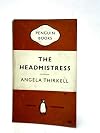
I’m now wondering if my reaction to the book was in any way affected by the physical edition that I read. Last week felt like a very long week, I was absolutely exhausted I still am – I was out two evenings after work, and so it ended up being a pretty slow reading week. Added to that I was struggling with the print size in that orange Penguin – and I began to wonder whether I would have got as irritated with parts of the novel had I not been squinting so uncomfortably at it. show less
War has come to the world of Barsetshire, bringing great change. Financial difficulties have obliged the Belton’s to let their large country house to the Hosiers’ Girls’ Foundation School. The school; evacuated from London had been seeking a more happier arrangement than the one they have had on a temporary basis in Barchester. Miss Sparling; the headmistress of the school, superintends the move, relieved on a personal level having had to lodge with show more Miss Pettinger, of the Barchester school, for which she is pitied by everyone. So, while the school set up home at Harefield Park, the Belton’s take a very nice house in the village.
The Belton’s three young adult children are all involved in wartime service, the eldest, Freddy is a Commander in the Navy, youngest son Charles in the Army – training in various places he is yet to be posted abroad. While the middle child Elsa – is involved in what is commonly called hush hush work, in a place that no one is supposed to have heard of, but everyone has. Mrs Belton is fortunate that her three children are able to get home fairly frequently – Charles, a little irreverent, energetic and often wildly enthusiastic about something or other, he had for me a touch of the Tony Morelands about him, while older brother Commander Freddy Belton, is a more measured man, reflecting the experiences he has already had. Elsa, has a little growing up to do, despite engaging herself to a wealthy Captain, fifteen years her senior. She is deeply upset at the sight of school girls galloping all over her former home.
There are many changes to be got over. The Beltons find it very strange to see a school setting up in their family home, school girls sleeping in their old bedrooms. Mrs Belton, rather likes the house in the village, from where she attends wartime working parties, yet she also feels something of the strain of helping her family adjust to the changes. Meanwhile, Elsa is doing her spoilt daughter act – she so wants to help her father – but goes about it in the wrong way and embarrasses both him and her new fiancé. Mrs Belton has a lot to worry quietly about and putting a brave face on things all the time is so very hard.
“What she would really like, she thought, would be to throw every single thing in her wardrobe out of the window and have everything new and to stop feeling tired and looking her age and go somewhere warm, if there was any warm place left in this horrible world now…”
wartime schoolgirlsMiss Sparling, the headmistress, is dauntless and practical, ably steering her girls through the changes that coming to Harefield Park has brought them. She soon makes her own friends among the locals, Mrs Belton is just one of them, elderly Mr Oriel the vicar – who once knew her grandfather, and Mr Carton, a middle-aged Oxford don vie for her society. There are some wonderful peripheral characters in The Headmistress – one of my favourites is Mrs Updike, surely drawn from life. Mrs Updike, is fairly accident prone, scalding herself, or cutting herself almost on a daily basis, happily declaring that she has ‘a perfect thing about…’ whatever it might be and launching into a long, involved and usually slightly muddled explanation.
Shakespeare readings, servants gossip, and a little romance find their way into the lives of this community in wartime.
“I never did take sugar in my tea, or in coffee,’ said the Vicar. ‘I have always disliked it. But I understood that by taking saccharine, we were somehow assisting the war effort.”
Heather Adams is the only one of Miss Sparling’s school girls that we really get to know – who in her typical class-conscious way, Thirkell lets us know that these girls are very much not of the same class as the Belton family. Heather is an unappealing girl, the daughter of a self-made man, she develops a rather crippling crush on Commander Belton.
So yes, there is quite a lot to like in The Headmistress – about which I had heard generally very good reports from other readers. It is witty and engaging, a gentle comedy of wartime manners. However, as I hinted above – I did have one or two small reservations and irritations.
Firstly, I was annoyed by the portrayal of a woman doctor – Dr Morgan, a rather peculiar figure, who tries to analyse her patients – no one seems to have any confidence in her – and all are rather relieved when good old (male) Dr Perry is able to sweep in with his reliable good sense and there is a sense that everyone is smiling indulgently behind the eccentric lady doctor’s back. Miss Sparling the headmistress has the confidence and admiration of everybody, presumably a spinster headmistress is within the scope of woman but a doctor! I am aware I might be being a little over sensitive. Then there was this little exchange:
“ …It’s no good asking you not to worry, Mrs Belton, but I would like to say again that I have every intention of marrying Elsa whether she likes it or not.’
‘What she needs is a good beating,’ said her mother, much to Captain Hornby’s surprise. ‘I’m ashamed of her.’
‘And Christopher’s the man to do it.’ Said Commander Belton unexpectedly.
‘I would like to beat her; very much indeed,’ said Captain Hornby dispassionately. ‘But I can’t stop to do it now. I’ve got to get back early tomorrow morning…”
Sorry – but what absolute bloody nonsense. It might well be tongue in cheek – but I don’t like it. It may have been a different era however I would say – in defence of different eras – that there were plenty of women writers writing at this period who would never have penned such stuff.
I’m now wondering if my reaction to the book was in any way affected by the physical edition that I read. Last week felt like a very long week, I was absolutely exhausted I still am – I was out two evenings after work, and so it ended up being a pretty slow reading week. Added to that I was struggling with the print size in that orange Penguin – and I began to wonder whether I would have got as irritated with parts of the novel had I not been squinting so uncomfortably at it. show less
Members
- Recently Added By
Lists

Favourite Virago Modern Classics
183 works; 38 members
Author Information

47+ Works 8,510 Members
Series

Belongs to Publisher Series
Virago Modern Classics (667)
Common Knowledge
- Canonical title
- The Headmistress
- Original publication date
- 1944
- People/Characters
- Miss Sparling
- Important places
- Harefield
- First words
- The pretty and formerly peaceful village of Harefield lies in a valley watered by the upper reaches of the River Rising, under the downs.
- Quotations
- "I've got my torch, but I forgot to put two thicknesses of tissue paper over it. And why the devil tissue paper, or two thicknesses? Why not one thickness of a paper that is twice as thick as tissue paper?" Mr Oriel said he t... (show all)hought that had been altered and you had to have some brown paper or something of the sort right over the glass and then make a hole in it of a certain size.
Mr Carton picked up the book and hurled it across the room. Its war binding cracked, its yellow-grey pages with hair mangled into them were scattered. - Last words
- (Click to show. Warning: May contain spoilers.)Then he drew his curtains, turned on the light and settled down to work.
Classifications
Statistics
- Members
- 277
- Popularity
- 116,495
- Reviews
- 14
- Rating
- (3.95)
- Languages
- English
- Media
- Paper, Ebook
- ISBNs
- 9
- ASINs
- 8