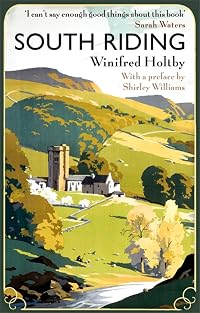
South Riding
by Winifred Holtby
On This Page
Description
After the death of her fiancé, an ambitious young woman returns home to a depressed, post-World War I Yorkshire village to become headmistress of the local girls' school.Tags
Recommendations









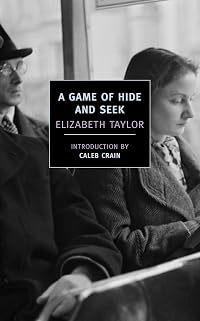

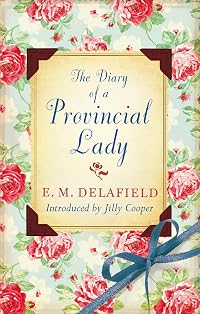
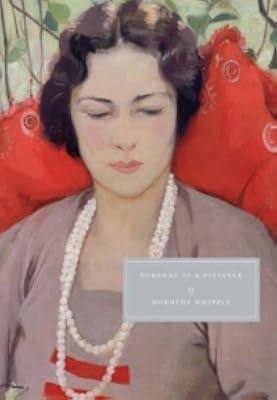
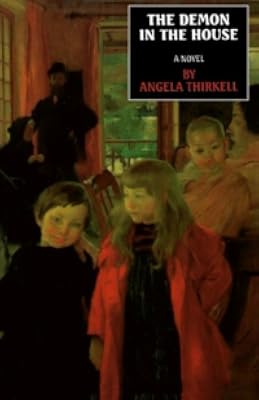







Member Recommendations
thorold Sarah Burton and Miss Sparling may be poles apart in political terms, but it's fun to see how much Thirkell's idea of a headmistress overlaps with Holtby's, despite that.
fountainoverflows A study of a community confronted "progress". Carefully developed characters and a love story to boot.
Member Reviews
Full disclosure: I began [South Riding] in mid-August this year of covid, 2020, and I have only finished it now at the end of November. Why did I put it down? Because of the times we are in and my own state of mind, yes. In earlier days (what we call "Before Times" around here) I would not have put it down, although, as I will get to, I would note the shift in tone about 2/3rds through the book and I would add that the shift disappointed me. It's a curious feature of novel-writing that you write along mining a vein for awhile, but then you come along to, exactly as in real life, a crucial moment when a choice must be made and what you then, as the writer, decide your characters will do or how they will react to an event (even if you show more choose to say, "the character made me do it") the book will definitively move into a final direction. Sometimes the shift is highly original and intriguing, or breathtaking, expanding outward into the unknown, at other times, there is a failure of nerve or imagination and the protagonist doesn't take the leap, choose to fold back on his or herself, there are thousands of ways these choices can play out so that sometimes the choice to fold inward, becomes (somehow) an expanding outward. This, is, I think what Holtby intended and that is pretty much exactly where I put the book down, overwhelmed. Embedded within this story of a town in Yorkshire, the new headmistress of the girl's school, the town council and the growing pains in the early 1930's of the area. is a love story. Well, several love stories, but only one is central. Robert Carne, the local squire, wants to maintain things as they are, but his life is a mess, his wife mad and requiring housing in an institution. She is a true aristocrat (whereas Carne is of the olde landed gentry ilk and this marriage was a disaster for all concerned.) He runs his farms well, but the expenses of his wife's care have ruined him. Schemes abound but Carne, caught up in his belief in his way of life, cannot see that he must change, compromise orlose. Two women adore Carne, an older woman, Mrs. Beddows, also a Councilwoman and the new headmistress who reluctantly falls in love with him. The best story here, the most original and moving, is the love Mrs. Beddows holds for Robert Carne, twenty years her junior. I went back to the novel at last for her sake. There is a moment where she admits to the younger woman, the headmistress, that her love for Carne has been confusing, that you look in the mirror and see three score and ten, but inside you're just a girl. I'm old enough now to know that and know how poignant an emotion that is. Well worth reading, this novel. Worth also knowing that Holtby was dying as she finished this, her last, and I do think the choice she made, to turn inward, was part of her own reconciliation with her approaching death. ****1/2 show less
Fascinating depiction of an inter war community. I kept finding parallels to other books - in Carne, the romantic and tragic remnant of a more chivalrous age there are echoes of Christopher Tietjens from Ford's magisterial Parade's End; on a more popular front there are echos of Delderfield - and can I have been alone in comparing this to Jilly Cooper's Wicked - red headed, tempestuous teacher comes alone to a new place to transform a school and release the potential of its most challenging pupils and community? Jilly, of course, ensures that the good end happily, which Winifred Holtby denies us in quite the same way - though there are many threads tied up satisfactorily in the end, if learning counts as happiness...
This was a BB from lit_chick, who described this Yorkshire-between-the wars story as "a perfect, perfect book." And it was. I had my doubts at first, as I was a little lost in early chapters of council meetings and council personalities vying for influence and alliances in the making of local decisions. But before I knew it I was swept away in the stories -- the grand and sweeping and the small and intimate. This is simply an amazing book. Vera Brittain writes in the epitaph (for Ms. Holtby died soon after finishing [South Riding] in 1935 at the age of 37): "This tale of universal values mirrored in local experience is not only an achievement of the mind; it is a triumph of personality, a testament of its author's undaunted philosophy. show more Suffering and resolution, endurance beyond calculation, the brave gaiety of the unconquered spirit, held Winifred Holtby back from the grave and went to its making. Seed-time and harvest, love and birth, decay and resurrection, are the immemorial stuff of which it has been created."
The book follows several South Riding characters -- the ambitious new headmistress of the girls' high school; the proud and ruined farmer-gentleman; his odd daughter; the various aldermen of varying political persuasions; the desperately poor family from the shacks for whom education may be a way out, or may be utterly unattainable. We see the intense suffering and small generosities of the Depression, but the reader's emotional connection is compounded by knowing that these characters' way of life is over, and that their world is changing irrevocably. It is not too unlike the present day and the desperate situations of wealthy nations' poor and politically marginalized. While their suffering is real, their former way of life is gone or changed forever. The book is a masterpiece. show less
The book follows several South Riding characters -- the ambitious new headmistress of the girls' high school; the proud and ruined farmer-gentleman; his odd daughter; the various aldermen of varying political persuasions; the desperately poor family from the shacks for whom education may be a way out, or may be utterly unattainable. We see the intense suffering and small generosities of the Depression, but the reader's emotional connection is compounded by knowing that these characters' way of life is over, and that their world is changing irrevocably. It is not too unlike the present day and the desperate situations of wealthy nations' poor and politically marginalized. While their suffering is real, their former way of life is gone or changed forever. The book is a masterpiece. show less
Set in 1930s Yorkshire, South Riding is the story of two strong women. Emma Beddows is the first and only alderwoman in the local government. At 72, she has lived a life of public service, and honed the relationship skills so critical to the political process. And despite operating in a "man's world," Emma has not lost her femininity:
Mrs Beddows sat warming her knees over the drawing room fire. Her skirt was pulled high, exposing her taut rounded calves and well-turned ankles. She was proud of her legs. For a woman of over seventy they did her credit (p. 37)
Sarah Burton is the newly-appointed head teacher at Kiplington Girls High School. Idealistic and driven, she brings energy and a bit of impetuosity to her work. But from the moment show more she accepts the job she finds herself at odds with Robert Carne, a school governor and prominent landowner. Carne was the only governor to oppose Sarah's appointment, and she is determined to prove him wrong. Sarah is surprised when her antagonistic feelings give way to something more romantic. Emma Beddows is surprised when this arouses jealous feelings; she is, after all, old enough to be Carne's mother.
In less skilled hands, a novel like South Riding would be a traditional love story, with a woman achieving her rightful purpose through marriage. But Winifred Holtby does something much different with this book: the romantic storyline shares the pages equally with Carne and his sad personal circumstances, the poor Holly family struggling for survival in the slums, a preacher caught in a blackmail scheme, a publican and his terminally ill wife, and many more everyday folk. I was fully immersed in the South Riding community; I began to feel as if I knew these people.
The interplay between Emma Beddows and Sarah Burton was also quite interesting. Their interactions are minimal and businesslike. Sarah respects Emma, recognizing that her generation has opened up new opportunities for women, but that certain societal expectations continue to hold them both back:
She thought of the women of Mrs Beddows' generation and of how even when they gave one quarter of their energy to public service they spent the remaining three-quarters on quite unnecessary domestic ritual and propitiation. The little plump woman with the wise lined face might have gone anywhere, done anything; but she would always set limits upon her powers through her desire not to upset her husband's family. (p. 183)
Sarah and Emma aren't exactly rivals, but they fail to realize how their joint influence -- on both Robert Carne and the community at large -- could do greater good than each of them on their own. Towards the end of the book they begin to grasp this, leaving me imagining the many ways these two women worked for good later (yes, I forgot for a moment that they weren't real people).
And finally, Holtby uses South Riding to express her strong anti-war sentiment, brought about by service during World War I. The messages are mostly understated, but as World War II threatens Britain she takes a stronger tone:
Men I used to know as the finest workmen in the world, skilled artisans, riveters, engineers, are rotting on the dole. ... And the tragic, sickening fact is that their only chance of re-employment lies in this arms race. They can return to life only by preparing for death. (p. 482)
Winifred Holtby finished South Riding just one month before dying of kidney disease. It is an absolute masterpiece. show less
Mrs Beddows sat warming her knees over the drawing room fire. Her skirt was pulled high, exposing her taut rounded calves and well-turned ankles. She was proud of her legs. For a woman of over seventy they did her credit (p. 37)
Sarah Burton is the newly-appointed head teacher at Kiplington Girls High School. Idealistic and driven, she brings energy and a bit of impetuosity to her work. But from the moment show more she accepts the job she finds herself at odds with Robert Carne, a school governor and prominent landowner. Carne was the only governor to oppose Sarah's appointment, and she is determined to prove him wrong. Sarah is surprised when her antagonistic feelings give way to something more romantic. Emma Beddows is surprised when this arouses jealous feelings; she is, after all, old enough to be Carne's mother.
In less skilled hands, a novel like South Riding would be a traditional love story, with a woman achieving her rightful purpose through marriage. But Winifred Holtby does something much different with this book: the romantic storyline shares the pages equally with Carne and his sad personal circumstances, the poor Holly family struggling for survival in the slums, a preacher caught in a blackmail scheme, a publican and his terminally ill wife, and many more everyday folk. I was fully immersed in the South Riding community; I began to feel as if I knew these people.
The interplay between Emma Beddows and Sarah Burton was also quite interesting. Their interactions are minimal and businesslike. Sarah respects Emma, recognizing that her generation has opened up new opportunities for women, but that certain societal expectations continue to hold them both back:
She thought of the women of Mrs Beddows' generation and of how even when they gave one quarter of their energy to public service they spent the remaining three-quarters on quite unnecessary domestic ritual and propitiation. The little plump woman with the wise lined face might have gone anywhere, done anything; but she would always set limits upon her powers through her desire not to upset her husband's family. (p. 183)
Sarah and Emma aren't exactly rivals, but they fail to realize how their joint influence -- on both Robert Carne and the community at large -- could do greater good than each of them on their own. Towards the end of the book they begin to grasp this, leaving me imagining the many ways these two women worked for good later (yes, I forgot for a moment that they weren't real people).
And finally, Holtby uses South Riding to express her strong anti-war sentiment, brought about by service during World War I. The messages are mostly understated, but as World War II threatens Britain she takes a stronger tone:
Men I used to know as the finest workmen in the world, skilled artisans, riveters, engineers, are rotting on the dole. ... And the tragic, sickening fact is that their only chance of re-employment lies in this arms race. They can return to life only by preparing for death. (p. 482)
Winifred Holtby finished South Riding just one month before dying of kidney disease. It is an absolute masterpiece. show less
"The South Riding" is a fictional designation for a real and distinctive region in Yorkshire. A good bit of the action in this novel concerns local governing bodies and the slippery political scheming and in-fighting that lubricates their joints. The personalities and personal strivings of aldermen including our mostly upright Mrs. Beddows, and of council members including the not-so-upright Mr. Huggins, made for very interesting reading, even if some of the particulars of their schemes left me slightly bewildered at times. (Holtby felt compelled to apologize to her mother, Alderman Mrs. Holtby, in her introduction, making it clear that South Riding was not her mother's district, and its councillors were not her mother's colleagues.) show more Intertwined with these goings-on are the daily concerns of the ordinary residents of the district--small holders, school mistresses and their pupils, labourers, dressmakers, pubkeepers, reporters and dairymen. It's all here: economics, politics, love, dying, faith, hypocrisy, innocence, pride, regret...a grand sprawling landscape of life with multiple roads and streams to explore. Loved it. show less
This is one of those books that regularly gets touted as a "forgotten masterpiece", quite ignoring the fact that the people it was written for have never stopped reading it.
Holtby may have been a left-wing intellectual and an admirer of Virginia Woolf, but she also understood the limitations of modernism. When she set out to write a final big social and political novel, setting out her ideas on social change and mortality, on idealism and greed, on feminism and tradition, on investment and prudence (and on all sorts of other things), she wasn't too proud to fall back on techniques borrowed from social realists like Arnold Bennett, J.B. Priestley and the great Victorians. There's not much room here for symbolism and streams of show more consciousness; soaring epiphanies are kept strictly under control and confined to the final chapters. The provincial setting and huge cast deliberately invite comparisons with Middlemarch, whilst the central love story is even more explicitly flagged to the reader as a parody of the plot of Jane Eyre. The message is pretty clear: it's no good being red unless you're read. Holtby knew it was futile to write books that would only be read by London intellectuals, so she planted her message in a book that would be enjoyed by readers not so different from the people she was writing about, whether they agreed with her or not. A very Yorkshire bit of pragmatism. Characters, stories, comedy, pathos, and a hint of romance may be there to sugar the pill, but it never feels like it: medium and message are married together quite as elegantly as anything that Priestley ever did, much more subtly than George Orwell could have managed it.
It must be thirty years since I last read it (I was prompted to pick it up again by Andrew Davies's dreadful new BBC adaptation, not a patch on the one Stan Barstow did for Yorkshire TV in the 70s). One thing that struck me quite forcefully on this re-reading was how much this is an attack on empty, cynical materialism. The characters who believe in something are all sympathetic, even when they believe in the wrong things (like Carne) or aren't strong enough to live up to their own ideals (like Huggins). Any bright, cynical modernist foolish enough to pick the book up would probably tiptoe gently away after seeing the scorn the author pours (without actually needing to say anything at all) on Carne's sister-in-law when she is rash enough to make a Cold Comfort Farm reference in Carne's presence. show less
Holtby may have been a left-wing intellectual and an admirer of Virginia Woolf, but she also understood the limitations of modernism. When she set out to write a final big social and political novel, setting out her ideas on social change and mortality, on idealism and greed, on feminism and tradition, on investment and prudence (and on all sorts of other things), she wasn't too proud to fall back on techniques borrowed from social realists like Arnold Bennett, J.B. Priestley and the great Victorians. There's not much room here for symbolism and streams of show more consciousness; soaring epiphanies are kept strictly under control and confined to the final chapters. The provincial setting and huge cast deliberately invite comparisons with Middlemarch, whilst the central love story is even more explicitly flagged to the reader as a parody of the plot of Jane Eyre. The message is pretty clear: it's no good being red unless you're read. Holtby knew it was futile to write books that would only be read by London intellectuals, so she planted her message in a book that would be enjoyed by readers not so different from the people she was writing about, whether they agreed with her or not. A very Yorkshire bit of pragmatism. Characters, stories, comedy, pathos, and a hint of romance may be there to sugar the pill, but it never feels like it: medium and message are married together quite as elegantly as anything that Priestley ever did, much more subtly than George Orwell could have managed it.
It must be thirty years since I last read it (I was prompted to pick it up again by Andrew Davies's dreadful new BBC adaptation, not a patch on the one Stan Barstow did for Yorkshire TV in the 70s). One thing that struck me quite forcefully on this re-reading was how much this is an attack on empty, cynical materialism. The characters who believe in something are all sympathetic, even when they believe in the wrong things (like Carne) or aren't strong enough to live up to their own ideals (like Huggins). Any bright, cynical modernist foolish enough to pick the book up would probably tiptoe gently away after seeing the scorn the author pours (without actually needing to say anything at all) on Carne's sister-in-law when she is rash enough to make a Cold Comfort Farm reference in Carne's presence. show less
This novel rivals Middlemarch for its microcosmic view of English rural life and its insights into the characters who inhabit their particular area of the countryside. Several of the covers offer a woman's face, suggesting that Sarah Burton is the focal point of the novel, but I am afraid pigeonholes this novel as a story just as a woman's novel when it is far better than that. Just as Middlemarch is more than Dorothea Brooks, South Riding is about human nature and how even the most ordinary of us struggle to make the best of our limitations, whether they be physical, intellectual, or spiritual. Flawed as we all are, our commonalities make us a community worth fighting for, not blindly, but as fully grounded in our values as show more possible.And what is best about this book is that it does not minimize those flaws, or the personal pain and guilt we inflict upon ourselves for being flawed. As one character tells another, "'And who are you to think you could get through life without pain? Did you expect never to be ashamed of yourself? Of course this hurts you. And it will go on hurting. You needn't believe much what they say about time healing. I've had seventy years and more of time and there are plenty of things in my life still won't bear thinking of. You've just got to get along as best you can with all your shames and sorrows and humiliations. Maybe in the end it's those things arte most use to you." It is up to each of us to decide what we will do about our shames, sorrows and humiliations, but the novel makes clear that we all have to carry them forward with us. show less
Members
- Recently Added By
Published Reviews
ThingScore 100
Holtby understood the necessity of conveying progressive ideas to the widest possible readership, of the kind that Woolf scorned in her essay "The Middlebrow".
added by thorold
Lists

The Guardian's 1000 Novels Everyone Must Read
1,005 works; 550 members

Favourite Virago Modern Classics
183 works; 38 members

Top Five Books of 2013
1,562 works; 715 members

...read all, pay nowt (Books set in Yorkshire)
86 works; 14 members

In or About the 1930s
198 works; 27 members

Recommend the 20 best books you've read in the last five years
2,168 works; 601 members
20th Century Literature
1,161 works; 55 members

Sense of place
156 works; 13 members

Hidden Classics
73 works; 15 members

Top Five Books of 2022
736 works; 272 members

Nobel non-laureates, non-male
30 works; 10 members

Best books read in 2011
200 works; 51 members

Best Books Read for TIOLI
49 works; 14 members

Bibliography for How to be a Heroine
148 works; 12 members

Books Set in Small Towns and Villages
278 works; 16 members
Books referenced in A Very Great Profession: The Woman's Novel 1914-39
199 works; 6 members
Trinity College Booklist (1951): Class Ten, English Literature
358 works; 5 members

Books discovered on LibraryThing
256 works; 36 members

A Novel Cure
742 works; 23 members
Talk Discussions
Past Discussions
158. South Riding by Winifred Holtby in Backlisted Book Club (March 2022)
South Riding in Virago Modern Classics (August 2011)
Author Information

24+ Works 2,391 Members
Some Editions
Awards and Honors
Series
Belongs to Publisher Series
Virago Modern Classics (273)
Work Relationships
Common Knowledge
- Canonical title
- South Riding
- Original title
- South Riding
- Original publication date
- 1936
- People/Characters
- County Alderman Mrs Beddows; Sarah Burton; Robert Carne
- Important places
- Yorkshire, England, UK
- Related movies
- South Riding (1938 | IMDb); South Riding (1974 | TV | IMDb); South Riding (2011 | TV | IMDb)
- Epigraph
- "Take what you want," said God. "Take it---and pay for it."
Old Spanish Proverb
Quoted in This Was My World by Viscountess Rhondda.
"I tell the things I know, the things I knew
Before I knew them, immemorially;
And as the fieldsman with unhurrying tread
Trudges with steady and unchanging pace,
Being born to clays that in the winter hold,
So... (show all) my pedestrian measure gravely plods
Telling a loutish life."
V. Sackville-West
The Land. - First words
- Young Lovell Brown, taking his place for the first time in the Press Gallery of the South Riding County Hall at Flintonbridge, was prepared to be impressed by everything.
Winifred Holtby, who had met my mother in the autumn of 1919, when both were students at Somerville College, Oxford, was, like her, a writer. (Preface)
In February 1935 Winifred Holtby, staying in Hornsea on the Yorkshire coast in order to escape the distractions and fatigue of life in London, wrote to her friend Vera Brittain to say that she had received 'a very nice letter... (show all) from Virginia Woolf asking if I would like to write an autobiography for the Hogarth Press'. (Introduction)
South Riding is the last novel that Winifred Holtby will write. (Epitaph) - Quotations
- I was born to be a spinster, and by God, I'm going to spin.
- Last words
- (Click to show. Warning: May contain spoilers.)She saw that gaiety, that kindliness, that valour of the spirit, beckoning her on from a serene old age.
(Click to show. Warning: May contain spoilers.)It is the great epic of local government, a monument to the tens of thousands who serve their fellow human beings at the grassroots where things grow. (Preface)
(Click to show. Warning: May contain spoilers.)Even though Winifred believed there would be another war, South Riding gives an assurance, perhaps a qualified one, that the communal efforts that have achieved these advances will survive. (Introduction)
(Click to show. Warning: May contain spoilers.)'The splendours of the firmament of time
May be eclipsed, but are extinguished not;
Like stars to their appointed height they climb
And death is a low mist which cannot blot
The brightness it may veil.' (Epitaph) - Blurbers
- Waters, Sarah; Mendelson, Charlotte
- Canonical DDC/MDS
- 823.912
- Canonical LCC
- PR6015.O5
Classifications
Statistics
- Members
- 1,037
- Popularity
- 24,932
- Reviews
- 42
- Rating
- (4.05)
- Languages
- 10 — Czech, Danish, English, French, German, Italian, Japanese, Norwegian (Bokmål), Norwegian, Spanish
- Media
- Paper, Audiobook, Ebook
- ISBNs
- 25
- ASINs
- 41