On This Page
Description
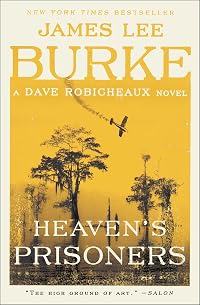
In Heaven's Prisoners, best-selling author James Lee Burke introduces the gritty, tough and compassionate former police officer Dave Robicheaux in our first novel of this blockbuster series. Burke's muscular and relentless prose brings characters and events to life with the battering energy of a Bayou thunderstorm. Robicheaux, a recovering alcoholic, has retired to bayou country when a small plane full of passengers-and trouble-drops out of the sky near his boat. But as he rescues the only show more survivor, a girl he names Alafair, the crash soon plunges him into a netherworld of murder and deception. Trapped by events he cannot control, the usually quiet and gentle Robicheaux protects himself and his loved ones the only way he knows how: with a fist and a gun. Mark Hammer's impassioned narration brings an earthy vitality to Robicheaux and the complex characters who inhabit his world. show lessTags
Recommendations






























Member Reviews
Heaven's Prisoners is without question one of my favorites of his novels. That rich Louisiana atmosphere and food, oh yes, the food! drew me in completely.
The references to "The Rhyme of the Ancient Mariner" were perfect for Dave's thoughts on the violence that is drawn to him. I read that book in high school and to this day if I do a "wrong", I try hard to do a "right" to absolve my feelings of guilt. Will the "rights" make up completely for the "wrongs" done and free the albatross? I question that a lot.
Thank you Mr. Burke for the lovely afternoon, whisking me away to the South and making me too, regret the passing of simpler times.
The references to "The Rhyme of the Ancient Mariner" were perfect for Dave's thoughts on the violence that is drawn to him. I read that book in high school and to this day if I do a "wrong", I try hard to do a "right" to absolve my feelings of guilt. Will the "rights" make up completely for the "wrongs" done and free the albatross? I question that a lot.
Thank you Mr. Burke for the lovely afternoon, whisking me away to the South and making me too, regret the passing of simpler times.
When Burke writes, I see dead people. And sand sharks, and listing planes and oil-slick bubbles of air. The book opens with a small plane going down near Dave's trawler, and Dave and his wife Annie checking for survivors. Its a vivid scene.
This is the second book starring Dave Robicheaux, described by a local stripper as "I know you were a good cop and all that bullshit,' she said, 'but there's a lot of stuff you guys never see. You can't. You don't live in it, Streak. You're a visitor." Unfortunately for Dave, he's about to take an extended vacation.
Burke challenges me; as a new writer to me, I haven't get been able to predict where he is going or how he'll get there. The first book had a strong level of violence, not merely implied, show more but described, and not merely murders, but torture. I don't like to go to those places, which lends itself to reading distraction; putting the book down and walking away. But its a hard-fought distraction and I always find myself returning to his vividly created world.
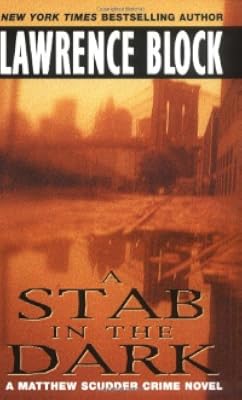
I enjoy Burke's descriptions; the lush world-building of southern Louisiana, past and present. But in this story it gets a little lost, and Burke can't quite keep his focus tight enough on the plot. This is, perhaps, one of the ways Burke and Lawrence Block, of Matt Scudder fame, differ; while Block is able to build a solid feel for period New York City, he doesn't lose focus on the mystery. In this case, the true focus is Dave Robicheaux, the detective, and his ability to wrestle with the demons that drive him. "I wondered if I would ever exorcise the alcoholic succubus that seemed to live within me, its claws hooked into my soul." But he knows "I was not simply a drunk. I was drawn to a violent and aberrant world the way a vampire bat seeks a black recess within the earth." I like it, a lot, but it isn't my normal escapist fiction. The story driver is Dave himself, and his inability to turn the other cheek, so to speak, and his attraction to the violence. At one point, it is nailed quite nicely when someone says, "You know what your problem is? You're two people in the same envelope. You want to be a moral man in an amoral business. At the same time you want to blow up their shit just like the rest of us."
There's lines I just loved: "I walked into the confessional and waited for the priest... I had known him for twenty-five years, and I trusted his working-class instincts and forgave him his excess of charity and lack of admonition, just as he forgave me for my sins."
And a very powerful thought for those in public safety:
"The truth was that I enjoyed it, that I got high on my knowledge of man's iniquity, that I disdained the boredom and predictability of the normal world as much as my strange alcoholic metabolism loved the adrenaline rush of danger and my feeling of power over an evil world that in many ways was mirrored in microcosm in my own soul." Heady stuff for a mystery-thriller, and one that bears thinking on.
I also admire Burke's acknowledgement of political events and how it continues to effect Robicheaux's life today: "Why did Dave Robicheaux have to impose all this order and form on his life? So you lose control and total out for a while, I thought. The U.S. Army certainly understood that. You declare a difficult geographical and political area a free-fire zone, than you stand up later in the drifting ash and the smell of napalm and define with much more clarity the past nature of the problem."
I understand both Burke and Robicheaux's preoccupation with the culture of their childhood, time past, with seeing an entire way of life slowly slip into the mud. For both of them, there were negative aspects--Burke is quick to acknowledge the racism--but also good things, particularly of a time when the moral code felt more straightforward. That's the illusion of childhood, of course, and perhaps by the end Dave realizes that as well.
Still, as a genre reader, this strays a bit too far into Southern gothic literary fiction for my pleasure, although it is a taste that's growing on me. While I like the tour of Louisiana, I would have preferred a stronger balance between the mystery and the character turmoil; a little more outward focus and a little less inward. Still, no one can say that Burke doesn't breathe life into his setting and characters; I felt like I'd know most of them on the street (not that I'd likely wander down those particular streets) and be able to find my way to his tour boat. Food especially--this time it's fresh seafood, roadside strawberries and ice cream (the first book it was po'boys and Dr. Pepper with limes and cherry juice). Now I have a food craving.
And boy, can this guy ever write. Not really a comfortable story, and it felt a little screenplay ready--I just knew his wife would die . But ultimately enjoyable and complex enough to rate it an above-average read.
Cross posted at http://clsiewert.wordpress.com/2013/06/25/heavens-prisoners-by-james-lee-burke/ show less
This is the second book starring Dave Robicheaux, described by a local stripper as "I know you were a good cop and all that bullshit,' she said, 'but there's a lot of stuff you guys never see. You can't. You don't live in it, Streak. You're a visitor." Unfortunately for Dave, he's about to take an extended vacation.
Burke challenges me; as a new writer to me, I haven't get been able to predict where he is going or how he'll get there. The first book had a strong level of violence, not merely implied, show more but described, and not merely murders, but torture. I don't like to go to those places, which lends itself to reading distraction; putting the book down and walking away. But its a hard-fought distraction and I always find myself returning to his vividly created world.
I enjoy Burke's descriptions; the lush world-building of southern Louisiana, past and present. But in this story it gets a little lost, and Burke can't quite keep his focus tight enough on the plot. This is, perhaps, one of the ways Burke and Lawrence Block, of Matt Scudder fame, differ; while Block is able to build a solid feel for period New York City, he doesn't lose focus on the mystery. In this case, the true focus is Dave Robicheaux, the detective, and his ability to wrestle with the demons that drive him. "I wondered if I would ever exorcise the alcoholic succubus that seemed to live within me, its claws hooked into my soul." But he knows "I was not simply a drunk. I was drawn to a violent and aberrant world the way a vampire bat seeks a black recess within the earth." I like it, a lot, but it isn't my normal escapist fiction. The story driver is Dave himself, and his inability to turn the other cheek, so to speak, and his attraction to the violence. At one point, it is nailed quite nicely when someone says, "You know what your problem is? You're two people in the same envelope. You want to be a moral man in an amoral business. At the same time you want to blow up their shit just like the rest of us."
There's lines I just loved: "I walked into the confessional and waited for the priest... I had known him for twenty-five years, and I trusted his working-class instincts and forgave him his excess of charity and lack of admonition, just as he forgave me for my sins."
And a very powerful thought for those in public safety:
"The truth was that I enjoyed it, that I got high on my knowledge of man's iniquity, that I disdained the boredom and predictability of the normal world as much as my strange alcoholic metabolism loved the adrenaline rush of danger and my feeling of power over an evil world that in many ways was mirrored in microcosm in my own soul." Heady stuff for a mystery-thriller, and one that bears thinking on.
I also admire Burke's acknowledgement of political events and how it continues to effect Robicheaux's life today: "Why did Dave Robicheaux have to impose all this order and form on his life? So you lose control and total out for a while, I thought. The U.S. Army certainly understood that. You declare a difficult geographical and political area a free-fire zone, than you stand up later in the drifting ash and the smell of napalm and define with much more clarity the past nature of the problem."
I understand both Burke and Robicheaux's preoccupation with the culture of their childhood, time past, with seeing an entire way of life slowly slip into the mud. For both of them, there were negative aspects--Burke is quick to acknowledge the racism--but also good things, particularly of a time when the moral code felt more straightforward. That's the illusion of childhood, of course, and perhaps by the end Dave realizes that as well.
Still, as a genre reader, this strays a bit too far into Southern gothic literary fiction for my pleasure, although it is a taste that's growing on me. While I like the tour of Louisiana, I would have preferred a stronger balance between the mystery and the character turmoil; a little more outward focus and a little less inward. Still, no one can say that Burke doesn't breathe life into his setting and characters; I felt like I'd know most of them on the street (not that I'd likely wander down those particular streets) and be able to find my way to his tour boat. Food especially--this time it's fresh seafood, roadside strawberries and ice cream (the first book it was po'boys and Dr. Pepper with limes and cherry juice). Now I have a food craving.
And boy, can this guy ever write. Not really a comfortable story, and it felt a little screenplay ready--
Cross posted at http://clsiewert.wordpress.com/2013/06/25/heavens-prisoners-by-james-lee-burke/ show less
This book is so dark and Dave Robicheaux acts so stupidly and selfishly--with disastrous consequences--that it is almost enough to make me quit the series. The story also drags on too long. Compared to the first book in the series, Neon Rain, I wasn't sure this was even the same character. In the end, Burke succeeds in leaving us with something, and we realize what a damaged character Robicheaux is. I guess if he had made it crystal clear in the first book, perhaps it would have been more difficult to publish. At this point, as a reader (or listener) you just have to buy in to whether you are willing to follow the character down what appears to be a long dark road. It's made a bit easier by the fact that Burke is a real stylist, and the show more picture of Cajun Country and New Orleans he paints is as real as it gets. Few novels immerse the reader in a more convincing world. As an audiobook, this suffered from being read by Mark Hammer rather than the superb Will Patton. Hammer isn't bad in his own right, but whereas Patton made each voice distinct, in a lot of the dialogues in this book, it is hard to tell Robicheaux from the other characters. In the end, I guess I'll recommend this, but expect to be infuriated.... show less
I've so enjoyed getting into James Lee Burke's Robicheaux series. His second book in it, 'Heaven's Prisoners', was published in 1988 and is like a time capsule for the tough policing that used to take place in the 'good old days'. Burke's lead character, David Robicheaux, is a throwback of the first order- tough, violent, romantic, principled, and unafraid.
Heaven's Prisoners opens with the recently retired-from-the-force Robicheaux and his wife spending the afternoon floating on the bayou in a boat when they witness the crash of a small plane. Robicheaux dives into water in an attempt to save some or all of the passengers, but is only able to extract one, a little child, from the wreckage. While on his search mission, he notes a number show more of anomalies about the wrecked plane and its passengers, and he and his wife decide to spirit the little girl away in order to protect her from what promises to be a dangerous investigation. He reports the crash and various governmental agencies show up to check into it. From that point on, Robicheaux's post-police career as a bait-shop owner on the bayou changes dramatically. Hard-ball policing, violence, betrayal, and some degree of payback ensue, with Robicheaux making a short return to police work in order to make the progress on the case needed to put his mind and his demons to rest.
I'm still kicking myself for waiting so long to 'discover' Burke's series. Robicheaux is a great character, a Viet Nam vet, alcoholic, bad ass ex-cop with a physicality that drives the series (although I'm only 2 books into 20+ so far...). Burke can really write and I admire his effortless descriptiveness. His milieu, New Orleans and the Louisiana bayou, and its inhabitants, mostly Cajun, black and poor whites, are often caricatures in the hands of others. Burke paints masterpieces-in-miniature, though, with his writing and allows readers to vividly picture the settings and the players. He's really among the best that I've come across at writing this beautifully in the midst of some pretty violent and nasty action.
Heaven's Prisoners comes to a fairly predictable rough ending. Robicheaux suffers great losses but gets some retribution, as well as more loss, in the end, but he lives to fight for his principles another day. It's a dynamite, hard-boiled crime novel that has me looking forward to the next in his series. show less
Heaven's Prisoners opens with the recently retired-from-the-force Robicheaux and his wife spending the afternoon floating on the bayou in a boat when they witness the crash of a small plane. Robicheaux dives into water in an attempt to save some or all of the passengers, but is only able to extract one, a little child, from the wreckage. While on his search mission, he notes a number show more of anomalies about the wrecked plane and its passengers, and he and his wife decide to spirit the little girl away in order to protect her from what promises to be a dangerous investigation. He reports the crash and various governmental agencies show up to check into it. From that point on, Robicheaux's post-police career as a bait-shop owner on the bayou changes dramatically. Hard-ball policing, violence, betrayal, and some degree of payback ensue, with Robicheaux making a short return to police work in order to make the progress on the case needed to put his mind and his demons to rest.
I'm still kicking myself for waiting so long to 'discover' Burke's series. Robicheaux is a great character, a Viet Nam vet, alcoholic, bad ass ex-cop with a physicality that drives the series (although I'm only 2 books into 20+ so far...). Burke can really write and I admire his effortless descriptiveness. His milieu, New Orleans and the Louisiana bayou, and its inhabitants, mostly Cajun, black and poor whites, are often caricatures in the hands of others. Burke paints masterpieces-in-miniature, though, with his writing and allows readers to vividly picture the settings and the players. He's really among the best that I've come across at writing this beautifully in the midst of some pretty violent and nasty action.
Heaven's Prisoners comes to a fairly predictable rough ending. Robicheaux suffers great losses but gets some retribution, as well as more loss, in the end, but he lives to fight for his principles another day. It's a dynamite, hard-boiled crime novel that has me looking forward to the next in his series. show less
Darker and more emotionally brutal than the first book in the Dave Robicheaux series, The Neon Rain, Heaven’s Prisoners stays involving but ultimately follows the tradition began by Raymond Chandler in The Long Goodbye, leaving the reader wondering “wait—what just happened? Why exactly did the person behind all this do it? And what did agency x have to do with it?” In Chandler’s case, there’s some evidence that not even the author knew the answers. In this, I think the author knows the score, but it was beyond my ability to tease out the connections with confidence. Nevertheless, I enjoyed the ride, although I’m a bit exhausted from reading the first two Robicheaux books in quick succession. (Incidentally, someone new to show more the series could start here just as easily as with The Neon Rain.)
As in the first book, also written in the latter years of the Reagan era, the plot partially hinges on the USA’s shameful exploits in Central America at that time. I enjoyed the character of DEA agent Minos P. Dautrieve, a sharp, wry, and honest investigator whom I found impossible not to visualize as actor Noah Emmerich in his character Stan Beeman on The Americans. show less
As in the first book, also written in the latter years of the Reagan era, the plot partially hinges on the USA’s shameful exploits in Central America at that time. I enjoyed the character of DEA agent Minos P. Dautrieve, a sharp, wry, and honest investigator whom I found impossible not to visualize as actor Noah Emmerich in his character Stan Beeman on The Americans. show less
Dave Robicheaux is a haunted man, fighting alcoholism and his memories of Vietnam. He's cursed to see far too clearly the evil in men, and yet somehow also recognize what made them who they are. Despite the damage that's been done to him, particularly by himself, he continues to strive for goodness and love. James Lee Burke's portrayal of the flawed Robicheaux presents him as a hero in the best sense of the word. Burke also has a magical way of describing the Louisiana of both today and yesterday in a way that makes me yearn to go there. I'll continue the rest of the series in order (despite the fact that I've already read so many of them) to both see Dave and Alafair (his daughter) grow and to hear Burke's magical voice.
This the second book in this wonderful, gritty series is even more tense then the first book was. When the book opens we see Dave and his lovely wife Annie living on the Bayou. Things are going good for Dave. He has a Bait and Tackle business that does well, and a beautiful wife to help him. Then, one day, a plane crashes into the water close to Dave and Annie's house. Things rapidly go downhill. Dave dives down to the wreckage to find four dead people, and a little girl who is alive. Dave saves her from the wreckage and he and Annie take over the care of this little Mexican girl who doesn't speak English and who has lost everything. This one act of courage places Dave in grave danger with some heavyweight crooks in the New Orleans show more area, and he's trying to maneuver his way around the sinkhole he's found himself in and without the aid of of his police badge. Old enemies and new come out of the woodwork, and while Dave is trying to slay these dragons, tragedy strikes which sends Dave down the road of dark despair and vengeance. I love this series. It is gritty and real, and the characters are believablel. We spend a lot of time in Dave's head as we read these books, and we get a glimpse of what he is going through and the thought processes that his stupendous brain goes through. You bet I'm going to continue to read this series until I get to the very end. show less
Members
- Recently Added By
Lists

Books Read in 2024
4,727 works; 128 members
Author Information

122+ Works 38,614 Members
James Lee Burke, winner of two Edgar awards, is the author of nineteen previous novels, many of them "New York Times" bestsellers, including "Cimmaron Rose", Cadillac Jukebox", & "Sunset Limited". He & his wife divide their time between Missoula, Montana, & New Iberia, Louisiana. (Publisher Provided)
Some Editions
Series

Belongs to Publisher Series
Serie Negra [RBA] (248)
Work Relationships
Is contained in
Has the adaptation
Has as a student's study guide
Common Knowledge
- Canonical title
- Heaven's Prisoners
- Original title
- Heavens Prisoners
- Original publication date
- 1988-04-15
- People/Characters
- Alafair Robicheaux; Annie Robicheaux; Dave Robicheaux; Bubba Rocque; Tee Neg; Minos Dautrieve (show all 10); Cecil Aguillard; Claudette Rocque; Robin Gaddis; Batist Perry
- Important places
- Atchafalaya Basin, Louisiana, USA; Bayou Teche, Louisiana, USA; New Iberia, Louisiana, USA
- Related movies
- Heaven's Prisoners (1996 | IMDb)
- First words
- I was just off Southwest Pass, between Pecan and Marsh islands, with the green, whitecapping water of the Gulf Stream to the south and the long, flat expanse of the Louisiana coastline behind me-which is really not a coastlin... (show all)e at all but instead a huge wetlands area of sawgrass, dead cypress strung with wisps of moss, and a maze of canals and bayous that are choked with Japanese water lilies whose purple flowers audibly pop in the morning and whose root systems can wind around your propeller shaft like cable wire.
- Quotations
- I was not simply a drunk; I was drawn to a violent and aberrant world the way a vampire bat seeks a black recess within the earth.
- Last words
- (Click to show. Warning: May contain spoilers.)I wait like a denied lover for the blue glow of dawn.
- Original language
- English
- Disambiguation notice
- Danish title (1990): Delta blues eller vorherres uskyldige gidsler; 1996 Danish edition has title: Besat af fortiden; Finnish title: Taivaan vangit; German title: Mississippi Delta – Blut in den Bayo... (show all)us
Classifications
Statistics
- Members
- 1,232
- Popularity
- 20,127
- Reviews
- 33
- Rating
- (3.83)
- Languages
- 8 — Danish, English, Finnish, French, German, Italian, Spanish, Swedish
- Media
- Paper, Audiobook, Ebook
- ISBNs
- 44
- ASINs
- 13