On This Page
Description
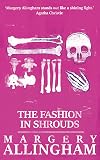
A custom-made killer shocks the fashionable London set in "one of the finest murder books ever written" featuring gentleman sleuth Albert Campion (The New Yorker). Albert Campion's sister is a success in her own right. A top fashion designer, she works for a legendary couturier and dresses Georgia Wells, the best-dressed actress in the world. Albert also has a connection to Georgia, but his is based on failure, not success. Georgia's former fiancé disappeared nearly three years ago, and show more Campion has never been able to find him. Until now . . . The victim's remains-discovered by Campion in a deserted country house-point to suicide. But the man's father assumes it was foul play. In a rarified world of wealth and privilege where silence and secrets can be bought, the investigation won't be easy, especially when another death takes center stage. This time, the victim is Georgia's current husband-and starring in the role of prime suspect: Albert's sister. "Top ranking whodunit in Dorothy Sayers tradition . . . Plus sale for non-mysteryites as first rate novel of fashionable London. Suspense-humor-well planned, well written." -Kirkus Reviews Praise for Margery Allingham "Margery Allingham stands out like a shining light." -Agatha Christie "The best of mystery writers." -The New Yorker "Allingham was a rare and precious talent." -The Washington Post "Don't start reading these books unless you are confident that you can handle addiction." -The Independent. show lessTags
Recommendations

















Member Recommendations

Member Reviews
After the wonderful humour of The Case of the Late Pig and the brooding introspection of Dancers in Mourning this book was a shock - once again we see a completely different side to Albert Campion. And it's not pleasant.
We enter the world of fashion in the 1930s; Campion's sister Valentine is a very successful fashion designer and Georgia Wells, the famous actress, is one of her largest clients (as well as being one of her closest friends). Georgia is charming and fascinating but seems to have no idea of the effect she can have on other people, so when she steals Valentine's lover no-one really bats an eyelid. But when Georgia's husband dies in a suspiciously convenient manner and Georgia seems to be spreading rumours that implicate show more Valentine in her husband's death, Albert Campion steps in to try and solve the mystery and protect his sister.
In this book we see another side to Albert Campion. Throughout most of the gruesome and dangerous cases he's looked into before, Campion has remained unruffled by events; murder and danger don't seem to have an emotional impact on him. But here we see him unsettled by the job he's been asked to do, unsettled by his sister and unsettled by the reappearance of Lady Amanda Fitton; it's not something he copes with well. Although it's clear he cares for Valentine there are passages in the novel where he thinks about hitting or shaking her and one conversation/argument where he says things to her that would be almost unforgivable by today's standards. Unlike some reviewers, I didn't see this as symptomatic of his general attitude towards women, or as Allingham saying that this sort of behaviour was acceptable, but rather an indication of Campoin's own extreme discomfort with the situation. Nothing in his behaviour towards women in earlier books prepared me for the way he behaved towards Valentine (and occasionally other women) in this book.
According to the frontispiece of my copy, an Observer review of The Fashion in Shrouds said that 'to Albert Campion has fallen the honour of being the first detective to feature in a story which is also by any standard a distinguished novel'. From following Liz's reading for the last couple of years, I'm very wary of someone declaring something to be a 'first', but I think it is fair to say that this book is more than just a good detective novel (although I don't think there's anything wrong with being just a good detective novel either). Allingham uses the world of fashion and the characters of Valentine, Georgia and to some extent, Lady Amanda, to explore the position of women in society in the 1930s, in particular the position of women who had careers. This aspect of the book has generated a lot of controversy, which is completely understandable given the views some of the characters express. From my reading of the novel, I don't think that Allingham is saying she agrees with the controversial statements that her characters make, but I'm also not sure I would agree with Allingham's views on femininity and women either. From a first reading I would say that Allingham thinks women have equal abilities to men's in the field of work but that they are disadvantaged by being more emotional beings, particularly where romance is concerned. I don't think this is fundamentally very different from the views a lot of people hold today, although modern views wouldn't be expressed in the same way Allingham's are. I found this element of the book fascinating and it hugely increased my enjoyment of the novel, but I can understand that others may either not be interested or find these ideas make the novel almost repulsive to them.
One of the less controversial quotes:
'They were two fine ladies of a fine modern world, in which their status had been raised until they stood as equals with their former protectors. Their several responsibilities were far heavier than most men's and their abilities greater. Their freedom was limitless. There they were at two o'clock in the morning, driving back in their fine carriage to lonely little houses, bought, made lovely and maintained by the proceeds of their own labours. They were both mistress and master, little Liliths, fragile but powerful in their way, since the livelihood of a great number of their fellow beings depended directly upon them, and yet, since they had not relinquished their femininity, within them, touching the very core and foundation of their strength, was the dreadful primitive weakness of the female of any species. Byron, who knew something about ladies if little enough about poetry, once threw off the whole shameful truth about the sex, and, like most staggeringly enlightening remarks, it degenerated into a truism and became discountenanced when it was no longer witty.
"Love really can rot any woman up," Georgia observed contentedly. "Isn't it funny?"
"Dear God, isn't it dangerous!" said Val.' show less
We enter the world of fashion in the 1930s; Campion's sister Valentine is a very successful fashion designer and Georgia Wells, the famous actress, is one of her largest clients (as well as being one of her closest friends). Georgia is charming and fascinating but seems to have no idea of the effect she can have on other people, so when she steals Valentine's lover no-one really bats an eyelid. But when Georgia's husband dies in a suspiciously convenient manner and Georgia seems to be spreading rumours that implicate show more Valentine in her husband's death, Albert Campion steps in to try and solve the mystery and protect his sister.
In this book we see another side to Albert Campion. Throughout most of the gruesome and dangerous cases he's looked into before, Campion has remained unruffled by events; murder and danger don't seem to have an emotional impact on him. But here we see him unsettled by the job he's been asked to do, unsettled by his sister and unsettled by the reappearance of Lady Amanda Fitton; it's not something he copes with well. Although it's clear he cares for Valentine there are passages in the novel where he thinks about hitting or shaking her and one conversation/argument where he says things to her that would be almost unforgivable by today's standards. Unlike some reviewers, I didn't see this as symptomatic of his general attitude towards women, or as Allingham saying that this sort of behaviour was acceptable, but rather an indication of Campoin's own extreme discomfort with the situation. Nothing in his behaviour towards women in earlier books prepared me for the way he behaved towards Valentine (and occasionally other women) in this book.
According to the frontispiece of my copy, an Observer review of The Fashion in Shrouds said that 'to Albert Campion has fallen the honour of being the first detective to feature in a story which is also by any standard a distinguished novel'. From following Liz's reading for the last couple of years, I'm very wary of someone declaring something to be a 'first', but I think it is fair to say that this book is more than just a good detective novel (although I don't think there's anything wrong with being just a good detective novel either). Allingham uses the world of fashion and the characters of Valentine, Georgia and to some extent, Lady Amanda, to explore the position of women in society in the 1930s, in particular the position of women who had careers. This aspect of the book has generated a lot of controversy, which is completely understandable given the views some of the characters express. From my reading of the novel, I don't think that Allingham is saying she agrees with the controversial statements that her characters make, but I'm also not sure I would agree with Allingham's views on femininity and women either. From a first reading I would say that Allingham thinks women have equal abilities to men's in the field of work but that they are disadvantaged by being more emotional beings, particularly where romance is concerned. I don't think this is fundamentally very different from the views a lot of people hold today, although modern views wouldn't be expressed in the same way Allingham's are. I found this element of the book fascinating and it hugely increased my enjoyment of the novel, but I can understand that others may either not be interested or find these ideas make the novel almost repulsive to them.
One of the less controversial quotes:
'They were two fine ladies of a fine modern world, in which their status had been raised until they stood as equals with their former protectors. Their several responsibilities were far heavier than most men's and their abilities greater. Their freedom was limitless. There they were at two o'clock in the morning, driving back in their fine carriage to lonely little houses, bought, made lovely and maintained by the proceeds of their own labours. They were both mistress and master, little Liliths, fragile but powerful in their way, since the livelihood of a great number of their fellow beings depended directly upon them, and yet, since they had not relinquished their femininity, within them, touching the very core and foundation of their strength, was the dreadful primitive weakness of the female of any species. Byron, who knew something about ladies if little enough about poetry, once threw off the whole shameful truth about the sex, and, like most staggeringly enlightening remarks, it degenerated into a truism and became discountenanced when it was no longer witty.
"Love really can rot any woman up," Georgia observed contentedly. "Isn't it funny?"
"Dear God, isn't it dangerous!" said Val.' show less
Well, that was...different.
Having read all of the Campion books up to this point, in order, I find myself wondering just what Allingham set out to do with The Fashion in Shrouds. It's not a particularly smooth novel. In fact, although I don't have any evidence for the theory, it reads like a book that may not have been originally intended for Campion at all. He's a brooding presence, far from the faux-Harold Lloyd figure affected in the earlier novels, and he only really shines in a few interactions with Lugg, his manservant, and Amanda, his fiance. Otherwise, his function is largely a mechanical one as the investigator - he is almost always called Mr Campion, not Albert, as if to increase audience disaffection - and his overall show more attitude is more than a little dour.
It's possible, then, that Allingham really didn't want to write about Campion any more, much as Agatha Christie became sick of Hercule Poirot and tried to sideline him in his later novels as much as possible. Shrouds almost reads as if it was envisioned as a romance, not a mystery, with Campion's sister Val and her client Georgia taking most of the spotlight if not the actual lead. Other reviews have chastised the book for its racism (historical but undeniable), but the jaw-dropper really is the anti-feminist rhetoric, which frankly forms most of the narrative voice. It's hard to read today, all the more because without the strange ruminations on women's minds, their flights of emotion, what they could and should give up for a man, and some remarkably biting chauvinistic dialogue, there's not much of a narrative left! This is a melodrama, a late 1930s "B" picture about star-crossed lovers that just happens to have the peculiarly dark cloud of Albert Campion wandering through it and prompting people for exposition. As Allingham certainly penned pure romances, it would be interesting to know if Shrouds was intended as just such a novel - wish-fulfillment stuff for a very different kind of reader - before she realized she needed a new Campion adventure. Campion's infamous line to his sister that she may need "a good cry or a nice rape," in context, is clearly the equivalent of someone saying "You just need to get laid" today, but it still has the awkward, harsh sound of someone speaking in a cheap romance novel, not easygoing, upper-class detective fiction.
Yet, Shrouds isn't particularly easygoing, anyway. The whole book is notably grim compared to earlier Campion novels, too. In Dancers in Mourning, the previous thriller, Allingham started to suggest a certain seediness to the lifestyle of the young and wealthy which the aging Campion found distasteful. Now she is making that very clear, from her overly lush descriptions of the fashion industry and its workers to the macabre details of the murdered bodies. Bright artifice and dark reality are being constantly contrasted, and both Mr Campion and his author seem troubled by everything they see. With World War II on the horizon, it's hard not to wonder if Allingham saw an end to frivolity - and, perhaps, an end to the usefulness of her Harlequin-esque hero entirely. As it is, between 1933 and 1938, Allingham published six Campion novels or collections, the last being Shrouds. She would not return to the character until Traitor's Purse, three years later, and she would never write about him with such frequency again.
What's to enjoy about The Fashion in Shrouds? The novel boasts one of Allingham's best titles, after a run of rather plebeian ones like Mystery Mile and Sweet Danger. It's fun to watch Allingham juggle characters, as usual, although in this case there may simply be too many to really follow. Perhaps most winningly, in the midst of the muddled anti-feminist focus, Allingham has tomboy Amanada define two types of relationship: "cake-love" versus "bread-and-butter love." It's the kind of practical, gentle wit that characterizes so many of the previous Campion novels - and it's sorely felt for its relative absence here. show less
Having read all of the Campion books up to this point, in order, I find myself wondering just what Allingham set out to do with The Fashion in Shrouds. It's not a particularly smooth novel. In fact, although I don't have any evidence for the theory, it reads like a book that may not have been originally intended for Campion at all. He's a brooding presence, far from the faux-Harold Lloyd figure affected in the earlier novels, and he only really shines in a few interactions with Lugg, his manservant, and Amanda, his fiance. Otherwise, his function is largely a mechanical one as the investigator - he is almost always called Mr Campion, not Albert, as if to increase audience disaffection - and his overall show more attitude is more than a little dour.
It's possible, then, that Allingham really didn't want to write about Campion any more, much as Agatha Christie became sick of Hercule Poirot and tried to sideline him in his later novels as much as possible. Shrouds almost reads as if it was envisioned as a romance, not a mystery, with Campion's sister Val and her client Georgia taking most of the spotlight if not the actual lead. Other reviews have chastised the book for its racism (historical but undeniable), but the jaw-dropper really is the anti-feminist rhetoric, which frankly forms most of the narrative voice. It's hard to read today, all the more because without the strange ruminations on women's minds, their flights of emotion, what they could and should give up for a man, and some remarkably biting chauvinistic dialogue, there's not much of a narrative left! This is a melodrama, a late 1930s "B" picture about star-crossed lovers that just happens to have the peculiarly dark cloud of Albert Campion wandering through it and prompting people for exposition. As Allingham certainly penned pure romances, it would be interesting to know if Shrouds was intended as just such a novel - wish-fulfillment stuff for a very different kind of reader - before she realized she needed a new Campion adventure. Campion's infamous line to his sister that she may need "a good cry or a nice rape," in context, is clearly the equivalent of someone saying "You just need to get laid" today, but it still has the awkward, harsh sound of someone speaking in a cheap romance novel, not easygoing, upper-class detective fiction.
Yet, Shrouds isn't particularly easygoing, anyway. The whole book is notably grim compared to earlier Campion novels, too. In Dancers in Mourning, the previous thriller, Allingham started to suggest a certain seediness to the lifestyle of the young and wealthy which the aging Campion found distasteful. Now she is making that very clear, from her overly lush descriptions of the fashion industry and its workers to the macabre details of the murdered bodies. Bright artifice and dark reality are being constantly contrasted, and both Mr Campion and his author seem troubled by everything they see. With World War II on the horizon, it's hard not to wonder if Allingham saw an end to frivolity - and, perhaps, an end to the usefulness of her Harlequin-esque hero entirely. As it is, between 1933 and 1938, Allingham published six Campion novels or collections, the last being Shrouds. She would not return to the character until Traitor's Purse, three years later, and she would never write about him with such frequency again.
What's to enjoy about The Fashion in Shrouds? The novel boasts one of Allingham's best titles, after a run of rather plebeian ones like Mystery Mile and Sweet Danger. It's fun to watch Allingham juggle characters, as usual, although in this case there may simply be too many to really follow. Perhaps most winningly, in the midst of the muddled anti-feminist focus, Allingham has tomboy Amanada define two types of relationship: "cake-love" versus "bread-and-butter love." It's the kind of practical, gentle wit that characterizes so many of the previous Campion novels - and it's sorely felt for its relative absence here. show less
I really enjoyed The Fashion in Shrouds by Margery Allingham, the 10th book in her Albert Campion series. I was intrigued by the characters which included both Campion’s sister, fashion designer Valentine as well as the reappearance of Amanda Fitton, who first made her appearance in book number 5, Sweet Danger. Amanda has now grown up and is working as an aircraft engineer. She and Albert decide to work together gathering information and so embark on a fake engagement but really they are fooling no one, these two are meant to be together.
The mystery is quite complex as Campion tries to figure out how a popular actress manages to have the unwanted men in her life conveniently die. This actress is vain, selfish and self-obsessed but show more could she be intelligent enough to carry out a murder? Then when his own sister is implicated in the recent death of the actress’ latest husband, he realizes that he has to solve the mystery and find out who is the murderer.
As well as giving the reader more information about the mysterious Campion, and giving us clues to work through toward solving the mystery, the author uses this novel to expose some less than stellar truths about fashionable society in 1930’s London. There were a few racist and sexist statements that reflect the 1930s viewpoint but overall this was a very good addition to the series. show less
The mystery is quite complex as Campion tries to figure out how a popular actress manages to have the unwanted men in her life conveniently die. This actress is vain, selfish and self-obsessed but show more could she be intelligent enough to carry out a murder? Then when his own sister is implicated in the recent death of the actress’ latest husband, he realizes that he has to solve the mystery and find out who is the murderer.
As well as giving the reader more information about the mysterious Campion, and giving us clues to work through toward solving the mystery, the author uses this novel to expose some less than stellar truths about fashionable society in 1930’s London. There were a few racist and sexist statements that reflect the 1930s viewpoint but overall this was a very good addition to the series. show less
Most certainly one of the best written mystery novels I've ever encountered, both in style and form. I was writing down favorite bits of exposition the whole time I was reading. It can be a bit off-putting in its treatment of women. Ms Allingham seemed very conflicted over her ideas of how "modern" women should behave, and it came across as very angry and almost downright ugly a few times. Maybe it was her reactionary attitude to the times in which she wrote or maybe it was her self-consciously overcompensating writing as herself a successful modern women, especially given the setting of this book - fashion, with lots of strong, central female characters. Like I said, a bit off-putting, but it actually adds a layer that makes me want to show more re-examine the whole thing and see what she was getting at exactly. It's my first novel length of hers (aside from some Campion short stories), so I will continue and see if it pervades all of her writing. As for the story itself, character development, tone and style, really great. show less
Well. There are several elements to this book which are good. One, we are introduced to Val, Campion's sister. Since Campion is an alias and our hero is generally rather mysterious, it is practically shocking to see something of his real or rather original life. Two, Amanda Fitton (from Sweet Danger) returns in a spectacular scene that follows on from the previous novel and she breathes fresh and fun life into the story and Campion's life. Three, there is a particularly standout chapter, 19 I think, which is a breathless account of all the characters phoning each other in a complete frenzy of action without writing any actual action. On a personal note too, reading this book was rather exciting because it was not adapted for TV and I show more haven't read it before, so it was completely new to me. That also has a down side though because sometimes Campion books work a lot better on a second read.
Right. So there are some truly brilliant elements to this novel. However, there are also some absolutely vile elements and just some general lameness.
The lameness unfortunately comes from the plot. Firstly most of the characters have weird names, (and there is a bizarre typo at one point when the character of Georgia is referred to as Gloria) and also several of them are known by multiple names, so it was difficult keeping a who's who in my head. Then both who is behind the various murders and machinations and the motive for said actions is unbearably apparent from very early on. I mean that Allingham explicitly sign-posts both so strongly that I assumed this must be some kind of red herring because why the hell would she just tell the damn reader the twist so early on? But instead at the end, it is all revealed as if it was supposed to be shrouded in mystery. Which it wasn't. So that was incredibly disappointing. Also the whole ending is almost exactly the same as in The Case Of The Late Pig, which was only two books ago in the series, so y'know, painfully repetitive. I'm really quite shocked by how obvious the entire finale is.
And then we come to the nastiness. I've never really noticed anything particularly unpleasant about these books before, but this one was vile in places. The N-word was used several times. Campion suggests that his sister needs raping at one point, which I can only assume meant something different in the 30s to what it means today. The theme of 'femininity' is repeated throughout, in this case meaning that women are naturally hysterical, irrational and pathetic, while men are masculine, meaning logical and strong. Which makes no freakin' sense, because this book was written BY A WOMAN. Allingham can't possibly believe the nonsense she is writing about women being ridiculous because she is able herself to write the intelligent menfolk characters. If women were incapable of those thoughts, then the writer would be incapable of writing the male characters. Also Amanda doesn't fit into the revoltingly sexist portrayal that is mostly used to describe Val, so the idea doesn't even hold up within the limits of the actual story. Finally, Val decides to marry a repulsive man who spends the entire book cheating on her and then demands she give up her independence and job that she is brilliantly skilled at so that he can make all the decisions for her and own her as an object, which is just baffling and revolting.
So uh.... in parts this was brilliant, but it had an ugly coating that sickened me at times, and sadly the ending was both obvious and derivative, so overall a let down. I look forward to more of the Campion/Amanda dynamic though. show less
Right. So there are some truly brilliant elements to this novel. However, there are also some absolutely vile elements and just some general lameness.
The lameness unfortunately comes from the plot. Firstly most of the characters have weird names, (and there is a bizarre typo at one point when the character of Georgia is referred to as Gloria) and also several of them are known by multiple names, so it was difficult keeping a who's who in my head. Then both who is behind the various murders and machinations and the motive for said actions is unbearably apparent from very early on. I mean that Allingham explicitly sign-posts both so strongly that I assumed this must be some kind of red herring because why the hell would she just tell the damn reader the twist so early on? But instead at the end, it is all revealed as if it was supposed to be shrouded in mystery. Which it wasn't. So that was incredibly disappointing. Also the whole ending is almost exactly the same as in The Case Of The Late Pig, which was only two books ago in the series, so y'know, painfully repetitive. I'm really quite shocked by how obvious the entire finale is.
And then we come to the nastiness. I've never really noticed anything particularly unpleasant about these books before, but this one was vile in places. The N-word was used several times. Campion suggests that his sister needs raping at one point, which I can only assume meant something different in the 30s to what it means today. The theme of 'femininity' is repeated throughout, in this case meaning that women are naturally hysterical, irrational and pathetic, while men are masculine, meaning logical and strong. Which makes no freakin' sense, because this book was written BY A WOMAN. Allingham can't possibly believe the nonsense she is writing about women being ridiculous because she is able herself to write the intelligent menfolk characters. If women were incapable of those thoughts, then the writer would be incapable of writing the male characters. Also Amanda doesn't fit into the revoltingly sexist portrayal that is mostly used to describe Val, so the idea doesn't even hold up within the limits of the actual story. Finally, Val decides to marry a repulsive man who spends the entire book cheating on her and then demands she give up her independence and job that she is brilliantly skilled at so that he can make all the decisions for her and own her as an object, which is just baffling and revolting.
So uh.... in parts this was brilliant, but it had an ugly coating that sickened me at times, and sadly the ending was both obvious and derivative, so overall a let down. I look forward to more of the Campion/Amanda dynamic though. show less
Summary: Albert Campion investigates three deaths connected to a fashionable actress, Georgia Wells, whose fashion designer is Campion’s sister Val.
I’ll admit it straight out. This was perhaps my least favorite Campion so far. Allingham always has complicated plots. This seemed just confusing. I only liked one character. I’ll get to her later.
In the course of the story, Campion investigates three deaths. All are connected to the alluring and fashionable actress Georgia Wells who seems to attract men as honey attracts bees. Campion’s sister Val, who works for a famous couturier, designs her dresses.
The first death occurred after Georgia’s former fiancé, a barrister, goes off hiking and never returns. This was three years show more earlier. Campion has been hired to find him. Until now, he has failed. Finally he explores an old haunt, finding his remains, his death apparently suicide.
Campion wants to know more about Georgia, and arranges through Val to meet her at a showing of the dresses for her new play. It’s a disaster all around. Alan Dell, an aircraft builder who has been seeing Val, is drawn to Georgia, even though she has married Raymond Ramillies, a governor of an African colony, who is also present. Then it comes out that the model, who closely resembles Georgia, Caroline Adamson, has leaked one of the designs, which has been copied. And when Georgia hears of her former fiancé’s suicide, she is overcome and asks Dell, to take her home.
Soon, Georgia has stolen Dell from Val, who is so furious she admits she could kill her. Meanwhile Dell’s company builds a gold-plated plane that Ramillies will take back to the colony for a local ruler. The night before, there is a party. Georgia brings Alan Dell. Then Ramillies appears with Caroline Adamson. Campion watches from a distance. Amanda Fitton accompanies him. She had invited him out of concern that Dell was neglecting the business. Georgia infatuates him. Amid a big scene, Amanda announces her engagement to Campion–the first he has heard of it.
Ramillies storms off and only appears the next morning, hung over. Georgia, asks Val for a cachet, likely a pain reliever, which she gives her. When it is time for the flight, delayed for an hour, Ramillies fails to appear. It turns out he is on the plane–dead. A local doctor at the resort at which they are staying finds in a post mortem that he died of natural causes, a heart attack most likely.
Campion is in a tight spot. Georgia reveals she had given Val’s cachet to Ramillies. Even though the post mortem found nothing, there is a cloud over Val. Given what she’d said about killing Georgia, had she tried and killed Ramillies instead? Campion refuses to believe it but steps back for a time.
Then Caroline Adamson calls Campion, wanting to meet. She never shows up. Locals find her dead in a nearby wood. The plot takes a key turn at a party Amanda throws to announce the breaking off of her “engagement” with Campion.
Amanda Fitton is the one interesting person in the story. Campion is erratic. Georgia is a self-absorbed creature who measures herself by her allure to men. Val is capable but too swayed by others. The entourage around Georgia were all on the take. And amid them all, a killer lurked, involved in all three deaths.
I “soldiered on” to the end. I didn’t care that much who the killer was. But I thought Campion should hang on to Amanda. They’d make a great team! show less
I’ll admit it straight out. This was perhaps my least favorite Campion so far. Allingham always has complicated plots. This seemed just confusing. I only liked one character. I’ll get to her later.
In the course of the story, Campion investigates three deaths. All are connected to the alluring and fashionable actress Georgia Wells who seems to attract men as honey attracts bees. Campion’s sister Val, who works for a famous couturier, designs her dresses.
The first death occurred after Georgia’s former fiancé, a barrister, goes off hiking and never returns. This was three years show more earlier. Campion has been hired to find him. Until now, he has failed. Finally he explores an old haunt, finding his remains, his death apparently suicide.
Campion wants to know more about Georgia, and arranges through Val to meet her at a showing of the dresses for her new play. It’s a disaster all around. Alan Dell, an aircraft builder who has been seeing Val, is drawn to Georgia, even though she has married Raymond Ramillies, a governor of an African colony, who is also present. Then it comes out that the model, who closely resembles Georgia, Caroline Adamson, has leaked one of the designs, which has been copied. And when Georgia hears of her former fiancé’s suicide, she is overcome and asks Dell, to take her home.
Soon, Georgia has stolen Dell from Val, who is so furious she admits she could kill her. Meanwhile Dell’s company builds a gold-plated plane that Ramillies will take back to the colony for a local ruler. The night before, there is a party. Georgia brings Alan Dell. Then Ramillies appears with Caroline Adamson. Campion watches from a distance. Amanda Fitton accompanies him. She had invited him out of concern that Dell was neglecting the business. Georgia infatuates him. Amid a big scene, Amanda announces her engagement to Campion–the first he has heard of it.
Ramillies storms off and only appears the next morning, hung over. Georgia, asks Val for a cachet, likely a pain reliever, which she gives her. When it is time for the flight, delayed for an hour, Ramillies fails to appear. It turns out he is on the plane–dead. A local doctor at the resort at which they are staying finds in a post mortem that he died of natural causes, a heart attack most likely.
Campion is in a tight spot. Georgia reveals she had given Val’s cachet to Ramillies. Even though the post mortem found nothing, there is a cloud over Val. Given what she’d said about killing Georgia, had she tried and killed Ramillies instead? Campion refuses to believe it but steps back for a time.
Then Caroline Adamson calls Campion, wanting to meet. She never shows up. Locals find her dead in a nearby wood. The plot takes a key turn at a party Amanda throws to announce the breaking off of her “engagement” with Campion.
Amanda Fitton is the one interesting person in the story. Campion is erratic. Georgia is a self-absorbed creature who measures herself by her allure to men. Val is capable but too swayed by others. The entourage around Georgia were all on the take. And amid them all, a killer lurked, involved in all three deaths.
I “soldiered on” to the end. I didn’t care that much who the killer was. But I thought Campion should hang on to Amanda. They’d make a great team! show less
A good Albert Campion outing with some great development of Amanda’s character. The story is somewhat hampered by too many characters, and by a disconcerting attitude toward the “essential nature of women.” But the humor and the convoluted plot make up for any faults.
Members
- Recently Added By
Lists

Top Five Books of 2013
1,562 works; 721 members

In or About the 1930s
198 works; 27 members

British Mystery
469 works; 14 members

Female Author
1,234 works; 66 members

Books Read in 2023
5,638 works; 147 members
Must Read Detective Stories (Nick Fuller)
278 works; 2 members
Author Information

131+ Works 20,368 Members
Margery Allingham, one of England's leading mystery writers, was born on May 20, 1904, in Ealing, a western suburb of London, but grew up in a remote village in Essex. Both of her parents were writers, and Margery carried on that tradition when she sold her first short story as an eight-year-old. At the Regent Street Polytechnic, she continued show more writing and studied drama and speech. While there, she wrote a verse play, Dido and Aeneas, in which she had a starring role during performances in London. At age 19, Allington published her first novel, Blackkerchief Dick. She wrote another novel, The White Cottage Mystery, before creating her most famous character, Albert Campion, in The Black Dudley Murder (published in England as The Crime at Black Dudley) in 1929. Allington went on to create twenty-eight more Campion mysteries, including several collections. She wrote more than 10 other novels, some under the pseudonym Maxwell March, as well as four novellas and sixty-four short stories. During World War II, Allingham served as First Aid Commandant for her district, organized the billeting and care of evacuees from London, and allowed her house to be turned into a temporary military base for eight officers and two hundred men of the Cameronians. The war greatly deepened Allingham's passion for her country, as evidenced in her later works. Allingham died of cancer on June 30, 1966. (Bowker Author Biography) show less
Some Editions
Awards and Honors
Notable Lists
Series

Belongs to Publisher Series
Work Relationships
Is contained in
Is abridged in
Common Knowledge
- Canonical title
- The Fashion In Shrouds
- Original title
- The Fashion In Shrouds
- Original publication date
- 1938
- People/Characters
- Albert Campion; Lady Amanda Fitton; Georgia Wells (stage name | officially Lady Ramillies); Stanislaus Oates (Superintendent); Valentine Ferris (Campion's widowed sister, Val); Marthe Papendeik (Tante Marthe) (show all 14); Ferdie Paul; Sir Raymond Ramillies; Alan Dell; Sir Henry Portland-Smith; Georgy Laminoff (Gaiogi); Anna Fitch; Caroline Adamson; Sonny Sinclair (known simply as Sinclair)
- Important places
- London, England, UK
- Epigraph
- '... there reigned throughout their whole world a special sort of snobbism and a conscious striving for effect which were the very parents of Fashion.'
Paul Poiret - First words
- Probably the most exasperating thing about the Fashion is its elusiveness.
- Quotations
- Why it is that a garment which is honestly attractive in, say, 1910 should be honestly ridiculous a few years later and honestly charming again a few years later still is one of those tings which are not satisfactorily to be ... (show all)explained and are therefore jolly and exciting and an addition to the perennial interest of life.
They were two fine ladies of a fine modern world, in which their status had been raised until they stood as equals with their former protectors. Their several responsibilities were far heavier than most men's and their abilit... (show all)ies greater. Their freedom was limitless. There they were at two o'clock in the morning, driving back in their fine carriage to lonely little houses, bought, made lovely and maintained by the proceeds of their own labours. They were both mistress and master, little Liliths, fragile but powerful in their way, since the livelihood of a great number of their fellow beings depended directly upon them, and yet, since they had not relinquished their femininity, within them, touching the very core and foundation of their strength, was the dreadful primitive weakness of the female of any species. Byron, who knew something about ladies if little enough about poetry, once threw off the whole shameful truth about the sex, and, like most staggeringly enlightening remarks, it degenerated into a truism and became discountenanced when it was no longer witty.
"Love really can rot any woman up," Georgia observed contentedly. "Isn't it funny?"
"Dear God, isn't it dangerous!" said Val. - Last words
- (Click to show. Warning: May contain spoilers.)'That's an idea. Do you know, Amanda, I'm not sure that "Comfort" isn't your middle name.'
- Canonical DDC/MDS
- 823.912
- Canonical LCC
- PR6001.L678
Classifications
Statistics
- Members
- 793
- Popularity
- 35,276
- Reviews
- 24
- Rating
- (3.56)
- Languages
- Danish, English, French, German
- Media
- Paper, Audiobook, Ebook
- ISBNs
- 32
- ASINs
- 29