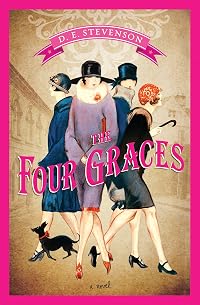
On This Page
Description
No Matter What Life Throws at Them, the Grace Sisters Always Have Each Other The four Grace sisters-Liz, Sal, Tilly, and Addie-love their quiet life in the country village of Chevis Green. To some, their insular world might seem dull, but the sisters and their father, Mr. Grace, never seem to run out of conversation, jokes, and pleasant ways to pass the time together. They truly are the happiest of families. That is, until Aunt Rona comes to town. Rona intends to stay with the Graces show more indefinitely, and her superior, meddlesome attitude immediately sets the sisters' teeth on edge. Throw in another unexpected houseguest, some potential suitors, and a case of mistaken intentions, and the members of the Grace family suddenly find themselves quite out of their element. Will they manage to make it through the summer and return to their quiet ways? Or will their close-knit family change forever? show lessTags
Recommendations

























Member Reviews
The Four Graces by D.E. Stevenson is the story of the four Grace sisters, Liz, Sal, Tilly, and Addie, who live in the small English village of Chevis Green during World War I. Their widowed father is the local vicar and the girls are used to the predictable, even tenor of their lives (even if the war is making it hard to get as much food as one would like). All of this domestic peace is shattered with the advent of two men into their quiet lives, Roderick Herd and William Single. Not to mention the advent of Aunt Rona, whose innate selfishness, always insufferable, becomes terrifying when it seems she's decided to marry Mr. Grace.
This little story is completely delightful! It's reminiscent of Anne of Ingleside with the intrusion of an show more uninvited, unlovable aunt into the family circle (only Aunt Mary Maria is nicer than Aunt Rona!). It also reminded me forcibly of Rilla of Ingleside, concerned as it is with the small affairs of a little village set against the vague and ominous backdrop of world war. The characters are not perfect; they have their insecurities and sins that make them likable. I hesitate to call this "wholesome" because the word has gained such a cynical undertone, but it really is. I will certainly revisit Chevis Green! show less
This little story is completely delightful! It's reminiscent of Anne of Ingleside with the intrusion of an show more uninvited, unlovable aunt into the family circle (only Aunt Mary Maria is nicer than Aunt Rona!). It also reminded me forcibly of Rilla of Ingleside, concerned as it is with the small affairs of a little village set against the vague and ominous backdrop of world war. The characters are not perfect; they have their insecurities and sins that make them likable. I hesitate to call this "wholesome" because the word has gained such a cynical undertone, but it really is. I will certainly revisit Chevis Green! show less
Reading D. E. Stevenson is simultaneously profoundly entertaining and heart-wrenching.
Her books reside in Scottish hills, in rural English villages, in the souls of people I can still identify. Gossipy villagers, retired military, silly girls, and hard-working clergymen. The archetypes are present in modern literature as well as society -- the church ladies who are always throwing a fundraiser, the neighbor slighted by some paltry ordeal, the befuddled academic who finds himself perpetually out of place.
I am attracted to these books for their colorful characters. I'm also drawn to what seems to be a slower pace, one unconnected by technology. Not everyone in Stevenson's books has a phone, they write letters, and women go to the market show more on specific days. The Four Graces takes place during wartime rationing, which probably seems rather romantic in retrospect, but must have been upsetting and tedious at the time. It also takes place in Chevis Green, one of Stevenson's tiny British hamlets out in the countryside, briefly featuring some of the characters from The Two Mrs. Abbotts. The story follows the four Graces (the Reverend Grace and his daughters: Liz, Sal, and Tilly) and their friends and family as they balance life, love, and unwelcome relatives. It's a charming story, and it also hit my nostalgia buttons in very strange places.
In this time period, knitting a sweater was not a waste of time. In fact, you never get a sense of wasted time within these pages: time is spent. Never wasted, no more than the fish scraps saved to create a fish pie or the pieces of old towel used to patch clothing and linens. People make things in this book, even if it's just darning a sock, fashioning a piece of furniture, cooking a meal, or fostering friendships. Time is invested, even in leisure activities. I love it.
Maybe it's just symptomatic of being perpetually tossed around by life, but I sometimes long for the time to sit down and actually fit something instead of feeling obligated to constantly be busy. People work hard in Stevenson's books, but they are allowed to do so at a slower pace without being rushed along an assembly line. As a result, Stevenson awards those she sees fit with happy endings, or just endings, and it's ultimately quite satisfying. show less
Her books reside in Scottish hills, in rural English villages, in the souls of people I can still identify. Gossipy villagers, retired military, silly girls, and hard-working clergymen. The archetypes are present in modern literature as well as society -- the church ladies who are always throwing a fundraiser, the neighbor slighted by some paltry ordeal, the befuddled academic who finds himself perpetually out of place.
I am attracted to these books for their colorful characters. I'm also drawn to what seems to be a slower pace, one unconnected by technology. Not everyone in Stevenson's books has a phone, they write letters, and women go to the market show more on specific days. The Four Graces takes place during wartime rationing, which probably seems rather romantic in retrospect, but must have been upsetting and tedious at the time. It also takes place in Chevis Green, one of Stevenson's tiny British hamlets out in the countryside, briefly featuring some of the characters from The Two Mrs. Abbotts. The story follows the four Graces (the Reverend Grace and his daughters: Liz, Sal, and Tilly) and their friends and family as they balance life, love, and unwelcome relatives. It's a charming story, and it also hit my nostalgia buttons in very strange places.
In this time period, knitting a sweater was not a waste of time. In fact, you never get a sense of wasted time within these pages: time is spent. Never wasted, no more than the fish scraps saved to create a fish pie or the pieces of old towel used to patch clothing and linens. People make things in this book, even if it's just darning a sock, fashioning a piece of furniture, cooking a meal, or fostering friendships. Time is invested, even in leisure activities. I love it.
Maybe it's just symptomatic of being perpetually tossed around by life, but I sometimes long for the time to sit down and actually fit something instead of feeling obligated to constantly be busy. People work hard in Stevenson's books, but they are allowed to do so at a slower pace without being rushed along an assembly line. As a result, Stevenson awards those she sees fit with happy endings, or just endings, and it's ultimately quite satisfying. show less
The Four Graces is set in the same community as The Two Mrs Abbotts, taking place immediately after that book, and features some of the same characters. And it treats WWII in the same sort of light-hearted, background way as The Two Mrs Abbotts, but here that approached seemed to suit the story.
The Four Graces are the four daughters of the vicar, Mr Grace, and the focus is on the three who are still living at home. It's a gentle, charming, introspective sort of story about Liz, Sal and Tilly dealing with change - some of the changes are a result of the war, but mostly they're the sort of changes that come with growing up.
I love this sort of story - the family dynamics, and difficulties of dealing with change. And the Graces have such show more delightful, funny conversations.
She took up the teapot and announced, "You can't have sugar because I want it for jam, and Joan forgot the saccharines."
"Hell," said Liz without rancor.
"If Father heard you-"
"But he can't, darling," reasoned Liz. "And anyhow, I only mean that place in Sweden - or is it Norway? Father wouldn't mind a bit if I said Birmingham."
My only disappointment is that I thought it ended a bit abruptly - I wanted to check in with one of the sisters, to see what her reactions to the latest developments were. There was a scene that would have been so logical to include for the final chapter that I couldn't believe that the author hadn't written it...
(If there was a sequel, I wouldn't mind - but there doesn't seem to be.) show less
The Four Graces are the four daughters of the vicar, Mr Grace, and the focus is on the three who are still living at home. It's a gentle, charming, introspective sort of story about Liz, Sal and Tilly dealing with change - some of the changes are a result of the war, but mostly they're the sort of changes that come with growing up.
I love this sort of story - the family dynamics, and difficulties of dealing with change. And the Graces have such show more delightful, funny conversations.
She took up the teapot and announced, "You can't have sugar because I want it for jam, and Joan forgot the saccharines."
"Hell," said Liz without rancor.
"If Father heard you-"
"But he can't, darling," reasoned Liz. "And anyhow, I only mean that place in Sweden - or is it Norway? Father wouldn't mind a bit if I said Birmingham."
My only disappointment is that I thought it ended a bit abruptly - I wanted to check in with one of the sisters, to see what her reactions to the latest developments were. There was a scene that would have been so logical to include for the final chapter that I couldn't believe that the author hadn't written it...
(If there was a sequel, I wouldn't mind - but there doesn't seem to be.) show less
Really it's between 3 and 4 stars. It would have been better if it was longer, I think, with more time developed to make the sisters stand out from each other a bit more.
This book can stand on its own, though it has extremely incidental references to a couple of characters from The Two Mrs. Abbotts. It's really not important to get the connection, though, as this book is about an entirely different family.
It's World War II, and the Graces are a family of four daughters and their father. They lead a very routine life, and they are pretty content with it. They are a clever but comfortable family. Elements of change begin to creep in, which make up the bulk of the novel. For one thing, a lodger comes to stay--an archaeologist of show more indeterminate age who is checking on some nearby Roman ruins. For another thing, a young officer gets acquainted with the girls, who all become immediately confused as to which one of them he is interested in. And a manipulating aunt-by-marriage moves in and makes herself at home. It's domestic drama and humor in the midst of a bigger world drama, which just has to take a back seat.
My favorite character is William Single, the archaeologist and lodger. He's physically rather clumsy and awkward, but surprisingly insightful and also very kind and humble.
It was a nice, gentle book, but it felt like little glimpses when I wanted a long look. Worth a read, though! show less
This book can stand on its own, though it has extremely incidental references to a couple of characters from The Two Mrs. Abbotts. It's really not important to get the connection, though, as this book is about an entirely different family.
It's World War II, and the Graces are a family of four daughters and their father. They lead a very routine life, and they are pretty content with it. They are a clever but comfortable family. Elements of change begin to creep in, which make up the bulk of the novel. For one thing, a lodger comes to stay--an archaeologist of show more indeterminate age who is checking on some nearby Roman ruins. For another thing, a young officer gets acquainted with the girls, who all become immediately confused as to which one of them he is interested in. And a manipulating aunt-by-marriage moves in and makes herself at home. It's domestic drama and humor in the midst of a bigger world drama, which just has to take a back seat.
My favorite character is William Single, the archaeologist and lodger. He's physically rather clumsy and awkward, but surprisingly insightful and also very kind and humble.
It was a nice, gentle book, but it felt like little glimpses when I wanted a long look. Worth a read, though! show less
"You drifted on for years...then everything happened at once, things...dissolved before your eyes...and life was new"
By sally tarbox on 27 July 2017
Format: Paperback
An absolute delight of a book - not great literature but intensely lovely and joyous without being in the least soppy and sentimental.
The Four Graces are the daughters of a country vicar; WW2 is on, and while Liz is a Land Girl and Addie living a rather more sophisticated life in London, Tilly and Sal focus on domestic and parish affairs.
But into their quiet life comes an archaeologist studing Roman remains. And there are soldiers, an evacuee and an unpleasant aunt who's been bombed out...
Utterly charming, takes you to a tranquil and virtuous world.
Although part of the 'Miss show more Buncle' series, this is very much a 'stand alone' work - I'd never read this author before.
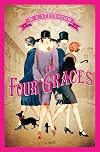
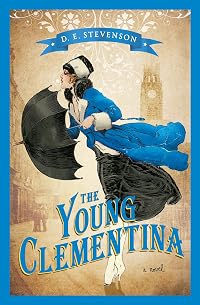
I see that the edition illustrated is American - I had an English version and would definitely urge readers to choose this, as the Englishness is the whole point of the thing. show less
By sally tarbox on 27 July 2017
Format: Paperback
An absolute delight of a book - not great literature but intensely lovely and joyous without being in the least soppy and sentimental.
The Four Graces are the daughters of a country vicar; WW2 is on, and while Liz is a Land Girl and Addie living a rather more sophisticated life in London, Tilly and Sal focus on domestic and parish affairs.
But into their quiet life comes an archaeologist studing Roman remains. And there are soldiers, an evacuee and an unpleasant aunt who's been bombed out...
Utterly charming, takes you to a tranquil and virtuous world.
Although part of the 'Miss show more Buncle' series, this is very much a 'stand alone' work - I'd never read this author before.
I see that the edition illustrated is American - I had an English version and would definitely urge readers to choose this, as the Englishness is the whole point of the thing. show less
Stevenson’s quiet, amusing perspectives on mid-century Britain are not for everyone but I happen to be a fan ever since I first tried Miss Buncle’s Book. The Four Graces continues to entertain. I only wish a sequel existed as, like her Mrs. Tim books, I want to know how life went on for the Grace sisters after this one ended.
This is a charming vintage women's fiction novel from 1946. The "Four Graces" are the daughters of a country vicar, all young adult at the time of the novel. Although WWII is in progress, it is not the primary focus. One of the sisters does end up involved with an airman, and because of the war he has to leave, and the youngest sister is the Women's Army Corps, but the focus is on the lives of the sisters and their father. They have always functioned as a family unit, particularly after the death of their mother, but the book is about the sisters finding their places as adult women. The catalyst is the arrival of a rather dreadful aunt who descends on them when her London home is bombed out, and who attempts to "manage" them all.
It's a show more gentle, amusing story, and a pleasure to read.
(Note: it is considered the final book in the "Miss Buncle" 4 book series but is only lightly connected to the third book, and not connected at all to the first two, so it can easily be read as a stand alone.) show less
It's a show more gentle, amusing story, and a pleasure to read.
(Note: it is considered the final book in the "Miss Buncle" 4 book series but is only lightly connected to the third book, and not connected at all to the first two, so it can easily be read as a stand alone.) show less
Members
- Recently Added By
Lists

Favourite Books
1,820 works; 316 members

Women in War
148 works; 30 members

Books Read in 2015
3,299 works; 126 members
Books Set in Small Towns and Villages
278 works; 16 members

Books Read in 2024
4,727 works; 128 members

Our Favorite Comfort Reads
334 works; 200 members

Books Read in 2026
2,116 works; 70 members
Author Information

62 Works 8,712 Members
D. E. (Dorothy Emily) Stevenson was born in Edinburgh, Scotland on November 18, 1892. She married Captain James Reid Peploe in 1916. She wrote over 40 books in her lifetime. Her first novel Peter West was published in 1923. Her other books include Mrs. Tim of the Regiment, Miss Buncle's Book, Miss Buncle Married, and Listening Valley. Her Mrs. Tim show more books were inspired by the diaries she kept while an army wife. She died on December 30, 1973. (Bowker Author Biography) show less
Some Editions
Series

Common Knowledge
- Canonical title
- The Four Graces
- Original publication date
- 1946
- People/Characters
- Matilda Grace; Archie Chevis-Cobbe; Elizabeth Grace; Sarah Grace; Adeline Grace; Miss Marks (show all 12); George Grace; William Single; Roderick Herd; Rona Mapleton; Jane Watt (Jane Chevis-Cobbe); Jeronina Abbott (Jerry)
- Important places
- Chevis Green, England, UK; Chevis Place, England, UK; vicarage, St. James, England, UK; Ganthorne Lodge, England, UK
- Dedication
- To the March Hare with much love.
- First words
- 'The Voice that breathed o'er Eden
That earliest wedding day,
The primal marriage blessing,
It hath not passed away.'
Matilda Grace was humming the words to herself as she played it on the organ. - Last words
- (Click to show. Warning: May contain spoilers.)"I feel like a god," said William Single.
- Canonical LCC
- PR6037.T458
Classifications
Statistics
- Members
- 288
- Popularity
- 112,249
- Reviews
- 14
- Rating
- (3.92)
- Languages
- English, Spanish
- Media
- Paper, Audiobook, Ebook
- ISBNs
- 13
- UPCs
- 1
- ASINs
- 11