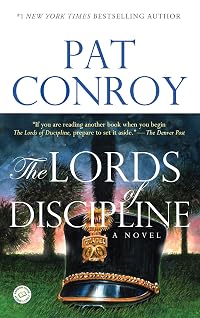
The Lords of Discipline
by Pat Conroy
On This Page
Description
"The Lords of Discipline is, simply, an American classic." -- Larry King The Lords of Discipline is a novel about coming of age, brotherhood, betrayal, and a man's forging of his own personal code of honor. Will McLean, a senior on the cadets' honor court, is an outsider by nature: a basketball star at a school that prizes military prowess above athletics, a military man in training who dares to question the escalating Vietnam war. And yet his greatest struggle will be with the corrupt show more institution of which he is a part. Rich in humor and suspense, abounding in a rare honesty and generosity of feeling, this novel established Pat Conroy as one of the strongest fictional voices in a generation. "A work of enormous power, passion, humor, and wisdom." - Washington Star "God preserve Pat Conroy." - Boston Globe. show lessTags
Recommendations




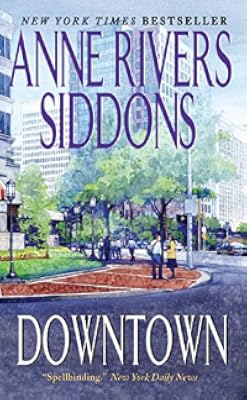
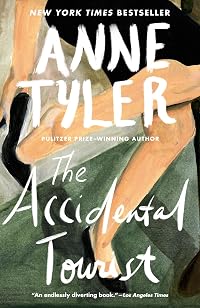


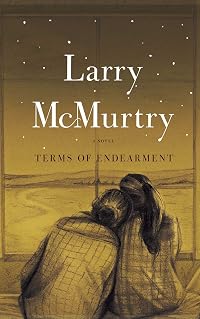
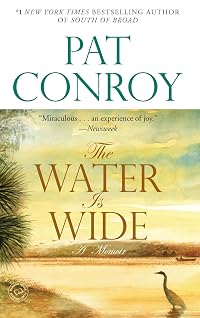









Member Reviews
This book began slowly as a character study. The narrator draws you into himself until you feel as though you become him, living his life with his disappointments, triumphs and pain. The prose is rich in drama and beauty. The characters are well-developed and it is difficult to put the book away when you put it down. The theme of how to maintain your humanity along with discipline and strength is a universal one. How does one do it? Some people go over the edge. This is a story about living on that edge. Gripping, dramatic and seemingly very unreal until you realize that it is not. It is very, very real in so many places for so many people.
WARNING: there is language in this book that will be painful for people. There is use of the show more n-word -- seemingly to make a point about widespread racism in southern and military society -- but some readers might still find it objectionable even in that context. show less
WARNING: there is language in this book that will be painful for people. There is use of the show more n-word -- seemingly to make a point about widespread racism in southern and military society -- but some readers might still find it objectionable even in that context. show less
I picked this up for a buck because I thought the cover looked ridiculous.
I finished it just now and don't know what to say. I feel too pained to cry, and heavy and sad. It's a beautiful, ugly, powerful book about honor, brotherhood, class, race, Vietnam, and adulthood. Really fantastic.
I finished it just now and don't know what to say. I feel too pained to cry, and heavy and sad. It's a beautiful, ugly, powerful book about honor, brotherhood, class, race, Vietnam, and adulthood. Really fantastic.
This is a powerful book. I found myself profoundly affected by it, and that's why I gave it a high rating. On the other hand, I didn't "enjoy" it - I found it deeply depressing and utterly condemning of mid-20th century southern American masculinity. The depressing aspect arises from my thought that the same situation could exist in my own community today. Can this story really be revealing an essential truth about what it means to be a man? How can anyone not be calling for the eradication of all such institutions from our global society? My audio book version included an intro by Conroy himself, in which he seemed to be accepting that the right to "wear the ring" (the sign of survival of the college experience) was something he was show more proud of. I felt like slashing my wrists. show less
Pat Conroy is not easy to read because he delves into the baser parts of human nature and it's in the people we know and love (or like, or should love) friend, father, spouse. While the plot typically sails along, it's the interior examination of character and self that bogs me down. This one dragged a bit too in description of Charleston (where I've never been) but it is a partially a love letter to this city and its impact on Will McLean, the main character. Will is starting his senior year at the Carolina Military Institute (a loose cover for Conroy's own experience at the Citadel.) Will is still a private in rank because he has fully bought into the military intellectually, but he is respected enough to be an elected member of the show more Honor court. He is also a star basketball player which also affords him some respect. It is 1966. Vietnam is in progress and a likely part of Will's future upon graduation. Also he is approached by Colonel Berrineau (the Bear) to keep an eye on an incoming plebe -- the first black student to be admitted to the Institute (Pearce). And he has a meeting with the General who runs the school which isn't quite so friendly. Will's best friend and roommate for the year is an effeminate young man (Tradd St. Croix) whose family is the elite of Charleston. And Will has befriended an unwed 19-year-old pregnant society girl, Annie Kate. Battle lines are drawn. The year starts normally enough with the typical cruelty and hazing of the plebes according to the "system" though Will and his roommates (Tradd, Dante Pignetti (Pig) and Mark Santoro) don't really engage. "To them [the participating upperclassmen], the excesses of the plebe system were salutary and character-building. Torture was simply an effective test of their bloom and vitality. It was the system and we had all agreed to abide by its laws.... I saw that the plebe system was destroying the ability or the desire of the freshmen to use the 'I'....The person who could survive the plebe year and still use the word 'I' was the most seasoned and indefatigable breed of survivor.....I wanted to be that man in my class."(158) That sums up Will's attitude toward his own experience and also his compassion toward the incoming freshmen. When a plebe (Poteete) commits suicide early in the semester, Will starts to suspect something darker is at work -- he himself had survived a Taming as a freshman - a student-led show of authority and dominance that was psychologically degrading and physically brutal after he had written a derogatory, satirical newspaper article about upperclassmen -- but Poteete's experience seems to go beyond even that extreme. Will starts to wonder about the existence of The 10 - a super secret society of Institute lore that runs out undesirables. The book becomes part detective work and part morality play as Will literally endangers his own life and those of his roommates as he tries to uncover the truth and save Pearce who is next on the 10's list. Meanwhile, Will has fallen in love with Annie Kate and spends much of his free time with her at her beach home hideaway. She cannot be seen in society because her mother is trying to hide the shame. Secrets abound. Think of Jack Nicholson in A Few Good Men: ("You can't handle the truth!") The last 3rd of the book is really where all the action is as all these events coalesce and threaten Will (and friends) with physical danger and the threat of not graduating. The way they stick together is touching and comes to some good in the end, though there is a monumental loss. Will's soul-searching and coming-of-age realizations are really at the heart of this book. He is remarkably strong (morally) and acts with true honor for the greater good when his digging around reveals a sinister reality and far-reaching betrayal that shakes the foundation of all he thought he knew. And yet he survives intact, if scarred to proclaim "I wear the ring." show less
“In Charleston, more than elsewhere, you get the feeling that the twentieth century is a vast, unconscionable mistake.”
“Evil would always come to me disguised in systems and dignified by law.”
This is a story about four cadets, in their final year at a military institute called The Citadel. It is 1966, Charleston, S.C. Will McLean is our wise-cracking narrator. He is also a poor boy from Georgia, with an authority problem. This novel is about friendships and loyalty, but there is also debauchery and betrayal, with a bit of misguided romance thrown in. There is also a wicked society, inside The Citadel, that Will begins to investigate.
This is southern melodrama at it's best. The dialogue is broad and turgid, but once you get show more into the flow of it, it fits the narrative. Conroy based this on his own experiences at the academy and much of the writing is solid, although it could have used some editing.
The use of the “N” word, is wince-inducing but I am sure it lends itself to it's time and place. show less
“Evil would always come to me disguised in systems and dignified by law.”
This is a story about four cadets, in their final year at a military institute called The Citadel. It is 1966, Charleston, S.C. Will McLean is our wise-cracking narrator. He is also a poor boy from Georgia, with an authority problem. This novel is about friendships and loyalty, but there is also debauchery and betrayal, with a bit of misguided romance thrown in. There is also a wicked society, inside The Citadel, that Will begins to investigate.
This is southern melodrama at it's best. The dialogue is broad and turgid, but once you get show more into the flow of it, it fits the narrative. Conroy based this on his own experiences at the academy and much of the writing is solid, although it could have used some editing.
The use of the “N” word, is wince-inducing but I am sure it lends itself to it's time and place. show less
I’ve apparently gone about reading Pat Conroy all backward, having started with The Death of Santini and now filling in with his earlier work.
In Death of Santini, Conroy provides an autobiographical recap to his earlier work through the prism of dealing with his father’s (The Great Santini) death. Having read this recap, I can now read his earlier “fiction” stories in a different light, recognizing them for their autobiographical underpinnings.
I must confess to a strong dislike for the dialog of the author’s character, Will McClean. In fact, it has the same, relentless, never ending, over the top, smarmy sarcasm as displayed by the author himself in The Death of Santini. A little goes a very long way, and 500 pages of it goes show more way too far. If this is in fact the way the author actually converses, I can come to two conclusions; he doesn’t have any friends, and he must be pretty tough, otherwise he would have taken innumerable butt whippings over the years (apparently he did, at the hands of his father. Now I know why). It is distracting and counterproductive to enjoyment of what would otherwise be an enjoyable and beautifully written expose of 1960s The Citadel.
The underlying story is fascinating, especially given its quasi-autobiographical nature. The plot twists are well conceived and executed. This would be a five star reading experience were it not for the irritating dialog. show less
In Death of Santini, Conroy provides an autobiographical recap to his earlier work through the prism of dealing with his father’s (The Great Santini) death. Having read this recap, I can now read his earlier “fiction” stories in a different light, recognizing them for their autobiographical underpinnings.
I must confess to a strong dislike for the dialog of the author’s character, Will McClean. In fact, it has the same, relentless, never ending, over the top, smarmy sarcasm as displayed by the author himself in The Death of Santini. A little goes a very long way, and 500 pages of it goes show more way too far. If this is in fact the way the author actually converses, I can come to two conclusions; he doesn’t have any friends, and he must be pretty tough, otherwise he would have taken innumerable butt whippings over the years (apparently he did, at the hands of his father. Now I know why). It is distracting and counterproductive to enjoyment of what would otherwise be an enjoyable and beautifully written expose of 1960s The Citadel.
The underlying story is fascinating, especially given its quasi-autobiographical nature. The plot twists are well conceived and executed. This would be a five star reading experience were it not for the irritating dialog. show less
This is a novel relating the harsh conditions a cadet must endure if he is to graduate from a military academy. The story is of one cadet who endures four grueling years at a military academy and develops a decidedly anti-military stance. It is a wonderful novel of camaraderie and friendship. However, it is also a testimony to man's inhumanity to man. I guess that is what the military stands for if one is to learn to kill in defense of one's country. A very unsettling novel, it left me glad that I personally never had to endure an environment such as the one Conroy describes.
Members
- Recently Added By
Lists

Southern Fiction
212 works; 52 members

1970s
657 works; 23 members

Blue Pyramid 1,276 Best Books of All Time
1,248 works; 32 members

1960s
281 works; 16 members

thinking of reading in 2016
99 works; 1 member

Books Read in 2018
4,360 works; 110 members

Florida
366 works; 3 members
Author Information

47+ Works 23,782 Members
Pat Conroy is the pen name of Donald Patrick Conroy, who was born in Atlanta, Georgia on October 26, 1945. He received a B.A. in English from The Citadel in 1967. After teaching high school at his alma mater, he accepted a job teaching disadvantaged black children in a two-room schoolhouse on Daufuskie Island off the South Carolina coast. Many of show more the children were illiterate, unable even to write their own names. He taught them using oral history and geography lessons. His experience on Daufuskie Island formed the basis for his first successful memoir, The Water Is Wide, which won the Anisfield-Wolf Award from the Cleveland Foundation and was made into the movie Conrack starring Jon Voight in 1976. His novels include Beach Music and South of Broad. Several of his novels were adapted into movies including The Great Santini, The Lords of Discipline, and The Prince of Tides. He also wrote several works of non-fiction including The Pat Conroy Cookbook: Recipes and Stories of My Life, My Reading Life, and The Death of Santini: The Story of a Father and His Son. He died of pancreatic cancer on March 4, 2016 at the age of 70. (Bowker Author Biography) show less
Some Editions
Awards and Honors
Work Relationships
Common Knowledge
- Canonical title
- The Lords of Discipline
- Original title
- The Lords of Discipline
- Original publication date
- 1980
- People/Characters
- Will McLean; Tradd Prioleau St. Croix; Dante "Pig" Pignetti; Mark Santoro; Col. Thomas "Bear" Berrineau; Tom Pearce (show all 38); Cain Gilbreath; Abigail St. Croix; Commerce St. Croix; Gooch Fraser; Gen. Benley Durrell; John Alexander; Wayne Braselton; Gaulden Grace; Cecil Snipes; Matt Leadbetter; John "Bucky" Poteete; John Kinnell; Jimmy Bull; Annie Kate Gervais; Harvey Clearwater; Lancey Hemphill; Bobby Bentley; Frank Maccabee; Gardiner Fox; Otto the Facebreaker; Col. Edward T. "the Great" Reynolds; Bo Maybank; Doug Cumming; Johnny Dubruhl; Dave Dunbar; Jimmy Mance; Dan Molligan; Jim Rowland; Henry Peak; Murray Sewers; Eddie Sheer; Reuben Clapsaddle
- Important places
- Charleston, South Carolina, USA (South Carolina Military Institute); South Carolina, USA; North Charleston, South Carolina,USA; Columbia, South Carolina, USA
- Related movies
- The Lords of Discipline (1983 | IMDb)
- Epigraph
- With heart at rest I climbed the citadel's steep height, and saw the city as from a tower, hospital, brothel, prison, and such hells, where evil comes up softly like a flower. Baudelaire's Epilogue
- Dedication
- This book is dedicated with love and gratitude to Lt. Col. Thomas Nugent Courvoisie, U.S.A. (ret.), the finest military officer I have ever known. And to Joseph Michael Devito and Robert D. Marks, friends and brothers.
Special thanks to these five remarkable people from Houghton Mifflin: Norman Berg, Shannon Ravenel Purves, Jonathan and Susan Galassi, and to Anne Barrett, whose retirement was a great loss to publishing and to the writers who loved her. - First words
- I wear the ring. (Prologue)
When I crossed the Ashley River my senior year in my gray 1959 Chevrolet, I was returning with confidence and even joy. - Quotations*
- Met mijn hart gerust beklom ik de steile hoogte van de citadel en zag de stad als vanuit een toren, gasthuis, bordeel, gevangenis en soortgelijke helse oorden waar het kwaad zacht opbloeit als een bloem. (Baudelaires Epiloog)
- Last words
- (Click to show. Warning: May contain spoilers.)And he pointed to my name.
(Click to show. Warning: May contain spoilers.)You see, I wear the ring. (Prologue) - Blurbers
- Yardley, Jonathan; Manning, Margaret; Fletcher, Sam; Dunning, John; King, Larry L.
*Some information comes from Common Knowledge in other languages. Click "Edit" for more information.
Classifications
Statistics
- Members
- 2,140
- Popularity
- 9,550
- Reviews
- 33
- Rating
- (4.10)
- Languages
- Dutch, English, Finnish, German
- Media
- Paper, Audiobook, Ebook
- ISBNs
- 51
- UPCs
- 1
- ASINs
- 16