
On This Page
Description
First published in 1924, Beau Geste tells the story of a stolen sapphire and three brothers, who consequently join the Foreign Legion. Michael 'Beau' Geste, as his nickname suggests, represents honour and bravery in the midst of deceit and treachery. An action-packed adventure, much of the plot is set in French North Africa where the Geste brothers have to contend with both a mutiny in their ranks and the attacks of the Touaregs. The novel has given rise to many films, most notably the 1939 show more version starring Gary Cooper and Ray Milland, and a stage production with Laurence Olivier in the title role.. show less
Tags
Recommendations

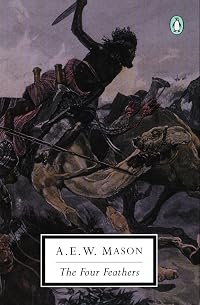
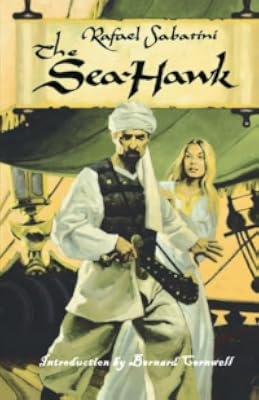




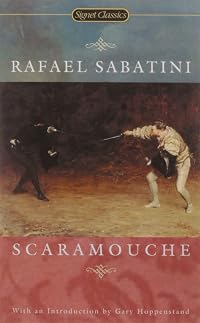



















Member Recommendations

Member Reviews
The kind of book Kipling would have written if he had only been interested in telling of adventures. The British boys are very British, and they kill a lot of Arabs with their superior technology. The framing narrative, a long conversation between two officers, is very like Kipling, and quite entertaining as the mannerisms of the British and the French officers are contrasted. The anti-semitism is especially baroque. That the British boys choose to learn Arabic is typical.
The main part of the book is a first person narrative, an exciting story, rich with detail, and with an ironic twist at the end.
The book fits the era well, Sabatini's "Scaramouche" had been published just a few years earlier.
The main part of the book is a first person narrative, an exciting story, rich with detail, and with an ironic twist at the end.
The book fits the era well, Sabatini's "Scaramouche" had been published just a few years earlier.
As I understand it, this is one of those archetypical books of an earlier era in which noble, privileged Englishmen ran off to the French Foreign Legion so as to confront adventure and romance. They're all so honest, upright and noble, never noticing for a moment that they're hideously racist and are actively supporting a system of empire in which they think it's the white man's God-given right to plunder the wogs, or something. They euphamize this all by calling it "peaceful penetration". It sounds like a so-called conservative's approach to shrugging off an act of rape. "I didn't rape the woman, your honor, I was merely honoring her by an act of peaceful penetration."
Anyway, this is one of those kinds of books, once considered part show more of the swash-buckling adventure books all young boys grew up reading (at least in my father's time). It's not bad, really, but the assumed superiority of these people who had everything handed to them on a silver spoon, does get wearying. Of course that attitude is still with us. And also, of course, for the most part, people don't understand that. It's what they grew up with and most of us don't question much. We seem wired to go with the con so long as there's a veneer or silver polish on it.
Whatever, the book is split into roughly three parts. It begins with an officer of the French Foreign Legion coming up to an outpost where all the soldiers are dead, but have been propped up at the parapets so as to seem like the fort is still fully manned. The bugler climbs over the walls to investigate, then disappears. The officer then climbs over the walls, and finds the fort's commander has been bayoneted through the chest. He is clutching a letter, which purports to be a confession to a jewelry theft by one Michael Geste. Michael Geste is the nephew and ward of a Lady Patricia something-or-other, whose estate the French officer has visited a few times. On the way home, he tells his story to a British Officer who has been pining for Lady Patricia for 25 years or so. Naturally, they want to do a full investigation.
Then we cut to a scene of six idle, well coddled young people larking around on Lady Patricia's estate, in between sessions away at school. There are the three Geste brothers, Lady Patricia's daughter, Claudia, the daughter's orphan companion, Isobel, and another hanger on, Augustus, whom everyone hates. At some point, they are admiring a special blue sapphire that Lady Patricia owns. The lights go out, and when they come back on, the sapphire is gone. They do various forms of investigation, but can find neither the sapphire nor the thief. One by one, the Geste brothers disappear, so as to be noble and cast suspicion on themselves and away from everyone else. First goes Michael, the ringleader of the merry band of dependents. Then his twin Digby bolts. Finally, younger brother John, who is also the narrator of much of the story, leaves. They have all run off to join the French Foreign Legion for romance and adventure.
So, the third part of the book is John's telling about the romance and adventure in the Foreign Legion, his finding his brothers, and so forth. There's not much romance and adventure, actually, mostly tedium, tedium in the so-called action and tedium in the telling. Eventually, we get some resolution regarding the jewel theft and realize how truly noble and high minded these young men are, despite their being lackeys of the imperialist system, or something.
As I understand it, Wren wrote a bunch of subsequent off shoots from this book. Perhaps they are indeed filled with swash buckling adventure. This book, while interesting for its significance in helping to understand one's cultural history, seemed to be to be overly filled with people's thinking through their options regarding one method of action or another, and not all that much actual action, romance and adventure. show less
Anyway, this is one of those kinds of books, once considered part show more of the swash-buckling adventure books all young boys grew up reading (at least in my father's time). It's not bad, really, but the assumed superiority of these people who had everything handed to them on a silver spoon, does get wearying. Of course that attitude is still with us. And also, of course, for the most part, people don't understand that. It's what they grew up with and most of us don't question much. We seem wired to go with the con so long as there's a veneer or silver polish on it.
Whatever, the book is split into roughly three parts. It begins with an officer of the French Foreign Legion coming up to an outpost where all the soldiers are dead, but have been propped up at the parapets so as to seem like the fort is still fully manned. The bugler climbs over the walls to investigate, then disappears. The officer then climbs over the walls, and finds the fort's commander has been bayoneted through the chest. He is clutching a letter, which purports to be a confession to a jewelry theft by one Michael Geste. Michael Geste is the nephew and ward of a Lady Patricia something-or-other, whose estate the French officer has visited a few times. On the way home, he tells his story to a British Officer who has been pining for Lady Patricia for 25 years or so. Naturally, they want to do a full investigation.
Then we cut to a scene of six idle, well coddled young people larking around on Lady Patricia's estate, in between sessions away at school. There are the three Geste brothers, Lady Patricia's daughter, Claudia, the daughter's orphan companion, Isobel, and another hanger on, Augustus, whom everyone hates. At some point, they are admiring a special blue sapphire that Lady Patricia owns. The lights go out, and when they come back on, the sapphire is gone. They do various forms of investigation, but can find neither the sapphire nor the thief. One by one, the Geste brothers disappear, so as to be noble and cast suspicion on themselves and away from everyone else. First goes Michael, the ringleader of the merry band of dependents. Then his twin Digby bolts. Finally, younger brother John, who is also the narrator of much of the story, leaves. They have all run off to join the French Foreign Legion for romance and adventure.
So, the third part of the book is John's telling about the romance and adventure in the Foreign Legion, his finding his brothers, and so forth. There's not much romance and adventure, actually, mostly tedium, tedium in the so-called action and tedium in the telling. Eventually, we get some resolution regarding the jewel theft and realize how truly noble and high minded these young men are, despite their being lackeys of the imperialist system, or something.
As I understand it, Wren wrote a bunch of subsequent off shoots from this book. Perhaps they are indeed filled with swash buckling adventure. This book, while interesting for its significance in helping to understand one's cultural history, seemed to be to be overly filled with people's thinking through their options regarding one method of action or another, and not all that much actual action, romance and adventure. show less
What a grand adventure this is! Heroes don't get any more noble, courageous, resourceful, and staunch than the Geste bros. Chock-full of feats of derring-do in exotic locations and intensely satisfying in a Victorian, Boy's Life, silent-film kind of way.
I can completely understand how good British boys bred on literature like this would grow up yearning for military glory and the chance to expand the glorious British Empire to the most dismal and dangerous corners of the world, concerned only that - when their time was up and they eventually did "pop off" (an aphorism favored by the Geste bros, by the way) - they would do so with their jaws nobly clenched and brave witticisms fading on their dying lips.
A little long in places but fun, show more fun, fun! show less
I can completely understand how good British boys bred on literature like this would grow up yearning for military glory and the chance to expand the glorious British Empire to the most dismal and dangerous corners of the world, concerned only that - when their time was up and they eventually did "pop off" (an aphorism favored by the Geste bros, by the way) - they would do so with their jaws nobly clenched and brave witticisms fading on their dying lips.
A little long in places but fun, show more fun, fun! show less
High adventure of the most entertaining sort; the kind that morphs from ghost story to Victorian mystery, to Foreign Legion derring-do. So absorbing that I missed my bus as it came and went while I sat on the bench turning pages in a wicked October wind. At the time, the breathtaking anti-semitism didn't bother me as much as it would today, but I was 13 and my father's son.
In the middle of the Sahara sits a fort manned by dead men. Another man is lying in the middle of the fort, a letter of confession for an old jewel robbery in his pocket.
With perhaps the most intriguing first chapter in the English language, Beau Geste, a tale of adventure, mystery, and honour in the French Foreign Legion kicks off to a great start. Take three brothers, a sadistic commanding officer, a fabulous sapphire, and the ever-present, watchful Arab enemy, combine and bake under the Saharan sun for a few suspenseful months, and you get this classic yarn.
With perhaps the most intriguing first chapter in the English language, Beau Geste, a tale of adventure, mystery, and honour in the French Foreign Legion kicks off to a great start. Take three brothers, a sadistic commanding officer, a fabulous sapphire, and the ever-present, watchful Arab enemy, combine and bake under the Saharan sun for a few suspenseful months, and you get this classic yarn.
I decided to re-read my copy of Beau Geste on a hot sultry day in July. I remember a rip-roaring tale of derring-do, and that is exactly what I found - again. What I also found is that I have an abridged version for 12-15 year-olds. I probably first read it at age 14. This was particularly instructive for me, since I was looking at guidelines for books for 12-15 year olds on a readers website, and thought, well, this wouldn't pass. Different age, different standards.
Beau Geste is the sort of book boys of my era loved. Lots of girls too. Heroes setting off into the French Foreign Legion because once upon a time a friend of their aunt had told them stories about it, and besides, what is a noble young man to do if he has just helped his show more aunt out of an awful mess? Illegally. (Some reviewers seem to have completely misunderstood why Beau joined up). It's a harrowing story which makes you wonder how people can survive in the desert, let alone under the conditions of the Legion as depicted in the early 1900s. It probably sits well against Patrick O'Brian adventures. I think it's a rip-roaring story, cleverly told (although I think the abridging may have done it a lot of favours, again based on other reviews). If you can find a condensed version (mine is a Green Dragon book dated 1966), get it.
When I judge what an early teen might read I think of this sort of adventure. So that may be why my books have an old-fashioned feel. What I realise is that the unabridged version is probably completely unsuitable for today's teen, being full (probably) of bad language and stereotypical foreigners. I still enjoy my old paperback though. It's a great read. show less
Beau Geste is the sort of book boys of my era loved. Lots of girls too. Heroes setting off into the French Foreign Legion because once upon a time a friend of their aunt had told them stories about it, and besides, what is a noble young man to do if he has just helped his show more aunt out of an awful mess? Illegally. (Some reviewers seem to have completely misunderstood why Beau joined up). It's a harrowing story which makes you wonder how people can survive in the desert, let alone under the conditions of the Legion as depicted in the early 1900s. It probably sits well against Patrick O'Brian adventures. I think it's a rip-roaring story, cleverly told (although I think the abridging may have done it a lot of favours, again based on other reviews). If you can find a condensed version (mine is a Green Dragon book dated 1966), get it.
When I judge what an early teen might read I think of this sort of adventure. So that may be why my books have an old-fashioned feel. What I realise is that the unabridged version is probably completely unsuitable for today's teen, being full (probably) of bad language and stereotypical foreigners. I still enjoy my old paperback though. It's a great read. show less
I'd never heard of Beau Geste until stumbling upon it on LibraryThing and then finding a free copy at Internet Archive and so began reading and was hooked. It's genre historical adventure set in the Sahara with the French Foreign Legion, involving three English brothers with a main theme of loyalty. You would not know the Great War ever happened it reads as if written in 1890, including gratuitous racial slurs against Jews and severe colonialist attitude, its popularity says something about the mood at the time of those wishing to escape modernism to a more assured time. It was one of the top best-sellers in America in 1924, unusual for a British book. I liked the use of French language and detailed descriptions of the Foreign Legion it show more has verisimilitude and exoticism. show less
Members
- Recently Added By
Lists

Read the book and saw the movie
1,170 works; 192 members

Best Adventure Stories
66 works; 15 members

Top Five Books of 2014
1,064 works; 397 members

SWORDS GUNS BATTLES
30 works; 3 members

Fiction For Men
142 works; 11 members

1920s
141 works; 6 members

The film surpassed the book
13 works; 3 members

Global Reads: Books Set in the Middle East and North Africa
50 works; 8 members
Novels of Great Adventures
34 works; 6 members

Best Book and Movie Combos
70 works; 11 members

Publisher's Weekly Bestsellers Part I - 1895-1939
399 works; 8 members
Author Information

72+ Works 1,971 Members
Some Editions
Awards and Honors
Distinctions
Series

Belongs to Publisher Series
Work Relationships
Is contained in
Has the adaptation
Common Knowledge
- Canonical title
- Beau Geste; Beau Geste (1926 Photoplay Edition) (1926 Photoplay Edition)
- Original title
- Beau Geste
- Original publication date
- 1924
- People/Characters
- Michael "Beau" Geste; Digby Geste; John Geste
- Important places
- Fort Zinderneuf, French North Africa; Devon, England, UK
- Related movies
- Beau Geste (1939 | IMDb); Beau Geste (1926 | IMDb); Beau Geste (1966 | IMDb); Beau Geste (1982 | IMDb); The Last Remake of Beau Geste (1977 | IMDb)
- First words
- Mr. George Lawrence, C.M.G., First Class District Officer of His Majesty's Civil Service, sat at the door of his tent and viewed the African desert scene with the eye of extreme disfavour.
- Last words
- (Click to show. Warning: May contain spoilers.)I think she feels she is somehow doing something for Michael by smoothing their path so..."
- Original language*
- Inglés
*Some information comes from Common Knowledge in other languages. Click "Edit" for more information.
Classifications
Statistics
- Members
- 1,121
- Popularity
- 22,691
- Reviews
- 26
- Rating
- (3.92)
- Languages
- 7 — Dutch, English, Finnish, Hungarian, Norwegian, Romanian, Spanish
- Media
- Paper, Audiobook, Ebook
- ISBNs
- 83
- UPCs
- 1
- ASINs
- 63