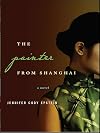
The Painter from Shanghai
by Jennifer Cody Epstein
On This Page
Description
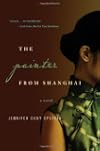
Reminiscent of Memoirs of a Geisha, The Painter from Shanghai is a re-imagining of the life of Pan Yuliang and her transformation from prostitute to post-Impressionist.Tags
Recommendations



Member Reviews
Pan Yuliang, Chinese ex-pat artist. Have you heard of her? I hadn't either but this novel limns a fascinating and believable life for this not particularly well known historic figure. Orphaned young and raised by an opium addicted uncle, Pan Yuliang is sold into prostitution in her teens. She is bought out of her contract by a government offical whom she ultimately marries, becoming his concubine or "second wife." Amazingly, given the political climate in China during her lifetime, she is not only allowed to study at a prominent art school in Shanghai, but she also wins a scholarship to go to Paris and study there. Her work is post-Impressionist and both Asian and European in feel with her most famous and controversial paintings being show more of nudes, and very commonly of herself nude. While in France, she meets and associates with other young Chinese (Zhou Enlai is one such person) who will ultimately help to change the face of their homeland and drive people like Pan Yuliang from the China racing headlong towards the Cultural Revolution.
This was a completely engrossing novel which kept me reading long past when the light should have been out. Epstein has drawn a very believable story for Pan Yuliang, from her beginnings as a maid in a brothel all the way to being at the nadir of the post-impressionist art movement in China. She's a warm and sympathetic character who faces set-backs with a bit of fatalism and a steely resolve, an intriguing mix in a character. Although this is billed as novel about Pan Yuliang the artist, it is quite far along in the narrative before she tries her hand at any drawing at all, which I had not expected. And while her early life was fascinating, I read with a small sense of "let's get to the painting part" nagging at the back of my mind. Pan Yuliang is very definitely the main character here, with few other characters appearing and lasting in the novel. There are no throw-away characters and no outside tangents to take the reader's attention from the major story, allowing the reader to crawl more fully into Yuliang's skin and experience the highs and lows of her life with her. I went searching on the internet for pictures of her work once I finished the book and obviously Epstein did a good job describing them as they weren't startlingly different from what I had imagined. They aren't particularly to my taste but the book definitely was. I recommend it for those who enjoy historical fiction, art history, or just a plain old good story that will keep you reading past your bedtime. show less
This was a completely engrossing novel which kept me reading long past when the light should have been out. Epstein has drawn a very believable story for Pan Yuliang, from her beginnings as a maid in a brothel all the way to being at the nadir of the post-impressionist art movement in China. She's a warm and sympathetic character who faces set-backs with a bit of fatalism and a steely resolve, an intriguing mix in a character. Although this is billed as novel about Pan Yuliang the artist, it is quite far along in the narrative before she tries her hand at any drawing at all, which I had not expected. And while her early life was fascinating, I read with a small sense of "let's get to the painting part" nagging at the back of my mind. Pan Yuliang is very definitely the main character here, with few other characters appearing and lasting in the novel. There are no throw-away characters and no outside tangents to take the reader's attention from the major story, allowing the reader to crawl more fully into Yuliang's skin and experience the highs and lows of her life with her. I went searching on the internet for pictures of her work once I finished the book and obviously Epstein did a good job describing them as they weren't startlingly different from what I had imagined. They aren't particularly to my taste but the book definitely was. I recommend it for those who enjoy historical fiction, art history, or just a plain old good story that will keep you reading past your bedtime. show less
"That the buyer, if she finds one, probably won't be able to read it means little. Yuliang doesn't sign it for him. She signs for herself, to bind her work to her. To tattoo it with a message: she has won." (Page 20)
Jennifer Cody Epstein's The Painter From Shanghai is a fictional account of Pan Yuliang's rise from the ashes of her life as Xiuqing, a young child sold into prostitution. Through careful brushstrokes of her own, Epstein deftly fills her canvas with the sights, sounds, and images of China--from the dark alleys and brothels to the crowded, chaotic streets of Shanghai--in the early 1920s. Yuliang is a complex character who numbly makes her way through the obstacles she faces as a new prostitute under the thumb of corrupted show more merchants and a harsh and battered old woman, known as Grandmother. Emerging from the dank and corrupted halls of the brothel, she jumps into her new life as the concubine/second wife to Pan Zanhua and embarks on her career as a student and painter at the height of the Communist uprising in China during the 1930s.
"'My husband,' she says, twisting her wedding band, 'writes that even more conservative Republicans will ally with the CCP now. For the nation's sake.'
'If anything, it's a marriage of convenience.' Now he looks straight into her eyes. 'And one I doubt will last.'" (Page 318)
Epstein has a style all her own in which she easily weaves in relevant historical information through character interaction and development, but she also captures even difficult emotions with deft description and poise.
In the brothel, readers will feel Yuliang's degradation as each man leers at her, touches her skin, and makes her kowtow to their desires. The one solace she has is the poetry of Li Qingzhao, which she recites from memory. Readers will enjoy the verse woven into the narrative as Yuliang examines herself at life-changing moments and seeks solace in the beauty of language.
Yuliang is molded by her mentors, but only truly blossoms when she becomes Zanhua's wife and starts painting. Through painting she learns to combat her demons, her past, and her future, coming into her own as a painter and individual. As China is pulled in two directions between the republic and the communists, Yuliang is caught between her rebellious nature and Chinese tradition.
"Tearing off the sheet, she tries again, this time with better results. Use each object as a road into the next. She proceeds to the easiest object on the table, the orange . . . And in the space of a moment that neither registers nor matters, she is no longer outside the still life but working within it, running her mind's hand over nubbly fruit skin. Pressing her face against the smooth tang of the bottle glass. Exploring a vase's crevices with both finger and pencil tip, each item part of a visual sentence she is translating." (Page 220)
The Painter From Shanghai has a lot to offer book clubs, readers interested in painting, historical fiction, the struggle of women in society, China, and political history, and is one of the best novels I've read this year. show less
Jennifer Cody Epstein's The Painter From Shanghai is a fictional account of Pan Yuliang's rise from the ashes of her life as Xiuqing, a young child sold into prostitution. Through careful brushstrokes of her own, Epstein deftly fills her canvas with the sights, sounds, and images of China--from the dark alleys and brothels to the crowded, chaotic streets of Shanghai--in the early 1920s. Yuliang is a complex character who numbly makes her way through the obstacles she faces as a new prostitute under the thumb of corrupted show more merchants and a harsh and battered old woman, known as Grandmother. Emerging from the dank and corrupted halls of the brothel, she jumps into her new life as the concubine/second wife to Pan Zanhua and embarks on her career as a student and painter at the height of the Communist uprising in China during the 1930s.
"'My husband,' she says, twisting her wedding band, 'writes that even more conservative Republicans will ally with the CCP now. For the nation's sake.'
'If anything, it's a marriage of convenience.' Now he looks straight into her eyes. 'And one I doubt will last.'" (Page 318)
Epstein has a style all her own in which she easily weaves in relevant historical information through character interaction and development, but she also captures even difficult emotions with deft description and poise.
In the brothel, readers will feel Yuliang's degradation as each man leers at her, touches her skin, and makes her kowtow to their desires. The one solace she has is the poetry of Li Qingzhao, which she recites from memory. Readers will enjoy the verse woven into the narrative as Yuliang examines herself at life-changing moments and seeks solace in the beauty of language.
Yuliang is molded by her mentors, but only truly blossoms when she becomes Zanhua's wife and starts painting. Through painting she learns to combat her demons, her past, and her future, coming into her own as a painter and individual. As China is pulled in two directions between the republic and the communists, Yuliang is caught between her rebellious nature and Chinese tradition.
"Tearing off the sheet, she tries again, this time with better results. Use each object as a road into the next. She proceeds to the easiest object on the table, the orange . . . And in the space of a moment that neither registers nor matters, she is no longer outside the still life but working within it, running her mind's hand over nubbly fruit skin. Pressing her face against the smooth tang of the bottle glass. Exploring a vase's crevices with both finger and pencil tip, each item part of a visual sentence she is translating." (Page 220)
The Painter From Shanghai has a lot to offer book clubs, readers interested in painting, historical fiction, the struggle of women in society, China, and political history, and is one of the best novels I've read this year. show less
This is a fictionalized account of the life Pan Yuliang, a post-impressionist Chinese painter who was quite controversial in her time—as a woman artist and painter of nudes, including nude self-portraits. Born at the end of the 19th century, she grew up in a time where women were culturally oppressed and when the entire country was undergoing a period of political upheaval. I thought Epstein did a beautiful job of conveying the cultural challenges Yuliang faced and overcame, eventually resulting in her move to France in 1937 in order to continue her painting.
I really enjoyed the first half of the book. There was a richness and depth in the telling of her early years--from orphan to prostitute to concubine. I became vested in her story show more as I saw her growing from a shy, downtrodden girl to becoming more self-possessed. However the second half fell a bit flat for me with the discussions of art and politics coming off as more an historical lesson rather than blending into the story of Yuliang’s development as an artist. I found myself skimming over those sections. Nevertheless, I still enjoyed this novel and have since viewed her artwork on the Internet. show less
I really enjoyed the first half of the book. There was a richness and depth in the telling of her early years--from orphan to prostitute to concubine. I became vested in her story show more as I saw her growing from a shy, downtrodden girl to becoming more self-possessed. However the second half fell a bit flat for me with the discussions of art and politics coming off as more an historical lesson rather than blending into the story of Yuliang’s development as an artist. I found myself skimming over those sections. Nevertheless, I still enjoyed this novel and have since viewed her artwork on the Internet. show less
The rampantly overused and often undeserved phrase "stunning debut" happens to be absolutely true in the case of this gorgeously crafted fictional tale of the real-life artist Pan-Yuliang, who was sold into prostitution at the age of nine and overcame her sordid past to become one of China's great painters. Epstein breathes vivid life into her characters as she charts Yuliang's journey from the "Hall of Eternal Splendor" brothel in Shanghai to Paris in the roaring 20s and back to a China roiled by imminent revolution. Meticulously researched and compulsively readable, this novel deserves every bit of the advance praise it's receiving from the press (among other things, it's a BN Discover pick for summer).
This book tells the story of Pan Yuliang, a young Chinese orphan girl, who in 1913, when she is 14 years old, is sold by her opium addicted, heavily in debt uncle, to a brothel in Wuhu. After spending two horrific years at the brothel, under the watchful eye of the manager, known as Godmother, Yuliang manages to escape when a young Government Official named Pan Zanhua, rescues her and takes her away. Yuliang discovers that she has a flair for painting, and wants to cultivate her new found talent. However, she discovers that she is living in dangerous times for a female artist who wants to push boundaries…
I enjoyed this book very much. Pan Yuliang was a real person, but this book is not intended so much as a biography, as a novel show more based on Yuliang’s life. The writing is beautiful – as artistic and enjoyable as the work of Yuliang herself. The main character is entirely believable – portrayed as a woman in conflict with the traditional standards of the society she lives in, but who also loves her country very much. While she is not always portrayed as a likeable person, she is always deserving of admiration, and I found it impossible not to root for her.
This is the first full length novel from Jennifer Cody Epstein, and it is eloquently written. It manages to be descriptive, yet never boring. The story moves along at a fair pace, but never feels hurried. I will await more work by this author, with great interest.
(NB: My copy of this book is called The Painter of Shanghai, but it also appears to have ben widely published under the name The Painter from Shanghai). show less
I enjoyed this book very much. Pan Yuliang was a real person, but this book is not intended so much as a biography, as a novel show more based on Yuliang’s life. The writing is beautiful – as artistic and enjoyable as the work of Yuliang herself. The main character is entirely believable – portrayed as a woman in conflict with the traditional standards of the society she lives in, but who also loves her country very much. While she is not always portrayed as a likeable person, she is always deserving of admiration, and I found it impossible not to root for her.
This is the first full length novel from Jennifer Cody Epstein, and it is eloquently written. It manages to be descriptive, yet never boring. The story moves along at a fair pace, but never feels hurried. I will await more work by this author, with great interest.
(NB: My copy of this book is called The Painter of Shanghai, but it also appears to have ben widely published under the name The Painter from Shanghai). show less
After finishing this book, I had to look up some of Pan Yuliang's paintings, especially her controversial nudes. I really enjoyed this novel about the life of a female Chinese painter, who was sold into prostitution as child but nevertheless managed to obtain an education and studied art in France and Rome, realizing her talent as a painter. This novel also provides a fascinating description of the painter's native China during a turbulent period.
Pan Yuliang wasn't always an artist. Before she became famous, she was known as Xiuquing, a child who was orphaned at an early age. She went to with her uncle, who was an opium addict. At the age of 14, her uncle sold her into prostitution. Her uncle did give her one thing, the love of poetry and this is whateventually attracks Pan Zanhua, a customs inspector. He makes Yuliang his second wife and sets up a home for her in Shanghai. It is here were she is free to learn to read and write and, eventually, cultivate her love of painting. Her husband, whose views on life and society do not prevent him from falling in love with and taking a whore as his concubine when they first met, constricted over time, fueled by his insecurity over losing show more her. Still, her studies take her to Paris where the buring wick of a Chinese revolution is never far away.
Pan Yuliang is a historical figure and Jennifer Cody Epstein brought her to life for me in the way she imagined and wrote Yuliang's life. Her story brought me back to The Blue Notebook, reminding me of how lucky Yuliang was to have been bought out of slavery by a man list Pan Zanhua. He loved her for who she was and encouraged her to learn to read and write. He even prompted her to reverse the damage done to her feet by the binding that was never completed when she was a child. The scene where Zanhua rubbed circulation into her feet was touching and beautiful. Despite his love and kindness, Yuliang is not able to give herself over to him completely. Her experiences as a prostitue in the Hall scared her in ways that she cannot express in words. It all came out of her through her art.
Yuliang and Zanhua's relationship was equal in Zanhua's estimation, but as she pushed to expand her education beyond the politcal writings and other reading and writing lessons he provided her, it became evident to Yuliang that she was still in a cage of sorts. When forced to choose, she could not afford to take a decision that was not in her own self-interest. Zanhua may have viewed her as selfish and ungrateful, but living so near the art that she loved and being kept form it was would have been worse than never having it in the first place. The fight between them resulting from her nude self-portrait brought this out very clearly. Had Zanhua's opinions become more conservative over the course of his relationship, or had Yuliang's perception of the freedom offered to her by his love shrink exponentially when she fully came up against the boundaries he set up? As fascinating as I found Yuliang's life, the study of their relationship was the element that really kept me engaged in The Painter from Shanghai.
I knew nothing of Chinese art or Pan Yuliang when I picked up this novel and started reading The Painter from Shanghai, but I wouldn't have enjoyed this novel any more if I had. Jennifer Cody Epstein writes about Yuliang with passion and fluidity. She made Yuliang and her world come alive. Her novel picked me up out of a reading funk. I was half way through it before I gave it a second thought. I enjoyed the way that Epstein made art of a part of Yuliang, a way for her to understand and come to terms with her world. She made sense out of Yuliang's choices and painted the complicated portrait of a woman who learned to live life by her own rules at a time and in a place where doing so was more shameful than prostitution. The Painter from Shanghai is the best Historical Fiction I've read this year.
http://literatehousewife.com/2009/06/167-the-painter-from-shanghai-review-and-bl... show less
Pan Yuliang is a historical figure and Jennifer Cody Epstein brought her to life for me in the way she imagined and wrote Yuliang's life. Her story brought me back to The Blue Notebook, reminding me of how lucky Yuliang was to have been bought out of slavery by a man list Pan Zanhua. He loved her for who she was and encouraged her to learn to read and write. He even prompted her to reverse the damage done to her feet by the binding that was never completed when she was a child. The scene where Zanhua rubbed circulation into her feet was touching and beautiful. Despite his love and kindness, Yuliang is not able to give herself over to him completely. Her experiences as a prostitue in the Hall scared her in ways that she cannot express in words. It all came out of her through her art.
Yuliang and Zanhua's relationship was equal in Zanhua's estimation, but as she pushed to expand her education beyond the politcal writings and other reading and writing lessons he provided her, it became evident to Yuliang that she was still in a cage of sorts. When forced to choose, she could not afford to take a decision that was not in her own self-interest. Zanhua may have viewed her as selfish and ungrateful, but living so near the art that she loved and being kept form it was would have been worse than never having it in the first place. The fight between them resulting from her nude self-portrait brought this out very clearly. Had Zanhua's opinions become more conservative over the course of his relationship, or had Yuliang's perception of the freedom offered to her by his love shrink exponentially when she fully came up against the boundaries he set up? As fascinating as I found Yuliang's life, the study of their relationship was the element that really kept me engaged in The Painter from Shanghai.
I knew nothing of Chinese art or Pan Yuliang when I picked up this novel and started reading The Painter from Shanghai, but I wouldn't have enjoyed this novel any more if I had. Jennifer Cody Epstein writes about Yuliang with passion and fluidity. She made Yuliang and her world come alive. Her novel picked me up out of a reading funk. I was half way through it before I gave it a second thought. I enjoyed the way that Epstein made art of a part of Yuliang, a way for her to understand and come to terms with her world. She made sense out of Yuliang's choices and painted the complicated portrait of a woman who learned to live life by her own rules at a time and in a place where doing so was more shameful than prostitution. The Painter from Shanghai is the best Historical Fiction I've read this year.
http://literatehousewife.com/2009/06/167-the-painter-from-shanghai-review-and-bl... show less
Members
- Recently Added By
Lists

Florida
366 works; 3 members
Author Information

4 Works 1,031 Members
Awards and Honors
Distinctions
Common Knowledge
- Canonical title
- The Painter from Shanghai
- People/Characters
- Pan Yuliang
- Important places
- Shanghai, China; Paris, France
- Important events
- Chinese Revolution of 1911; Japanese invasion of Manchuria, 1931
Classifications
Statistics
- Members
- 546
- Popularity
- 54,192
- Reviews
- 25
- Rating
- (3.74)
- Languages
- 7 — Danish, Dutch, English, German, Norwegian (Bokmål), Norwegian, Spanish
- Media
- Paper, Audiobook, Ebook
- ISBNs
- 19
- ASINs
- 6