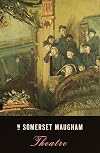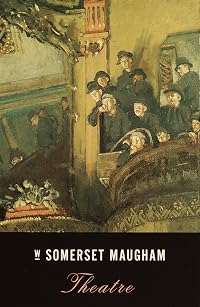
Theatre
by W. Somerset Maugham 
On This Page
Description
In Theatre, W. Somerset Maugham–the author of the classic novels Of Human Bondage and Up at the Villa–introduces us to Julia Lambert, a woman of breathtaking poise and talent whose looks have stood by her forty-six years. She is one of the greatest actresses England–so good, in fact, that perhaps she never stops acting. It seems that noting can ruffle her satin feathers, until a quiet stranger who challenges Julia's very sense of self. As a result, she will endure rejection for the show more first time, her capacity as a mother will be affronted, and her ability to put on whatever face she desired for her public will prove limited. In Theatre, Maugham subtly exposes the tensions and triumphs that occur when acting and reality blend together, and–for Julia–ultimately reverse. From the Trade Paperback edition. show lessTags
Recommendations

















Member Reviews
Maugham's work is easy to read, not because it is simple, but that he is a story teller. Many subtle nuances permeate the prose, and topics including art, poetry, politics, and sexuality, amid class consciousness, are as near or far as the reader wishes them to be. A few themes that resonate with me recently include the notion of solitude. I often think of the 2007 film La Vie en Rose and how Édith Piaf's character at the end says words to the effect of "we all die alone". When I tried to find the precise quote, I stumbled upon a review of the movie in The Guardian from 2007 that indicates the movie was "empty". Yet for me, I had shuddered at the prospect of dying alone until some time after I "unDisneyfied" myself in my forties. In show more the review, a quote from Olivier Dahan reads that the movie provides "the perfect example of someone who places no barrier between her life and her art". Julia Lambert, Maugham's protagonist, occupies exactly this same space. Although this book can be considered either a tragedy or a comedy, depending on how you look at it (is this even possible?), there is a strong theme of solitude, as in being alone with one's thoughts while being part of society but remaining autonomous from family and friends - as if there is no bond beyond mere convention (Marxist maybe?). Out of the entire cast, Julia Lambert's son emerges as the one intelligent being among a crowd of self-seeking and emotionally greedy individualists who by the end are all likeable but rather annoying (think of Agatha Christie's Poirot and how even she tired of his conceited dandyism - he was a bore). In some ways, an alternative title might even be How to be or not be a Bore. Not that the book is boring, but the characters and their mutual disregard for each other certainly make one think about one's own level of boringness as highlighted by these characters. I think that while audience sympathy for Piaf makes all the difference in the movie, Lambert's rich life of high culture doesn't allow the same leniency. But what is clear is that we live and die alone, whether we think so or not. Theatre leaves me wondering to what extent I bore those around me, live selfishly without noticing, and think I am better than everyone else. To err is human, and Maugham points out that our propensity for being boring, selfish, and judgemental mean that we can only ever err in this regard. Lambert shows us how far we can push it in the guise of blurring life and art. There are a couple of quotes that I find brilliant. First, on acting and poetry: "You had to have had the emotions, but you could only play them when you had got over them. She remembered that Charles had once said to her that the origin of poetry was emotion recollected in tranquility. She did't know anything about poetry, but it was certainly true about acting" (p. 290). Second, when Lambert's son is telling her how he perceives her: "When I've seen you go into an empty room I've sometimes wanted to open the door suddenly, but I've been afraid to in case I found nobody there" (p. 261). The former is true in my experience, but I have never said it so elegantly. The latter is what concerns me more now than dying alone. I can accept that as a future fact, but if I were to be, as Lambert's son does to his mother, peeled back like an onion, would there be anything of substance? In Poetics, Aristotle makes clear distinctions between tragedy and comedy. It seems an absurdity that a story could be both. But I think that is what Maugham achieves. That he does this in a book called Theatre in a story that focuses on actors makes it possible, and, like I said, you could read this story as a comedy and think "those crazy artist types", or, you could read this as a tragedy and think "do I do that with my life?" In either mode, Maugham displays his genius. show less
My first introduction to Maugham's work many years ago was with Of Human Bondage and I was so moved by this story of sexual obsession that although the details are fuzzy in my memory, the emotions evoked are still fresh in my mind. I think the ending had me crying for days. In a different way, The Razor's Edge proved itself to be a worthy classic and cemented in my opinion that Maugham is a supreme writer capable of bringing his characters to life with all the pain and passion that love can bring. I've read many times that the critics were not kind to his work citing his plain prose style and lack of a large vocabulary among some of his many literary failings. The reading public, however appreciated his work and to this day his books show more are still widely read and loved.
Theatre introduces us to Julia Lambert, the reigning queen of London stage who at the age of forty-six, after decades of always playing a part both on and off stage,starts to doubt herself as a person. Although adored by the theatre going public, she's been in a passionless yet highly successful marriage to a part-time actor, full-time theatre manager, Michael. To her one child, Roger, she's a distant mother who found the idea of having a child much more appealing than the reality of raising one. After years of being virtuously faithful in her marriage, Julia finds herself totally enamored with a young man who sees his path to the society that he wishes to enter obtainable through her.Despite the difference in their ages, his attention is flattering and they begin an affair, so passionate that Julia finds herself looking and feeling 20 years younger until the time he rejects her, leaving Julia hurt, humiliated and at a loss. Is her sex appeal only on the stage? Can she be attractive to men as herself without the trappings of stage craft? Is she only bits and pieces of all the roles she has acted?
We are taken from the early days of the courtship between Michael and Julia, the beginnings of their long careers, their many successes and through Julia's eyes we see her act her way through life, her every studied gesture, every situation that arises becoming an opportunity to play a role, how real life and the make-believe world of the theatre are so intertwined as to become one and the same - reality blurred. Maugham took us behind the curtain, stripped away the glamour and revealed all the hard work and rehearsals required to be "natural" on stage.
I absolutely loved Julia with her total self absorption, her husband, son, friends, fellow cast members, and lover being only bit players to the grand act that she called her life. While not really connecting with others, she was never a snob and on the whole kind, loyal and generous to others but also capable of savage yet subtle revenge on those who she believes have wronged her. I loved this book, finding it impossible to put down, even re-reading several parts of it and would very happily have continued reading for another hundred or so pages...I didn't want it to end.! This book is one that is very easy to recommend to others who are interested in good literature.
Originally published on www.chapterofdreams.com show less
Theatre introduces us to Julia Lambert, the reigning queen of London stage who at the age of forty-six, after decades of always playing a part both on and off stage,starts to doubt herself as a person. Although adored by the theatre going public, she's been in a passionless yet highly successful marriage to a part-time actor, full-time theatre manager, Michael. To her one child, Roger, she's a distant mother who found the idea of having a child much more appealing than the reality of raising one. After years of being virtuously faithful in her marriage, Julia finds herself totally enamored with a young man who sees his path to the society that he wishes to enter obtainable through her.
We are taken from the early days of the courtship between Michael and Julia, the beginnings of their long careers, their many successes and through Julia's eyes we see her act her way through life, her every studied gesture, every situation that arises becoming an opportunity to play a role, how real life and the make-believe world of the theatre are so intertwined as to become one and the same - reality blurred. Maugham took us behind the curtain, stripped away the glamour and revealed all the hard work and rehearsals required to be "natural" on stage.
I absolutely loved Julia with her total self absorption, her husband, son, friends, fellow cast members, and lover being only bit players to the grand act that she called her life. While not really connecting with others, she was never a snob and on the whole kind, loyal and generous to others but also capable of savage yet subtle revenge on those who she believes have wronged her. I loved this book, finding it impossible to put down, even re-reading several parts of it and would very happily have continued reading for another hundred or so pages...I didn't want it to end.! This book is one that is very easy to recommend to others who are interested in good literature.
Originally published on www.chapterofdreams.com show less
Stunning twist at the end, the son whom Julia thought little of, gave her the lecture of her life, telling her she is acting even when she isn't on the stage. But Julia recovered her self-possession, brushed it off and chose to think her son is wrong, when all of us readers know how true the son is. Though Julia is hard to like, perhaps she is the epitome of us all. We are acting all the time, and we don't even know it.
Maugham is not someone you turn to for beauty of language or depth of ideas or insight into the human condition. He seems to have a very shallow take on people. And his sentences are as flat as anything I've ever read. He reminded me of Jackie Collins, not in the salacious content but in the no-frills, just-the-facts style-free tone of his writing. I will probably never try Mr. Maugham again. He is very readable, easy and bland as under-salted potato chips. But so lacking in imagination and atmosphere, so blank and narrow in his creation of character, and with dialog so banal and incapable of surprise that it becomes a chore even to turn the page.
Maugham is not someone you turn to for beauty of language or depth of ideas or insight into the human condition. He seems to have a very shallow take on people. And his sentences are as flat as anything I've ever read. He reminded me of Jackie Collins, not in the salacious content but in the no-frills, just-the-facts style-free tone of his writing. I will probably never try Mr. Maugham again. He is very readable, easy and bland as under-salted potato chips. But so lacking in imagination and atmosphere, so blank and narrow in his creation of character, and with dialog so banal and incapable of surprise that it becomes a chore even to turn the page.
Theatre follows the lives of an actress and her actor husband who finds himself much more of a director and manager of their eventual own theatre. He is handsome, mediocre on the stage and the essential cog of their entrepeneurial machine. She, Julia, is so encompassing as an actress, wildly vivacious at parties and, initially at least, faithful to Michael. Then the bubble of her life and thoughts leads to an almost mid-life crisis affect. The strive for youth and to experience youth (and own or purchase it, in actuality and metophorically) become obsessions. Although always present, her sarcasm and put-downs of others are heightened and at times she "plays" a unladylike and undesirable "part". She becomes a "damned fool" for love and show more seeks from others the admiration and ego-massage she preserves her husband with. A vacation for her is conveniently turned into a treat for her hosts and her manipulation of all around her is astounding. Shamefully, the tale does not end, it just stops. I'm sure a good play has a scene or two of tying up lose ends and satisfying it's audience. This novel, however, deems the turn of maturity in Julia in dining alone and proving she exists beyond her many parts a sufficient ending. In truth, I believe Theatre to be perpetual. It could go on and on, as a succesful play would show again again.
A pleasant read and a gorgeously old fashioned edition - thank you public library. show less
A pleasant read and a gorgeously old fashioned edition - thank you public library. show less
Scandalous Maugham at his best! Knowing the dramas of theatrical life- i thoroughly enjoyed this book!
Members
- Recently Added By
Lists

The Novels of W. Somerset Maugham
22 works; 2 members

Publisher's Weekly Bestsellers Part I - 1895-1939
399 works; 8 members

The Complete Rory Gilmore Reading List
506 works; 5 members
Author Information

709+ Works 46,789 Members
Writer William Somerset Maugham was born in Paris on January 25, 1874. He attended St. Thomas's Medical School in London. A prolific writer, Maugham produced novels, short stories, plays, and an autobiographical novel, "Of Human Bondage." Although he remains popular for his novels and short stories, when he was alive his plays, now dated, were show more also popular, and in 1908 four of his plays ran simultaneously. Maugham died in Nice, France, on December 16, 1965. (Bowker Author Biography) show less
W. Somerset Maugham has a Legacy Library. Legacy libraries are the personal libraries of famous readers, entered by LibraryThing members from the Legacy Libraries group.
Some Editions
Awards and Honors
Series
Belongs to Publisher Series
Work Relationships
Common Knowledge
- Canonical title*
- Theater
- Original title
- Theatre
- Alternate titles
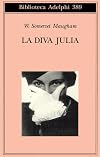
- Woman of the world [Bantam, 1951]; Julia, du bist zauberhaft [German]; La Diva Julia [Italian]
- Original publication date
- 1937
- People/Characters
- Julia Lambert
- Important places
- London, England, UK
- Related movies
- Being Julia (2004 | IMDb)
- First words
- The door opened and Michael Gosseleyn looked up.
- Last words*
- (Click to show. Warning: May contain spoilers.)Ich ziehe Beefsteaks vor.
- Original language
- English
*Some information comes from Common Knowledge in other languages. Click "Edit" for more information.
Classifications
Statistics
- Members
- 812
- Popularity
- 34,214
- Reviews
- 12
- Rating
- (3.81)
- Languages
- 18 — Czech, Danish, Dutch, English, Finnish, French, German, Hungarian, Italian, Latvian, Norwegian (Bokmål), Norwegian, Polish, Portuguese, Romanian, Russian, Spanish, Swedish
- Media
- Paper, Audiobook, Ebook
- ISBNs
- 40
- ASINs
- 35