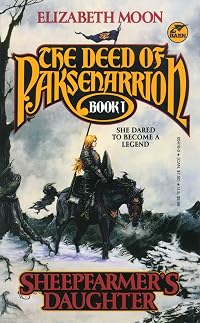
Sheepfarmer's Daughter
by Elizabeth Moon
The Deed of Paksenarrion (1), Paksenarrion's World (03 (Deed of Paksenarrion 01)), Paksenarrion World - Series Order (6)
On This Page
Description
Paksenarrion Dorthansdotter may be the daughter of a humble sheep farmer in the far north end of the kingdom, but she dreams of so much more. After refusing her father's orders to do the sensible thing and marry the pig farmer down the road, Paks, runs away to join a band of mercenaries, dreaming of daring deeds and military glory. But life in the army is different than she imagined, and her daydreams at first seem to be turning to nightmares. But Paks refuses to let her dreams die—and show more does her duty with honor and integrity. Her path is an arduous one, but it will transform her into a hero remembered in songs, chosen by the gods to restore a lost ruler to his throne.The Compton Crook Award?winning first novel from Nebula?winning author Elizabeth Moon. The first in the Paksenarrion Trilogy—now with an all?new introduction by the author.
At the publisher's request, this title is sold without DRM (Digital Rights Management).
. show less
Tags
Recommendations



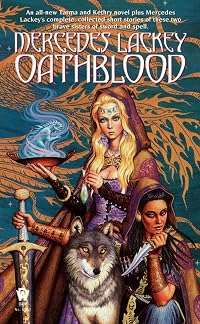
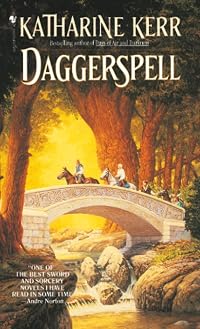
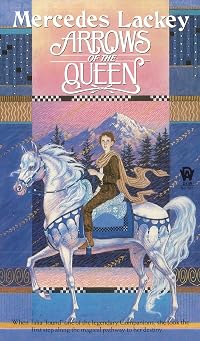
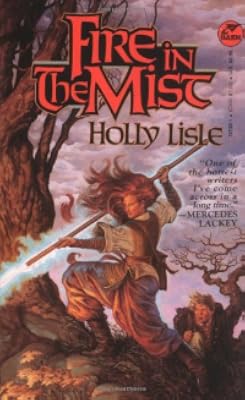


Member Reviews
Sheepfarmer's Daughter is essentially a military SF story told in an adventure fantasy setting. If this sounds AWESOME, read on.
The novel's setting is the stock fantasy world of the 70s, but Moon describes it in lush, precise detail (like the best Dungeons & Dragons campaign you've ever played). Instead of following a traveling band of heroes, the book lovingly depicts the everyday slog of infantry in a mercenary company.
There is plenty of adventure and peril, but also a lot of tedium, suffering, and details of everyday life. (It's so dense with these details that you will find yourself struggling to remember place names and minor characters—don't worry; there's not a test at the end.) It's the perfect light read for those who enjoy show more atmosphere and worldbuilding rather than nonstop action. As with any book that follows a tight-knit community, there's a coziness to the narrative that reminds me of school stories as well as military SF (which explains why the two genres are so easily combined, as in Ender's Game).
Paksenarrion is a wonderful, understated character—bold yet unsure of herself and fun to root for as she grows from a country bumpkin to a confident warrior. The book does intimate that she may have a heroic future, but she isn't a princess or a wizard or the Chosen One, and I like her the more for it. She's also apparently asexual, and it's depicted as totally okay and means that her emotional life doesn't center around sexuality (which, you know, is true of the rest of humanity as well, but don't tell writers that. I say that as a writer who loves her romance subplots).
I felt the book dealt with two touchy subjects very well—military service and the role of women. The novel doesn't glorify war, but it does sensitively depict why young people in an agrarian society would decide to enlist and the sense of community and loyalty that binds them together.
Gender is dealt with in a refreshing way as well—Paks' world is much more egalitarian than many faux-medieval fantasy worlds, but there is still cultural variation in the treatment of women and extremely powerful depictions of sexual harassment and violence in a military context. Since Moon isn't going for historic realism, she takes her inspiration from the modern, rather than medieval, experience of women in the military. This means that we get lots of female characters who both kick ass and speak convincingly to her readers' lived experiences.
At the end of the day, it's a fluffy rather than literary work of fantasy literature, but a totally delightful one that doesn't repeat the same old tropes of court intrigue, runaway princesses, artifact quests, and end of the world scenarios. Highly recommended. show less
The novel's setting is the stock fantasy world of the 70s, but Moon describes it in lush, precise detail (like the best Dungeons & Dragons campaign you've ever played). Instead of following a traveling band of heroes, the book lovingly depicts the everyday slog of infantry in a mercenary company.
There is plenty of adventure and peril, but also a lot of tedium, suffering, and details of everyday life. (It's so dense with these details that you will find yourself struggling to remember place names and minor characters—don't worry; there's not a test at the end.) It's the perfect light read for those who enjoy show more atmosphere and worldbuilding rather than nonstop action. As with any book that follows a tight-knit community, there's a coziness to the narrative that reminds me of school stories as well as military SF (which explains why the two genres are so easily combined, as in Ender's Game).
Paksenarrion is a wonderful, understated character—bold yet unsure of herself and fun to root for as she grows from a country bumpkin to a confident warrior. The book does intimate that she may have a heroic future, but she isn't a princess or a wizard or the Chosen One, and I like her the more for it. She's also apparently asexual, and it's depicted as totally okay and means that her emotional life doesn't center around sexuality (which, you know, is true of the rest of humanity as well, but don't tell writers that. I say that as a writer who loves her romance subplots).
I felt the book dealt with two touchy subjects very well—military service and the role of women. The novel doesn't glorify war, but it does sensitively depict why young people in an agrarian society would decide to enlist and the sense of community and loyalty that binds them together.
Gender is dealt with in a refreshing way as well—Paks' world is much more egalitarian than many faux-medieval fantasy worlds, but there is still cultural variation in the treatment of women and extremely powerful depictions of sexual harassment and violence in a military context. Since Moon isn't going for historic realism, she takes her inspiration from the modern, rather than medieval, experience of women in the military. This means that we get lots of female characters who both kick ass and speak convincingly to her readers' lived experiences.
At the end of the day, it's a fluffy rather than literary work of fantasy literature, but a totally delightful one that doesn't repeat the same old tropes of court intrigue, runaway princesses, artifact quests, and end of the world scenarios. Highly recommended. show less
Summary: Fun and more-ish. Story of a young girl who runs away to join a mercenary company in a fantasy world and does a lot of growing up along the way.
Things I liked:
Dialogue: the author tells versus shows most of the time. You get to discover the characters by their actions and things they say versus overarching narration or exposition.
Training sequences: I found the descriptions of training and medieval fighting very evocative of the training I do at my judo club. It was immersive and pragmatic. Made a nice change from the usual farm boy takes up his magic sword and defeats the dark lord sort of stuff.
Things I thought could be improved:
Some of the fantasy elements like dwarves seem like the inserted just to make the fantasy show more world genre.
Lots of characters at first are hard to track. I'm not sure if the answer is to have less characters or make them more distinct.
Highlight: When Paks is accused of attacking the corporal. I liked this whole sequence. It was like CSI meets fantasy novel meets Private Benjamin the movie show less
Things I liked:
Dialogue: the author tells versus shows most of the time. You get to discover the characters by their actions and things they say versus overarching narration or exposition.
Training sequences: I found the descriptions of training and medieval fighting very evocative of the training I do at my judo club. It was immersive and pragmatic. Made a nice change from the usual farm boy takes up his magic sword and defeats the dark lord sort of stuff.
Things I thought could be improved:
Some of the fantasy elements like dwarves seem like the inserted just to make the fantasy show more world genre.
Lots of characters at first are hard to track. I'm not sure if the answer is to have less characters or make them more distinct.
Highlight:
Moon, Elizabeth. Sheepfarmer’s Daughter. Deed of Paksenarrion No. 1. Baen, 1988.
Sheepfarmer’s Daughter is the first novel of a a trilogy that would inspire two spinoff series, which, for all I know, Elizabeth Moon may still be writing. There are now ten books set in the Paksenarrion universe, not counting shorter pieces and omnibus editions. When I first read this book quite a while ago, I passed it off as a routine woman warrior version of a standard sword, sandal, and sorcery fantasy. I think now that I missed a few things. First, Paks is a more nuanced character than I realized. When she runs away from home to avoid an arranged marriage, she is, like the heroine of Terry Pratchett’s Monstrous Regiment (2003), desperate and show more ignorant of the consequences of her decision. Her idea of what it means to be a soldier derives solely from family legend. As we follow her through her early training and later battles, she asks herself, and we are encouraged to ask with her, what motivations and ethical constraints are proper in soldiering. When she joins the local Duke’s mercenary force, she trusts him to behave ethically, but she is honest about fighting for money. These motivations and constraints become more complex and intense. It was also refreshing to find how restrained is Moon’s treatment of the story’s few fantasy elements. They are necessary to plot, theme, and genre expectations, but they are much more under control than in many books in the genre. Moving from three to four stars. show less
Sheepfarmer’s Daughter is the first novel of a a trilogy that would inspire two spinoff series, which, for all I know, Elizabeth Moon may still be writing. There are now ten books set in the Paksenarrion universe, not counting shorter pieces and omnibus editions. When I first read this book quite a while ago, I passed it off as a routine woman warrior version of a standard sword, sandal, and sorcery fantasy. I think now that I missed a few things. First, Paks is a more nuanced character than I realized. When she runs away from home to avoid an arranged marriage, she is, like the heroine of Terry Pratchett’s Monstrous Regiment (2003), desperate and show more ignorant of the consequences of her decision. Her idea of what it means to be a soldier derives solely from family legend. As we follow her through her early training and later battles, she asks herself, and we are encouraged to ask with her, what motivations and ethical constraints are proper in soldiering. When she joins the local Duke’s mercenary force, she trusts him to behave ethically, but she is honest about fighting for money. These motivations and constraints become more complex and intense. It was also refreshing to find how restrained is Moon’s treatment of the story’s few fantasy elements. They are necessary to plot, theme, and genre expectations, but they are much more under control than in many books in the genre. Moving from three to four stars. show less
Paks defies her father's arranged marriage for her, instead running away to join the army. What follows is a detailed and thorough introduction to the life of a soldier: cleaning privy trenches, learning weaponry, and fending for herself as a woman surrounded by men. And excelling.
I loved this book. Loved it, loved it. If I had read it when I was heavily into fantasy when I was a teenager, I probably would have gone totally fan girl. The thing that sets this apart from most fantasy novels is Moon's attention to military detail. We follow every step of Paks's training, days of slogging through thick mud, and a multitude of battle scenes. For some, these details might be boring - not me. I was fascinated, and loved how it made everything show more feel real. Paks is certainly no Mary Sue, either. She suffers and trains hard to achieve her level of skill and she has zero interest in sex or marriage. None. It was refreshing to read a book with a female main character who enjoyed her independence and was content with her lot in life. Of course, this is book one, so that may change as her character develops, and that's fine. I'll be happy to follow along on her journey. show less
I loved this book. Loved it, loved it. If I had read it when I was heavily into fantasy when I was a teenager, I probably would have gone totally fan girl. The thing that sets this apart from most fantasy novels is Moon's attention to military detail. We follow every step of Paks's training, days of slogging through thick mud, and a multitude of battle scenes. For some, these details might be boring - not me. I was fascinated, and loved how it made everything show more feel real. Paks is certainly no Mary Sue, either. She suffers and trains hard to achieve her level of skill and she has zero interest in sex or marriage. None. It was refreshing to read a book with a female main character who enjoyed her independence and was content with her lot in life. Of course, this is book one, so that may change as her character develops, and that's fine. I'll be happy to follow along on her journey. show less
I picked this one up because my wife recommended it. She said, “It saved fantasy for me.” That was high praise, but I can see now that it was worth it. I am also tempted to say that it saved fantasy for me, but I’m not sure I’ll find much else like it.
I do enjoy Urban Fantasy, but I confess I’ve never really enjoyed much traditional fantasy, i.e. epic sword and sorcercy, though I could never quite put my finger on it. The best I could say was that, “I just couldn’t get into it.” I figured that the genre simply was not for me, and I stuck to my science fiction.
After reading this book, I think I figured out my problem with most fantasy. It’s the long expository openings setting the scene and showing off all the show more world-building the author has done. I can’t really blame most of these authors, because this seems to be The Way It Is Done, in a mold set first perhaps by Tolkien himself.
Well, with all deference the old master, this usually bores me to death. It’s the kingdom of Blahdyblay, ruled by the Lords of Nuchinsuch since the ancient days of Dear-God-my-eyes-are-bleeding! We’re usually seven or eight pages in before anything actually happens, except in rare cases, where we start with some brief excitement, only to be followed by page after page of exposition. Look, I’ll give you the One True Ring if you’ll just shut up about the damned jibbenweed smoke for five minutes!
Sheepfarmer’s Daughter does not suffer from this problem. Admittedly, it starts with a now unfashionable prologue, but even then, it introduces a mystery. Then, chapter one starts with our protagonist, Paks, doing stuff. She’s in a struggle and is making a change in her life. She’s already five steps into the mythical Hero’s Journey, and she’s just getting started.
Yes, the book shows signs of quite a bit of world-building. There are old alliances, gods and saints, raging ogres, fallen kingdoms, and so forth, but it doesn’t come in a front-loaded infodump. Instead, it is revealed to us through the eyes of an wide-eyed foot soldier, one muddy step at a time. The narrator doesn’t tell us about the southern farm lands, the impenetrable fortress, or the honorable allies. Instead, Paks marches through them, butts up against them, and fights alongside them. We don’t so much see the world as we feel it.
Beyond that, the story is good, and it is both gritty and noble. People die, Paks gets hurt. Wounds heal slowly, and scars accumulate. But honor is upheld, and despite all the setbacks and painful losses along the way, the good guys win in the end. Since it’s also the first book in a trilogy, I should also say that powerful forces are at work in the world, and we see them moving slowly and at oblique angles. I don’t yet know where they’re going, but I can see that they’re going to pull Paks deeper into the crucible and explain the mystery that was laid out in that prologue.
So, it was very good – beyond five stars. It’s the first of a trilogy, so I’m looking forward to diving into them, even though they’re each about 500 pages long. And what’s more, Elizabeth Moon has returned to this world after several years, so even after I finish this trilogy, there will be more waiting for me. I’m tempted to dive in headfirst, but I think I’ll stretch it out a bit and savor this one for the next year or two. show less
I do enjoy Urban Fantasy, but I confess I’ve never really enjoyed much traditional fantasy, i.e. epic sword and sorcercy, though I could never quite put my finger on it. The best I could say was that, “I just couldn’t get into it.” I figured that the genre simply was not for me, and I stuck to my science fiction.
After reading this book, I think I figured out my problem with most fantasy. It’s the long expository openings setting the scene and showing off all the show more world-building the author has done. I can’t really blame most of these authors, because this seems to be The Way It Is Done, in a mold set first perhaps by Tolkien himself.
Well, with all deference the old master, this usually bores me to death. It’s the kingdom of Blahdyblay, ruled by the Lords of Nuchinsuch since the ancient days of Dear-God-my-eyes-are-bleeding! We’re usually seven or eight pages in before anything actually happens, except in rare cases, where we start with some brief excitement, only to be followed by page after page of exposition. Look, I’ll give you the One True Ring if you’ll just shut up about the damned jibbenweed smoke for five minutes!
Sheepfarmer’s Daughter does not suffer from this problem. Admittedly, it starts with a now unfashionable prologue, but even then, it introduces a mystery. Then, chapter one starts with our protagonist, Paks, doing stuff. She’s in a struggle and is making a change in her life. She’s already five steps into the mythical Hero’s Journey, and she’s just getting started.
Yes, the book shows signs of quite a bit of world-building. There are old alliances, gods and saints, raging ogres, fallen kingdoms, and so forth, but it doesn’t come in a front-loaded infodump. Instead, it is revealed to us through the eyes of an wide-eyed foot soldier, one muddy step at a time. The narrator doesn’t tell us about the southern farm lands, the impenetrable fortress, or the honorable allies. Instead, Paks marches through them, butts up against them, and fights alongside them. We don’t so much see the world as we feel it.
Beyond that, the story is good, and it is both gritty and noble. People die, Paks gets hurt. Wounds heal slowly, and scars accumulate. But honor is upheld, and despite all the setbacks and painful losses along the way, the good guys win in the end. Since it’s also the first book in a trilogy, I should also say that powerful forces are at work in the world, and we see them moving slowly and at oblique angles. I don’t yet know where they’re going, but I can see that they’re going to pull Paks deeper into the crucible and explain the mystery that was laid out in that prologue.
So, it was very good – beyond five stars. It’s the first of a trilogy, so I’m looking forward to diving into them, even though they’re each about 500 pages long. And what’s more, Elizabeth Moon has returned to this world after several years, so even after I finish this trilogy, there will be more waiting for me. I’m tempted to dive in headfirst, but I think I’ll stretch it out a bit and savor this one for the next year or two. show less
Paksenarrion, Paks for short, wants more out of life than to marry the pig farmer down the road. Against her father's wishes she's off to join the army, even if it means she can never see her family again. And so here her adventure begins.
Sheepfarmer's Daughter is the first in The Deeds of Paksnearrion series by Elizabeth Moon. It is a traditional style fantasy story where the main character is on her way to becoming a hero through deed and strength of character quickly rising through the ranks of the company while avoiding several cliches. Paks is just the sheepfarmer's daughter who wants to be a fighter. She makes mistakes, has prejudices and achieves her goals through hard work and determination instead of being gifted with special show more powers. Others see Paks as special while she is content to see herself as a good fighter and soldier.
One of the things I liked is the author doesn't shy away from the details of military life. There are details about hardships of life on the march, the difficulties in dealing with a mixed sex army from the female perspective, the importance of drills and the chaos of the battle field. It is not gritty fantasy - while many people die details of their injuries are largely left out. The author's background in military training definitely shows.
On the downside, characters other than Paks are only lightly fleshed out. There is one chapter near the end from another character's point of view that was great - I wish there had been more of this. There is also a lot of travel involved, which starts to get repetitive and loses the tension being built by the story.
Those minor flaws aside, I quite enjoyed the book. I'll be looking for the other books to continue the series. show less
Sheepfarmer's Daughter is the first in The Deeds of Paksnearrion series by Elizabeth Moon. It is a traditional style fantasy story where the main character is on her way to becoming a hero through deed and strength of character quickly rising through the ranks of the company while avoiding several cliches. Paks is just the sheepfarmer's daughter who wants to be a fighter. She makes mistakes, has prejudices and achieves her goals through hard work and determination instead of being gifted with special show more powers. Others see Paks as special while she is content to see herself as a good fighter and soldier.
One of the things I liked is the author doesn't shy away from the details of military life. There are details about hardships of life on the march, the difficulties in dealing with a mixed sex army from the female perspective, the importance of drills and the chaos of the battle field. It is not gritty fantasy - while many people die details of their injuries are largely left out. The author's background in military training definitely shows.
On the downside, characters other than Paks are only lightly fleshed out. There is one chapter near the end from another character's point of view that was great - I wish there had been more of this. There is also a lot of travel involved, which starts to get repetitive and loses the tension being built by the story.
Those minor flaws aside, I quite enjoyed the book. I'll be looking for the other books to continue the series. show less
A farm girl doesn't want to marry and runs away to join a mercenary company. Strong fantasy story written by an author who understands the difference between a soldier and a warrior which makes the military life believable. We see her training and first battles, and the initial stirrings of the powers interested in her.
Recommended.
Recommended.
Members
- Recently Added By
Lists

Epic fantasy by female authors
47 works; 7 members

Female Protagonist
1,056 works; 57 members

Fantasy novels with a female protagonist
76 works; 15 members

Books Read in 2023
5,547 works; 145 members

Books Read in 2000
115 works; 4 members

Books Read in 2013
1,630 works; 51 members
Author Information

119+ Works 37,058 Members
Elizabeth Moon was born March 7, 1945, and grew up in McAllen, Texas, graduating from McAllen High School in 1963. She has a B.A. in History from Rice University (1968) and another in Biology from the University of Texas at Austin (1975) with graduate work in Biology at the University of Texas, San Antonio. She served in the USMC from 1968 to show more 1971, first at MCB Quantico and then at HQMC. She married Richard Moon, a Rice classmate and Army officer, in 1969; they moved to the small central Texas town where they still live in 1979. They have one son, born in 1983. (Publisher Fact Sheets) Elizabeth Moon was born on March 7, 1945 in Texas. She received a B.A. in history from Rice University in 1968 and a B.S. in biology from the University of Texas at Austin in 1975 with graduate work in biology at the University of Texas, San Antonio. She served in the United States Marine Corps from 1968 to 1971. In the early 1980s, she wrote the Florence News column for the county weekly newspaper. She is a science fiction and fantasy author. In 1986, she published her first science fiction story in the monthly magazine Analog and the anthology series Sword and Sorceress. Her first novel, The Sheepfarmer's Daughter, was published in 1988 and won the Compton Crook Award in 1989. Her other works include Remnant Population, Oath of Fealty, Kings of the North, and Echoes of Betrayal. She has won several awards including the Nebula Award for Best Novel for The Speed of Dark in 2003 and the Heinlein Award in 2007. (Bowker Author Biography) show less
Some Editions
Awards and Honors
Awards
Series


Work Relationships
Is contained in
Common Knowledge
- Canonical title
- Sheepfarmer's Daughter
- Original title
- Sheepfarmer's daughter
- Original publication date
- 1988-06
- People/Characters
- Paksenarrion "Paks" Dorthansdottir; Saben Kanasson; Canna Arendts; Vik; Natzlin; Arcolin (show all 8); Kefer; Volya
- Epigraph
- None
- Dedication
- None
- First words
- In a sheepfarmer's low stone house, high in the hills above Three Firs, two swords hang now above the mantelpiece. - Prologue
"And I say you will!" bellowed the burly sheepfarmer, Dorthan Kanasson. - Chapter 1 - Last words
- (Click to show. Warning: May contain spoilers.)Saben's red horse would bear her to the Afterfields.
- Blurbers
- Tarr, Judith
Classifications
Statistics
- Members
- 1,632
- Popularity
- 13,797
- Reviews
- 50
- Rating
- (3.92)
- Languages
- English, Italian, Norwegian (Bokmål), Swedish
- Media
- Paper, Audiobook, Ebook
- ISBNs
- 18
- ASINs
- 14