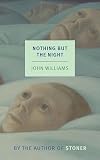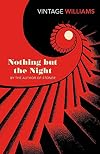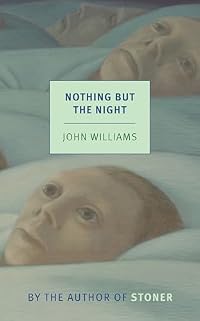
Nothing but the Night
by John Williams
On This Page
Description
Stoner author John Williams's first novel is a searing look at a man's relationship with his absent father, and how early trauma manifests throughout one's life John Williams's first novel is a brooding psychological noir. Arthur Maxley is a young man at the end of his emotional rope. Having dropped out of college, he's holed up in a big-city hotel, living off an allowance from his family, feeling nothing but alone and doing nothing but drinking to forget it. What's brought him to this show more point? Something is troubling him, something is haunting him, something he cannot bring himself either to face or to turn away from. And now his father has come to town, a hail-fellow-well-met kind of guy. They've been estranged for years, and yet Arthur wants to meet--and so he does, reeling away from the encounter for a night of drinking and dancing and a final reckoning with the traumatizing past that readers will not soon forget. Nothing But the Night includes an interview with Nancy Williams, John Williams's widow. show lessTags
Recommendations















Member Reviews
Childhood trauma, especially when rooted in the family, creates a vortex, ever-present, pulling at the individual with relentless force. Every failure in the present amplifies its gravity. It is the experience of being thrown into the world, subjected to forces beyond one’s control or comprehension. The emotional torment inherited from the birth-givers is not chosen, it is passed down like a curse.
In that haunted past, all things good and all things evil coexist. And the individual straddles two worlds: one leg in a reality that feels unreal, weightless; the other anchored in the past, where he truly exists. The protagonist is one such man. He does not resist the pull. There is no fight. His existence lacks forward motion, lacks show more defined purpose. He does not articulate his entrapment, nor does he attempt escape. He is suspended in it.
There are brief glitches that jolt him into the present, but they are fleeting. Each time, he sinks back, deeper into himself.
It carries the same characteristic bleakness as Stoner, that slow and sorrowful drift through life but here, the suspension is coloured differently: not Stoner’s dark reds, deep blues, and worn browns, but a lifeless grey-black. Only the women in the novel seem to possess color, but that dissipates soon as well. show less
In that haunted past, all things good and all things evil coexist. And the individual straddles two worlds: one leg in a reality that feels unreal, weightless; the other anchored in the past, where he truly exists. The protagonist is one such man. He does not resist the pull. There is no fight. His existence lacks forward motion, lacks show more defined purpose. He does not articulate his entrapment, nor does he attempt escape. He is suspended in it.
There are brief glitches that jolt him into the present, but they are fleeting. Each time, he sinks back, deeper into himself.
It carries the same characteristic bleakness as Stoner, that slow and sorrowful drift through life but here, the suspension is coloured differently: not Stoner’s dark reds, deep blues, and worn browns, but a lifeless grey-black. Only the women in the novel seem to possess color, but that dissipates soon as well. show less
Night, not Day
“In all the endless road you tread / There’s nothing but the night.” - AE Housman
A young John Williams penned lush language to describe a single day in the life of another young man. He minutely observes everything, however trivial: two sentences to describe an envelope, and starting(!) to sit down. But it is profound and bewitching. The multi-sensory sights, sounds, textures, tastes, and smells of a dramatic day are poetic, sensuous, and sublime. (The sexual references are the least sensual.)
“Father, he thought. It is a word.”
Arthur is traumatised by an incident involving his father. A memory he strives to suppress. A man he tries to avoid. In contrast, his memories of his mother are fond, intimate, and show more intense.
Watery Dreams
Dreams are paradoxical: you have strange powers, but also no power. Such is the opening. Such is Arthur’s life:
“The tool of a dark prankster, a grim little joker who creates worlds within world, lives within life, brains within brain.”
Arthur feels he is the victim of external forces, exacerbated by his drifting in and out of consciousness - sleep, daydreams, and drunken haze:
“With mind and memory he could go back in time… into a dream which was more actual than the unreality of his present existence.”
It’s dripping with watery metaphors.
“His pain flooded like a drowning wave.”
He goes with the flow one minute:
“A bit of flotsam tossed and carried along between narrow banks.”
But resists it another:
“Time rushed about him and he was dull and silent, an immovable rock in a rushing stream.”
Remembering to Forget
The delicate heart of the story is an unspecified, but terrible, incident that Arthur tries to forget, as he was advised to do. Awake or dreaming, he tiptoes around the edge of memories of the event itself, like picking a scab, but not daring to pull it off and expose the wound. It is “obscured by the habitual force of conscious will”.
There is no escape:
“Remembrance… followed him as a ravenous animal follows its wounded prey”
There is another sort of repression: clumsy and pejorative hints about the probable homosexuality of at least one character, but that is never fully explored.
Power and Powerlessness
Cartoon: “Don’t kid yourself. Free will is an illusion”, one Bizarro puppet tells another.
The dreaminess and conscious forgetting compound Arthur’s sense of being controlled: by events, by his father, and of course, his memories.
He projects that back to his whole life, and onto others:
“People… oozed onto the dance floor… like so many dumb puppets manipulated by unseen hands.”
There’s even a mesmerising showgirl called Volita, who dances more like a puppet possessed, than of her own volition.
Such a view can absolve one of guilt for anything and everything, but the price is to accept and entrench one’s powerlessness. Who wants to be a victim or a toy? Isn’t it better to face the truth and be free - to feel, even if it’s painful?
Falling Apart
“The thing which had been nameless could now be spoken… He remembered.”
Confronting our demons is meant to be good. But when the unexpected brutality that caused Arthur’s likely PTSD is finally revealed (emotional as much as physical), the exquisite writing slips away. The delicately decorative words are suddenly mixed with clichés and awkward metaphors:
• “Drawn forward by a sanguine magnet of terror.”
• “His arms were a resilient vice.”
• “There was a swollen river in him”, so the dam wouldn’t hold.
Maybe Williams lost the momentum to polish the final rough stones, and that is why he later disowned it.
Maybe it was a deliberate reflection of the arc of Arthur’s life.
Other Quotes
• “Morning rays of sunlight poked inquisitive fingers through the half-opened shutters… and touched his face softly, warmly, impersonally.”
• “Last night’s cheap perfume, so strong that the sickening odor of morning food and the kitchen smell could not obscure it.”
• “The drapes had been drawn aside to disclose the vapid stare of the windows. They leered down at him.”
• “The stern implacability of the [college] buildings… a holocaust of faces which had no names.”
• “The rain as it descended in light, wet thongs, inexorably graying and immobilizing the city which huddled patiently beneath its gentle lash.”
• “There’s nothing worse than being alone when you aren’t strong enough to face your own thoughts… You’ve got to make yourself believe you’re not alone, even if you are.”
• “He breathed deeply, shuddering of the corrupt air.” (Yes, “of”.)
• “He who is alone in a desert is always aware of his own significance… But one who is solitary in the midst of a teeming swarm loses awareness of himself as an individual.”
• “He… waited for the evening to reveal itself to him, sentence by sentence, like an unread book.”
• “Remembering with sudden certainty the loveliness of unimportant, unostentatious little things. The green velvet feel of damp grass beneath his feet; the soughing of the wind through the maple trees; a night-bird’s lonely call.”
• “Moonlight slithered through the open lattices” and later it “sifted”.
• “A sickly cloud of almost tangible sordidity.” (In a nightclub.)
• “Her warm moist breath crept daintily on his skin”
Williams’ Oeuvre
Three Novels
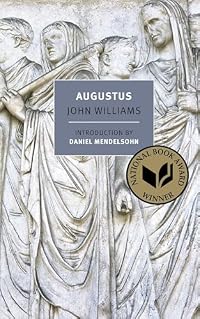
John Williams (not the composer of Star Wars, Jaws, Close Encounters, Superman, ET, Jurassic Park, Schindler's List, Harry Potter, and others) published three novels between 1960 and 1972 (the era of the Cold War, of the Cuba crisis, the Vietnam War, the Black Panther movement). The last of them, Augustus (review HERE), winning the National Book Award.
But his works gradually gathered dust on forgotten shelves until Stoner (nothing to do with dope - see my review HERE) was reissued in 2003 by Vintage and then by New York Review Books Classics in 2006. Its popularity slowly swelled, bringing Augustus and Butcher’s Crossing (review HERE) in its wake. Momentum built on GoodReads, too.
• Stoner currently (10 July 2018) has 66,679 ratings, averaging 4.29*, with 8,138 reviews.
• Butcher’s Crossing has 8,997 ratings, averaging 4.11*, with 940 reviews.
• Augustus has 6,259 ratings, averaging 4.19*, with 677 reviews.
The Fourth Novel - First and Last
But this, his first novel from 1948, was left behind. He wrote it when he was only 22, while he was in Burma during the war, recovering from plane crash. It has only 519 ratings, averaging a mere 3.11*, with 66 reviews. But maybe that will change, now it's been reissued (February 2019) by New York Review Books Classics.
Having loved the other three, and knowing Williams had disowned this youthful (aged 26) work, I was wary of reading it. But I succumbed, and am glad I did, even though it could not and did not reach the brilliance of its successors.
Four Novels, Compared
All four are more about character than plot, and start with a young man breaking away from his roots, trying to find himself, and forge his life.
But whereas Stoner and Augusts chart a lifetime, and involve complicated relationships with wives and daughters, Butcher’s Crossing is a few months, and this a mere 24 hours.
Butcher's Crossing has something of the detail of tiny sensation that are so noticeable here.
The relationships between men are generally complex, and often problematic; women are significant, but have softer power.
Augustus is startlingly different in form, being epistolary and historical.
All have a degree of bleakness, but the better known trio have plenty of hope and beauty for balance.
See this interview with Nancy Gardner Williams: HERE.
Other Influences?
The novel-of-a-single-day, with incredible attention to detail, reminded me of Nicholson Baker’s 1988 novel, The Mezzanine (see my review, HERE). And for a few chapters, the telephone assumed huge significance. Not in a sexual way, but it again brought Baker to mind, for Vox (see my review HERE). I doubt there’s a connection, but if so, Williams was first.
The strongest theme, of suppressing what one doesn’t want to know or remember, has many parallels with Ford Madox Ford’s 1915 novel, The Good Soldier (see my review, HERE). However, the protagonists of the two books are trying to ignore very different things.
Kafka is also relevant. Like Arthur, he sometimes felt parasitic and controlled, and he had a very fraught relationship with his father, albeit for different reasons. Kafka wrote his grievances in Letter to His Father, whereas Arthur receives a life-changing letter from his father.
Read This Because…
This is a good book, but not a great one. If I hadn't known the author and adored his later works, I think it would have been only 3*. Its importance lies in seeing the early work of a superb writer. I strongly suggest you read those greats first. Then you can more easily spot the gems in the shingle. And they are many.
In a similar way, Arnold Bennett's first novel(la), A Man from the North, is really only worth reading for seeing the seeds of the author he would become. See my review, HERE. show less
“In all the endless road you tread / There’s nothing but the night.” - AE Housman
A young John Williams penned lush language to describe a single day in the life of another young man. He minutely observes everything, however trivial: two sentences to describe an envelope, and starting(!) to sit down. But it is profound and bewitching. The multi-sensory sights, sounds, textures, tastes, and smells of a dramatic day are poetic, sensuous, and sublime. (The sexual references are the least sensual.)
“Father, he thought. It is a word.”
Arthur is traumatised by an incident involving his father. A memory he strives to suppress. A man he tries to avoid. In contrast, his memories of his mother are fond, intimate, and show more intense.
Watery Dreams
Dreams are paradoxical: you have strange powers, but also no power. Such is the opening. Such is Arthur’s life:
“The tool of a dark prankster, a grim little joker who creates worlds within world, lives within life, brains within brain.”
Arthur feels he is the victim of external forces, exacerbated by his drifting in and out of consciousness - sleep, daydreams, and drunken haze:
“With mind and memory he could go back in time… into a dream which was more actual than the unreality of his present existence.”
It’s dripping with watery metaphors.
“His pain flooded like a drowning wave.”
He goes with the flow one minute:
“A bit of flotsam tossed and carried along between narrow banks.”
But resists it another:
“Time rushed about him and he was dull and silent, an immovable rock in a rushing stream.”
Remembering to Forget
The delicate heart of the story is an unspecified, but terrible, incident that Arthur tries to forget, as he was advised to do. Awake or dreaming, he tiptoes around the edge of memories of the event itself, like picking a scab, but not daring to pull it off and expose the wound. It is “obscured by the habitual force of conscious will”.
There is no escape:
“Remembrance… followed him as a ravenous animal follows its wounded prey”
There is another sort of repression: clumsy and pejorative hints about the probable homosexuality of at least one character, but that is never fully explored.
Power and Powerlessness
Cartoon: “Don’t kid yourself. Free will is an illusion”, one Bizarro puppet tells another.
The dreaminess and conscious forgetting compound Arthur’s sense of being controlled: by events, by his father, and of course, his memories.
He projects that back to his whole life, and onto others:
“People… oozed onto the dance floor… like so many dumb puppets manipulated by unseen hands.”
There’s even a mesmerising showgirl called Volita, who dances more like a puppet possessed, than of her own volition.
Such a view can absolve one of guilt for anything and everything, but the price is to accept and entrench one’s powerlessness. Who wants to be a victim or a toy? Isn’t it better to face the truth and be free - to feel, even if it’s painful?
Falling Apart
“The thing which had been nameless could now be spoken… He remembered.”
Confronting our demons is meant to be good. But when the unexpected brutality that caused Arthur’s likely PTSD is finally revealed (emotional as much as physical), the exquisite writing slips away. The delicately decorative words are suddenly mixed with clichés and awkward metaphors:
• “Drawn forward by a sanguine magnet of terror.”
• “His arms were a resilient vice.”
• “There was a swollen river in him”, so the dam wouldn’t hold.
Maybe Williams lost the momentum to polish the final rough stones, and that is why he later disowned it.
Maybe it was a deliberate reflection of the arc of Arthur’s life.
Other Quotes
• “Morning rays of sunlight poked inquisitive fingers through the half-opened shutters… and touched his face softly, warmly, impersonally.”
• “Last night’s cheap perfume, so strong that the sickening odor of morning food and the kitchen smell could not obscure it.”
• “The drapes had been drawn aside to disclose the vapid stare of the windows. They leered down at him.”
• “The stern implacability of the [college] buildings… a holocaust of faces which had no names.”
• “The rain as it descended in light, wet thongs, inexorably graying and immobilizing the city which huddled patiently beneath its gentle lash.”
• “There’s nothing worse than being alone when you aren’t strong enough to face your own thoughts… You’ve got to make yourself believe you’re not alone, even if you are.”
• “He breathed deeply, shuddering of the corrupt air.” (Yes, “of”.)
• “He who is alone in a desert is always aware of his own significance… But one who is solitary in the midst of a teeming swarm loses awareness of himself as an individual.”
• “He… waited for the evening to reveal itself to him, sentence by sentence, like an unread book.”
• “Remembering with sudden certainty the loveliness of unimportant, unostentatious little things. The green velvet feel of damp grass beneath his feet; the soughing of the wind through the maple trees; a night-bird’s lonely call.”
• “Moonlight slithered through the open lattices” and later it “sifted”.
• “A sickly cloud of almost tangible sordidity.” (In a nightclub.)
• “Her warm moist breath crept daintily on his skin”
Williams’ Oeuvre
Three Novels
John Williams (not the composer of Star Wars, Jaws, Close Encounters, Superman, ET, Jurassic Park, Schindler's List, Harry Potter, and others) published three novels between 1960 and 1972 (the era of the Cold War, of the Cuba crisis, the Vietnam War, the Black Panther movement). The last of them, Augustus (review HERE), winning the National Book Award.
But his works gradually gathered dust on forgotten shelves until Stoner (nothing to do with dope - see my review HERE) was reissued in 2003 by Vintage and then by New York Review Books Classics in 2006. Its popularity slowly swelled, bringing Augustus and Butcher’s Crossing (review HERE) in its wake. Momentum built on GoodReads, too.
• Stoner currently (10 July 2018) has 66,679 ratings, averaging 4.29*, with 8,138 reviews.
• Butcher’s Crossing has 8,997 ratings, averaging 4.11*, with 940 reviews.
• Augustus has 6,259 ratings, averaging 4.19*, with 677 reviews.
The Fourth Novel - First and Last
But this, his first novel from 1948, was left behind. He wrote it when he was only 22, while he was in Burma during the war, recovering from plane crash. It has only 519 ratings, averaging a mere 3.11*, with 66 reviews. But maybe that will change, now it's been reissued (February 2019) by New York Review Books Classics.
Having loved the other three, and knowing Williams had disowned this youthful (aged 26) work, I was wary of reading it. But I succumbed, and am glad I did, even though it could not and did not reach the brilliance of its successors.
Four Novels, Compared
All four are more about character than plot, and start with a young man breaking away from his roots, trying to find himself, and forge his life.
But whereas Stoner and Augusts chart a lifetime, and involve complicated relationships with wives and daughters, Butcher’s Crossing is a few months, and this a mere 24 hours.
Butcher's Crossing has something of the detail of tiny sensation that are so noticeable here.
The relationships between men are generally complex, and often problematic; women are significant, but have softer power.
Augustus is startlingly different in form, being epistolary and historical.
All have a degree of bleakness, but the better known trio have plenty of hope and beauty for balance.
See this interview with Nancy Gardner Williams: HERE.
Other Influences?
The novel-of-a-single-day, with incredible attention to detail, reminded me of Nicholson Baker’s 1988 novel, The Mezzanine (see my review, HERE). And for a few chapters, the telephone assumed huge significance. Not in a sexual way, but it again brought Baker to mind, for Vox (see my review HERE). I doubt there’s a connection, but if so, Williams was first.
The strongest theme, of suppressing what one doesn’t want to know or remember, has many parallels with Ford Madox Ford’s 1915 novel, The Good Soldier (see my review, HERE). However, the protagonists of the two books are trying to ignore very different things.
Kafka is also relevant. Like Arthur, he sometimes felt parasitic and controlled, and he had a very fraught relationship with his father, albeit for different reasons. Kafka wrote his grievances in Letter to His Father, whereas Arthur receives a life-changing letter from his father.
Read This Because…
This is a good book, but not a great one. If I hadn't known the author and adored his later works, I think it would have been only 3*. Its importance lies in seeing the early work of a superb writer. I strongly suggest you read those greats first. Then you can more easily spot the gems in the shingle. And they are many.
In a similar way, Arnold Bennett's first novel(la), A Man from the North, is really only worth reading for seeing the seeds of the author he would become. See my review, HERE. show less
In this dramatic novella, the main character is a young man who is obviously struggling. He has a troubled relationship with his father and is clearly in some sort of mental crisis as the short timeline unfolds. The root of his issues is finally revealed after an increasingly frantic unfolding of events.
This is [[John Williams]]'s first novel. His writing is already confident and succinct, but I felt the dramatic subject matter didn't quite suit his writing style. I still highly recommend reading [Stoner] first. I think it's clearly his best book (I've now read all 4 of his novels), though all of his writing is good and worthwhile.
This is [[John Williams]]'s first novel. His writing is already confident and succinct, but I felt the dramatic subject matter didn't quite suit his writing style. I still highly recommend reading [Stoner] first. I think it's clearly his best book (I've now read all 4 of his novels), though all of his writing is good and worthwhile.
Masterful depiction of a young man in agony. He has tried to live his life apart from his past, which contains memories too painful to bear examining. This faulty resolution fails when his father appears (after a long separation) and requests a meeting. The young man slowly unravels and reader learn, bit by bit, of the terrible tragedy of his childhood as we watch him fall apart. Terrific pacing and outstanding character study.
A tale of trauma. There is something great here, though I can understand why he separated himself from the piece. Perhaps too personal, or too distant. Still it’s a great piece despite its obvious shortcomings.
Beautiful writing but depressing and for dedicated Williams fans only.
This a story about Arthur leads a life of loneliness and dreams. Time seems to move slowly through the events in a day in his life. We find out, slowly too, the great tragedy that determines his life of loneliness and not bring able to relate to people well, particularly women.
The novel is extremely suspenseful even though there is no apparent danger in his life. It is caused by the moves between his imagination or dreams and reality.
The novel is extremely suspenseful even though there is no apparent danger in his life. It is caused by the moves between his imagination or dreams and reality.
Members
- Recently Added By
Lists

Books Read in 2019
4,052 works; 108 members
Author Information

12 Works 13,599 Members
Series
Belongs to Publisher Series
Common Knowledge
- Canonical title
- Nothing but the Night
- Original title
- Nothing But The Night
- Original publication date
- 1948; 2015 (dutch) (dutch)
- First words*
- De droom, waarin hij gewichtloos en apathisch was, waarin hij een uitdijende nevel van bewustzijn was die kolkte en trilde in een uitgestrekte duisternis, was aanvankelijk zonder gevoel, slechts een vaag soort associatieve wa... (show all)arneming, blind, hersenloos en afwezig, alleen maar in staat een onderscheid te maken tussen hemzelf en de duisternis.
- Last words*
- (Click to show. Warning: May contain spoilers.)Onvast begon hij aan de wandeling door de lange, smalle straat naar waar het donker werd en waar geen licht was, waar de nacht op hem drukte, waar niets op hem wachtte, waar hij, uiteindelijk, alleen was.
- Original language
- English
*Some information comes from Common Knowledge in other languages. Click "Edit" for more information.
Classifications
Statistics
- Members
- 337
- Popularity
- 93,707
- Reviews
- 8
- Rating
- (3.16)
- Languages
- 6 — Catalan, Dutch, English, German, Italian, Spanish
- Media
- Paper, Audiobook, Ebook
- ISBNs
- 22
- ASINs
- 3