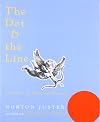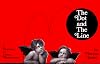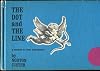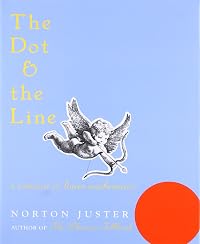
The Dot and the Line: A Romance in Lower Mathematics
by Norton Juster
On This Page
Description
A straight line falls in love with a dot and develops his talents to form all kinds of geometric shapes in order to win her affections.Tags
Recommendations












Member Reviews
Aw, come on, Line. You can do better than Dot. Especially after your burst of personal growth! Why didn't you outgrow Dot?
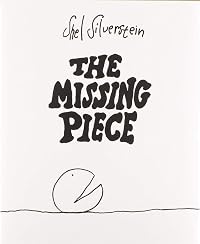
I don't think this is the message I'm supposed to take from this story. I finished it with similar feelings to how I feel about Shel Silverstein's sweet story of codependency The Missing Piece Meets the Big O--a nagging suspicion that I was supposed to find it charming and romantic but instead feeling pity and a mild revulsion to the dynamic.
Why everyone should read this anyway: (a) it's Norton Juster, (b) it involves math jokes, and (c) what do you need a (c) for? It's Norton Juster and makes math jokes. Line's friends were concerned about "how terribly thin and drawn he had become"? Who doesn't think that's hilarious?
I don't think this is the message I'm supposed to take from this story. I finished it with similar feelings to how I feel about Shel Silverstein's sweet story of codependency The Missing Piece Meets the Big O--a nagging suspicion that I was supposed to find it charming and romantic but instead feeling pity and a mild revulsion to the dynamic.
Why everyone should read this anyway: (a) it's Norton Juster, (b) it involves math jokes, and (c) what do you need a (c) for? It's Norton Juster and makes math jokes. Line's friends were concerned about "how terribly thin and drawn he had become"? Who doesn't think that's hilarious?
Genius.
That would be my one word review, but for those of you who want more I would call this one of the best picture books I've ever read. The story is both simple and complex, much like mathematics. It's the story of a line who's in love with a dot and the plot is filled with all the agony of unrequited love for the entire 80 pages, which will take less than 15 minutes to read. But these will be the most amusing 15 minutes of your day as you explore the theme of love through lower mathematics.
That would be my one word review, but for those of you who want more I would call this one of the best picture books I've ever read. The story is both simple and complex, much like mathematics. It's the story of a line who's in love with a dot and the plot is filled with all the agony of unrequited love for the entire 80 pages, which will take less than 15 minutes to read. But these will be the most amusing 15 minutes of your day as you explore the theme of love through lower mathematics.
The Dot and the Line is a funny little picture book for kids and adults. It's a humorous allegory about a straight line who falls in love with a dot. Unfortunately the dot loves the more free-spirited squiggle and the straight line nears despair. He tries to rejoice in his wonderful uses (illustrated in creative and humorous ways) but is still frustrated by his lack of creativity and spontaneity. He finally discovers...
Well, I don't want to spoil it for you, but it's a fun little book that packs quite a bit of philosophical punch. Though it's not quite as involved, expect some of the same word plays and humor as the author's most famous book: The Phantom Tollbooth.
Well, I don't want to spoil it for you, but it's a fun little book that packs quite a bit of philosophical punch. Though it's not quite as involved, expect some of the same word plays and humor as the author's most famous book: The Phantom Tollbooth.
Well actually it's in my son's permanent collection, not mine. He's a huge fan of Norton Juster, too, and he's currently finishing his degree in mathematics education.
So, yes, the note in the back compares this to Gulliver and Alice in Wonderland, as in, fables for all ages with a dose of math. Another reviewer compares it to Flatland, which would be fine, except that's so heavy with social satire the math gets lost in it. Of course it should be compared to Juster's more famous, and even more wonderful, work, The Phantom Tollbooth. But also I compare it to [b:The Missing Piece|30122|The Missing Piece (The Missing Piece, #1)|Shel show more Silverstein|https://i.gr-assets.com/images/S/compressed.photo.goodreads.com/books/1388184341l/30122._SX50_.jpg|41394]. And if you like any of the above, read the rest. show less
So, yes, the note in the back compares this to Gulliver and Alice in Wonderland, as in, fables for all ages with a dose of math. Another reviewer compares it to Flatland, which would be fine, except that's so heavy with social satire the math gets lost in it. Of course it should be compared to Juster's more famous, and even more wonderful, work, The Phantom Tollbooth. But also I compare it to [b:The Missing Piece|30122|The Missing Piece (The Missing Piece, #1)|Shel show more Silverstein|https://i.gr-assets.com/images/S/compressed.photo.goodreads.com/books/1388184341l/30122._SX50_.jpg|41394]. And if you like any of the above, read the rest. show less
A classic love triangle occurs between a line, a dot, and a squiggle expressed through geometry. The line loves the dot, the dot the squiggle, and the squiggle is just a squiggle. The line tries to impress the dot by bending, curving, and forming angles. Eventually, the line wins the love of the dot by being the best line it can be. This silly book has so much more to offer than just arithmetic. It is about gaining confidence in being who you are. The illustrations are bright and vibrant which provide various mathematical expressions. This charming book is not only a math builder but a self-esteem builder as well.
Acute, quirky picture book for all ages. You can view it from several angles: it’s superficially about geometry, but tangentially about love across boundaries, trying new things, and the perils of judging by appearance. Hence, the subtitle, “A Romance in Lower Mathematics”. My point is plane [sic]: unless you’re really obtuse, you’ll come round to its punning charms, by degrees.
Plot Line, Story Arc, and Love Triangle
A “sensible straight line” falls in love with a “frivolous dot” who prefers a “wild and unkempt squiggle”.
Image: The dot going after the squiggle.
The line tries to impress her: a daredevil tightrope, a potent lance in a painting, and so on.
Image: The line as an international sportsman
But he’s still a show more straight line, in one dimension - merely in a different context.
After much effort, he begins to develop in other directions: an angle, then another, and another.
Image: The line making angles
But he can’t resist the lure of order, so he makes symmetrical geometric shapes: beautiful and increasingly elaborate, but not wild and free. Eventually he progresses to ellipses, curves, and more creative beautiful hybrids.
He goes back to impress the dot with a variety of patterns, including: mysterious (maze), profound (web), complex, erudite (classical Greek pillar decoration), and eloquent (cherubic frame).
Image: Mysterious, Complex, Compelling (Source.)
The squiggle just squiggles, and the dot realises:
“What she had thought was freedom and joy was nothing but anarchy and sloth.”
The message seems to be about being brave, industrious, and tenacious. Or maybe it’s just fun. The explicit moral is a typical pun:
"To the vector belong the spoils."
Puns
* Before long he was completely on edge.
* How terribly thin and drawn he had become.
* Stretching a point (to say that the dot is beautiful)
Polymath
The author and illustrator, Norton Juster, was an architect and academic, as well as a writer of children’s books, including Phantom Tollbooth.
He also won an Oscar in 1966 for his ten-minute animation of this book. Robert Morley reads the full text, but some of the illustrations are slightly different, and there is a wider, brighter palette. You can watch it HERE (or Google it) and read details on imdb HERE.
Image: The line and the dot in a more colourful video world
Aesthetics
The pictures, in both book and animation, use a surprising variety of styles, but I think it works.
Unfortunately, my edition uses an italic serif font - Colwell - which is pretty, but not easy for children to read. In particular, lower case H and B are almost indistinguishable.
Image: She only had/bad eyes for...
Misalliance
Another comic, all-age tale of love across class barriers, is Flanders and Swann’s delightful song of the same era, Misalliance, about the doomed love of the Honeysuckle and the Bindweed (which is also the name of a Scottish country dance; see diagram of moves here). F&S will teach you a weird botanical fact along the way:
* Lyrics: HERE.
* F&S performing: HERE.
* My review of Songs of Michael Flanders and Donald Swann: HERE.
Image: Honeysuckle and bindweed, entwined (Source.)
See also
For a more abstract look at two-dimensional space, with satirical analogies to Victorian society, see Abbott's Flatland, which I reviewed HERE. show less
Plot Line, Story Arc, and Love Triangle
A “sensible straight line” falls in love with a “frivolous dot” who prefers a “wild and unkempt squiggle”.
Image: The dot going after the squiggle.
The line tries to impress her: a daredevil tightrope, a potent lance in a painting, and so on.
Image: The line as an international sportsman
But he’s still a show more straight line, in one dimension - merely in a different context.
After much effort, he begins to develop in other directions: an angle, then another, and another.
Image: The line making angles
But he can’t resist the lure of order, so he makes symmetrical geometric shapes: beautiful and increasingly elaborate, but not wild and free. Eventually he progresses to ellipses, curves, and more creative beautiful hybrids.
He goes back to impress the dot with a variety of patterns, including: mysterious (maze), profound (web), complex, erudite (classical Greek pillar decoration), and eloquent (cherubic frame).
Image: Mysterious, Complex, Compelling (Source.)
The squiggle just squiggles, and the dot realises:
“What she had thought was freedom and joy was nothing but anarchy and sloth.”
The message seems to be about being brave, industrious, and tenacious. Or maybe it’s just fun. The explicit moral is a typical pun:
"To the vector belong the spoils."
Puns
* Before long he was completely on edge.
* How terribly thin and drawn he had become.
* Stretching a point (to say that the dot is beautiful)
Polymath
The author and illustrator, Norton Juster, was an architect and academic, as well as a writer of children’s books, including Phantom Tollbooth.
He also won an Oscar in 1966 for his ten-minute animation of this book. Robert Morley reads the full text, but some of the illustrations are slightly different, and there is a wider, brighter palette. You can watch it HERE (or Google it) and read details on imdb HERE.
Image: The line and the dot in a more colourful video world
Aesthetics
The pictures, in both book and animation, use a surprising variety of styles, but I think it works.
Unfortunately, my edition uses an italic serif font - Colwell - which is pretty, but not easy for children to read. In particular, lower case H and B are almost indistinguishable.
Image: She only had/bad eyes for...
Misalliance
Another comic, all-age tale of love across class barriers, is Flanders and Swann’s delightful song of the same era, Misalliance, about the doomed love of the Honeysuckle and the Bindweed (which is also the name of a Scottish country dance; see diagram of moves here). F&S will teach you a weird botanical fact along the way:
* Lyrics: HERE.
* F&S performing: HERE.
* My review of Songs of Michael Flanders and Donald Swann: HERE.
Image: Honeysuckle and bindweed, entwined (Source.)
See also
For a more abstract look at two-dimensional space, with satirical analogies to Victorian society, see Abbott's Flatland, which I reviewed HERE. show less
Intermittently inventive; twee; weirdly essentialist about what women, I mean dots, want, and how lines are supposed to woo them.
Members
- Recently Added By
Lists

Fiction for Readers Who Love Science and Math
57 works; 15 members

Mooie titels
80 works; 1 member
Author Information

18+ Works 25,748 Members
Common Knowledge
- Canonical title
- The Dot and the Line: A Romance in Lower Mathematics
- Original publication date
- 1963
- Related movies
- The Dot and the Line: A Romance in Lower Mathematics (1965 | IMDb)
- Dedication
- For Euclid, no matter what they say.
- First words
- Once upon a time there was a sensible straight line who was hopelessly in love with a dot.
- Last words
- (Click to show. Warning: May contain spoilers.)Moral: To the vector belong the spoils.
Classifications
Statistics
- Members
- 864
- Popularity
- 31,671
- Reviews
- 25
- Rating
- (4.27)
- Languages
- English, French, Spanish
- Media
- Paper
- ISBNs
- 6
- UPCs
- 1
- ASINs
- 12