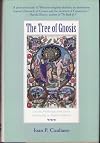
The Tree of Gnosis: Gnostic Mythology from Early Christianity to Modern Nihilism
by Ioan P. Couliano
On This Page
Tags
Recommendations

























Member Reviews
Despite the subtitle, which seems to imply a narrative "from Early Christianity to Modern Nihilism," The Tree of Gnosis offers detail on the synchronic forms of dualist doctrine, rather than the all-too-common suppositions about diachronic connection between instances of heresy. In this major work -- one of the last in a career cut short by murder -- Couliano claimed to be pioneering a new theoretical method, with wider ambitions to go beyond the history of religions to embrace the sciences and other "mental objects" of historical consequence.
The "tree" of the title is not a genealogical tree, but rather a logical one tout court, as Couliano takes Gnosticism (or more generally, dualist theology) to be an "ideal object" existing "in a show more logical dimension." Its variegation orients to three principal axes: ecosystemic intelligence (i.e. "the god of this world"), the anthropic principle, and the "superiority of humankind to the world and its creators." Couliano disagrees vigorously with those who rate the antique Gnostics as pessimists, insisting very adroitly that their metaphysics provides for extreme optimism in the context of a negative valuation of the existing cosmos.
The bulky middle of the text, treating the specifics of different dualist thinkers and sects in late antiquity, is good coverage. But the juicy parts are the methodological introduction and the chapters at the end that include the comparison of traditional "metaphysical" gnoses to their modern "anti-metaphysical" counterparts, and a ludic paradigm of doctrinal development.
It's a shame that Couliano was too early to comment on the millennial glut of Gnostic cinema (The Matrix, Dark City, The Truman Show, etc.). He also dismisses the Gnostic character of Philip K. Dick's work on the basis of a reading of The Divine Invasion, when he would have been better off looking at VALIS, The Three Stigmata of Palmer Eldritch, or even Dick's self-analytical Exegesis.
This 1990 book (in the French original) is a relatively recent one in its field, distinctly following and often criticizing the first wave of scholarship driven by the epochal Nag Hammadi finds of the mid-20th century. While it was not as revelatory for me as Couliano's earlier Eros and Magic in the Renaissance, it is still an outstanding study that deserves the attention of anyone interested in its subject matter. show less
The "tree" of the title is not a genealogical tree, but rather a logical one tout court, as Couliano takes Gnosticism (or more generally, dualist theology) to be an "ideal object" existing "in a show more logical dimension." Its variegation orients to three principal axes: ecosystemic intelligence (i.e. "the god of this world"), the anthropic principle, and the "superiority of humankind to the world and its creators." Couliano disagrees vigorously with those who rate the antique Gnostics as pessimists, insisting very adroitly that their metaphysics provides for extreme optimism in the context of a negative valuation of the existing cosmos.
The bulky middle of the text, treating the specifics of different dualist thinkers and sects in late antiquity, is good coverage. But the juicy parts are the methodological introduction and the chapters at the end that include the comparison of traditional "metaphysical" gnoses to their modern "anti-metaphysical" counterparts, and a ludic paradigm of doctrinal development.
It's a shame that Couliano was too early to comment on the millennial glut of Gnostic cinema (The Matrix, Dark City, The Truman Show, etc.). He also dismisses the Gnostic character of Philip K. Dick's work on the basis of a reading of The Divine Invasion, when he would have been better off looking at VALIS, The Three Stigmata of Palmer Eldritch, or even Dick's self-analytical Exegesis.
This 1990 book (in the French original) is a relatively recent one in its field, distinctly following and often criticizing the first wave of scholarship driven by the epochal Nag Hammadi finds of the mid-20th century. While it was not as revelatory for me as Couliano's earlier Eros and Magic in the Renaissance, it is still an outstanding study that deserves the attention of anyone interested in its subject matter. show less
Ratings
Members
- Recently Added By
Lists

Nonfiction books that need to be reprinted.
39 works; 1 member
Author Information

44+ Works 849 Members
Classifications
- Genres
- Nonfiction, Religion & Spirituality, Philosophy, History
- DDC/MDS
- 299.932 — Religion Other religions Shintoism/Taoism/Other Mythologies Religions of other origin Religions of eclectic and syncretistic origin Gnosticism
- LCC
- B638 .C8513 — Philosophy, Psychology and Religion Philosophy (General) By period Ancient
- BISAC
Statistics
- Members
- 116
- Popularity
- 281,668
- Reviews
- 1
- Rating
- (4.43)
- Languages
- English, Romanian
- Media
- Paper
- ISBNs
- 3
- ASINs
- 1