The Silent Gondoliers
by William Goldman
On This Page
Description
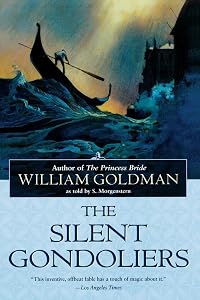
The return of a beloved classic, from the bestselling author of The Princess Bride! "This inventive, offbeat fable has a touch of magic about it."--Los Angeles Times Once upon a time, the gondoliers of Venice possessed the finest voices in all the world. But, alas, few remember those days--and fewer still were ever blessed to hear such glorious singing. No one since has discovered the secret behind the sudden silence of the golden-voiced gondoliers. No one, it seems, but S. Morgenstern. Now show more Morgenstern recounts the sad and noble story of the ambitions, frustrations, and eventual triumph of Luigi, the gondolier with the gooney smile. Here, in this brilliantly illustrated exposition of the surprising facts behind this all-but-forgotten mystery, S. Morgenstern reveals the fascinating truths about John the Bastard, Laura Lorenzini, the centenarian Cristaldi the Pickle, Enrico Caruso, Porky XII, the Great Sorrento, the Queen of Corsica--and, of course, the one and only Luigi. His tale will captivate you as much as his song! "Where The Princess Bride was lightheartedly brutal, this story is gently whimsical, well-complemented by Paul Giovanopoulos's zany drawings."--San Francisco Examiner-Chronicle show lessTags
Recommendations




















Member Reviews
This is a sweet little story about a talented gondolier who can't sing. It's written by 'S. Morgenstern' the fictional author of The Princess Bride. It's been quite a while since I read that novel so I'm not sure if this voice sounds the same as that one, I remember the joke being that Morgentern was a boring historian and satirist who was more interested in lists than his own action scenes and witty dialogue, hence why William Goldman felt the need to step in and help the story out. So a story by just Morgenstern sounds like an odd sell. But I think you still get hints of his character, as he tells the story as if it is a piece of historical research and occasionally goes off on tangents. It's funny, as you'd expect from Goldman, and show more surprisingly sweet too, but it is odd that this is a short novella. Why did he decide to write another story as Morgenstern, and why one so very different from The Princess Bride? I would have liked this to have been part of a collection of short stories or one of a series of Morgenstern books, so it's weird that instead all we have is one novel from the 70s and one novella from the 80s and as far as I know that's all. I think that Morgenstern was an excuse for Goldman to let out his whimsical side. I've only read two of his 'just Goldman' works, but they certainly have a much harsher tone and reality than The Princess Bride or The Silent Gondoliers. I know that Goldman stopped writing novels from the mid eighties and living now in a post-Goldman world it is sad to know there will never be any more.
(Side note: I didn't particularly enjoy Giovanopoulos's illustrations or feel they added anything to the story) show less
(Side note: I didn't particularly enjoy Giovanopoulos's illustrations or feel they added anything to the story) show less
This gonzo tall tale is the only other book Goldman has written in the style of "The Princess Bride." And it's a thing to behold: the way he takes a seemingly scatter-shot mode of storytelling and funnels everything into a hair-raising and absolutely satisfying climax. A book best read in one delirious sitting (or, as I did, read aloud in a day to a bookish and giddy 6th grader). -Adam
This was sweet, and dreamlike in its simplicity. Goldman has written a lovely fable about dreams, and loyalty, and perseverance, and community.
For a Friend Who...loves the Princess Bride and wants to know if there are any other Engish translations of S. Morganstern’s books
So, What's the Story? It’s a cozy fantasy (a tall tale really) about Venice’s GOAT gondolier who is dismissed because he can’t [REDACTED]. Despite this, he comes to the city’s rescue in its darkest hour.
It's a Great Read Because... Like the Princess Bride, this is a story within a story and is delightful and witty, written by a master storyteller. But more than just the jokes, there’s real heart in the story of Luigi. Much like eating really good homemade pasta, this book leaves you happily satisfied.
Caveats Luigi the gondolier is basically Fezzik the giant from Princess Bride.
Something Extra show more Beautiful fine line illustrations by Paul Giovanopoulos. show less
So, What's the Story? It’s a cozy fantasy (a tall tale really) about Venice’s GOAT gondolier who is dismissed because he can’t [REDACTED]. Despite this, he comes to the city’s rescue in its darkest hour.
It's a Great Read Because... Like the Princess Bride, this is a story within a story and is delightful and witty, written by a master storyteller. But more than just the jokes, there’s real heart in the story of Luigi. Much like eating really good homemade pasta, this book leaves you happily satisfied.
Caveats Luigi the gondolier is basically Fezzik the giant from Princess Bride.
Something Extra show more Beautiful fine line illustrations by Paul Giovanopoulos. show less
Short but sweet. I wouldn't have picked it up if not for The Princess Bride, which I love, but it was a nice little diversion. This book (almost felt like more of a short story than a book - took under half an hour to read) tells the story of Luigi, who wants nothing more than to be a gondolier, but who is unfortunately tone-deaf: unacceptable in a city that prides itself on its singing gondoliers. Charming, funny, and lovely illustrations that add to the flavor of the story, although the ending felt a bit abrupt and the answer to the mystery (Why did the gondoliers stop singing) is left a little ambiguous, that's okay. It's not a meaty or ambitious book or anything like that, but sometimes you just need something light and sweet, and show more this serves admirably. show less
The gondoliers of Venice were once regarded as the finest singers in the world, but for years they have been mysteriously silent. At the heart of this mystery is a young gondolier named Luigi. Luigi is an incredibly gifted gondolier, able to navigate what other gondoliers refer to as SPLAT Corner with the greatest of ease. However, when it comes to his vocal abilities, Luigi is severely lacking. In fact, his singing is so appalling that the citizens of Venice throw fish at him from their windows. His customers, wary of being pelted by flying seafood during their leisurely gondola rides, soon disappear. His fellow gondoliers, fearing for their own livelihoods, demand that Luigi never work as a gondolier again.
The disgraced Luigi then show more goes to work in the Gondolier’s Tavern, washing dishes to earn his living. But still he dreams of the day when he can sing his heart out on the Grand Canal. After ten years he saves up enough money to take vocal lessons, but the only instructor who will take him on is a deaf man. Luigi’s dream looks as though it will never be attainable, but an act of great bravery and skill will eventually change how his fellow gondoliers look at Luigi.
This is a fast and enjoyable read with a fair amount of charm, but The Silent Gondoliers doesn’t quite live up the genius of Goldman’s better known work, The Princess Bride. Luigi’s story is not a must-read, but it is a pleasant tale that can be read in under an hour. show less
The disgraced Luigi then show more goes to work in the Gondolier’s Tavern, washing dishes to earn his living. But still he dreams of the day when he can sing his heart out on the Grand Canal. After ten years he saves up enough money to take vocal lessons, but the only instructor who will take him on is a deaf man. Luigi’s dream looks as though it will never be attainable, but an act of great bravery and skill will eventually change how his fellow gondoliers look at Luigi.
This is a fast and enjoyable read with a fair amount of charm, but The Silent Gondoliers doesn’t quite live up the genius of Goldman’s better known work, The Princess Bride. Luigi’s story is not a must-read, but it is a pleasant tale that can be read in under an hour. show less
A charming little fable which explains why the gondoliers in Venice do not sing. This volume is not even long enough to be called a novella, as the delightful line drawing illustrations take up at least half the pages. Luigi, a tone-deaf gondolier, saves the gondoliers’ church in the middle of the legendary Christmas day storm, and all the Venetian gondoliers quit singing in solidarity.
Members
- Recently Added By
Author Information

69+ Works 41,758 Members
William Goldman was born in Highland Park, Illinois on August 12, 1931. He received a bachelor's degree in English from Oberlin College and a master's degree from Columbia University. He began his writing career in 1957 and wrote his first screenplay Masquerade in 1965. During his lifetime, he wrote more than 20 screenplays and over 20 novels. He show more wrote the screenplays for Butch Cassidy and the Sundance Kid, Misery, A Bridge Too Far, The Stepford Wives, and Chaplin. He adapted three screenplays from his own novels including The Princess Bride, Marathon Man, and Heat. His other novels included The Temple of Gold, No Way to Treat a Lady, Adventures in the Screen Trade, Hype and Glory, and Which Lie Did I Tell. He sometimes wrote under pseudonyms during his career including S. Morgenstern and Harry Langlaugh. He won three Lifetime Achievement Awards for Screenwriting, including the 1985 Laurel Award for Lifetime Achievement in Screenwriter. He won two Screenwriter of the Year Awards and two Academy Awards, one for Butch Cassidy and the Sundance Kid and the other for All the President's Men. He also won an English Academy Award. He died from colon cancer and pneumonia on November 16, 2018 at the age of 87. (Bowker Author Biography) show less
Some Editions
Awards and Honors
Awards
Common Knowledge
- Original publication date
- 1983
- Important places
- Venice, Veneto, Italy
- First words
- Everyone knows that the gondoliers of Venice are the greatest——correction, sorry——everyone used to know that the gondoliers of Venice are the greatest singers in the world.
- Last words
- (Click to show. Warning: May contain spoilers.)Because when someone special happens, he rubs off on everybody...
Classifications
Statistics
- Members
- 562
- Popularity
- 52,913
- Reviews
- 15
- Rating
- (3.90)
- Languages
- English, German, Spanish
- Media
- Paper, Ebook
- ISBNs
- 6
- ASINs
- 3