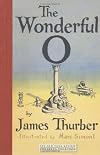
The Wonderful O
by James Thurber
On This Page
Description
Relates what happened when an evil sea captain banished the letter O from the island Ooroo.Tags
Recommendations













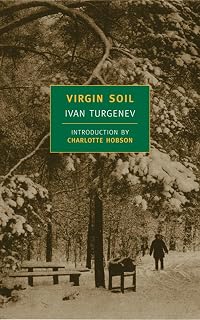
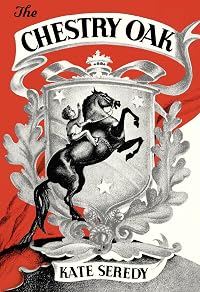
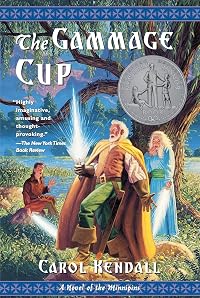
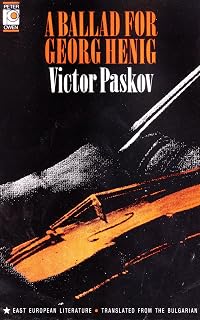

Member Recommendations
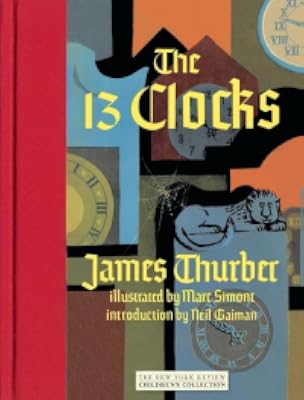
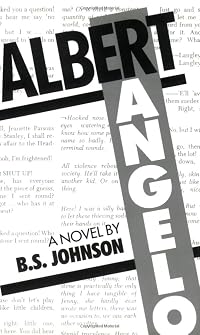
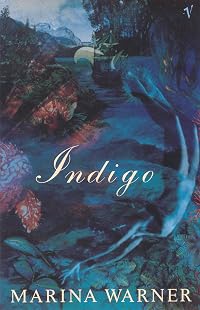
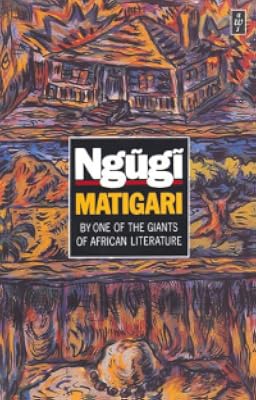
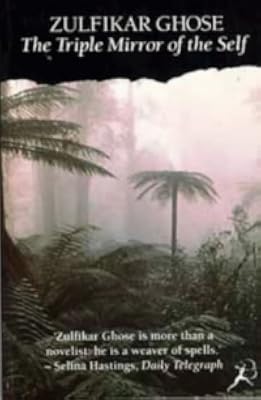
SylviaC Both stories use a light touch to look at language and censorship.
Member Reviews
I was thrilled to learn that there were a couple James Thurber books on the 1001 Books list. I was additionally thrilled to see that they are very short books (an entirely different world than that of the Middlemarches and Les Miserabless of the list).
My library puts this book into Adult Fiction, but it's the kind of read that YA or even younger could enjoy. It's got a fairy-tale vibe to it: two dastardly pirate-type characters take over an island, looking for buried treasure. When they can't find the treasure, they settle for removing any object or animal whose name contains the letter "o"; they dictate that the language will be changed to outlaw any letter "o."
The book is about censorship; it's about fighting back against occupation show more and unjust situations. The writing is top-notch; the language has a rhythm and beauty to it, and at times it's almost poetry, as well as a paean to vocabulary. It's funny, illluminating, and invigorating. It was a thoroughly enjoyable read for me.
Removing the "O"s from words renders most everything unintelligible:
"They are swing chas. What is slid? What is left that's slace? We are begne and webegne. Life is bring and brish. Even schling is flish. Animals in the z are less lacnic than we. Vices are filled with paths and scial intercurse is baths. Let us gird up ur lins like lins and rt the hrrr and ust the afs."
"What nannibickering is this?" cried the blacksmith. "What is this gibberish?"
"English," said Andreus, "without it's O's." show less
My library puts this book into Adult Fiction, but it's the kind of read that YA or even younger could enjoy. It's got a fairy-tale vibe to it: two dastardly pirate-type characters take over an island, looking for buried treasure. When they can't find the treasure, they settle for removing any object or animal whose name contains the letter "o"; they dictate that the language will be changed to outlaw any letter "o."
The book is about censorship; it's about fighting back against occupation show more and unjust situations. The writing is top-notch; the language has a rhythm and beauty to it, and at times it's almost poetry, as well as a paean to vocabulary. It's funny, illluminating, and invigorating. It was a thoroughly enjoyable read for me.
Removing the "O"s from words renders most everything unintelligible:
"They are swing chas. What is slid? What is left that's slace? We are begne and webegne. Life is bring and brish. Even schling is flish. Animals in the z are less lacnic than we. Vices are filled with paths and scial intercurse is baths. Let us gird up ur lins like lins and rt the hrrr and ust the afs."
"What nannibickering is this?" cried the blacksmith. "What is this gibberish?"
"English," said Andreus, "without it's O's." show less
The wordplay is even more consistently clever here than in The 13 Clocks, but towards the end it descends into sentimentality whereas The 13 Clocks maintained a more sinister atmosphere throughout. Simont's illustrations also aren't as strong in this one.
A fable for all ages that would be *wonderful* as a family read-aloud. Beyond the crazy tongue-twisters created by taking the letters O out of our words, the language itself is brilliant... well, of course, it's Thurber. I'm not sure the plot is amazing, and the characters definitely aren't (only one female, a young woman who does happen to be the hero but is still not any more defined than the other stock characters). But the premise, and the development thereof, and the word-play, oh my.
Educational, too, as deciphering the words will fix the spelling of them in the reader's mind.
I want a box set of Thurber's five fables to read over and over....
Key words to live by, both in the book and in our own troubled times:
Hope. Love. Valor. show more Freedom.
"... a man could say boo to a goose, and tell the difference between to lose and too loose." show less
Educational, too, as deciphering the words will fix the spelling of them in the reader's mind.
I want a box set of Thurber's five fables to read over and over....
Key words to live by, both in the book and in our own troubled times:
Hope. Love. Valor. show more
"... a man could say boo to a goose, and tell the difference between to lose and too loose."
What a wonderful little story all about O!
An ominous character named Black arrives on an island called Ooroo (soon to be changed to R). He shares with a sailor that his mother got stuck in a porthole and they couldn't pull her in, so they had to push her out. The trauma of this was so unbearable that Black decides to be rid of the letter O - I'm assuming this is because a porthole is a circular shape, but this part was a little fuzzy and maybe could've been expanded on.
However, Thurber writes his stories with a rhyme and rhythm throughout, never knowing when you're going to inadvertently read a rhyming sentence or two. I came across words I'd never heard before. I loved how even animals without an O in their name, were still linked to show more the Latin categorical name, like spiders are arthropods!
I just had to add my favourite quotes from this book; there simply wasn't enough available on Goodreads to capture the fun silliness and wordplay this story is full of.
It's a fun little story that teaches children about words and nouns and plurals. It's safe to say that I won't be able to not notice the amount of words with O's in them after reading this.
I know that I'm not alone in wondering why two of Thurber's children's stories (The 13 Clocks) were on the 1'001 books to read before you die list', but I get it now. It's an enjoyable and quick read that shows the fun you can have with words. show less
An ominous character named Black arrives on an island called Ooroo (soon to be changed to R). He shares with a sailor that his mother got stuck in a porthole and they couldn't pull her in, so they had to push her out. The trauma of this was so unbearable that Black decides to be rid of the letter O - I'm assuming this is because a porthole is a circular shape, but this part was a little fuzzy and maybe could've been expanded on.
However, Thurber writes his stories with a rhyme and rhythm throughout, never knowing when you're going to inadvertently read a rhyming sentence or two. I came across words I'd never heard before. I loved how even animals without an O in their name, were still linked to show more the Latin categorical name, like spiders are arthropods!
I just had to add my favourite quotes from this book; there simply wasn't enough available on Goodreads to capture the fun silliness and wordplay this story is full of.
It's a fun little story that teaches children about words and nouns and plurals. It's safe to say that I won't be able to not notice the amount of words with O's in them after reading this.
I know that I'm not alone in wondering why two of Thurber's children's stories (The 13 Clocks) were on the 1'001 books to read before you die list', but I get it now. It's an enjoyable and quick read that shows the fun you can have with words. show less
first line: "Somewhere a ponderous tower clock slowly dropped a dozen strokes into the gloom."
What happens when a particular letter is denied an island's citizens? When using it is deemed criminal activity? Writer James Thurber (NB, his name lacks said illicit letter!) tells us exactly this in his well-penned, whimsical children's tale.
Wow. Who could foresee how tough avoiding "o" would become?
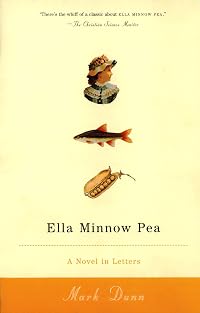
Anyway, this book is fun -- silly but with a message of hope, valor, love, and other "o" words. Great to read out loud, with lots of wordplay not unlike that in Mark Dunn's Ella Minnow Pea: A Novel in Letters.
What happens when a particular letter is denied an island's citizens? When using it is deemed criminal activity? Writer James Thurber (NB, his name lacks said illicit letter!) tells us exactly this in his well-penned, whimsical children's tale.
Wow. Who could foresee how tough avoiding "o" would become?
Anyway, this book is fun -- silly but with a message of hope, valor, love, and other "o" words. Great to read out loud, with lots of wordplay not unlike that in Mark Dunn's Ella Minnow Pea: A Novel in Letters.
Two men backed by a ship's crew land on a pleasant little island where the inhabitants choose not to fight back, but rather acquiesce to their presence, but things get too hard to bear when one of the men begins issuing edicts about the letter O. First they destroy things with the O in their name. Then they out and out ban words with the letter O in them. When the gings-n becme t hard t bear, and the peple must get rid of the men. [Trans: When the goings-on become too hard to bear...]
James Thurber, as a children's author at least, has me entirely enchanted. It started with a chance crossing with his book The White Deer, and expanded with my discovery of The Thirteen Clocks. And it is not hard to say that The Wonderful O cemented the show more deal. I adore his writing. One of the most attractive aspects is the simplicity. It reminded me, to be honest, of The Phantom Tolbooth [Juster], because when something happens in the world of the book, it just happens. It requires no explanation that these things are possible or likely, and harkens back to the joy of the willing suspension of disbelief--because these things are happening and these people are responding, you don't really need to know how or why this very simple and non-magical seeming world has an enchanted castle. It just does. And there is much delight to be had in this.
The Wonderful O only about eight or so pages long, and has a delightfully musical cadence to much of the text. As I read through last night, I felt compelled to be reading it aloud because my mind's ear caught rythms and rhymes scattered throughout the conversations and brief periods of exposition. In the lists of things being destroyed or outlawed, especially, you can find it.
Being a very brief eighty pages or so, the book is well worth the short time to read it. show less
James Thurber, as a children's author at least, has me entirely enchanted. It started with a chance crossing with his book The White Deer, and expanded with my discovery of The Thirteen Clocks. And it is not hard to say that The Wonderful O cemented the show more deal. I adore his writing. One of the most attractive aspects is the simplicity. It reminded me, to be honest, of The Phantom Tolbooth [Juster], because when something happens in the world of the book, it just happens. It requires no explanation that these things are possible or likely, and harkens back to the joy of the willing suspension of disbelief--because these things are happening and these people are responding, you don't really need to know how or why this very simple and non-magical seeming world has an enchanted castle. It just does. And there is much delight to be had in this.
The Wonderful O only about eight or so pages long, and has a delightfully musical cadence to much of the text. As I read through last night, I felt compelled to be reading it aloud because my mind's ear caught rythms and rhymes scattered throughout the conversations and brief periods of exposition. In the lists of things being destroyed or outlawed, especially, you can find it.
Being a very brief eighty pages or so, the book is well worth the short time to read it. show less
Z wanted to read this for two days' pretty much straight through . . . and we did. What a lovely, brilliant, funny book. Honoring language and freedom and hope and love and literature has never been so thrilling or wonderful. This is a pleasure to read aloud and, apparently, to listen to (especially if you have a kid who's familiar with a wide range of animals, their Latin classifications - all of those "O's" - and characters from literature, both high and low).
Update: 7/2012 - Re-read this after the boy didn't remember much of the first go-around. And he loves it even more.
Update: 7/2012 - Re-read this after the boy didn't remember much of the first go-around. And he loves it even more.
Members
- Recently Added By
Lists

1001 Books You Must Read Before You Die
1,448 works; 1,133 members

Favorite Childhood Books
1,646 works; 515 members

Satori Smiles Children's Book List
262 works; 7 members
Ambleside Books
459 works; 18 members

Children's Humor
51 works; 6 members

Short and Sweet
245 works; 24 members

Books Set on Islands
190 works; 24 members

Ambleside Year 8
80 works; 1 member
Author Information

135+ Works 18,250 Members
Born in Columbus, Ohio, Thurber was blinded in one eye in a childhood accident. He attended Ohio State University but left without earning a degree. In 1925 he moved to New York City, where he joined the staff of the New Yorker in 1927 at the urging of his friend E. B. White. For the rest of his lifetime, Thurber contributed to the magazine his show more highly individual pieces and those strange, wry, and disturbing pen-and-ink drawings of "huge, resigned dogs, the determined and sometimes frightening women, the globular men who try so hard to think so unsuccessfully." The period from 1925, when the New Yorker was founded, until the death of its creator-editor, Harold Ross, in 1951, was described by Thurber in delicious and absorbing detail in The Years with Ross (1959). Of his two great talents, Thurber preferred to think of himself primarily as a writer, illustrating his own books. He published "fables" in the style of Aesop (see Vol. 2) and La Fontaine (see Vol. 2)---usually with a "barbed tip of contemporary significance"---children's books, several plays (two Broadway hits, one successful musical revue), and endless satires and parodies in short stories or full-length works. "The Secret Life of Walter Mitty," included in My World---and Welcome to It (1942), is probably his best-known story and continues to be frequently anthologized. T. S. Eliot described Thurber's work as "a form of humor which is also a way of saying something serious." (Bowker Author Biography) show less
All Editions
Some Editions
Awards and Honors
Distinctions
Notable Lists
Series
Belongs to Publisher Series
Work Relationships
Is contained in
Common Knowledge
- Canonical title
- The Wonderful O
- Original publication date
- 1957
- People/Characters
- Littlejack; Black; Andreus; Hyde; Andrea
- Important places
- Ooroo
- Dedication
- For Ted Gardiner, and his Julias and Patricias, with love and other good O words.
- First words
- Somewhere a ponderous tower clock slowly dropped a dozen strokes into the gloom.
- Last words
- (Click to show. Warning: May contain spoilers.)The sun went down, and its golden glow lighted with fire the wonderful O.
- Original language
- English
Classifications
- Genres
- Children's Books, Fiction and Literature
- DDC/MDS
- 818.508 — Literature & rhetoric American literature in English American miscellaneous writings in English 20th Century
- LCC
- PZ7 .T422 .W — Language and Literature Fiction and juvenile belles lettres Fiction and juvenile belles lettres Juvenile belles lettres
- BISAC
Statistics
- Members
- 903
- Popularity
- 29,720
- Reviews
- 20
- Rating
- (4.02)
- Languages
- English, Spanish
- Media
- Paper, Audiobook, Ebook
- ISBNs
- 14
- UPCs
- 1
- ASINs
- 16