On This Page
Description
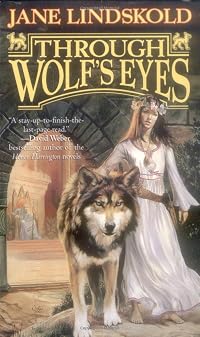
Firekeeper only vaguely remembers a time when she didn't live with her "family," a pack of "royal wolves"-bigger, stronger, and smarter than normal wolves. Now her pack leaders are sending her back to live among the humans, as they promised her mother years ago. Some of the humans think she may be the lost heir to their throne. This could be good-and it could be very, very dangerous. In the months to come, learning to behave like a human will turn out to be more complicated than she'd ever show more imagined. But though human ways might be stranger than anything found in the forest, the infighting in the human's pack is nothing Firekeeper hasn't seen before. That, she understands just fine. She's not your standard-issue princess-and this is not your standard-issue fairy tale. show lessTags
Recommendations


Member Recommendations
Member Reviews
This is the first novel in a fantasy series about a very complex and fascinating world. Despite the cover, it’s not just about a girl and a pack of wolves, by far. She’ll travel far and discover all sorts of places and cultures. Yes, unlike most fantasy worlds, this one is actually filled with different countries, with their histories, traditions, ways of life, etc. There is also a growing number of interesting characters, and the main heroine herself is also a fairly complex (and likeable) person. Strong female characters have been fashionable as of late, but sadly many of them seem to have been born from the desire to supply the demand rather than inspiration, and much as I like the idea itself, Firekeeper is actually the first show more such heroine I’ve read about who seems like a real human being rather than an artificial construct. Even villains in this series resemble real-life people rather than demonic personifications of a thirst for power or other dark yearnings. The same naturalness applies to the plot, which is the opposite of conventional, to put it mildly – all my predictions regarding book 1 came to naught, and then I simply stopped making any. Also remarkably, the series maintains its high quality throughout its 6 novels. It was a treat to read, and describes one of the very few fantasy worlds I wish I could visit for real. show less
I had such high hopes for this book. As someone who loves both fantasy and wolves, this series seemed like a perfect fit for my tastes... but instead, I admit I was tempted to abandon it at various points, and for the first time I can remember, I decided to simply actively skim whole chapters devoted to particular characters. That is, obviously, not a good sign for how I felt about the book as a whole.
On its surface, the concept here is simple--and I think that's where its power lies. For me, the chapters that focused on Firekeeper, her wolf companion Blind Seer, and their immediate companions were the heart of the work, and although I would have liked a bit more attention to be paid to Blind Seer--rather than him sometimes seeming only show more like a human voice in wolf form vs an actual wolf--those chapters felt engaging and true to the concept that made me pick up the book. Unfortunately, I'd say that half of this book was devoted to exploring court lineage and intrigue, to the extent of including full chapters focused on characters who, truly, the reader didn't need to get to know at anywhere near such length. The book would have been so much stronger if the writer had forced herself to stick to telling the story through chapters focused on Firekeeper and her immediate companions. Instead, however, it felt as if Lindskold wanted to spend time explaining every bit of world-building she'd come up with and every character's family--even if, in the end, they'd have no real effect on the story.
I suspect that, had this book been around 300 pages instead of near 600, I would have raved about it and immediately ordered the rest of the series. As things stand, I doubt I'll read anything more from the author. I do already have the second book in the series--I got it together with the first, I was so sure I'd enjoy this--so I may look at the book jacket and see if it sounds like there's a stronger focal point in the second book, but it's just as possible that I'll simply give the book away. This was an incredibly disappointing read, and I suspect the author was more interested in writing about court intrigue than fantasy, but thought this would be an angle through which to sell court politics. Certainly, that's how it felt. show less
On its surface, the concept here is simple--and I think that's where its power lies. For me, the chapters that focused on Firekeeper, her wolf companion Blind Seer, and their immediate companions were the heart of the work, and although I would have liked a bit more attention to be paid to Blind Seer--rather than him sometimes seeming only show more like a human voice in wolf form vs an actual wolf--those chapters felt engaging and true to the concept that made me pick up the book. Unfortunately, I'd say that half of this book was devoted to exploring court lineage and intrigue, to the extent of including full chapters focused on characters who, truly, the reader didn't need to get to know at anywhere near such length. The book would have been so much stronger if the writer had forced herself to stick to telling the story through chapters focused on Firekeeper and her immediate companions. Instead, however, it felt as if Lindskold wanted to spend time explaining every bit of world-building she'd come up with and every character's family--even if, in the end, they'd have no real effect on the story.
I suspect that, had this book been around 300 pages instead of near 600, I would have raved about it and immediately ordered the rest of the series. As things stand, I doubt I'll read anything more from the author. I do already have the second book in the series--I got it together with the first, I was so sure I'd enjoy this--so I may look at the book jacket and see if it sounds like there's a stronger focal point in the second book, but it's just as possible that I'll simply give the book away. This was an incredibly disappointing read, and I suspect the author was more interested in writing about court intrigue than fantasy, but thought this would be an angle through which to sell court politics. Certainly, that's how it felt. show less
I loved this book. The character of firekeeper was engaging and her understanding and interpretation of the people she encountered was fascinating. I loved how she was a loved and valued member of the wolf pack. I'm very eager to read the next book in the series.
A new take on the wild-child-raised-by-animals archetype; in this case, the animals in question are as intelligent as humans. Firekeeper, the wolf-girl, is brought back into human society after living with Royal wolves for as long as she can remember. Her perspective on human society is an interesting one, with her comparisons to wolf society and her thoughts on what does or does not make sense. For example, in her mind, the castle gardener ranks higher than the nobles, or should, because the gardener provides food. Overall, a very well written and thought provoking book.
Okay, so, to start: This book includes (1) a world map, (2) a royal family tree, and (3) a glossary of characters. Any guesses as to why supplementary materials like these are included in so many fantasy novels? SO THAT EXTRANEOUS WORLD-BUILDING FACTOIDS DON'T NEED TO BE REVEALED THROUGH OVERLY-EXPOSITORY NARRATION OR DIALOGUE.
And yet that constituted 40% of the book.
There was a scene in which one cousin recounts to another HIS WHOLE FAMILY'S NAMES. To his cousin. Who has known this family all her life. In another scene, a character explains that the border between the primary country and its greatest rival is a river -- as if this wouldn't be common knowledge (and readily visible in the aforementioned map). Several pages are dedicated show more to an Old-Testament-style recounting of who begat whom; quite a few more describe the geological events that formed a once-used setting. To put it briefly: far too much time was spent agonizing over unnecessary or oft-repeated details.
The premise was great; the plot was decent; the writing put me to sleep. Luckily, the pace picked up CONSIDERABLY in the last quarter of the book, which got me through it. The sequel's been gathering dust on my shelf for the last decade or so (which is actually why I picked this one up), so I'll give a run at that next, but if the writing is as torturous as in this one, I'll put it aside within the first hundred pages. show less
And yet that constituted 40% of the book.
There was a scene in which one cousin recounts to another HIS WHOLE FAMILY'S NAMES. To his cousin. Who has known this family all her life. In another scene, a character explains that the border between the primary country and its greatest rival is a river -- as if this wouldn't be common knowledge (and readily visible in the aforementioned map). Several pages are dedicated show more to an Old-Testament-style recounting of who begat whom; quite a few more describe the geological events that formed a once-used setting. To put it briefly: far too much time was spent agonizing over unnecessary or oft-repeated details.
The premise was great; the plot was decent; the writing put me to sleep. Luckily, the pace picked up CONSIDERABLY in the last quarter of the book, which got me through it. The sequel's been gathering dust on my shelf for the last decade or so (which is actually why I picked this one up), so I'll give a run at that next, but if the writing is as torturous as in this one, I'll put it aside within the first hundred pages. show less
Three and a half stars, curse Goodreads' rating system. Oh well.
I can't help feeling this must have been kind of a hard sell. "The primary heirs to the throne have all died, and a nobleman decides to make a play for greater power by going in search of a missing, disinherited prince and his family, and finds what appears to be the prince's daughter, who has been raised by wolves since about the age of five..."
Making it less ridiculous an idea is that this *is* a fantasy novel, in which the wolves involved in the raising are a higher order of creature - royal wolves, smarter, faster, stronger, etc. They have raised the girl as one of their own as far as they can, sorely lacking in the depth of senses but compensated by abilities even show more greater wolves cannot attain. She is Firekeeper, which is self-explanatory.
There has always been a prophecy among the wolves that she would return to her own kind, and she does so when she braves the camp of Kestrel, the aforementioned nobleman. The first person she meets is Derian Carter (in this world one's surname generally indicates profession), and before he knows what hit him he is her bodyguard and teacher, trying to instill in her as much civilized behavior and language as possible.
This could have been deeply annoying. So often use of pidgin or elementary English rings false and serves only to cause irritation, and many writers make the unfortunate choice to linger over the character's misadventures with fork and ballgown; this wasn't bad. If anything, I thought Firekeeper advanced a little too quickly, but what do I know? Maybe she's just that clever and Derian is just a very good teacher.
The relationships in and around the keep are well done. I keep expecting it to be more George R.R. Martin, as there are a few similarities in worldbuilding and tone, but this is a brighter world, with more people who can be trusted (seemingly). Firekeeper makes a few friends quickly, and while this had me flinching at first, I soon found it safe to stop: she does not seem likely to come to harm with them.
Firekeeper is a fascinating character, and rings true: an intelligent young woman who would rather be like the only family she has ever known, but who accepts the duty of being human and among nobles (for the time being). She is never ashamed of not being human, nor of not being wolf - wolves don't feel shame, therefore neither does she. I like that that isn't drummed out of her; I could wish it would rub off on some of her friends. She does well enough with learning to speak, but reading and art appreciation escapes her: wolves also don't rely heavily on visuals to get by in the world. Her best friend, Blind Seer, is wonderful, all wolf and gorgeous, and the peregrine falcon who also watches her back is nicely done - anthropomorphism at its best. Among the humans, the bad guys are a little cliched and gloating evil-for-evil's-sake, but the protagonistic characters are good folk. I like Derian, a great deal. The Duke who takes her as his ward had his own interests at heart from the beginning - but he also takes very seriously the duties he took on with her. He won't cast her off just because she might not become what he hoped.
Things were going along very nicely, the climax was winding down, when suddenly Chapter 28 came along like a solid brick wall. Suddenly the book goes from fairly solid story-telling to ... infodump. Pure and unadulterated infodump. It could be construed as being Allister's ponderings, but no: I can't think of a more perfect example of infodump. And I think it's safe to say that, having skimmed it, it wasn't really necessary. There had to have been other ways to get that information out than to spend five dense pages talking about the past several monarchies. Bad, bad idea, and one major reason I didn't go higher with my rating.
More extensive review on my blog: http://agoldoffish.wordpress.com/2011/06/03/through-wolfs-eyes-jane-lindskold show less
I can't help feeling this must have been kind of a hard sell. "The primary heirs to the throne have all died, and a nobleman decides to make a play for greater power by going in search of a missing, disinherited prince and his family, and finds what appears to be the prince's daughter, who has been raised by wolves since about the age of five..."
Making it less ridiculous an idea is that this *is* a fantasy novel, in which the wolves involved in the raising are a higher order of creature - royal wolves, smarter, faster, stronger, etc. They have raised the girl as one of their own as far as they can, sorely lacking in the depth of senses but compensated by abilities even show more greater wolves cannot attain. She is Firekeeper, which is self-explanatory.
There has always been a prophecy among the wolves that she would return to her own kind, and she does so when she braves the camp of Kestrel, the aforementioned nobleman. The first person she meets is Derian Carter (in this world one's surname generally indicates profession), and before he knows what hit him he is her bodyguard and teacher, trying to instill in her as much civilized behavior and language as possible.
This could have been deeply annoying. So often use of pidgin or elementary English rings false and serves only to cause irritation, and many writers make the unfortunate choice to linger over the character's misadventures with fork and ballgown; this wasn't bad. If anything, I thought Firekeeper advanced a little too quickly, but what do I know? Maybe she's just that clever and Derian is just a very good teacher.
The relationships in and around the keep are well done. I keep expecting it to be more George R.R. Martin, as there are a few similarities in worldbuilding and tone, but this is a brighter world, with more people who can be trusted (seemingly). Firekeeper makes a few friends quickly, and while this had me flinching at first, I soon found it safe to stop: she does not seem likely to come to harm with them.
Firekeeper is a fascinating character, and rings true: an intelligent young woman who would rather be like the only family she has ever known, but who accepts the duty of being human and among nobles (for the time being). She is never ashamed of not being human, nor of not being wolf - wolves don't feel shame, therefore neither does she. I like that that isn't drummed out of her; I could wish it would rub off on some of her friends. She does well enough with learning to speak, but reading and art appreciation escapes her: wolves also don't rely heavily on visuals to get by in the world. Her best friend, Blind Seer, is wonderful, all wolf and gorgeous, and the peregrine falcon who also watches her back is nicely done - anthropomorphism at its best. Among the humans, the bad guys are a little cliched and gloating evil-for-evil's-sake, but the protagonistic characters are good folk. I like Derian, a great deal. The Duke who takes her as his ward had his own interests at heart from the beginning - but he also takes very seriously the duties he took on with her. He won't cast her off just because she might not become what he hoped.
Things were going along very nicely, the climax was winding down, when suddenly Chapter 28 came along like a solid brick wall. Suddenly the book goes from fairly solid story-telling to ... infodump. Pure and unadulterated infodump. It could be construed as being Allister's ponderings, but no: I can't think of a more perfect example of infodump. And I think it's safe to say that, having skimmed it, it wasn't really necessary. There had to have been other ways to get that information out than to spend five dense pages talking about the past several monarchies. Bad, bad idea, and one major reason I didn't go higher with my rating.
More extensive review on my blog: http://agoldoffish.wordpress.com/2011/06/03/through-wolfs-eyes-jane-lindskold show less
Excellent start for what should be a fine series. Great set of characters good and bad, though the latter do get whittled down slightly in the course of the story. Firekeeper with her wild falcon and wolf compadres transition well into the ranks of nobility added and tutored by the faithful Derian. The plebeian names of the nobles such as Lord Oyster, are a little disconcerting initially but are easier to manage than the more fanciful ones created by other authors. Looking forward to Book 2.
Members
- Recently Added By
Lists

Nonhuman Protagonists
235 works; 34 members
Author Information

58+ Works 9,375 Members
Jane Lindskold received a B.A., M.A. and Ph.D. in English from Fordham University. She was an adjunct professor at Fordham, before becoming an Assistant Professor of English at Lynchburg College in Virginia. While there, she became friends with Roger Zelazny. She completed his two unfinished novels Donnerjack and Lord Demon after his death. Her show more first novel, Brother to Dragons, Companion to Owls was published in 1994. Her other works include Changer, Legends Walking, Through Wolf's Eyes, and Fire Season written with David Weber. (Bowker Author Biography) show less
Some Editions
Series

Work Relationships
Common Knowledge
- Canonical title
- Through Wolf's Eyes
- Original publication date
- 2001
- People/Characters
- Firekeeper; Derian Carter; Elise Archer
- Dedication
- For Jim,
with Love - First words
- AAA-roooo! AAA-roooo!
Distant, yet carrying, the wolf's howl broke the late-afternoon stillness. - Publisher's editor
- Nielsen Hayden, Teresa
- Blurbers
- Stirling, S. M.
- Disambiguation notice
- Amazon UK have the author incorrectly as Jane Linskold on one edition
Classifications
Statistics
- Members
- 1,367
- Popularity
- 17,439
- Reviews
- 21
- Rating
- (3.85)
- Languages
- English
- Media
- Paper, Ebook
- ISBNs
- 5
- ASINs
- 4