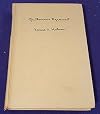
Gentleman's Agreement
by Laura Z. Hobson
On This Page
Description
A landmark novel that ranked #1 on the New York Times bestseller list for five months straight, Gentleman's Agreement speaks to the pervasive nature of prejudice after World War II-an issue just as relevant today as when the book was first published Journalist Philip Green has just moved to New York City from California when the Third Reich falls. To mark this moment in history, his editor at Smith's Weekly Magazine assigns Phil a series of articles on anti-Semitism in America. In order to show more experience anti-Semitism firsthand, Phil, a Christian, decides to pose as a Jew. What he discovers about the rampant bigotry in America will change him forever. show lessTags
Recommendations






















Member Reviews
The banality of racism in post-WWII America is explored. Chilling stuff. The prose is clear but almost YA in tone and structure- and yet, there are parts that are nuanced, rich, and almost esoteric. I’m also finding hints of the female author building an ideal male lead. The sexism is understated, however, especially for something written in the 1940s. It is interesting to see it come through from the woman’s point of view but the double standard is still there and under its own ‘gentlemen’s agreement.’
An important work and i’m glad they made the movie so true to the book. It’s impressive, really, that they did so especially during the time period in which it came out. Of course, the fascinating thing to me is how the show more themes of this book apply to all prejudices. Literally, you could substitute almost any minority or group that receives prejudice for Jews in this book and it would be relevant. But, then, people will just gloss it over and make excuses just like Kathy and her friends in Darien because people compartmentalize.
Hobson does a great job of showing us the everyday life of the prejudicial meme. As the main character Phil works through his own experiences and discovered prejudices, we see what happens in the mundane life. The truly powerful stuff is the personal evolution that another character goes through because she’s a die-hard “i’m not antisemitic! How dare you!” kind of person who believes that merely playing lip-service to the idea that this stuff is, of course, unconscionable that it makes you not prejudice. That good people can say prejudiced and racist things whether they know it or not. And that by standing idly by, saying nothing and remaining to tacitly support the status quo, bigotry, unfairness, and interpersonal ugliness is perpetuated. The author gets at the heart of this inertia by explaining that people don’t want to stand up for this kind of thing and fight because they like the position they are in. they enjoy the comforts of being among the privileged cohort and do not want to lose those comforts.
This story does not show us prejudice in the context of huge marches, legislative battles, court cases, nasty hate crimes, or any other event of high profile. Sometimes i think we can lose the forest for the trees when we make everything an overt, epic struggle against an obvious enemy when, in fact, the battle occurs constantly in pat phrases you hear every day at work, school, in the grocery, etc. that is where the battle truly is and Hobson takes us right down in the trenches. She even distracts us somewhat from the main theme by giving us a romance to watch which is what a favorite author of mine calls “guerilla ontology.”
a powerful study of American values as applicable today as it was in the 1940s and ‘50s. show less
An important work and i’m glad they made the movie so true to the book. It’s impressive, really, that they did so especially during the time period in which it came out. Of course, the fascinating thing to me is how the show more themes of this book apply to all prejudices. Literally, you could substitute almost any minority or group that receives prejudice for Jews in this book and it would be relevant. But, then, people will just gloss it over and make excuses just like Kathy and her friends in Darien because people compartmentalize.
Hobson does a great job of showing us the everyday life of the prejudicial meme. As the main character Phil works through his own experiences and discovered prejudices, we see what happens in the mundane life. The truly powerful stuff is the personal evolution that another character goes through because she’s a die-hard “i’m not antisemitic! How dare you!” kind of person who believes that merely playing lip-service to the idea that this stuff is, of course, unconscionable that it makes you not prejudice. That good people can say prejudiced and racist things whether they know it or not. And that by standing idly by, saying nothing and remaining to tacitly support the status quo, bigotry, unfairness, and interpersonal ugliness is perpetuated. The author gets at the heart of this inertia by explaining that people don’t want to stand up for this kind of thing and fight because they like the position they are in. they enjoy the comforts of being among the privileged cohort and do not want to lose those comforts.
This story does not show us prejudice in the context of huge marches, legislative battles, court cases, nasty hate crimes, or any other event of high profile. Sometimes i think we can lose the forest for the trees when we make everything an overt, epic struggle against an obvious enemy when, in fact, the battle occurs constantly in pat phrases you hear every day at work, school, in the grocery, etc. that is where the battle truly is and Hobson takes us right down in the trenches. She even distracts us somewhat from the main theme by giving us a romance to watch which is what a favorite author of mine calls “guerilla ontology.”
a powerful study of American values as applicable today as it was in the 1940s and ‘50s. show less
This is one of those books I meant to get to for years, decades even, but it never seemed to be quite the right time. Recently though, I found it in one of those book deals newsletters (Of which I read about a bazillion every day. No, really!) and decided that it was time to dive in.
It's odd how a book can seem both dated as well as shockingly timely. This is clearly a mid-century book, right down to the vocabulary. And yet the themes are so completely contemporary -- anti-semitism, shades of prejudice, racism -- that there were times I had to stop reading because I would begin to feel sick that we've progressed so little since the post-WWII era.
It's the story of a reporter who is assigned a series of articles on anti-semitism in show more contemporary America, and who goes undercover as a Jew to get an authentic feel for his subject. He doesn't seem to do much research, rather he wings it by announcing to people that he's Jewish and waiting to see how they react. Responses range from surprise to withdrawal, to not-so-subtle rejection; all unsurprising responses from strangers and even acquaintances. But what he finds is that with only a couple of exceptions, friends, family, and even his fiancee show a range of discomfort with what he's doing. He discovers that even Jews are prejudiced against certain perceived "types," and that his best friend, a Jew, has spent years never showing how angry he is about the systemic prejudice he and his family and friends have suffered.
Whatever technical problems I found in this book, they were mitigated by both the message, and the fact that the characters, though flawed, were adults, not dewy-eyed kids with a mission, or schoolyard bullies. They had real lives, loves, problems, fell in and out of love, and had sex lives that were their own business. They were capable of noble behavior and base behavior all within the scope of this story. They sometimes just reacted, but they also took time to think about things.
In the end, Hobson's most important message is this: When good people are afraid to rock the boat, nothing ever gets accomplished. When they're afraid to call their friends, acquaintances, co-workers, and even family members on prejudice, either overt or covert, they become part of the problem. show less
It's odd how a book can seem both dated as well as shockingly timely. This is clearly a mid-century book, right down to the vocabulary. And yet the themes are so completely contemporary -- anti-semitism, shades of prejudice, racism -- that there were times I had to stop reading because I would begin to feel sick that we've progressed so little since the post-WWII era.
It's the story of a reporter who is assigned a series of articles on anti-semitism in show more contemporary America, and who goes undercover as a Jew to get an authentic feel for his subject. He doesn't seem to do much research, rather he wings it by announcing to people that he's Jewish and waiting to see how they react. Responses range from surprise to withdrawal, to not-so-subtle rejection; all unsurprising responses from strangers and even acquaintances. But what he finds is that with only a couple of exceptions, friends, family, and even his fiancee show a range of discomfort with what he's doing. He discovers that even Jews are prejudiced against certain perceived "types," and that his best friend, a Jew, has spent years never showing how angry he is about the systemic prejudice he and his family and friends have suffered.
Whatever technical problems I found in this book, they were mitigated by both the message, and the fact that the characters, though flawed, were adults, not dewy-eyed kids with a mission, or schoolyard bullies. They had real lives, loves, problems, fell in and out of love, and had sex lives that were their own business. They were capable of noble behavior and base behavior all within the scope of this story. They sometimes just reacted, but they also took time to think about things.
In the end, Hobson's most important message is this: When good people are afraid to rock the boat, nothing ever gets accomplished. When they're afraid to call their friends, acquaintances, co-workers, and even family members on prejudice, either overt or covert, they become part of the problem. show less
https://nwhyte.livejournal.com/3109567.html
In the novel, Hobson is able to take us into the heads of Phil and Kathy, and Phil is a lot more nuanced on the page than on the screen. It's a case where telling rather than showing is the way to go; the novel makes it clear that Phil and Kathy's relationship is physical, and likewise that Dave and Anne have an affair. It feels more fair to Kathy and makes Phil more interesting than the screenplay does. Some of my criticisms still stand - there is no obvious black character in the book (the editor, Minify, employs a maid called Berta who is described as "husky", but that's not the same as "dusky"). The Holocaust is referenced in passing, but the emphasis is still on anti-Semitism as show more experienced by the East Coast upper classes. But the story came alive for me on the page as it had not done on the screen. It was originally serialised in Cosmopolitan. show less
In the novel, Hobson is able to take us into the heads of Phil and Kathy, and Phil is a lot more nuanced on the page than on the screen. It's a case where telling rather than showing is the way to go; the novel makes it clear that Phil and Kathy's relationship is physical, and likewise that Dave and Anne have an affair. It feels more fair to Kathy and makes Phil more interesting than the screenplay does. Some of my criticisms still stand - there is no obvious black character in the book (the editor, Minify, employs a maid called Berta who is described as "husky", but that's not the same as "dusky"). The Holocaust is referenced in passing, but the emphasis is still on anti-Semitism as show more experienced by the East Coast upper classes. But the story came alive for me on the page as it had not done on the screen. It was originally serialised in Cosmopolitan. show less
Summary
Well known journalist Phil Green moves to New York City with his young son Tom and elderly mother. For his first assignment, he's asked by his editor to begin an in depth series of articles on Anti-Semitism, an idea suggested by his wealthy editor's niece, Kathy. New to the city, Phil is in a perfect position to pull off pretending that he is Jewish as he begins to settle into his new home. His series of articles follows that experience for 8 weeks and uncovers racism at its worst...some expected and some not so unexpected...and even heartbreaking at times.
What I Liked
**This book's content makes it hard for me to "like"...but that opinion has nothing to do with the book itself. I think it's good for us to read things that make us show more uncomfortable sometimes.
Phil - what a bold fella this Phil...especially when things get tough...and they do. It almost seems the more difficult the task becomes, the stronger Phil digs in to prove his point. And, even when he feels as if he's coming apart, he doesn't sway from his mission. He's realistic enough to know that his responses will affect his family for generations...so he chooses the most difficult road in order to try and stop the continued growth of Anti-Semitism in his own family.
Phil's writing - I've always liked reading about writers and the processes they go through as they decide on what to write, the angle to use, the complications, the time it takes, and the brain processes especially.
Alternating point of views - the author alternates between Kathy and Phil...and even though I didn't care for Kathy, I did feel it was incredibly effective to get her mind's workings on realizing her own prejudice, trying to deny it, defend it, accept it, make choices about how it will affect her life, and possibly even change it.
What I Didn't Like
The complications - I'm still thinking about this novel...there's no easy fix...and writing this review was actually scary. I was so afraid that something I said would insult someone. And, I mean that from the bottom of my heart. Racism is so ingrained in us that even those of us who don't wish to be prejudice and/or who speak out for marginalized groups, sometimes even find ourselves laughing at the jokes or falling back on the stereotypes when we find someone who fits them.
The fear - hidden racism is scary. And, it's real. And, as Phil's Jewish friend Dave so perfectly said, "there are always consequences."
The lack of answers - I may have written about it before, but I once had a student who wrote on a quiz..."If the Jews can get over the Holocaust, then why can't blacks get over segregation?"
Of course, right now you're thinking of the typical Mississippi stereotype...front teeth missing, gun-toting, thug wearing cowboy boots and spitting tobacco. Not so this kid. I happened to know this student's parents AND grandparents; I taught his older brother and his younger sister, and his younger sister is a friend of my oldest daughter. He was raised in a very nice home with money. His grandmother especially is the epitome of the Southern lady. This family actually attends the same church I do, and I had never heard or seen anything similar to this line of thought from any of the other members of his family.
Where the hell did this train of thought come from?
This kid really didn't see anything wrong with what he said. And, when I questioned him about it (I did), he defended his question as an intelligent one...and denied that his thoughts were racist in any way.
He really believed that.
The questions - Growing up in the South, most of the racism I've dealt with on a daily basis is black and white....literally. So, my knowledge of the kind of racism against Jews is limited strictly to the Holocaust. As a fairly intelligent middle aged woman, I'm ashamed to admit that here's one more area of our country's history that I really didn't (and still don't) know much about. I even asked a colleague of mine where the hatred of the Jews comes from.
He asked me where I'd been for the last 2000 years :/
He also said that he thought the hate was a "Christian" response to the Jews' rejection of Jesus Christ (who was Himself a Jew).
That's very Christian, don't you think?
See what I mean by complicated. Roll all that around in your head for a while.
Kathy - I couldn't make myself like Kathy...and I promise, I tried. The worst part is that I think I didn't like her because she fit the stereotype of wealthy divorced woman in the 40's, cigarette in hand, pretending she she's a modern woman who likes her independence while all the while looking for a husband, flitting back and forth between her home, her parents home, her cottage, here and there...and especially her "white knight" syndrome. Kathy wanted to expose anti-semitism...as long as it didn't inconvenience or change her life in any way.
Overall Recommendations
I finished this book with many more questions than I started with...don't read this one expecting to find a neatly knit story.
Those interested in a historical look at journalism in old New York City and grappling with the very complicated facets of Anti-Semitism after WWII will appreciate this book.
**I received an ecopy of Gentlemen's Agreement from the publisher via Net Galley. All opinions are my own. show less
Well known journalist Phil Green moves to New York City with his young son Tom and elderly mother. For his first assignment, he's asked by his editor to begin an in depth series of articles on Anti-Semitism, an idea suggested by his wealthy editor's niece, Kathy. New to the city, Phil is in a perfect position to pull off pretending that he is Jewish as he begins to settle into his new home. His series of articles follows that experience for 8 weeks and uncovers racism at its worst...some expected and some not so unexpected...and even heartbreaking at times.
What I Liked
**This book's content makes it hard for me to "like"...but that opinion has nothing to do with the book itself. I think it's good for us to read things that make us show more uncomfortable sometimes.
Phil - what a bold fella this Phil...especially when things get tough...and they do. It almost seems the more difficult the task becomes, the stronger Phil digs in to prove his point. And, even when he feels as if he's coming apart, he doesn't sway from his mission. He's realistic enough to know that his responses will affect his family for generations...so he chooses the most difficult road in order to try and stop the continued growth of Anti-Semitism in his own family.
Phil's writing - I've always liked reading about writers and the processes they go through as they decide on what to write, the angle to use, the complications, the time it takes, and the brain processes especially.
Alternating point of views - the author alternates between Kathy and Phil...and even though I didn't care for Kathy, I did feel it was incredibly effective to get her mind's workings on realizing her own prejudice, trying to deny it, defend it, accept it, make choices about how it will affect her life, and possibly even change it.
What I Didn't Like
The complications - I'm still thinking about this novel...there's no easy fix...and writing this review was actually scary. I was so afraid that something I said would insult someone. And, I mean that from the bottom of my heart. Racism is so ingrained in us that even those of us who don't wish to be prejudice and/or who speak out for marginalized groups, sometimes even find ourselves laughing at the jokes or falling back on the stereotypes when we find someone who fits them.
The fear - hidden racism is scary. And, it's real. And, as Phil's Jewish friend Dave so perfectly said, "there are always consequences."
The lack of answers - I may have written about it before, but I once had a student who wrote on a quiz..."If the Jews can get over the Holocaust, then why can't blacks get over segregation?"
Of course, right now you're thinking of the typical Mississippi stereotype...front teeth missing, gun-toting, thug wearing cowboy boots and spitting tobacco. Not so this kid. I happened to know this student's parents AND grandparents; I taught his older brother and his younger sister, and his younger sister is a friend of my oldest daughter. He was raised in a very nice home with money. His grandmother especially is the epitome of the Southern lady. This family actually attends the same church I do, and I had never heard or seen anything similar to this line of thought from any of the other members of his family.
Where the hell did this train of thought come from?
This kid really didn't see anything wrong with what he said. And, when I questioned him about it (I did), he defended his question as an intelligent one...and denied that his thoughts were racist in any way.
He really believed that.
The questions - Growing up in the South, most of the racism I've dealt with on a daily basis is black and white....literally. So, my knowledge of the kind of racism against Jews is limited strictly to the Holocaust. As a fairly intelligent middle aged woman, I'm ashamed to admit that here's one more area of our country's history that I really didn't (and still don't) know much about. I even asked a colleague of mine where the hatred of the Jews comes from.
He asked me where I'd been for the last 2000 years :/
He also said that he thought the hate was a "Christian" response to the Jews' rejection of Jesus Christ (who was Himself a Jew).
That's very Christian, don't you think?
See what I mean by complicated. Roll all that around in your head for a while.
Kathy - I couldn't make myself like Kathy...and I promise, I tried. The worst part is that I think I didn't like her because she fit the stereotype of wealthy divorced woman in the 40's, cigarette in hand, pretending she she's a modern woman who likes her independence while all the while looking for a husband, flitting back and forth between her home, her parents home, her cottage, here and there...and especially her "white knight" syndrome. Kathy wanted to expose anti-semitism...as long as it didn't inconvenience or change her life in any way.
Overall Recommendations
I finished this book with many more questions than I started with...don't read this one expecting to find a neatly knit story.
Those interested in a historical look at journalism in old New York City and grappling with the very complicated facets of Anti-Semitism after WWII will appreciate this book.
**I received an ecopy of Gentlemen's Agreement from the publisher via Net Galley. All opinions are my own. show less
I am delighted to see that this book is back in print again! I knew the basic story from the Academy Award winning movie (starring Gregory Peck), but I had not read the book until 2006. The language struck me as a little dated for today's reader, but the truth of the book's message is timeless. This book made me think long and hard about prejudice and racism and how subtle and pervasive both can be in our lives. I am a better person for having read this book. Read it!
strong characterization, interesting plot.
the book is 70 yrs old and it still holds up.
the book is 70 yrs old and it still holds up.
I liked the movie but found the book rather coarse.
Members
- Recently Added By
Lists

Publisher's Weekly Bestsellers - Part II - 1940 - 1979
355 works; 5 members

Book Riot's 100 must-read works of Jewish Fiction
100 works; 8 members

Judaism & Israel
104 works; 2 members

Books Read in 2024
4,623 works; 126 members

The "A" List
67 works; 8 members
Author Information

12+ Works 700 Members
Awards and Honors
Work Relationships
Common Knowledge
- Canonical title
- Gentleman's Agreement
- Original publication date
- 1946
- People/Characters
- Philip S. Green; Dave Goldman; Dr. Lieberman; Phil Green; Kathy
- Important places
- New York, New York, USA
- Related movies
- Gentleman's Agreement (1947 | IMDb)
- Disambiguation notice
- book
Classifications
- Genres
- General Fiction, Fiction and Literature, Historical Fiction
- DDC/MDS
- 813.52 — Literature & rhetoric American literature in English American fiction in English 1900-1999 1900-1945
- LCC
- PZ3 .H6544 .G — Language and Literature Fiction and juvenile belles lettres Fiction and juvenile belles lettres Fiction in English
- BISAC
Statistics
- Members
- 337
- Popularity
- 94,125
- Reviews
- 10
- Rating
- (3.81)
- Languages
- Danish, Dutch, English, Romanian
- Media
- Paper, Ebook
- ISBNs
- 12
- ASINs
- 20