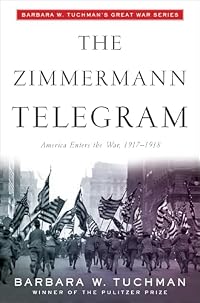
The Zimmermann Telegram
by Barbara Tuchman
On This Page
Description
In the dark winter of 1917, as World War I was deadlocked, Britain knew that Europe could be saved only if the United States joined the war. But President Wilson remained unshakable in his neutrality. Then, with a single stroke, the tool to propel America into the war came into a quiet British office. One of countless messages intercepted by the crack team of British decoders, the Zimmermann telegram was a top-secret message from Berlin inviting Mexico to join Japan in an invasion of the show more United States. Mexico would recover her lost American territories while keeping the U.S. occupied on her side of the Atlantic. How Britain managed to inform America of Germany's plan without revealing that the German codes had been broken makes for an incredible, true story of espionage, intrigue, and international politics as only Barbara W. Tuchman could tell it. show lessTags
Recommendations


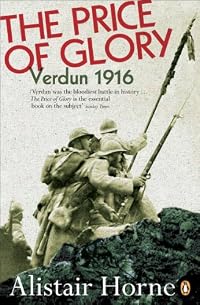
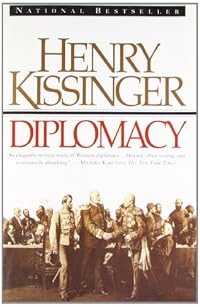

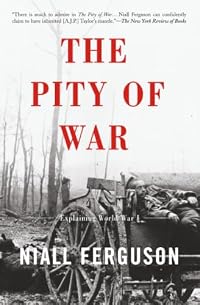
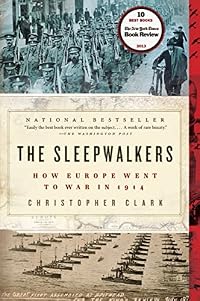




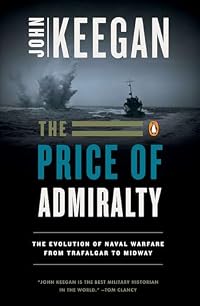

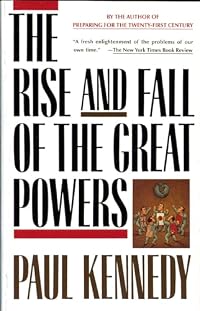
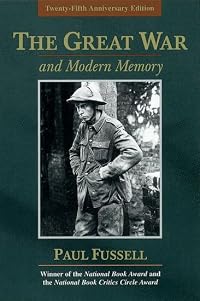
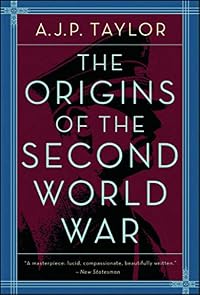







Member Recommendations
Member Reviews
Easily one of the best books of historical narrative I've read in yonks. Utterly compelling story full of the worst and best and most mediocre of personalities, sometimes all in one personality, and all affecting the ways and means in which millions of men die horribly in the trenches, depending on how and when and whether the contents of one intercepted telegram are revealed. The ways in which both very stupid and extremely clever people in positions of immense power simply don't listen to what they don't want to hear are all too well familiar.
While it dates from the late '50s, this work of WW I history is still a vibrant even thrilling read. Good narration from Wanda McCaddon helps, but it is really the text. You have militant, hyperlogical Germans (proto-Nazis, it feels) seeking to foment and support a revolution separating much of the United States away to independent states of people of color by spurring Mexico and Japan... Pancho Villa! Yellow Peril! Woodrow Wilson and public opinion... Pitched and heated (if small) battles - really a Western Hemisphere story of America drawn into World War I by coded cables and unmaked spies with strategic British help over at the London embassy so it can all be "on American soil"
First: the blurb on the back cover from Saturday Review—“The tale has most of the ingredients of an Eric Ambler spy thriller”—is completely inaccurate. Anyone who picks this up in the hopes of gaining some insights into espionage is going to be disappointed, largely because Tuchman reminds us that espionage is much less an issue of triple-agents, exotic locations, and life-and-death struggles than it is of dedicated people in offices struggling with information and how to use it. This is not to dampen her achievement, only to let potential readers know what they’re about to begin.
Why the United States entered World War I is sometimes explained with basic word association, such as, “The Lusitania!” or, “The subs!” show more Tuchman argues that these were obvious factors, but that the interception of the Zimmerman telegram—a 1917 directive sent, in code, from Arthur Zimmerman, State Secretary for Foreign Affairs of the German Empire, to Heinrich Eckhardt, the German Imperial Minister in Mexico, urging Eckhardt to approach the president of Mexico with the offer of German support if Mexico attempted an American invasion—was the factor that pushed Wilson into war. “The telegram was not the only deciding factor upon the President,” Tuchman states. “It was, rather the last drop that emptied his cup of neutrality.”
The opening of the book details how the British counterespionage agents working in what was known as Room 40 intercepted and decoded the telegram, only to face an odd obstacle: how to let the United States know of its contents without telling them directly. If the British directly informed the United States, the Americans might act suddenly and then inadvertently prove to the Germans that their code had been deciphered. But much of the book examines the Mexican revolutions occurring at the time, Pershing looking for Pancho Villa, and the means buy which many German agents and ambassadors communicated in secret to gain favor with General Carranza, the President of Mexico. At times, any reader will wish there were a cast of characters in the back or that Tuchman used appositives when writing. Too often, I found myself looking in the index or in previous pages to remind myself who someone was. She often writes as if the players in the story were all household names.
But she also writes in a way that is so refreshing to anyone who has been reading academic writing. “Wilson was one of those few who formulate the goals for mankind, but he was in the impossible position of trying to function as seer and executive at the same time.” Theodore Roosevelt was “writhing like a bound Prometheus against the confines of American pacifism.” After Zimmerman was exposed, he assumed that German-Americans would support him, but found that they “retreated across the hyphen to take their stand, somewhat sullenly, on the American side.” There’s no jargon, no hand wringing about “agency,” or abstruse language offered for the purpose of impressing a tenure committee or puffing up its author. At times, it’s complicated—but so is the question of why the United States entered the War. show less
Why the United States entered World War I is sometimes explained with basic word association, such as, “The Lusitania!” or, “The subs!” show more Tuchman argues that these were obvious factors, but that the interception of the Zimmerman telegram—a 1917 directive sent, in code, from Arthur Zimmerman, State Secretary for Foreign Affairs of the German Empire, to Heinrich Eckhardt, the German Imperial Minister in Mexico, urging Eckhardt to approach the president of Mexico with the offer of German support if Mexico attempted an American invasion—was the factor that pushed Wilson into war. “The telegram was not the only deciding factor upon the President,” Tuchman states. “It was, rather the last drop that emptied his cup of neutrality.”
The opening of the book details how the British counterespionage agents working in what was known as Room 40 intercepted and decoded the telegram, only to face an odd obstacle: how to let the United States know of its contents without telling them directly. If the British directly informed the United States, the Americans might act suddenly and then inadvertently prove to the Germans that their code had been deciphered. But much of the book examines the Mexican revolutions occurring at the time, Pershing looking for Pancho Villa, and the means buy which many German agents and ambassadors communicated in secret to gain favor with General Carranza, the President of Mexico. At times, any reader will wish there were a cast of characters in the back or that Tuchman used appositives when writing. Too often, I found myself looking in the index or in previous pages to remind myself who someone was. She often writes as if the players in the story were all household names.
But she also writes in a way that is so refreshing to anyone who has been reading academic writing. “Wilson was one of those few who formulate the goals for mankind, but he was in the impossible position of trying to function as seer and executive at the same time.” Theodore Roosevelt was “writhing like a bound Prometheus against the confines of American pacifism.” After Zimmerman was exposed, he assumed that German-Americans would support him, but found that they “retreated across the hyphen to take their stand, somewhat sullenly, on the American side.” There’s no jargon, no hand wringing about “agency,” or abstruse language offered for the purpose of impressing a tenure committee or puffing up its author. At times, it’s complicated—but so is the question of why the United States entered the War. show less
Chock full of pithy, judgmental descriptions of historical figures, this book tells the story of the intrigue that helped push the US into WWI, as a result of the Kaiser’s attempt to recruit Mexico into an alliance with Germany and Japan to take US territory—by sending coded messages via the US’s own diplomatic messaging. Some of the incidents are so bizarre they’re funny—this was at the end of the Great Game, and spies did some pretty incredible things, even as the War to End All Wars ground on.
Barbara Tuchman's short novel-like treatment of the US entry into the First World War tells how a hare-brained idea provoked the USA by threatening its South-Western states and tipped the scales of war against Germany.
Barbara Tuchman, often accused of writing for the unwashed masses, concentrated on an upper class, actor-centric history. Whereas many current historians identify and value general systems and structures, in her books, the monumental decisions are the results of individual actions and accidents (For an excellent combination of three frames see Graham Allison's Essence of decision about the Cuban Missile Crisis). Her cast are the rulers of states, politicians and the diplomatic corps adding for colour some crooks and show more knaves. She excelled in vignettes of their quirks , e.g. "The secret of his success, it was said, was his willingness to be bored" (p. 71) was her assessment of the social charms of the German ambassador. She was also a master of suspense. Even though everybody is aware of the outcome, her gripping narrative is captivating.
The Zimmermann telegram, named after a mid-WWI German foreign secretary, was the result of the Kaiser's meddling in far-away countries outside the core German sphere of influence and interest. Even after one of these dangerous games ignited the world in 1914 (the tale of another Tuchman bestseller, The Guns of August), the Germans hell-bent on destruction stoked the sleeping giants USA and Russia. Unable to win the land war in Europe, Germany relied on two gambles: It won the one in the East (Lenin) but lost the one in the West (u-boat war).
The Zimmermann telegram proposed an alliance among Germany, Mexico and Japan against the USA, which suited neither of the partners and existed mostly in the imagination of German diplomats and agents. Japan had already gobbled up the German colonies in Asia and had much to lose by entering the war. Mexico was (as ever) in a state of politcal turmoil with roving bandits and rival warlords. Attacking the big neighbour, however soothing to Mexican egos, would have been utter folly. The inoperable and worthless Zimmermann telegram, however, became a weapon in the hand of the British government, which by listening in on the German communications and decrypting them was fully aware of its content. Handing the telegram to the US government, which then published it, led to a public relations disaster of German sympathies in the USA and killed US neutrality. The US entry into the First World War doomed the German war machinery.
Tuchman's books cover basically two topics, the decisions which lead to wars, and societies in turmoil and decline. Sometimes, as in the Zimmermann telegram and The Guns of August, these two are interlinked. If you are interested in the First World War, continue with The Guns of August about the origins of that war (Pulitzer Prize). Her excellent The March of Folly about the decisions which led to Vietnam and the American Revolution is probably her most explicit hint of an underlying theory. The weaker The first salute retells the first diplomatic recognition of the US by the Dutch.
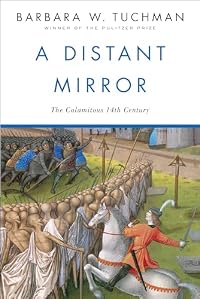
The doom of Victorian society is the topic of the The Proud Tower. A very similar take is her wonderful portrayal of the end of the Dark Ages (14th century) in The Distant Mirror. I have yet to read her second Pulitzer Prize winning book about Stilwell and China. show less
Barbara Tuchman, often accused of writing for the unwashed masses, concentrated on an upper class, actor-centric history. Whereas many current historians identify and value general systems and structures, in her books, the monumental decisions are the results of individual actions and accidents (For an excellent combination of three frames see Graham Allison's Essence of decision about the Cuban Missile Crisis). Her cast are the rulers of states, politicians and the diplomatic corps adding for colour some crooks and show more knaves. She excelled in vignettes of their quirks , e.g. "The secret of his success, it was said, was his willingness to be bored" (p. 71) was her assessment of the social charms of the German ambassador. She was also a master of suspense. Even though everybody is aware of the outcome, her gripping narrative is captivating.
The Zimmermann telegram, named after a mid-WWI German foreign secretary, was the result of the Kaiser's meddling in far-away countries outside the core German sphere of influence and interest. Even after one of these dangerous games ignited the world in 1914 (the tale of another Tuchman bestseller, The Guns of August), the Germans hell-bent on destruction stoked the sleeping giants USA and Russia. Unable to win the land war in Europe, Germany relied on two gambles: It won the one in the East (Lenin) but lost the one in the West (u-boat war).
The Zimmermann telegram proposed an alliance among Germany, Mexico and Japan against the USA, which suited neither of the partners and existed mostly in the imagination of German diplomats and agents. Japan had already gobbled up the German colonies in Asia and had much to lose by entering the war. Mexico was (as ever) in a state of politcal turmoil with roving bandits and rival warlords. Attacking the big neighbour, however soothing to Mexican egos, would have been utter folly. The inoperable and worthless Zimmermann telegram, however, became a weapon in the hand of the British government, which by listening in on the German communications and decrypting them was fully aware of its content. Handing the telegram to the US government, which then published it, led to a public relations disaster of German sympathies in the USA and killed US neutrality. The US entry into the First World War doomed the German war machinery.
Tuchman's books cover basically two topics, the decisions which lead to wars, and societies in turmoil and decline. Sometimes, as in the Zimmermann telegram and The Guns of August, these two are interlinked. If you are interested in the First World War, continue with The Guns of August about the origins of that war (Pulitzer Prize). Her excellent The March of Folly about the decisions which led to Vietnam and the American Revolution is probably her most explicit hint of an underlying theory. The weaker The first salute retells the first diplomatic recognition of the US by the Dutch.
The doom of Victorian society is the topic of the The Proud Tower. A very similar take is her wonderful portrayal of the end of the Dark Ages (14th century) in The Distant Mirror. I have yet to read her second Pulitzer Prize winning book about Stilwell and China. show less
The Queen of World War I does it again (or did it before-this was written before "Guns of August" and "Proud Tower"). A fascinating story of how the infamous Zimmermann telegram made its way to President Wilson via Britain's secret service and Room 40. Because the British didn't want to make public that they had the German code, they had to do some fancy dancing to make it look like the decoded version came from somewhere else, while convincing Wilson that it was authentic. Tuchman's books are never dry, even when you think "a whole book about a telegram?" I was lucky enough to get this book at a book fair where the cover made it look like a thriller novel, and that's where it was. If it had been in history, someone would have gotten it show more way before me! show less
A non-fiction read about the infamous telegram that brought the U.S. into WWI. After reading the book, I 'm sure that the US would have entered anyway, but this is just one more event that pushed America closer to the precipice of war.
Pluses:
learned about room 40
heard Mexican names I've not heard since 1972 when I studied at the Universidad de Mexico City (Villa, Carranzza, Huerta, Diaz, Madero)
saw another side presented of Woodrow Wilson that I had not read of before--that of a stubborn, hard-headed, non-compromising individual
Minuses:
so many characters, could not keep them straight; especially the German & British...I listened to this on Audio. Perhaps had I read a hard copy, my mind might have been more organized.
My expectations were show more that the book centered primarily on the interception and decoding of the telegram, but that was not the case. The book was primarily about high-level politics from 1914-1918. 3 stars, 7 hrs 12 mins (256 pages) show less
Pluses:
learned about room 40
heard Mexican names I've not heard since 1972 when I studied at the Universidad de Mexico City (Villa, Carranzza, Huerta, Diaz, Madero)
saw another side presented of Woodrow Wilson that I had not read of before--that of a stubborn, hard-headed, non-compromising individual
Minuses:
so many characters, could not keep them straight; especially the German & British...I listened to this on Audio. Perhaps had I read a hard copy, my mind might have been more organized.
My expectations were show more that the book centered primarily on the interception and decoding of the telegram, but that was not the case. The book was primarily about high-level politics from 1914-1918. 3 stars, 7 hrs 12 mins (256 pages) show less
Members
- Recently Added By
Lists

Best Military History Books
123 works; 21 members

World War I - fiction & non-fiction
19 works; 4 members

Books about World War I
80 works; 14 members

Folio Society
831 works; 53 members

Club Read's Recommended Nonfiction Written by Women
618 works; 30 members
THE WAR ROOM
813 works; 24 members
Author Information

28+ Works 29,711 Members
Barbara W. Tuchman achieved prominence as a historian with The Zimmermann Telegram, and international fame with The Guns of August--a huge bestseller and winner of the Pulitzer Prize. There followed other successes, including The Proud Tower, Stilwell and the American Experience in China (also awarded the Pulitzer Prize), A Distant Mirror, The show more March of Folly, and The First Salute. show less
Some Editions
Series
Belongs to Publisher Series
Work Relationships
Is abridged in
Common Knowledge
- Canonical title
- The Zimmermann Telegram
- Original title
- The Zimmermann Telegram
- Alternate titles*
- Het Zimmermann-telegram
- Original publication date
- 1958
- People/Characters
- Woodrow Wilson; Reginald Hall; Arthur Zimmermann; Pancho Villa; Wilhelm II, German Kaiser and King of Prussia; John J. Pershing (General) (show all 7); Robert Lansing
- Important places
- New York, New York, USA; El Paso, Texas, USA; London, England, UK; Veracruz, Mexico; Berlin, Germany
- Important events
- World War, 1914-1918.; Seizure of Veracruz
- First words
- The first message of the morning watch plopped out of the pneumatic tube into the wire basket with no more premonitory rattle than usual.
- Last words
- (Click to show. Warning: May contain spoilers.)In the lives of the American people it was the end of innocence.
- Original language
- English
- Canonical DDC/MDS
- 940.3112
- Canonical LCC
- D511.T77
*Some information comes from Common Knowledge in other languages. Click "Edit" for more information.
Classifications
Statistics
- Members
- 1,676
- Popularity
- 13,251
- Reviews
- 31
- Rating
- (3.91)
- Languages
- 8 — Catalan, Dutch, English, French, German, Hebrew, Spanish, Swedish
- Media
- Paper, Audiobook, Ebook
- ISBNs
- 34
- ASINs
- 54