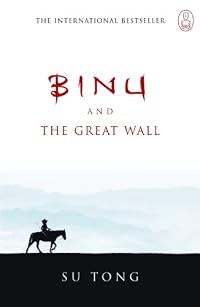
Binu and the Great Wall : The Myth of Meng
by Su Tong
On This Page
Description
In Peach Village, crying is forbidden. But as a child, Binu never learnt to hide her tears. Shunned by the villagers, she faced a bleak future, until she met Qiliang, an orphan who offered her his hand in marriage.Then one day Qiliang disappears. Binu learns that he has been transported hundreds of miles and forced to labour on a project of terrifying ambition and scale - the building of the Great Wall. Binu is determined to find and save her husband. Inspired by her love, she sets out on an show more extraordinary journey towards Great Swallow Mountain, with only a blind frog for company. What follows is an unforgettable story of passion, hardship and magical adventure. show lessTags
Recommendations









Member Reviews
Why bother (re-)telling a story?
If most of the volumes of the myths series so far have struggled to do anything but rehash the same tired Greco-Roman mythology, Chinese novelist Su Tong's (Raise The Red Lantern) contribution to the Canongate Myths series at least adds a different perspective. It's apparently based on the tale of Binu, the wife of a man conscripted to build the Chinese wall, who walked all the way across China to make sure he had something warm to wear when winter came, only to end up crying over his grave.
"Different" doesn't necessarily mean "good," though.
There's no denying that there's a story very much worth telling at the heart of this. Criterion #1 to re-telling an old myth to a modern audience must, of course, be show more that the myth still has some sort of value as a story, and Su Tong (who's a citizen of the People's Republic and lives in Beijing) certainly mines this one well. There's a great project to be built, ordered by the king whom almost nobody has seen in person and who only shows up in the story by dying, for which the people are expected to sacrifice everything and not complain; the worst crime one can commit (short of planning to assasinate the king or disobeying the local ruler) is to cry. Especially if you're a woman.
They had stolen her package, stolen her body, and finally they had stolen her grief, her tears, and her right to die.
Damnit, it's positively Orwell with a Confucian twist as Su Tong follows Binu across China, running into people from all walks (and rides, and leaps, and crawls) of life, leading up to a finale that I'm sure would make a cracking scene in a movie.
And yet. One would think criterion #2 for a successful re-hash of an old story would be to make not only the themes but also the characters come alive, so that the reader can identify with the story and not only understand but feel its relevance. Now, in fairness, it's possible that there's just a cultural gap at work here. Maybe the numerous side plots are in fact allusions to stories I've never read, and maybe Tong puts a clever spin on them and uses them to add another layer to what, to me, looks like a lifeless story, full of clumsy "magic realism" that never feels real, and populated by flat, one-dimensional characters. Our heroine never does anything but weep - bucketfulls, literally - and declare how much she needs to get to her husband, and none of the dozens of supporting characters she meets along the way serve any purpose but to provide video game-like obstacles and clues in a way that would make Paulo Coelho proud. And it goes on like this for far too long, veering back and forth the affairs of peasants and kings without ever really making any of them matter despite going into excruciating detail time and again.
I can see why Tong bothers re-telling the story of Binu. I'm not entirely sure if I should have bothered reading it, though. As an allegory, it works; but like Binu's husband, it ends up crushed under the weight of far too much stone serving no purpose but to keep people out. show less
If most of the volumes of the myths series so far have struggled to do anything but rehash the same tired Greco-Roman mythology, Chinese novelist Su Tong's (Raise The Red Lantern) contribution to the Canongate Myths series at least adds a different perspective. It's apparently based on the tale of Binu, the wife of a man conscripted to build the Chinese wall, who walked all the way across China to make sure he had something warm to wear when winter came, only to end up crying over his grave.
"Different" doesn't necessarily mean "good," though.
There's no denying that there's a story very much worth telling at the heart of this. Criterion #1 to re-telling an old myth to a modern audience must, of course, be show more that the myth still has some sort of value as a story, and Su Tong (who's a citizen of the People's Republic and lives in Beijing) certainly mines this one well. There's a great project to be built, ordered by the king whom almost nobody has seen in person and who only shows up in the story by dying, for which the people are expected to sacrifice everything and not complain; the worst crime one can commit (short of planning to assasinate the king or disobeying the local ruler) is to cry. Especially if you're a woman.
They had stolen her package, stolen her body, and finally they had stolen her grief, her tears, and her right to die.
Damnit, it's positively Orwell with a Confucian twist as Su Tong follows Binu across China, running into people from all walks (and rides, and leaps, and crawls) of life, leading up to a finale that I'm sure would make a cracking scene in a movie.
And yet. One would think criterion #2 for a successful re-hash of an old story would be to make not only the themes but also the characters come alive, so that the reader can identify with the story and not only understand but feel its relevance. Now, in fairness, it's possible that there's just a cultural gap at work here. Maybe the numerous side plots are in fact allusions to stories I've never read, and maybe Tong puts a clever spin on them and uses them to add another layer to what, to me, looks like a lifeless story, full of clumsy "magic realism" that never feels real, and populated by flat, one-dimensional characters. Our heroine never does anything but weep - bucketfulls, literally - and declare how much she needs to get to her husband, and none of the dozens of supporting characters she meets along the way serve any purpose but to provide video game-like obstacles and clues in a way that would make Paulo Coelho proud. And it goes on like this for far too long, veering back and forth the affairs of peasants and kings without ever really making any of them matter despite going into excruciating detail time and again.
I can see why Tong bothers re-telling the story of Binu. I'm not entirely sure if I should have bothered reading it, though. As an allegory, it works; but like Binu's husband, it ends up crushed under the weight of far too much stone serving no purpose but to keep people out. show less
Binu's husband Wan Qiliang is pressganged into working on the Great Wall of China. She sets out on the long journey to bring him a set of winter clothes.
It's difficult to judge this without knowing the original Chinese folk tale. Is it a straightforward retelling or is the author riffing on the story somehow? I certainly enjoyed it as a story of a journey across China by one woman and a frog who may or may not be the reincarnation of a woman from the nearby town.
One annoying feature is that the book has no apostrophes (were or we're, shed or she'd, etc?) or speech marks, which can be momentarily confusing.
It's difficult to judge this without knowing the original Chinese folk tale. Is it a straightforward retelling or is the author riffing on the story somehow? I certainly enjoyed it as a story of a journey across China by one woman and a frog who may or may not be the reincarnation of a woman from the nearby town.
One annoying feature is that the book has no apostrophes (were or we're, shed or she'd, etc?) or speech marks, which can be momentarily confusing.
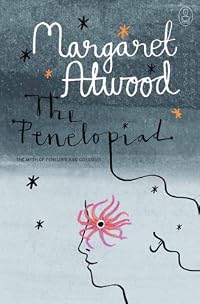
After reading The Penelopiad, I immediately put all the rest of the Canongate myths series on my wishlist. Sadly, a couple of books later, I realise that The Penelopiad was great because it was written by Margaret Atwood, not because it was a reimagining of a myth.
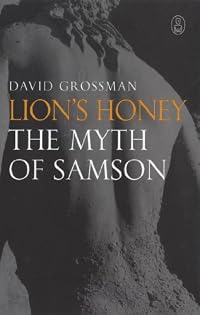
The Penelopiad took the story and added psychological realism, and an authentic voice (sure, it had modern sensibilities, but since it's a myth, why not?). The next one I read, Lion's Honey, had a bit too much psychological detail - it read like the process of coming up with the backstory, rather than the story itself. Binu and the Great Wall adds detail and context to the myth - but not much in the way of insight.
Instead, there's an element of political allegory - everyone show more Binu meets has mutilated themselves in one way or another as a result of the tyranny they live under, and they mock Binu because her own resistance shows them up. (Her husband, like all the other men, has been taken away to build the Great Wall, and she sets out to look for him). In most places, it is forbidden to cry, so Binu's tears shake up the places that she passes. But pretty soon it becomes very monotonous - bad things happen, Binu cries, after a short respite more bad things happen, Binu cries... show less
The Penelopiad took the story and added psychological realism, and an authentic voice (sure, it had modern sensibilities, but since it's a myth, why not?). The next one I read, Lion's Honey, had a bit too much psychological detail - it read like the process of coming up with the backstory, rather than the story itself. Binu and the Great Wall adds detail and context to the myth - but not much in the way of insight.
Instead, there's an element of political allegory - everyone show more Binu meets has mutilated themselves in one way or another as a result of the tyranny they live under, and they mock Binu because her own resistance shows them up. (Her husband, like all the other men, has been taken away to build the Great Wall, and she sets out to look for him). In most places, it is forbidden to cry, so Binu's tears shake up the places that she passes. But pretty soon it becomes very monotonous - bad things happen, Binu cries, after a short respite more bad things happen, Binu cries... show less
Binu's husband has been taken as one of the local men to build the Great Wall of China. They were quite poor despite Binu's good looks. Binu loves her husband Wan Qiliang and when the wether starts to turn cold she worries he will need his winter coat. So she sets out on a journey by foot from her home Peach Villiage to travel to find him across Great Swallow Mountain and give him his coat. With her travels a blind frog that was once a blind woman looking for her lost son.
The journey is long and hard with many interesting adventures along the way. Binu is set upon by many sleezy men as she is a woman travelling alone. No one in North Moutain can cry naturally through their eyes and the woman have learnt to cry through various other body show more parts for example their hair, feet, breasts and ears. This "skill" saves Binu as well as putting her in more danger on many occassions on her journey.
A blend of mythology, folklore and fairy tale, this tale would be ideal for anyone who loves these themes or enjoyed Sky Burial by Xinran. I really loved this tale, it really captured my imagination and the language was beautiful. I really felt for Binu on her amazing journey of devotion for her husband. No one seemed to understand her love for Wan Qiliang which is a shame. Oh and don't expect a traditional fairy tale "and they lived happily ever after" ending... show less
The journey is long and hard with many interesting adventures along the way. Binu is set upon by many sleezy men as she is a woman travelling alone. No one in North Moutain can cry naturally through their eyes and the woman have learnt to cry through various other body show more parts for example their hair, feet, breasts and ears. This "skill" saves Binu as well as putting her in more danger on many occassions on her journey.
A blend of mythology, folklore and fairy tale, this tale would be ideal for anyone who loves these themes or enjoyed Sky Burial by Xinran. I really loved this tale, it really captured my imagination and the language was beautiful. I really felt for Binu on her amazing journey of devotion for her husband. No one seemed to understand her love for Wan Qiliang which is a shame. Oh and don't expect a traditional fairy tale "and they lived happily ever after" ending... show less
Retelling the story of one woman’s journey in search for her husband, who was brought to build the Great Wall, this story follows the hardships and challenges that Binu had to face as the result of her decision to go after her husband, Qiliang.
The story starts off with the story of how people who live in the areas around North Mountain have been forbidden to cry. Even babies and young children are taught to never shed tears from their eyes. But to cry is only natural, after all, and these people have since found some rather mysterious ways in which they could shed tears from other parts of their bodies, but their eyes and cheeks stay dry. Binu, is one such person living in one of the villages at the foot of North Mountain.
She decides show more to go to Great Swallow Mountain, even if it means to walk a thousand li to get there, when she finds out that her husband, Qiliang, was taken to build the Great Wall there. She makes up her mind to deliver winter clothing to Qiliang, as the weather is turning cold. But sorceresses tell her that she will die if she makes this journey.
As she embarks on her journey to seek her husband, she comes across a blind frog, reincarnated from a blind old woman who was looking for her son. She comes across deer-children next, children who have taken to prancing and skipping in the woods like deer, forgetting their roots and homes. She then becomes the bride to a dead thief, escaping which only to come across far more bizarre events and characters. show less
The story starts off with the story of how people who live in the areas around North Mountain have been forbidden to cry. Even babies and young children are taught to never shed tears from their eyes. But to cry is only natural, after all, and these people have since found some rather mysterious ways in which they could shed tears from other parts of their bodies, but their eyes and cheeks stay dry. Binu, is one such person living in one of the villages at the foot of North Mountain.
She decides show more to go to Great Swallow Mountain, even if it means to walk a thousand li to get there, when she finds out that her husband, Qiliang, was taken to build the Great Wall there. She makes up her mind to deliver winter clothing to Qiliang, as the weather is turning cold. But sorceresses tell her that she will die if she makes this journey.
As she embarks on her journey to seek her husband, she comes across a blind frog, reincarnated from a blind old woman who was looking for her son. She comes across deer-children next, children who have taken to prancing and skipping in the woods like deer, forgetting their roots and homes. She then becomes the bride to a dead thief, escaping which only to come across far more bizarre events and characters. show less
An interesting book about an old chinese myth. Not quite what I expected but still enjoyable.
Members
- Recently Added By
Lists

Myth (Reuse and Retelling)
188 works; 24 members
Author Information

50+ Works 1,243 Members
Awards and Honors
Notable Lists
Series
Belongs to Publisher Series
Common Knowledge
- Canonical title
- Binu and the Great Wall : The Myth of Meng
- Original publication date
- 2007-11
- First words
- The people who live at the foot of the North Mountain cannot cry, even today.
- Last words
- (Click to show. Warning: May contain spoilers.)Wan Qiliang and the others are rising up from the ground!
- Original language
- Chinese
Classifications
- Genres
- General Fiction, Fiction and Literature, Fantasy
- DDC/MDS
- 813 — Literature & rhetoric American literature in English American fiction in English
- LCC
- PL2904 .T86 .B5513 — Language and Literature Languages and literatures of Eastern Asia, Africa, Oceania Languages of Eastern Asia, Africa, Oceania Chinese language and literature Chinese literature Individual authors and works
- BISAC
Statistics
- Members
- 176
- Popularity
- 185,072
- Reviews
- 7
- Rating
- (3.07)
- Languages
- 7 — Dutch, English, Finnish, French, German, Japanese, Swedish
- Media
- Paper, Ebook
- ISBNs
- 21
- ASINs
- 3