
Jiang Rong
Author of Wolf Totem
About the Author
Disambiguation Notice:
Rong Jiang is the pen name for Lu Jiamin.
Works by Jiang Rong
Tagged
Common Knowledge
Members
Reviews

Lü Jiamin was a college student in 1967 when the Cultural Revolution began. Hoping to avoid persecution as an educated elite, he volunteered to be sent to Inner Mongolia where he lived with the Mongol herders until he was thirty-three. His experiences there, including adopting an abandoned wolf cub, informed his writing of this wildly popular book. Lü published the book under the pen name Jiang Rong, and it wasn't until he won the inaugural Man Asian Literary Prize that his identity was show more known. He was unable to attend the awards ceremony and remains unable to get a passport due to his participation in the Tiananmen Square protests.
The outlines of the novel seem to roughly follow Lü's experiences. Chen Zhen is a young scholar who volunteers to go down to the countryside at the onset of the Cultural Revolution and becomes a sheep herder. His Mongol mentor, Bilgee, is an elderly man who follows the traditional beliefs and practices of his Mongol ancestors. He teaches Chen to respect and honor the fearsome Mongolian wolf and its place in maintaining the ecological balance of the region. As Chen learns more, he becomes obsessed with the wolves and both studies them with a scientific mindset and mythologizes the role of the wolf in Chinese history. His passion for the old ways brings him into conflict with the agricultural goals set by Beijing, and with the herders for attempting to raise a wolf cub.
I enjoyed learning about the Mongolian steppe from the perspective of a Han Chinese and appreciated the mythical aspects. Harder for me was to read the constant scenes of animal violence. Much of it was natural (wolves vs horses and sheep, as well as gazelles and marmots), but is still hard to read in detail, at least for this reader. Also hard to read in a different sense was the inevitable fate of the steppe and the Mongol nomads. Although the outcome is common history, Jiang expertly creates tension as his characters struggle against this fate. show less
The outlines of the novel seem to roughly follow Lü's experiences. Chen Zhen is a young scholar who volunteers to go down to the countryside at the onset of the Cultural Revolution and becomes a sheep herder. His Mongol mentor, Bilgee, is an elderly man who follows the traditional beliefs and practices of his Mongol ancestors. He teaches Chen to respect and honor the fearsome Mongolian wolf and its place in maintaining the ecological balance of the region. As Chen learns more, he becomes obsessed with the wolves and both studies them with a scientific mindset and mythologizes the role of the wolf in Chinese history. His passion for the old ways brings him into conflict with the agricultural goals set by Beijing, and with the herders for attempting to raise a wolf cub.
I enjoyed learning about the Mongolian steppe from the perspective of a Han Chinese and appreciated the mythical aspects. Harder for me was to read the constant scenes of animal violence. Much of it was natural (wolves vs horses and sheep, as well as gazelles and marmots), but is still hard to read in detail, at least for this reader. Also hard to read in a different sense was the inevitable fate of the steppe and the Mongol nomads. Although the outcome is common history, Jiang expertly creates tension as his characters struggle against this fate. show less
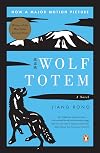
**Disclaimer: lots and lots of spoilers below.
Wolf Totem is one of those stories that touches you deeply. It went to mysterious places reserved just to my favorite characters. I'll carry these characters with me for a long time, like as in any great story I've read before. Chen, Bilgee, Erlang and Little Wolf were my companions for the last months, and while I was living my own adventures they allowed me to join them into theirs. They brought me into their dens and yurts. They became my show more companions from another time, and right now I am grieving with their departure. They still are on the beautiful Mongolia's grassland in mid 60's while I am in 2019, Ukraine.
This thrilling tale of man and wolf co living through the centuries by the ecological and social balance that it implicates: wolves keep the plagues controlled on the grassland, men hunt wolves when they are overpopulated, wolves teach men war strategies, men fear and worship the wolves. Both wild and brave, men and wolves survived the natural challenges imposed by the grassland but wouldn't able to survive the Chinese invasion during the Cultural Revolution. Farmers, researchers and militaries from other parts of China were sent to develop the region at any cost. The subtle balance was broken from a macro view, from politicians who intended to rise the crops and flocks to feed its citizens forcing the shepherds on the grassland into a new life style. In a micro view, the balance was broken when one Chinese student stole a wolf cub from its den and raised it among the humans.
What make it sad is that it just a sample from the humanity's ability in all history. I believe in development but not at any cost. And as the book ends, Beijing is covered in yellow dust, Little Wolf was buried in yellow sand and everything that came after the farming turned grassland into yellow desert.
Wolf Totem has majestic quotes that I started marking on the very first hundred pages from a total of 524 pages in English. This book made me wish I could read Chinese just to read the original. Wolf Totem made me cry several times and every time I've opened a page I was pulled down to the winds and herds and mosquitoes of Mongolia. I heard the wolves howling laments from distant mountains when they've noticed a wolf prisoner among the humans. I felt the cold winter and I tasted sheep dishes. I've cried with the cubs slaughtering, I felt joy in Chen's yurt with Little Wolf. I've wished this friendship couldn't be one sided as it was. I begged, in my mind, for the author give me a happy ending, because since the beginning I and Little Wolf smelled something bad in the air was to come: "The little wolf had come to accept his surroundings and was happy to frolic with his puppy friends, even though his nose told him that this wasn't his real home." p. 262
I was sobbing on Jiang Rong's shoulder wondering why Little Wolf had to die. He was a brave wolf king, he deserved free landscapes to run wild. Chen couldn't take out its wilderness within. And Chen regretted his whole life having breaking the grasslands laws, however it doesn't mean that before the Chinese invasion there was peace between wolves and men. "Have you forgotten that grassland is a battlefield, and that no one who's afraid of blood can call himself a warrior? Doesn't bother you that those wolves wiped out an entire herd of horses? If we don't use violent means, how will we ever beat them?" p. 129 (...) "The wolf is their spiritual totem, but a physical enemy." p.333
Bilgee reminds me of my grandfather with all your wisdom of living and his prophecies that nobody cared and silently turned into reality few years after. "We grasslanders eat meat all our lives, for which we kill many creatures. After we die, we donate our meat back to the grassland. To us, it only seems fair, and it's good for our soul when we go up to Tengger" p.125
And the dogs wild submission also taught me about friendship and individuality. Erlang was still his own man. He allowed men boss him. When he and Yellow killed those wolves and were recognized among the other dogs, I could see their happy faces. "The students' arrival had taught the dogs they were more good things to eat in the world than they were used to, and eating candy in front of all those dogs brought Erlang and Yellow canine glory." p. 194
They also required a happy ending. They were true heroes on the grassland. "And their relationship to the humans was closer; they helped to dispel the loneliness of the wildwood." p. 195 (...) "Every yurt has someone whose life has been saved by the family dog". p. 196
(...)
"Women had the most unpleasant work - patching up the injured dogs. Men used dogs during a hunt, but women relied on them for watching the livestock at night. And it was they who raised them, almost as if their children. When dogs were hurt, or when they died, it was the women who grieved." p. 195
"Dogs eat peoples shit; wolves eat people. By eating shit, dogs are nothing but slaves to humans. But wolves eat human corpses to send the souls into the botom of Tengger." p. 269
(...)
This is a tale of abrupt changes in societies. Of decisions made by people without any respect or empathy for the others. It's the average good who turns into a whole bad, as the secret lake of swans which was turned into grassland for the livestock. While China was taking grassland piece by piece, Chen was taking Little Wolf's freedom, voice and fangs, and Bao was eating a sacred swan. "He surely lacked the strength to move the rocks in order to see his mate one last time. A swan's lamentation over the death of its mate and the heartbreaking cries of the old wolf came together in pulsating waves of mourning." p. 292
I learned a long time ago that novels teach me more about history, culture and politics than any school book. It was the same when I've read Chasing the Flame: One Man's Fight to Save the World. Even if I don't agree with UN's argument, I was able, for the first time, to understand how refugee crisis start and how complicate it is to end. Or best, to have a happy ending.
This book remained me of The Secret Garden, Jane Austen, Jack London, Thoreau. And obviously, The Steppenwolf. Legends of the Fall. Mongolia and even The Lion King. "Suddenly, a long howl cut through the darkness. It was a gentle tender, and mournful sound filled with the pain, sorrow, and longing of a mother wolf. (...) A mother's song to her child, echoing through the ancient, desolate grassland. Chen was unable to hold back his tears; Yang Ke's eyes were also glistening. (...) It was as if the mother wolves wanted to vent their accumulated bitterness of losing cubs years after years over the millennia, submerging the vast, dark grassland into thousands of years of sadness." p. 386
--
As my friend Gesiel passed Little Wolf to me, I feel I have to let my travel mate go. It doesn't belong to the chains of steady shelves. Its story must be read thousand times. This is an essay of my grief after the book's end. Also, this is me stretching my English vocabulary, which is a bit narrow, a bit weak and a slightly skinny (we both must attend the gym soon).
This essay is still being revisioned until I finish processing Wolf Totem. Please, feel free to comment if you see any typo or misspelling. show less
Wolf Totem is one of those stories that touches you deeply. It went to mysterious places reserved just to my favorite characters. I'll carry these characters with me for a long time, like as in any great story I've read before. Chen, Bilgee, Erlang and Little Wolf were my companions for the last months, and while I was living my own adventures they allowed me to join them into theirs. They brought me into their dens and yurts. They became my show more companions from another time, and right now I am grieving with their departure. They still are on the beautiful Mongolia's grassland in mid 60's while I am in 2019, Ukraine.
This thrilling tale of man and wolf co living through the centuries by the ecological and social balance that it implicates: wolves keep the plagues controlled on the grassland, men hunt wolves when they are overpopulated, wolves teach men war strategies, men fear and worship the wolves. Both wild and brave, men and wolves survived the natural challenges imposed by the grassland but wouldn't able to survive the Chinese invasion during the Cultural Revolution. Farmers, researchers and militaries from other parts of China were sent to develop the region at any cost. The subtle balance was broken from a macro view, from politicians who intended to rise the crops and flocks to feed its citizens forcing the shepherds on the grassland into a new life style. In a micro view, the balance was broken when one Chinese student stole a wolf cub from its den and raised it among the humans.
What make it sad is that it just a sample from the humanity's ability in all history. I believe in development but not at any cost. And as the book ends, Beijing is covered in yellow dust, Little Wolf was buried in yellow sand and everything that came after the farming turned grassland into yellow desert.
Wolf Totem has majestic quotes that I started marking on the very first hundred pages from a total of 524 pages in English. This book made me wish I could read Chinese just to read the original. Wolf Totem made me cry several times and every time I've opened a page I was pulled down to the winds and herds and mosquitoes of Mongolia. I heard the wolves howling laments from distant mountains when they've noticed a wolf prisoner among the humans. I felt the cold winter and I tasted sheep dishes. I've cried with the cubs slaughtering, I felt joy in Chen's yurt with Little Wolf. I've wished this friendship couldn't be one sided as it was. I begged, in my mind, for the author give me a happy ending, because since the beginning I and Little Wolf smelled something bad in the air was to come: "The little wolf had come to accept his surroundings and was happy to frolic with his puppy friends, even though his nose told him that this wasn't his real home." p. 262
I was sobbing on Jiang Rong's shoulder wondering why Little Wolf had to die. He was a brave wolf king, he deserved free landscapes to run wild. Chen couldn't take out its wilderness within. And Chen regretted his whole life having breaking the grasslands laws, however it doesn't mean that before the Chinese invasion there was peace between wolves and men. "Have you forgotten that grassland is a battlefield, and that no one who's afraid of blood can call himself a warrior? Doesn't bother you that those wolves wiped out an entire herd of horses? If we don't use violent means, how will we ever beat them?" p. 129 (...) "The wolf is their spiritual totem, but a physical enemy." p.333
Bilgee reminds me of my grandfather with all your wisdom of living and his prophecies that nobody cared and silently turned into reality few years after. "We grasslanders eat meat all our lives, for which we kill many creatures. After we die, we donate our meat back to the grassland. To us, it only seems fair, and it's good for our soul when we go up to Tengger" p.125
And the dogs wild submission also taught me about friendship and individuality. Erlang was still his own man. He allowed men boss him. When he and Yellow killed those wolves and were recognized among the other dogs, I could see their happy faces. "The students' arrival had taught the dogs they were more good things to eat in the world than they were used to, and eating candy in front of all those dogs brought Erlang and Yellow canine glory." p. 194
They also required a happy ending. They were true heroes on the grassland. "And their relationship to the humans was closer; they helped to dispel the loneliness of the wildwood." p. 195 (...) "Every yurt has someone whose life has been saved by the family dog". p. 196
(...)
"Women had the most unpleasant work - patching up the injured dogs. Men used dogs during a hunt, but women relied on them for watching the livestock at night. And it was they who raised them, almost as if their children. When dogs were hurt, or when they died, it was the women who grieved." p. 195
"Dogs eat peoples shit; wolves eat people. By eating shit, dogs are nothing but slaves to humans. But wolves eat human corpses to send the souls into the botom of Tengger." p. 269
(...)
This is a tale of abrupt changes in societies. Of decisions made by people without any respect or empathy for the others. It's the average good who turns into a whole bad, as the secret lake of swans which was turned into grassland for the livestock. While China was taking grassland piece by piece, Chen was taking Little Wolf's freedom, voice and fangs, and Bao was eating a sacred swan. "He surely lacked the strength to move the rocks in order to see his mate one last time. A swan's lamentation over the death of its mate and the heartbreaking cries of the old wolf came together in pulsating waves of mourning." p. 292
I learned a long time ago that novels teach me more about history, culture and politics than any school book. It was the same when I've read Chasing the Flame: One Man's Fight to Save the World. Even if I don't agree with UN's argument, I was able, for the first time, to understand how refugee crisis start and how complicate it is to end. Or best, to have a happy ending.
This book remained me of The Secret Garden, Jane Austen, Jack London, Thoreau. And obviously, The Steppenwolf. Legends of the Fall. Mongolia and even The Lion King. "Suddenly, a long howl cut through the darkness. It was a gentle tender, and mournful sound filled with the pain, sorrow, and longing of a mother wolf. (...) A mother's song to her child, echoing through the ancient, desolate grassland. Chen was unable to hold back his tears; Yang Ke's eyes were also glistening. (...) It was as if the mother wolves wanted to vent their accumulated bitterness of losing cubs years after years over the millennia, submerging the vast, dark grassland into thousands of years of sadness." p. 386
--
As my friend Gesiel passed Little Wolf to me, I feel I have to let my travel mate go. It doesn't belong to the chains of steady shelves. Its story must be read thousand times. This is an essay of my grief after the book's end. Also, this is me stretching my English vocabulary, which is a bit narrow, a bit weak and a slightly skinny (we both must attend the gym soon).
This essay is still being revisioned until I finish processing Wolf Totem. Please, feel free to comment if you see any typo or misspelling. show less

I nearly cried as I turned the last page of 'Wolf Totem', and knew that in doing so, that I had completed reading what would become one of my all-time favourite pieces of modern literature, and connected with it in a way that I hadn't imagined.
Set in the grasslands of Mongolia during the Cultural Revolution, 'Wolf Totem' tells the semi-autobiographical story of a young Chinese man's separation from these events, instead exposed to new day-to-day struggles adapting to the way of life of show more nomadic tribes. Through the story's lead character Chen Zhen, the reader finds themselves absolutely encapsulated in the stories and beliefs of the grassland surrounding wolves, and entranced in the intricate methods in place year-long ensuring the stability of this particular way of life with regards food production, safety and land sustainability.
I found that I was, through Chen Zhen, reading this book and seeing, with fascinated learning eyes, feeling the excitement and fear of what life must have been like. It is with sadness that the closing chapters remind the reader that this book was based on real events, yet it is a book that you can completely and utterly lose yourself in, and it will leave a lasting effect. show less
Set in the grasslands of Mongolia during the Cultural Revolution, 'Wolf Totem' tells the semi-autobiographical story of a young Chinese man's separation from these events, instead exposed to new day-to-day struggles adapting to the way of life of show more nomadic tribes. Through the story's lead character Chen Zhen, the reader finds themselves absolutely encapsulated in the stories and beliefs of the grassland surrounding wolves, and entranced in the intricate methods in place year-long ensuring the stability of this particular way of life with regards food production, safety and land sustainability.
I found that I was, through Chen Zhen, reading this book and seeing, with fascinated learning eyes, feeling the excitement and fear of what life must have been like. It is with sadness that the closing chapters remind the reader that this book was based on real events, yet it is a book that you can completely and utterly lose yourself in, and it will leave a lasting effect. show less
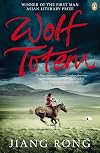
Chen Zhen is a Chinese student, volunteers to spend some time in the countryside at the beginning of the Cultural Revolution. Sent to the grasslands of Inner Mongolia to live and work among the nomadic people whose way of life hasn't changed in centuries. Taken under the wing of Bilgee, a tribal elder, Chen learns of a natural order of balance that has successfully provided for the existence of these people which is now under threat from the new way of doing things that the Chinese have show more brought with them. The intended destruction of the wolves, the largest predator in the region could have devastating effects on the ecology. Who is it that keeps the gazelle's from stopping in one place until that area of grass has either been consumed or trampled into oblivion so there will be none left for the Mongols own herds of sheep, cattle and horses? Who keeps the marmot and rabbit population in check so that their burrows won't proliferate across the land causing untold devastation? Chen's fascination with wolves grows with the more he sees and learns of these creatures and formulates a plan that may have dire consequences. He wants to get hold of a cub and raise it so that he can study it at close quarters. Raising a natural predator within a camp surrounded by livestock, what could possibly go wrong?
This is a semi-autobiographical novel based on the author's own experiences of the time. It explores the socio-political expansionism of the Chinese at the expense of their neighbours as well as providing a very strong ecological message where removing one part of a delicately balanced ecosystem could spell disaster that may be impossible to recover from. It's not a subtle book and does bang you over the head with its message at times. Its also not an easy book to read, I personally couldn't just sit and read large chunks of this novel reading just one or two chapters at a time before having to set it down. It's not that it isn't a fascinating tale, it is, but the narrative doesn't flow and I'm not sure whether that's the fault of the author or the translator or possibly a combination of both. What most appeals about this book though is the way in which the grasslands existence is brought to life for the reader. It's quite an insight into an often brutal reality. An epilogue chapter,where Chen Zhen returns to the grasslands some thirty years later, is quite damning on what has happened in those intervening years . show less
This is a semi-autobiographical novel based on the author's own experiences of the time. It explores the socio-political expansionism of the Chinese at the expense of their neighbours as well as providing a very strong ecological message where removing one part of a delicately balanced ecosystem could spell disaster that may be impossible to recover from. It's not a subtle book and does bang you over the head with its message at times. Its also not an easy book to read, I personally couldn't just sit and read large chunks of this novel reading just one or two chapters at a time before having to set it down. It's not that it isn't a fascinating tale, it is, but the narrative doesn't flow and I'm not sure whether that's the fault of the author or the translator or possibly a combination of both. What most appeals about this book though is the way in which the grasslands existence is brought to life for the reader. It's quite an insight into an often brutal reality. An epilogue chapter,
Lists
Awards


You May Also Like


Associated Authors
Statistics
- Works
- 3
- Members
- 856
- Popularity
- #29,895
- Rating
- 3.8
- Reviews
- 27
- ISBNs
- 60
- Languages
- 12
- Favorited
- 1
