Anything for Billy
by Larry McMurtry
On This Page
Description
Recreates the colorful life of the legendary outlaw Billy the Kid, a gunslinger neither as ferocious nor as purposeful as legend has him to be.Tags
Recommendations










Member Reviews
Aside from the peerless, inescapable Lonesome Dove, that exemplar of the genre, it seems Larry McMurtry only really wrote one Western. While I've not read all of them so far, of the ones I have I can say they are much the same at their core, whether it's Boone's Lick, Buffalo Girls, the four Berrybender Narratives or this offering from the years of Lonesome Dove's immediate afterglow: Anything for Billy.
Ostensibly telling the story of Billy the Kid (who I assume needs no introduction here), Anything for Billy is a typical McMurtry Western offering: agreeable and well-written and hard to criticise, or at least to land a solid punch on; but also slightly frivolous, trotting rather than galloping, a disorienting mix of quixotic comic show more adventure and stomach-churning moments of violence stuffed with passing nods to real, minor historical figures from the Old West. McMurtry's fans always seemed more interested in recapturing Lonesome Dove's magic than he did, and Anything for Billy shares that lack of ambition his Western offerings often possessed.
McMurtry seemed to position himself as a 'demythologiser' of the American West, not in the modern dogmatic sense of harrowing and shaming it according to political ideology, but in a general sort of antipathy towards it: a rewriting of its stories and legends so that they wilfully lose a bit of their lustre in the transition. Why, I don't know, but – Lonesome Dove, as ever, aside – you read one of his Western stories feeling the whole place was a bit shabby, that you're imbibing something that feels a little bit unnatural.
Some readers might see this contrarianism as a push for realism, but I would argue that McMurtry's ersatz Westerns play as fast and loose with the real characters of the West as the hacks and pop-culture storytellers ever have, only in the opposite direction. Nowhere is this starker than in Anything for Billy. The most obvious omission is that of Pat Garrett (without spoilers, Billy in this novel is killed by someone completely different, in a completely different place, for completely different reasons). Some of Garrett's function in the legend is fulfilled by another (fictional) character, but anyone with knowledge of the "real" story will be left scratching their heads at all the real people omitted, the fictional people included in their stead, and the events that are changed to a lesser purpose. It's a sandbox that throws out all the ready-made toys while still at play: a sort of fever-dream version of the Billy the Kid legend, neither pure, welcome truth nor easy, entertaining myth.
Indeed, you could take the story and change the name of its subject and have a perfectly serviceable Western fiction (indeed, McMurtry almost does this as a half-measure, calling his incarnation 'Billy Bone' rather than William Bonney). The one reason I expect McMurtry hitched this novel more explicitly to the 'Billy the Kid' name was to explore Billy's disconcertingly casual murderousness. Billy is personally charming, in a runtish sort of way, but "a blank domino when it came to conscience" (pg. 303), and this fits in well with the author's penchant for comic opera laced with hyperviolence. (For example, McMurtry invents one character, perhaps the only appealing one in the novel, for no real purpose, and then kills them off in a lethargic and humiliating way.)
But while the author conveys Billy's psychosis passably well, ultimately the book falls short as a character exploration. For all his interest in demythologising the West, McMurtry makes no effort to account for how Billy acquired his reputation nor how he developed it in the rumour mills of the Old West; in short, how this unremarkable, hapless thug became a Western legend, a notorious outlaw to rank with the most feared villains, without really doing much of anything beyond a few grubby homicides. It leaves the reader with that reliable, passing enjoyment of another McMurtry Western but, as ever, also more than a little bemused at what could have been and what was left unclaimed. show less
Ostensibly telling the story of Billy the Kid (who I assume needs no introduction here), Anything for Billy is a typical McMurtry Western offering: agreeable and well-written and hard to criticise, or at least to land a solid punch on; but also slightly frivolous, trotting rather than galloping, a disorienting mix of quixotic comic show more adventure and stomach-churning moments of violence stuffed with passing nods to real, minor historical figures from the Old West. McMurtry's fans always seemed more interested in recapturing Lonesome Dove's magic than he did, and Anything for Billy shares that lack of ambition his Western offerings often possessed.
McMurtry seemed to position himself as a 'demythologiser' of the American West, not in the modern dogmatic sense of harrowing and shaming it according to political ideology, but in a general sort of antipathy towards it: a rewriting of its stories and legends so that they wilfully lose a bit of their lustre in the transition. Why, I don't know, but – Lonesome Dove, as ever, aside – you read one of his Western stories feeling the whole place was a bit shabby, that you're imbibing something that feels a little bit unnatural.
Some readers might see this contrarianism as a push for realism, but I would argue that McMurtry's ersatz Westerns play as fast and loose with the real characters of the West as the hacks and pop-culture storytellers ever have, only in the opposite direction. Nowhere is this starker than in Anything for Billy. The most obvious omission is that of Pat Garrett (without spoilers, Billy in this novel is killed by someone completely different, in a completely different place, for completely different reasons). Some of Garrett's function in the legend is fulfilled by another (fictional) character, but anyone with knowledge of the "real" story will be left scratching their heads at all the real people omitted, the fictional people included in their stead, and the events that are changed to a lesser purpose. It's a sandbox that throws out all the ready-made toys while still at play: a sort of fever-dream version of the Billy the Kid legend, neither pure, welcome truth nor easy, entertaining myth.
Indeed, you could take the story and change the name of its subject and have a perfectly serviceable Western fiction (indeed, McMurtry almost does this as a half-measure, calling his incarnation 'Billy Bone' rather than William Bonney). The one reason I expect McMurtry hitched this novel more explicitly to the 'Billy the Kid' name was to explore Billy's disconcertingly casual murderousness. Billy is personally charming, in a runtish sort of way, but "a blank domino when it came to conscience" (pg. 303), and this fits in well with the author's penchant for comic opera laced with hyperviolence. (For example, McMurtry invents one character, perhaps the only appealing one in the novel, for no real purpose, and then kills them off in a lethargic and humiliating way.)
But while the author conveys Billy's psychosis passably well, ultimately the book falls short as a character exploration. For all his interest in demythologising the West, McMurtry makes no effort to account for how Billy acquired his reputation nor how he developed it in the rumour mills of the Old West; in short, how this unremarkable, hapless thug became a Western legend, a notorious outlaw to rank with the most feared villains, without really doing much of anything beyond a few grubby homicides. It leaves the reader with that reliable, passing enjoyment of another McMurtry Western but, as ever, also more than a little bemused at what could have been and what was left unclaimed. show less
I read most of McMurtry's works many years ago, but somehow missed this one which came out a few years after his epic masterpiece, Lonesome Dove. I found it an enjoyable read, with familiar development of the characters in the style of McMurtry's western literature. While not the strongest of McMurtry's books, I recommend it for fans of McMurtry and western tales.
McMurtry runs out of gas when the series is pushed too far: re-read "Lonesome Dove" instead of picking up this one.
I've never been much on Westerns, but this was a great read. McMurtry does his best in portraying the characters that pepper the book with a quick dialog and good action. The story surrounds an Easterner who writes dime novels. He abandons his family to follow his heart to the Wild West where he meets up with a very conflicted Billy the Kid. Imaginative plus.
A fictional biography of the adventures of Billy the Kid.
I did not finish this book.
Welcome to the wild, hot-blooded adventures of Billy the Kid, the American West's most legendary outlaw. Larry McMurtry takes us on a hell-for-leather journey with Billy and his friends as they ride, drink, love, fight, shoot, and escape their way into the shining memories of Western myth. Surrounded by a splendid cast of characters that only Larry McMurtry could create, Billy charges headlong toward his fate, to become in death the unforgettable desperado he aspires to be in life.
Mar 2, 2023Swedish
Members
- Recently Added By
Author Information

96+ Works 43,300 Members
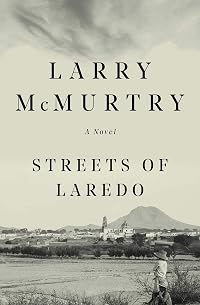
Larry McMurtry, winner of the Pulitzer Prize for Fiction, among other awards, is the author of twenty-four novels, two collections of essays, two memoirs, more than thirty screenplays, & an anthology of modern Western fiction. He lives in Archer City, Texas. (Publisher Provided) Novelist Larry McMurtry was born June 3, 1936 in Wichita Falls, show more Texas. He received a B.A. from North Texas State University in 1958, an M.A. from Rice University in 1960, and attended Stanford University. He married Josephine Ballard in 1959, divorced in 1966, and had one son, folksinger James McMurtry. Until the age of 22, McMurtry worked on his father's cattle ranch. When he was 25, he published his first novel, "Horseman, Pass By" (1961), which was turned into the Academy Award-winning movie Hud in 1962. "The Last Picture Show" (1966) was made into a screenplay with Peter Bogdanovich, and the 1971 movie was nominated for eight Oscars, including one for best screenplay adaptation. "Terms of Endearment" (1975) received little attention until the movie version won five Oscars, including Best Picture, in 1983. McMurtry's novel "Lonesome Dove" (1985) won the Pulitzer Prize in 1986 and the Spur Award and was followed by two popular TV miniseries. The other titles in the Lonesome Dove Series are "Streets of Laredo" (1993), "Dead Man's Walk" (1995), and "Comanche Moon" (1997). The other books in his Last Picture Show Trilogy are "Texasville" (1987) and "Duane's Depressed" (1999). McMurtry suffered a heart attack in 1991 and had quadruple-bypass surgery. Following that, he suffered from severe depression and it was during this time he wrote "Streets of Laredo," a dark sequel to "Lonesome Dove." His companion Diana Ossana, helping to pull him out of his depression, collaborated with him on "Pretty Boy Floyd" (1994) and "Zeke and Ned" (1997). He co-won the Best Screenplay Golden Globe and the Academy Award for Best Adapted Screenplay for Brokeback Mountain in 2006. He made The New York Times Best Seller List with his title's Custer and The Last Kind Words Saloon. McMurtry is considered one of the country's leading antiquarian book dealers. (Bowker Author Biography) show less
Some Editions
Awards and Honors
Distinctions
Work Relationships
Is contained in
Common Knowledge
- Canonical title
- Anything for Billy
- Original title
- Anything for Billy
- Original publication date
- 1988
- People/Characters
- Billy "Billy the Kid" Bone; William Bonner
- Dedication
- For
Margaret Ellen Slack
In Memory of
Dorothea Oppenhiemr
The flower of Friendship never faded - First words
- The first time I saw Billy he came walking out of a cloud.
- Last words
- (Click to show. Warning: May contain spoilers.)I cried all twenty-five times I saw the picture: it reminded me of all my hard goodbyes, and of my murdering friend, the wandering boy himself, Billy Bone, white star of the West, whose dust is now one with the billions and billions of particles that compose that ancient plain.
Classifications
Statistics
- Members
- 978
- Popularity
- 26,858
- Reviews
- 7
- Rating
- (3.39)
- Languages
- 8 — Czech, English, French, German, Norwegian (Bokmål), Norwegian, Spanish, Swedish
- Media
- Paper, Ebook
- ISBNs
- 26
- ASINs
- 16