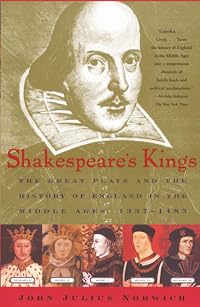
Shakespeare's Kings: The Great Plays and the History of England in the Middle Ages: 1337-1485
by John Julius Norwich
On This Page
Description
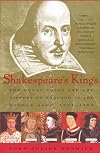
In a fast-paced, engaging narrative, Norwich chronicles the actual events of the 14th and 15th centuries that inspired Shakespeare's history plays, from the untimely death of the heroic Black Prince and Henry Bolingbroke's ousting of Richard II to the legendary Battle of Agincourt and the notorious 18-month reign of Richard III. Of full-color photos. In a sparkling, fast-paced narrative, esteemed historian John Julius Norwich chronicles the turbulent events of fourteenth and fifteenth show more century England that inspired Shakespeare's history plays. It was a time of uncertainty and incessant warfare, a time during which the crown was constantly contested, alliances were made and broken, and peasants and townsmen alike arose in revolt. This was the raw material of Shakespeare's dramas, and Norwich holds up his work to the light of history to ask: Who was the real Falstaff? How accurate a historian was the playwright? Shakespeare's Kings is a marvelous study of the bard's method of spinning history into art, and a captivating portrait of the Middle Ages. show lessTags
Recommendations


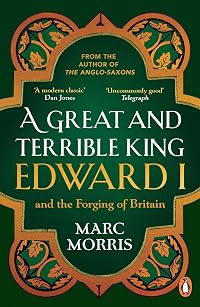
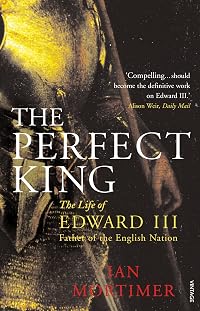
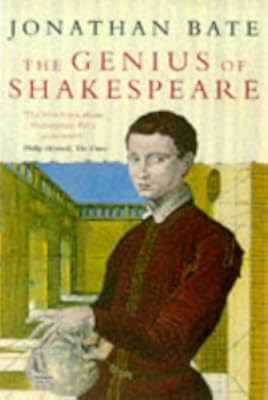
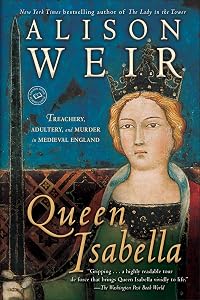



Member Reviews
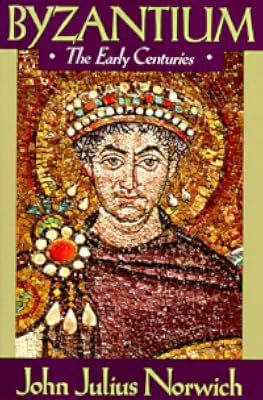
I should have realized that the Norwich was the person to finally sort out the labyrinth twists and turns of the War of the Roses for me. He had after all tackled (previously) a thousand years of Venice, and of Byzantium, with breezy ease. In those other books he called upon the reader to visit the architecture and scenery associated with the events in history he related - giving the bare facts of history some color as it were. In 'Shakespeare's Kings' he doesn't so much use art, as artifice, to illustrate his story. Norwich demonstrates (after fully acquainting you with the detail of the real history) how Shakespeare would compress years (sometimes decades) into a few minutes on stage and a few lines of dialogue, yet do so brilliantly show more and while preserving the general flow of events. But after reading Norwich you realize that at almost no point do Shakespeare's dramatic effects come anywhere near the extraordinary cast of real characters and their (generally) diabolical behaviour. Such examples of true heroism, courage and dignity as there were only served to throw the misdeeds of others into harsher contrast.
This is very readable history that doesn't sacrifice any detail and is highly recommended for anyone who ever got stuck at the 15th Century, and for those who want to put some flesh on the bones of Shakespeare's accounts of those times. show less
This is very readable history that doesn't sacrifice any detail and is highly recommended for anyone who ever got stuck at the 15th Century, and for those who want to put some flesh on the bones of Shakespeare's accounts of those times. show less
This is a book that compares and contrasts the historical version of the Kings (beginning with Edward III and ending with Richard III) with Shakespeare's plays. According to this historian, Shakespeare was pretty spot on and took creative license to capture larger truths that would appeal more universally. Norwich feels he took the most creative license with Richard III. I should have taken notes, for memory's sake. 432 pages
This history of Shakespeare's Plantagenet kings contrasts the way the Bard told the stories with the way historians believe they actually happened. It praises Shakespeare's choices at times, recognizing his worth as a storyteller, and shining light on why he wrote his characters the way he did.
Ratings
Members
- Recently Added By
Lists

The Wars of the Roses (Nonfiction)
7 works; 2 members

Works concerning William Shakespeare
75 works; 4 members
Author Information

100+ Works 12,624 Members
John Julius Norwich was born in the United Kingdom on September 15, 1929. He served in the Royal Navy before receiving a degree in French and Russian at New College, Oxford. After graduation, he joined the H. M. Foreign Service and served in Belgrade, Beirut, and as a member of British delegation to the Disarmament Conference in Geneva. In 1954, show more he inherited the title of Viscount Norwich. In 1964, he resigned from the Foreign Service to become a writer. He was a historian, travel writer, and television personality. His books included The Normans in the South, A History of Venice, The Italian World, Venice: A Traveller's Companion, 50 Years of Glyndebourne: An Illustrated History, A Short History of Byzantium, Absolute Monarchs: A History of the Papacy, Sicily: An Island at the Crossroads of History, and A History of France. He and H. C. Robbins Landon wrote Five Centuries of Music in Venice. Norwich was the host of the BBC radio panel game My Word! from 1978 to 1982. He wrote and presented more than 30 television documentaries including Maestro, The Fall of Constantinople, Napoleon's Hundred Days, Cortés and Montezuma, Maximilian of Mexico, The Knights of Malta, The Treasure Houses of Britain, and The Death of the Prince Imperial in the Zulu War. In 1993, he was appointed CVO for having curated an exhibition at the Victoria and Albert Museum to mark the 40th anniversary of the Queen's accession to the throne. In 2015, he was awarded the Biographers' Club award for his lifetime service to biography. He died on June 1, 2018 at the age of 88. (Bowker Author Biography) show less
Work Relationships
Is a reply to
Common Knowledge
- Alternate titles
- Shakespeare's Kings
- Original publication date
- 1999
- People/Characters
- Edward III, King of England; Henry IV, King of England; Henry V, King of England; Henry VI, King of England; Richard III, King of England; William Shakespeare
- Important places
- England, UK
- Important events
- Hundred Years' War (1337 | 1453); Battle of Agincourt (1415-10-25); Wars of the Roses (1455 | 1485); Battle of Bosworth Field (1485-08-22)
- Epigraph
- Shakespeare was the theatre's greatest craftsman: he wasted no tortured ratiocination on his plays. Instead he filled them with the gaudy heroes that all of us see ourselves becoming on some bright morrow, and the lowly fraud... (show all)s and clowns we are today.
H. L. Mencken - Dedication
- To Peter Carson, who for thirty years guided my hand and who gave me, with so much else, the idea for this book.
- First words
- My own introduction to Shakespeare's history plays took place when I was fifteen, and was taken by my parents to see the two parts of King Henry IV, in consecutive matinée and evening performances, at the New Theatre ... (show all)in London.
- Last words
- (Click to show. Warning: May contain spoilers.)The play was the thing; and if he could amuse, inspire and perhaps very modestly educate his audiences, that was enough. He did so, and he has continued to do so four four hundred years. He rests his case.
- Blurbers*
- Bate, Jonathan; Kermode, Frank; McLynn, Frank
- Original language
- English
*Some information comes from Common Knowledge in other languages. Click "Edit" for more information.
Classifications
- Genres
- Poetry, History, Nonfiction, Literature Studies and Criticism, Fiction and Literature
- DDC/MDS
- 822.33 — Literature & rhetoric English & Old English literatures British Drama Shakespeare Shakespeare, William 1564–1616
- LCC
- PR2982 .N67 — Language and Literature English English Literature English renaissance (1500-1640)
- BISAC
Statistics
- Members
- 607
- Popularity
- 47,989
- Reviews
- 4
- Rating
- (3.74)
- Languages
- English, German
- Media
- Paper, Audiobook, Ebook
- ISBNs
- 8
- ASINs
- 5