On This Page
Description
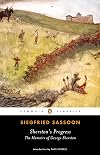
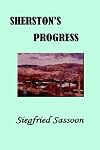
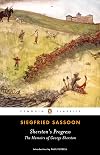
The third volume in Siegfried Sassoon's beloved trilogy, The Complete Memoirs of George Sherston, with a new introduction by celebrated historian Paul Fussell A highly decorated English soldier and an acclaimed poet and novelist, Siegfried Sassoon won fame for his trilogy of fictionalized autobiographies that wonderfully capture the vanishing idylls of Edwardian England and the brutal realities of war. Having been deemed mentally ill for his anti-war sentiments and sent for treatment, show more George Sherston comes under the care of neurologist Dr. W. H. R. Rivers, who allows Sherston to sort through his attitudes toward the fighting (events that have also been semi-fictionalized by Pat Barker for her bestselling and critically acclaimed Regeneration Trilogy). After six months in the hospital, Sherston leaves to rejoin his regiment. He is soon dispatched to Ireland, where he attempts to reclaim some of the idyllic fox-hunting days of his youth, then to Palestine. He finally ends up at the Western Front in France, where he is shot in the head while on a reconnaissance mission and invalided back home. As the capstone of Sassoon's masterful Sherston trilogy, Sherston's Progress--whose evocation of Bunyan's Pilgrim's Progress is not at all accidental--literally brings home the unforgettable journey of George Sherston from aristocratic childhood through war hero and anti-war martyr, all the way to wounded veteran trying to move on from the Great War. For more than seventy years, Penguin has been the leading publisher of classic literature in the English-speaking world. With more than 1,700 titles, Penguin Classics represents a global bookshelf of the best works throughout history and across genres and disciplines. Readers trust the series to provide authoritative texts enhanced by introductions and notes by distinguished scholars and contemporary authors, as well as up-to-date translations by award-winning translators. show lessTags
Recommendations
























Member Reviews
This book follows on from "Memoirs of a Fox Hunting Man" and "Memoirs of an Infantry Officer". I would recommend reading all 3 books together.
George Sherston has been sent back to England to recuperate from an injury sustained in battle in France in WW1. It is during this time that he decides that the war should stop and it is up to him to do it. The army has a different idea and he is sent to a hospital for "shell shocked soldiers" where he has nice "chats" with the doctor which help him see things differently. He does not see himself as suffering the same sort of mental illness as the other patients although he does admit that "something" changed in him following his wounding. Fortunately he also manages to fit in some fox hunting show more and other leisure pursuits. Nevertheless he is rehabilitated and spends time in Egypt before going back to the battlefield in France and where he fills his spare time reading
I enjoyed spending time with George, (Sassoon), and felt he conveyed a genuine empathy for the young soldiers he comanded while dealing with his own emotional conflicts. show less
George Sherston has been sent back to England to recuperate from an injury sustained in battle in France in WW1. It is during this time that he decides that the war should stop and it is up to him to do it. The army has a different idea and he is sent to a hospital for "shell shocked soldiers" where he has nice "chats" with the doctor which help him see things differently. He does not see himself as suffering the same sort of mental illness as the other patients although he does admit that "something" changed in him following his wounding. Fortunately he also manages to fit in some fox hunting show more and other leisure pursuits. Nevertheless he is rehabilitated and spends time in Egypt before going back to the battlefield in France and where he fills his spare time reading
I enjoyed spending time with George, (Sassoon), and felt he conveyed a genuine empathy for the young soldiers he comanded while dealing with his own emotional conflicts. show less
Meditations of a sensitive man, and an insight into long lost times. Sassoon comes across as refreshingly honest in places and slightly egotistical at other points, but it is a fine line to tread in this sort of memoir. The four chapters are very distinct but sit well within the book. I would like to read the other two books in this trilogy now. 3.8 stars.
This final book in Sassoon's fictionalized memoir of his youth and service in the First World War covers his time in what we would call therapy, a consequence of his "Soldier's Declaration" critical of the war, as well as his return to duty until the influenza removes him from active duty until war's end. It is fascinating to compare this book with the story told in Pat Barker's Regeneration Trilogy. My only disappointment was that Sassoon ends his memoir with so much of his life yet to live.
I never really understood fox-hunting till I read memoirs of a fox-hunting man
Ratings
Members
- Recently Added By
Lists

Folio Society
831 works; 53 members
Author Information

70+ Works 3,823 Members
Sassoon is unusual among the generation of World War I poets in that he survived the war and was able to write of it both immediately and retrospectively. Born into a wealthy family, Sassoon grew up steeped in the genteel pleasures of the Edwardian aristocracy. He enlisted as a second lieutenant in World War I, serving in France. Like many poets, show more Sassoon wrote of the war at first as a noble, chivalric undertaking. But, under the influence of Robert Graves, Sassoon soon developed a more cynical aesthetic. His poem "Repression of War Experience" helps explain the development of his war poetry: It describes the frustration of the soldier trying to communicate the nature of the war to those safe at home and vividly connotes the horror and madness that pervade the soldiers' sustained experience in the trenches. His eventual pacifism and distrust of the military are reflected in his short poem "The General," which blames an uncomprehending and facile wartime leadership for the needless deaths of masses of soldiers. (Bowker Author Biography) show less
Some Editions
Awards and Honors
Notable Lists
Series

Belongs to Publisher Series
Work Relationships
Is contained in
Common Knowledge
- Original publication date
- 1936
- Important places
- Cairo, Egypt; Palestine
Classifications
Statistics
- Members
- 259
- Popularity
- 125,535
- Reviews
- 4
- Rating
- (4.17)
- Languages
- English, Swedish
- Media
- Paper, Ebook
- ISBNs
- 6
- ASINs
- 21