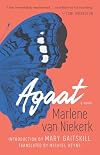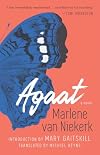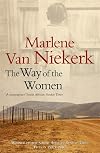
The Way of the Women
by Marlene Van Niekerk
On This Page
Description
Fiction. Historical Fiction. HTML:Set in apartheid South Africa, Agaat portrays the unique relationship between Milla, a 67-year-old white woman, and her black maidservant turned caretaker, Agaat. Through flashbacks and diary entries, the reader learns about Milla's past. Life for white farmers in 1950s South Africa was full of promise — young and newly married, Milla raised a son and created her own farm out of a swathe of Cape mountainside. Forty years later her family has fallen apart, show more the country she knew is on the brink of huge change, and all she has left are memories and her proud, contrary, yet affectionate guardian. With haunting, lyrical prose, Marlene Van Niekerk creates a story of love and family loyalty. Winner of the South African Sunday Times Fiction Prize in 2007, Agaat was translated as The Way of the Women by Michiel Heyns, who received the Sol Plaatje Award for his translation. show lessTags
Recommendations

























Member Recommendations

Member Reviews
Agaat is unlike any book you’ll ever read. It is challenging, delightful, frustrating, poetic, shocking and beautiful. Agaat is the name of a black maidservant to a white farmer’s wife, Milla DeWet. The novel is written in shifting perspectives, jumps in chronology and streams of consciousness. While it can be confusing and at times infuriating, it ensnares you deeper into the core of the book, the soul and reason why the story is being told. After the end of the Apartheid in South Africa, Milla is diagnosed with ALS and slowly loses the ability to move. Agaat must then act for her. But how is she to know what Milla wants when she lies there on a bed, moving only her eyes? To say outright how, is to recant the entire book page by show more page. Agaat is beautifully written and a somewhat challenging read; do not expect answers to be handed out, plots to be tied into neat little parcels. Expect to be transported into the very particular culture of South Africa, when the Dutch ruled and after the Apartheid ended. Expect beautiful, masterful literature that could be read hundreds of times, each with a deeper meaning. The South African Sunday Times had it right when they said, “A masterpiece has arrived.” It is a masterpiece indeed. show less
This is an extremely demanding book. Not only does it approach doorstop territory at nearly 600 pages, but it also bounces the narrative around within a 40-year period stretching from the mid-1950s through the mid-1990s. Stylistically, author van Niekerk abandons traditional forms and jumps from unpunctuated, free-form diary entries to second-person narration to random chunks of stream-of-consciousness babble. Set in South Africa and translated into English for the American market, it’s set against the apartheid and political upheaval of that time and place – a background with which most American readers are totally unfamiliar. And if all that isn’t enough, the plot centers around and is told almost completely from the POV of a show more woman dying of amyotrophic lateral sclerosis (ALS; also known as Lou Gehrig’s disease), and who is no longer capable of communicating verbally or in writing.
So why would anyone choose to tackle such a monumental project?
Perhaps it’s because van Niekerk is a master at laying out the breadcrumbs that lure the reader into the tale: who is Agaat, and how did this native African woman become such an integral part of the white de Wet family in an era of strict national apartheid? Is she nurse or servant, slave or “adopted” daughter, victim or master manipulator? Is it the reader’s imagination, or is there a definite “Whatever Happened to Baby Jane?” vibe going here? (All these questions eventually get answered – more or less – but none ever really deals with the soul of an abused, nearly feral child reluctantly spirited away to a fairyland she couldn’t understand, only to be expelled after a few short years for by circumstances she could neither control nor comprehend.)
Or perhaps it’s because the clash between the book’s main characters, told mostly in jumbled retrospect through diary excerpts, is as mesmerizing as a slo-mo train wreck. You know how this is going to end, but can’t look away.
Make no mistake about it – virtually all the characters in this book are monsters. From the brutal husband to the castrating wife to her domineering mother and perhaps even to Agaat herself – they slash and claw and manipulate one another without regard for the consequences. This is a tale of blood and fire, of a twisted marriage that spawns emotional cripples, of thoughtless cruelty based on race and social position, all coming to a head in the mind of the dying Milla.
The description of Milla’s descent into ALS is not for the faint of heart. This horrible disease slowly takes away muscle control – usually the ability to walk first, then use of the arms and hands, then the ability to sit upright. Bowel and bladder control are lost. Swallowing become difficult to impossible. Speech functions are lost. The patient’s world closes in tighter and tighter and tighter – but all the while, the brain is functioning. The patient *knows* what is happening but is helpless against it.
Amidst all this high drama, the often-lyrical writing shows up in sharp contrast. Van Niekerk’s roots as a poet are never far below the surface. Whether the reader welcomes the atmospheric cascades of words and images or merely considers them unnecessary verbiage in an already over-inflated tale will have a great deal to do with their enjoyment of (or impatience with) this work.
Readers who opt to take up the challenge should read the Glossary first, and then dig in for a difficult few hours as the rhythms and enticements of this compelling novel take hold. show less
So why would anyone choose to tackle such a monumental project?
Perhaps it’s because van Niekerk is a master at laying out the breadcrumbs that lure the reader into the tale: who is Agaat, and how did this native African woman become such an integral part of the white de Wet family in an era of strict national apartheid? Is she nurse or servant, slave or “adopted” daughter, victim or master manipulator? Is it the reader’s imagination, or is there a definite “Whatever Happened to Baby Jane?” vibe going here? (All these questions eventually get answered – more or less – but none ever really deals with the soul of an abused, nearly feral child reluctantly spirited away to a fairyland she couldn’t understand, only to be expelled after a few short years for by circumstances she could neither control nor comprehend.)
Or perhaps it’s because the clash between the book’s main characters, told mostly in jumbled retrospect through diary excerpts, is as mesmerizing as a slo-mo train wreck. You know how this is going to end, but can’t look away.
Make no mistake about it – virtually all the characters in this book are monsters. From the brutal husband to the castrating wife to her domineering mother and perhaps even to Agaat herself – they slash and claw and manipulate one another without regard for the consequences. This is a tale of blood and fire, of a twisted marriage that spawns emotional cripples, of thoughtless cruelty based on race and social position, all coming to a head in the mind of the dying Milla.
The description of Milla’s descent into ALS is not for the faint of heart. This horrible disease slowly takes away muscle control – usually the ability to walk first, then use of the arms and hands, then the ability to sit upright. Bowel and bladder control are lost. Swallowing become difficult to impossible. Speech functions are lost. The patient’s world closes in tighter and tighter and tighter – but all the while, the brain is functioning. The patient *knows* what is happening but is helpless against it.
Amidst all this high drama, the often-lyrical writing shows up in sharp contrast. Van Niekerk’s roots as a poet are never far below the surface. Whether the reader welcomes the atmospheric cascades of words and images or merely considers them unnecessary verbiage in an already over-inflated tale will have a great deal to do with their enjoyment of (or impatience with) this work.
Readers who opt to take up the challenge should read the Glossary first, and then dig in for a difficult few hours as the rhythms and enticements of this compelling novel take hold. show less
I just finished reading this masterpiece and my head is reeling. It is a book that requires a lot of patience, as at times it seems that little is happening, yet I found that I hung on every word, highlighting lines and paragraphs to be reread later. It is a complex and very internal story told through diary entries, disjointed prose, and the thoughts of a completely paralyzed dying woman. It explores the ever-changing relationship between two very strong women - one a white land owner and the other a black maid/daughter/nanny/caregiver/competitor. The interactions between them and their relationship with the white woman's son is painful, at times exquisite, and often conflicted.
I was mesmerized by the prose, deeply touched by the show more humanity, challenged by the multiple story lines and intensely intimate relationships, and found that though the book was very long, I was never bored. This will surely be one of my top books of 2017. show less
I was mesmerized by the prose, deeply touched by the show more humanity, challenged by the multiple story lines and intensely intimate relationships, and found that though the book was very long, I was never bored. This will surely be one of my top books of 2017. show less
Handling & Tema : 5/5
Karaktärerna: 5/5
Miljöbeskrivning: 5/5
Språk och berättarkonst: 5/5
: Boken handlar om den komplicerade relationen mellan Milla och Agaat. Året är 1996, Milla har blivit svårt sjuk i als och har till sist blivit helt förlamad. Hon är sängliggande och helt beroende av sin skötare Agaat. Hon är en fånge i sin egna kropp och kan endast kommunicera med ögonen, och det är Agaat som tar hand om henne dag och natt.
Boken består av Millas dagbok anteckningar och genom dessa anteckningar får vi veta vad som har hänt. Historien växer sakta fram.
Handlingen hoppar mellan nutid och dåtid. Mellan att Milla är en ung lantbrukarhustru som kämpar med sin gård och sitt olyckliga äktenskap. När Agaat kommer in i show more hennes liv blir hon en distraktion från Millas olyckliga tillvaro.
Genom att ta sig an Agaat, uppfostra henne, lära upp henne och forma henne till det som passar Milla utan att ta någon hänsyn till vad Agaat själv vill ger oss en inblick i ett system uppbyggd av de vita i svartas land.
Fantastiskt bra bok som tar upp så många viktiga frågor. En bok ämnad för bokcirklar där man kan diskutera den i oändlighet. show less
Karaktärerna: 5/5
Miljöbeskrivning: 5/5
Språk och berättarkonst: 5/5
: Boken handlar om den komplicerade relationen mellan Milla och Agaat. Året är 1996, Milla har blivit svårt sjuk i als och har till sist blivit helt förlamad. Hon är sängliggande och helt beroende av sin skötare Agaat. Hon är en fånge i sin egna kropp och kan endast kommunicera med ögonen, och det är Agaat som tar hand om henne dag och natt.
Boken består av Millas dagbok anteckningar och genom dessa anteckningar får vi veta vad som har hänt. Historien växer sakta fram.
Handlingen hoppar mellan nutid och dåtid. Mellan att Milla är en ung lantbrukarhustru som kämpar med sin gård och sitt olyckliga äktenskap. När Agaat kommer in i show more hennes liv blir hon en distraktion från Millas olyckliga tillvaro.
Genom att ta sig an Agaat, uppfostra henne, lära upp henne och forma henne till det som passar Milla utan att ta någon hänsyn till vad Agaat själv vill ger oss en inblick i ett system uppbyggd av de vita i svartas land.
Fantastiskt bra bok som tar upp så många viktiga frågor. En bok ämnad för bokcirklar där man kan diskutera den i oändlighet. show less
At the beginning of this epic novel, seventy-year-old Milla de Wet is confined to her bed. Once the strong and competent owner of a successful farm inherited from her mother, Milla suffers from A.L.S. and now is left with only the ability to blink her eyes and, after a while, not even that. Milla is entirely dependent on the ministrations of Agaat, her devoted house servant, who wordlessly promises Milla “the best-managed death in history.” It is 1996 in South Africa, just two years after the demise of apartheid.
From this confined vantage point, Milla narrates her adult life story, beginning with her troubled marriage to the dashing, if agriculturally-challenged, Jak de Wet in 1947. Soon after she and Jak settle on her farm, Milla show more decides to take in and raise the abused young daughter of a farm laborer, renaming the girl Agaat. Long unable to have a child of her own, Milla eventually gives birth to a son named Jakkie, marginalizing Agaat’s position in the family. Over time, Milla and Agaat develop a complex co-dependency, as do Jakkie and Agaat, while Jak becomes jealous of Agaat’s hold over both his wife and his son. Agaat forms the center of a decades-long, multi-dimensional game of tug-o-war: “a pivot she was, a kingpin, you’d felt for a while now how the parts gyrated around her, faster and faster, even though she was the least.”
Agaat is about many things, including marriage, parenting, friendship, sickness, and death. Politically-minded readers will find plenty of support for interpreting the novel as an allegory for apartheid, while those with more domestic interests will appreciate the details on embroidery, ecologically-sensitive farming practices, and home-based nursing procedures. Perhaps Agaat’s most important lesson concerns the importance of communication to achieving lasting change. The best education and carefully constructed systems cannot bridge the gap between master and servant, between white and black. Rather, true understanding is possible only after years of empathetic communication. As Milla nears death, she and Agaat have finally approached this kind of understanding:
"[The doctor’s] face looms above mine. He looks at my eyes as if they were the eyes of an octopus, as if he’s not quite sure where an octopus’s eyes are located, as if he doesn’t know what an octopus sees. He shines a little light into my face, he swings it from side to side. I look at him hard, but seeing, he cannot see.
Agaat catches my eye. Wait, let me see, she says.
[The doctor] stands aside. He shakes his head.
Agaat’s face is above me, her cap shines white, she looks into my eyes. I blink them for her so that she can see what I think. The effrontery! They think that if you don’t stride around on your two legs and make small talk about the weather, then you’re a muscle mass with reflexes and they come and flash lights in your face. Tell the man he must clear out.
A small flicker ripples across Agtaat’s face. Ho now hopalong! it means. Her apron creaks as she straightens up. Her translation is impeccable.
She says thank you doctor. She says doctor is welcome to leave now, she’s feeling better. She says thank you for the help, thank you for the oxygen, we can carry on here by ourselves again now.
I close my eyes. He must think she’s crazy.
Again the fingers snapping in front of my face.
She’s conscious, really, doctor, you can leave her alone now, she’s just tired, when she shuts her eyes like that then I know. Everything’s in order, she says, she just wants to sleep now. I know, I know her ways."
Milla’s disease has the potential to reduce this nearly 600-page novel into an exercise in claustrophobia, but, instead, Van Niekerk has created a work of stunning breadth and emotional potency. Milla’s second-person narration is liberally broken up by her diary entries, which Agaat has decided to read to Milla during her last days, and by italicized paragraphs of Milla’s stream-of-consciousness musings. Van Niekerk is a poet as well as a novelist, and her considerable poetic abilities are on display throughout the novel. Likewise, Michiel Heyns’s masterful work yields an English translation with all the elegant power of the original language. These various elements come together in Agaat to create an unforgettable reading experience that transcends the lives of its four primary characters to implicate the broader world.
This review also appears on my blog Literary License. show less
From this confined vantage point, Milla narrates her adult life story, beginning with her troubled marriage to the dashing, if agriculturally-challenged, Jak de Wet in 1947. Soon after she and Jak settle on her farm, Milla show more decides to take in and raise the abused young daughter of a farm laborer, renaming the girl Agaat. Long unable to have a child of her own, Milla eventually gives birth to a son named Jakkie, marginalizing Agaat’s position in the family. Over time, Milla and Agaat develop a complex co-dependency, as do Jakkie and Agaat, while Jak becomes jealous of Agaat’s hold over both his wife and his son. Agaat forms the center of a decades-long, multi-dimensional game of tug-o-war: “a pivot she was, a kingpin, you’d felt for a while now how the parts gyrated around her, faster and faster, even though she was the least.”
Agaat is about many things, including marriage, parenting, friendship, sickness, and death. Politically-minded readers will find plenty of support for interpreting the novel as an allegory for apartheid, while those with more domestic interests will appreciate the details on embroidery, ecologically-sensitive farming practices, and home-based nursing procedures. Perhaps Agaat’s most important lesson concerns the importance of communication to achieving lasting change. The best education and carefully constructed systems cannot bridge the gap between master and servant, between white and black. Rather, true understanding is possible only after years of empathetic communication. As Milla nears death, she and Agaat have finally approached this kind of understanding:
"[The doctor’s] face looms above mine. He looks at my eyes as if they were the eyes of an octopus, as if he’s not quite sure where an octopus’s eyes are located, as if he doesn’t know what an octopus sees. He shines a little light into my face, he swings it from side to side. I look at him hard, but seeing, he cannot see.
Agaat catches my eye. Wait, let me see, she says.
[The doctor] stands aside. He shakes his head.
Agaat’s face is above me, her cap shines white, she looks into my eyes. I blink them for her so that she can see what I think. The effrontery! They think that if you don’t stride around on your two legs and make small talk about the weather, then you’re a muscle mass with reflexes and they come and flash lights in your face. Tell the man he must clear out.
A small flicker ripples across Agtaat’s face. Ho now hopalong! it means. Her apron creaks as she straightens up. Her translation is impeccable.
She says thank you doctor. She says doctor is welcome to leave now, she’s feeling better. She says thank you for the help, thank you for the oxygen, we can carry on here by ourselves again now.
I close my eyes. He must think she’s crazy.
Again the fingers snapping in front of my face.
She’s conscious, really, doctor, you can leave her alone now, she’s just tired, when she shuts her eyes like that then I know. Everything’s in order, she says, she just wants to sleep now. I know, I know her ways."
Milla’s disease has the potential to reduce this nearly 600-page novel into an exercise in claustrophobia, but, instead, Van Niekerk has created a work of stunning breadth and emotional potency. Milla’s second-person narration is liberally broken up by her diary entries, which Agaat has decided to read to Milla during her last days, and by italicized paragraphs of Milla’s stream-of-consciousness musings. Van Niekerk is a poet as well as a novelist, and her considerable poetic abilities are on display throughout the novel. Likewise, Michiel Heyns’s masterful work yields an English translation with all the elegant power of the original language. These various elements come together in Agaat to create an unforgettable reading experience that transcends the lives of its four primary characters to implicate the broader world.
This review also appears on my blog Literary License. show less
Marlene van Niekerk deserved all the accolades and more. A well written novel about a farming family living in South Africa in the past fifty years. Compassionate, heartfelt, sensitive, never boring or pathetic. The perspective of a lame author dying slowly losing life's gifts one by one is dramatic - especially as we get to know her as a director of life in her earlier days. The husband - a caricature of a "wit afrikaaner man" - never really got my sympathy even though the son and even the adopted slave girl did sometimes even take his side. The insights into farming life in the Karoo are priceless - the slaughtering of the lambs, the hunting for butterflies, the description of the stars and cooking customs.
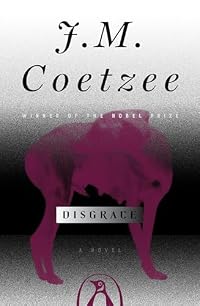
It's a bit of "Fiela's show more kind" [Mathee], Disgrace [Coetzee] and "This life" [Schoeman] and probably much more even. I just loved reading it and can just recommend: "Tolle lege" show less
It's a bit of "Fiela's show more kind" [Mathee], Disgrace [Coetzee] and "This life" [Schoeman] and probably much more even. I just loved reading it and can just recommend: "Tolle lege" show less
Plot
Set between the early 1950's and 1996 on Grootmoedersdrift farm in South Africa, this novel chronicles the life of Kamilla (Milla) de Wet (née Redelinghuys), her maid Agaat Lourier, Milla's arrogant husband Jak and her son Jakkie. The book flits from Milla's diaries that she has written over the years, to Milla's deathbed where she is succumbing to paralysis and is waited on hand and foot by Agaat. It would be unfair for me to tell the whole story as the tension really builds up in how the full story is not revealed until almost the end.
Review
This is so difficult to review. The book is 620 pages long. In the end the 3 weeks I dedicated to it have been worth it, the writing is truly beautiful in descriptions of the South African show more countryside and life there. I was especially hooked by the last 100 pages. I was really drawn in to the love hate relationship between Agaat and Milla. By the end of the book, i'd developed a similar love hate attitude towards both characters. A hugely poignant and important novel, in my opinion, showing the death of the old South African ways and Agaat's eventual chance for freedom. Unfortunately, I am not able to do justice to review this book and would urge you to simply pick it up and dedicate a few weeks to it. show less
Set between the early 1950's and 1996 on Grootmoedersdrift farm in South Africa, this novel chronicles the life of Kamilla (Milla) de Wet (née Redelinghuys), her maid Agaat Lourier, Milla's arrogant husband Jak and her son Jakkie. The book flits from Milla's diaries that she has written over the years, to Milla's deathbed where she is succumbing to paralysis and is waited on hand and foot by Agaat. It would be unfair for me to tell the whole story as the tension really builds up in how the full story is not revealed until almost the end.
Review
This is so difficult to review. The book is 620 pages long. In the end the 3 weeks I dedicated to it have been worth it, the writing is truly beautiful in descriptions of the South African show more countryside and life there. I was especially hooked by the last 100 pages. I was really drawn in to the love hate relationship between Agaat and Milla. By the end of the book, i'd developed a similar love hate attitude towards both characters. A hugely poignant and important novel, in my opinion, showing the death of the old South African ways and Agaat's eventual chance for freedom. Unfortunately, I am not able to do justice to review this book and would urge you to simply pick it up and dedicate a few weeks to it. show less
Members
- Recently Added By
Lists

Top Five Books of 2013
1,564 works; 722 members

Top Five Books of 2017
757 works; 231 members
Author Information

12 Works 753 Members
Some Editions
Awards and Honors
Awards
Distinctions
Series
Belongs to Publisher Series
Common Knowledge
- Canonical title
- The Way of the Women
- Original title
- Agaat
- Original publication date
- 2010
- Important places
- South Africa
- Important events
- Apartheid
- First words*
- Mattvit vinter.
- Last words*
- (Click to show. Warning: May contain spoilers.)Jag blundar för att somna.
- Original language
- Afrikaans
*Some information comes from Common Knowledge in other languages. Click "Edit" for more information.
Classifications
- Genres
- Fiction and Literature, General Fiction
- DDC/MDS
- 839.3636 — Literature & rhetoric German & related literatures Other Germanic literatures Netherlandish literatures Afrikaans Afrikaans fiction 2000–
- LCC
- PT6592.32 .A545 .A6513 — Language and Literature German, Dutch and Scandinavian literatures Afrikaans literature Individual authors or works
- BISAC
Statistics
- Members
- 454
- Popularity
- 66,919
- Reviews
- 22
- Rating
- (4.03)
- Languages
- 7 — Afrikaans, Dutch, English, French, German, Italian, Swedish
- Media
- Paper, Ebook
- ISBNs
- 29
- ASINs
- 3