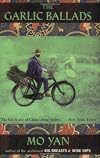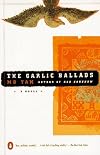
The Garlic Ballads
by Mo Yan
On This Page
Description
This stunning work of historical fiction illustrates the harsh realities of modern China by the nation's first winner of the Nobel Prize in Literature.The farmers of Paradise County have been leading a hardscrabble life unchanged for generations. The Communist government has encouraged them to plant garlic, but selling the crop is not as simple as they believed. Warehouses fill up, taxes skyrocket, and government officials mistreat even those who have traveled for days to sell their show more harvest. A surplus on the garlic market ensues, and the farmers must watch as their crops wither and rot in the fields.
All the while, families are destroyed by the random imprisonment of young and old for supposed crimes against the state. The prisoners languish in horrifying conditions in their cells, with only their strength of character and thoughts of loved ones to save them from madness. Meanwhile, a blind minstrel incites the masses to take the law into their own hands, and a riot escalates to savage and unforgettable consequences.
The Garlic Ballads is a powerful vision of life under the heel of an inflexible and uncaring government. Based on an uprising in rural China in 1987, this book is also a delicate story of love between man and woman, father and child, friend and friend—and the struggle to maintain that love despite overwhelming obstacles.
. show less
Tags
Recommendations











Member Reviews
Suffering. In a word, that is this book. With shades of Kafka's Trial and Castle, as well as Kozinski's The Painted Bird and Orwell's 1984, this book evidences suffering at nearly every conceivable level. Along with this Mo Yan has an incredible predilection for depicting the grotesque and disgusting side of the human bodily experience. Shit, blood, semen, spit, piss, sweat, every 'inelegant' bit of bodily output is given detailed mention here.
Taken together what does this mean for the story? As I read it I experienced one of the most unpleasant but efficacious stories of human sensuality (the grim and gritty side of it) coupled with human agony by way of soulless and bloodless bureaucracy and just plain person to person cruelty I've show more ever read. It's as if Orwell gave us the government, Kafka the bureaucracy and the all but mindless functionaries to man it, and Kozinski the minds of the people in and among all of it, all coalescing together to create something truly awful.
But Mo Yan's writing has an additional trait I'd feel remiss for not mentioning. Namely, this trait is his power of naturalistic description. The fields of millet and jute, the full and blood moon in the velvet sky overlooking the nearly endless sea of crop and grasses, it's all wonderfully described. And taken together with the absurd level of inhumanity Mo Had so skillfully describes the descriptions of nature (and fauna to a lesser extent) become something hauntingly evocative, like a run of film from Terrence Malick's The Thin Red Line, nature's beautiful indifference to the goings on of humanity.
I feel as though up to this point I've only been talking around the story and not about the story itself, and there is a reason for that. Considering this is an early novel of Mo Yan's it's somewhat understandable but still baffling as to how badly paced this story is. It slogs something awful. Not quite as bad as an AB Yehoshua novel but in that league, certainly. Less than halfway through the book I checked my kindle to see how many pages in I was...and was straight flummoxed to see that the entire novel was only 280 some odd pages. Really, up to a certain point I just assume this was a 400 page novel, damn was I surprised.
As for the rating though, and whether or not this gets a recommendation, it's 'yes' certainly, but not without a handful of caveats. For one thing, this book is draining. The level of anguish and misery on display here is not for the faint of heart. It hits you hard initially and doesn't relent at all, save for a few instances of some of the darkest comedy you're liable to read outside of a Dennis Cooper novel. Another point, the story itself is so mired in its specific temporal and cultural context that anyone not well or even passably versed in recent Chinese history will be a bit lost, I know I was. This last point however I must admit did work in an way to the story's favor. As I discussed with a friend over drinks this novel had an incredible sense of the exotic and the near other worldly, something that reads like a postcard from the edge of either the very long ago or the very far flung in the future. It's a bizarre feeling and not easily replicated.
So, in summation, read this book. But gird yourself for the weight and terror of governmental oppression and the agony of human cruelty, stitched together by bureaucratic soullessness. There's a humanity in this work that allows it moments of transcendence. But this humanity is that of the corporeal, the dirty, the red hot magma like pulsing just beneath the surface of the beat down, the oppressed, and the weary. show less
Taken together what does this mean for the story? As I read it I experienced one of the most unpleasant but efficacious stories of human sensuality (the grim and gritty side of it) coupled with human agony by way of soulless and bloodless bureaucracy and just plain person to person cruelty I've show more ever read. It's as if Orwell gave us the government, Kafka the bureaucracy and the all but mindless functionaries to man it, and Kozinski the minds of the people in and among all of it, all coalescing together to create something truly awful.
But Mo Yan's writing has an additional trait I'd feel remiss for not mentioning. Namely, this trait is his power of naturalistic description. The fields of millet and jute, the full and blood moon in the velvet sky overlooking the nearly endless sea of crop and grasses, it's all wonderfully described. And taken together with the absurd level of inhumanity Mo Had so skillfully describes the descriptions of nature (and fauna to a lesser extent) become something hauntingly evocative, like a run of film from Terrence Malick's The Thin Red Line, nature's beautiful indifference to the goings on of humanity.
I feel as though up to this point I've only been talking around the story and not about the story itself, and there is a reason for that. Considering this is an early novel of Mo Yan's it's somewhat understandable but still baffling as to how badly paced this story is. It slogs something awful. Not quite as bad as an AB Yehoshua novel but in that league, certainly. Less than halfway through the book I checked my kindle to see how many pages in I was...and was straight flummoxed to see that the entire novel was only 280 some odd pages. Really, up to a certain point I just assume this was a 400 page novel, damn was I surprised.
As for the rating though, and whether or not this gets a recommendation, it's 'yes' certainly, but not without a handful of caveats. For one thing, this book is draining. The level of anguish and misery on display here is not for the faint of heart. It hits you hard initially and doesn't relent at all, save for a few instances of some of the darkest comedy you're liable to read outside of a Dennis Cooper novel. Another point, the story itself is so mired in its specific temporal and cultural context that anyone not well or even passably versed in recent Chinese history will be a bit lost, I know I was. This last point however I must admit did work in an way to the story's favor. As I discussed with a friend over drinks this novel had an incredible sense of the exotic and the near other worldly, something that reads like a postcard from the edge of either the very long ago or the very far flung in the future. It's a bizarre feeling and not easily replicated.
So, in summation, read this book. But gird yourself for the weight and terror of governmental oppression and the agony of human cruelty, stitched together by bureaucratic soullessness. There's a humanity in this work that allows it moments of transcendence. But this humanity is that of the corporeal, the dirty, the red hot magma like pulsing just beneath the surface of the beat down, the oppressed, and the weary. show less
first published as Tiantang suan tai zhi ge in magazine form, 1988
It's 1987 and supply management has come to the garlic farmers of northeast Gaomi township, Not only that, every farmer is now a garlic farmer, for the state is not buying any other crop. Garlic is not something that can be succession planted over long periods and harvested in waves like leaf lettuce. When it is ready, that's it. Off it goes in a race to the purchasing agents, for who knows how long it will take for them to fulfill their unannounced quota. If they stop buying before you get a chance to sell, your garlic crop and farming year are wasted.
As The Garlic Ballads opens, we know none of this. Instead, we meet Gao Yang as he is being arrested for being part of a show more mob that destroyed the county offices. Mo then takes us back to harvest time, when the peasants used whatever means they could to transport their garlic to the commodity exchange warehouse. Funnelling in from around the county to the one road leading there, a sense of urgency and controlled panic grows as the fear of a lost year catches up with each farmer. Carts break down, loads spill and eventually the road becomes impassable.
Venal petty officials trawl the trapped peasants, collecting unofficial taxes for such things as a highway toll, commodity exchange tax, and even sanitation fines when donkeys deposit their own contributions on the road. Can't pay? These helpful officials will take it in kind; just hand over a pound or two of that garlic. Suddenly, the announcement comes; the warehouse is full and no one knows when more garlic will be purchased. Go home and take your garlic with you.
After a week of this daily charade, the peasants protest at the County Office and a riot ensues when no one will hear them out.
Most of the story during the harvest and over this week of selling, but the narration moves back and forth over the events in a non linear fashion. We hear the stories of other farmers, especially that of Gao Yan's cousin, Gao Ma and his girlfriend Fang Jinju. Their horrific love story reveals a rural society still deeply mired in the old customs. Poverty, arranged marriages, beatings, threats and retaliations all work against them.
Despite the unrelenting sense of hopelessness about life improving, there it a humour and kindness between casual acquaintances in day to day life, that contrasts sharply with the deeper divisions that occur between people more closely bound together by family or circumstance. However, add incarceration and torture, several suicides, a condemned prisoner and corruption all around, and it is easy to see why this book was originally banned in China. Mo Yan has had an official change in fortune since then, but this novel shows him at the time of his most forceful criticism of the authorities.
Each chapter starts with a verse from the ballad of Zhang Kou, the blind minstrel who chronicles the garlic harvest, the glut and its fallout, sometimes criticizing, sometimes inciting, always narrating for the people's record.
-------------------
My edition, published by Arcade from the 1989 Taiwan Hung-fan edition, says "Parts of Chapter Nineteen and all of Chapter Twenty have been revised in conjunction with the author". Since these are the last two chapters, I'd like to know how they read originally. show less
It's 1987 and supply management has come to the garlic farmers of northeast Gaomi township, Not only that, every farmer is now a garlic farmer, for the state is not buying any other crop. Garlic is not something that can be succession planted over long periods and harvested in waves like leaf lettuce. When it is ready, that's it. Off it goes in a race to the purchasing agents, for who knows how long it will take for them to fulfill their unannounced quota. If they stop buying before you get a chance to sell, your garlic crop and farming year are wasted.
As The Garlic Ballads opens, we know none of this. Instead, we meet Gao Yang as he is being arrested for being part of a show more mob that destroyed the county offices. Mo then takes us back to harvest time, when the peasants used whatever means they could to transport their garlic to the commodity exchange warehouse. Funnelling in from around the county to the one road leading there, a sense of urgency and controlled panic grows as the fear of a lost year catches up with each farmer. Carts break down, loads spill and eventually the road becomes impassable.
Venal petty officials trawl the trapped peasants, collecting unofficial taxes for such things as a highway toll, commodity exchange tax, and even sanitation fines when donkeys deposit their own contributions on the road. Can't pay? These helpful officials will take it in kind; just hand over a pound or two of that garlic. Suddenly, the announcement comes; the warehouse is full and no one knows when more garlic will be purchased. Go home and take your garlic with you.
After a week of this daily charade, the peasants protest at the County Office and a riot ensues when no one will hear them out.
Most of the story during the harvest and over this week of selling, but the narration moves back and forth over the events in a non linear fashion. We hear the stories of other farmers, especially that of Gao Yan's cousin, Gao Ma and his girlfriend Fang Jinju. Their horrific love story reveals a rural society still deeply mired in the old customs. Poverty, arranged marriages, beatings, threats and retaliations all work against them.
Despite the unrelenting sense of hopelessness about life improving, there it a humour and kindness between casual acquaintances in day to day life, that contrasts sharply with the deeper divisions that occur between people more closely bound together by family or circumstance. However, add incarceration and torture, several suicides, a condemned prisoner and corruption all around, and it is easy to see why this book was originally banned in China. Mo Yan has had an official change in fortune since then, but this novel shows him at the time of his most forceful criticism of the authorities.
Each chapter starts with a verse from the ballad of Zhang Kou, the blind minstrel who chronicles the garlic harvest, the glut and its fallout, sometimes criticizing, sometimes inciting, always narrating for the people's record.
Pray listen, my fellow villagers, to
Zhang Kou's tale of the mortal world and Paradise!
Green garlic and white garlic to fry fish and meat,
Black garlic and rotten garlic to make a compost heap...
Townsfold, stick out your chests, show what you're made of---
Hand in hand we will advance to the seat of power!...
Anyone not afraid of being hacked to pieces
Can unseat a party secretary or county administrator...
The Communist Party, which didn't fear the Jap devils---
Is it now afraid to listen to its own people?
-------------------
My edition, published by Arcade from the 1989 Taiwan Hung-fan edition, says "Parts of Chapter Nineteen and all of Chapter Twenty have been revised in conjunction with the author". Since these are the last two chapters, I'd like to know how they read originally. show less
It feels wrong to give only 3* to a winner of the Nobel Prize for Literature, but I didn't enjoy this enough to give it four.
It is based on a true incident in the 1980s (though conditions described are so basic, it's a shock to realise how recent it is), when farmers rioted after the government refused to buy all the garlic it had told them to grow, because there of the resulting glut. I presume the individual characters are inventions, or composites.
STRUCTURE
Each chapter starts with a few lines of a ballad that outline the bare bones of the story, as sung by Zhang Kou, a blind minstrel.
The main text follows individual characters: how they became involved with the uprising, and their relationships with their families, neighbours and show more each other. There are two main timelines, though it isn't always immediately obvious when some sections are set, which I found irritating. Another annoyance was a few passages that suddenly switched to first-person, in a somewhat jarring way.
The main characters are Gao Yang who has a blind daughter and newborn son, and Gao Ma, a younger (and single) man, along with Jinju and her mother, Fourth Aunt Fang.
GRAPHIC VIOLENCE AND VIOLATION
Because it is describing a political injustice with devastating consequences, along with corrupt officials inclined to torture those beneath them, it is painfully graphic a lot of the time. The brutality of family and neighbours is almost as bad. Such incidents need to be documented, but it's hard to read, at times.
At first, the explicitness is more subtle, conjuring poverty in more subtle ways. For example, instead of saying that Gao Yang is too poor to buy new shoes, it says "Baked earth burned the soles of his feet; the intense heat made his eyes water. With the sun beating down on his bare back, he scraped caked-on dirt from his chest."
The visceral descriptions of pain, flesh and bodily fluids that follow are relentless, although they are counterbalanced with poetic descriptions of plants, birds, and landscapes. At times, the link is explicit, as when one captive "took a last look at the poplar tree where he had been [agonisingly] shackled, and actually felt a tinge of nostalgia." Another time, colourful parakeets are bloodily slaughtered, "clouds of living colour that whirled above... until, wing-weary, they fell like stones, thudding like heavy rain drops".
THEMES AND SYMBOLS
Despite all the blood, pus and urine, tears are probably more important, especially the desperate desire not to shed them (and to deny it when doing so). A typical refrain is "Gao Yang's eyes were awash with tears. 'I'm not crying', he reassured himself".
There are also certain plants and crops that are mentioned in ways that makes me think they contain additional associations that I am unaware of, principally indigo, jute and corn. (The garlic is more obvious.)
It is all so painfully real, a fleeting mention of ghosts - as if they are entirely factual entities - comes as an anachronistic shock.
Of course, the main theme is about the incompetence and corruption of government, and how it is the peasant farmers who suffer. Standing up for what is right is very dangerous. I should probably state that Mo Yan is a pen name that means "don't speak" in Chinese.
ENDING
The ending was incomplete for many characters (which I don't mind), but the final scene felt forced and clichéd.
QUOTES
* "Stars shone brightly in the deep, dark, downy-soft canopy of heaven, beneath which cornstalks, straining to grow tall, stretched and rustled."
* "The two strings sing out with a muffled scratchiness slowly rounding out to crisp, mellow notes that tightened around his listeners' eager hearts."
* "I am lying in the cornfields gazing at clouds being carved up by sharp-edged leaves above me... White sap beads up and dangles from downy filaments, reluctant to fall earthward, like the tears on her lashes."
* "Her feelings for her brother matched her feel for his game leg: pity on occasion, disgust the rest of the time. Pity and disgust, an emotional conflict that entangled her."
* A neglected cornfield "protested uneasily in the breeze: withered tassels and stalks retaining barely a trace of moisture no longer enjoyed the resiliancy of their youth, when they had been bent before the wind, their emerald leaves fluttering gracefully like ribbons of satin with each gust to form cool green waves; just thinking about it brought tears to her eyes, for now the wind made the stalks shudder as they stood tall and rigid, their once graceful movements just a memory."
* In a society where you're told what to believe, lack of direction is troubling: "not knowing what thoughts she should force into the emptiness of her mind".
* In prison, "benches painted an unknowable colour".
* "The dew-laden silkworm droppings falling on his legs seemed to him to be the excrement of heavenly constellations."
* When desperately thirsty and finally getting water, "he heard the crackling sounds of bone-dry organs being irrigated."
* "crinkled skin - a face that looked lie a soybean soaked in water, then set out to dry."
* "He could scarcely believe that in the space of twenty-four hours a vigorous man like him had been turned into a worthless, panting shell of a human being."
* In court, he "understood the presiding judge's words but little of his meaning... he sensed vaguely that the events being chronicled had little to do with him" - although of course the did (allegedly). show less
It is based on a true incident in the 1980s (though conditions described are so basic, it's a shock to realise how recent it is), when farmers rioted after the government refused to buy all the garlic it had told them to grow, because there of the resulting glut. I presume the individual characters are inventions, or composites.
STRUCTURE
Each chapter starts with a few lines of a ballad that outline the bare bones of the story, as sung by Zhang Kou, a blind minstrel.
The main text follows individual characters: how they became involved with the uprising, and their relationships with their families, neighbours and show more each other. There are two main timelines, though it isn't always immediately obvious when some sections are set, which I found irritating. Another annoyance was a few passages that suddenly switched to first-person, in a somewhat jarring way.
The main characters are Gao Yang who has a blind daughter and newborn son, and Gao Ma, a younger (and single) man, along with Jinju and her mother, Fourth Aunt Fang.
GRAPHIC VIOLENCE AND VIOLATION
Because it is describing a political injustice with devastating consequences, along with corrupt officials inclined to torture those beneath them, it is painfully graphic a lot of the time. The brutality of family and neighbours is almost as bad. Such incidents need to be documented, but it's hard to read, at times.
At first, the explicitness is more subtle, conjuring poverty in more subtle ways. For example, instead of saying that Gao Yang is too poor to buy new shoes, it says "Baked earth burned the soles of his feet; the intense heat made his eyes water. With the sun beating down on his bare back, he scraped caked-on dirt from his chest."
The visceral descriptions of pain, flesh and bodily fluids that follow are relentless, although they are counterbalanced with poetic descriptions of plants, birds, and landscapes. At times, the link is explicit, as when one captive "took a last look at the poplar tree where he had been [agonisingly] shackled, and actually felt a tinge of nostalgia." Another time, colourful parakeets are bloodily slaughtered, "clouds of living colour that whirled above... until, wing-weary, they fell like stones, thudding like heavy rain drops".
THEMES AND SYMBOLS
Despite all the blood, pus and urine, tears are probably more important, especially the desperate desire not to shed them (and to deny it when doing so). A typical refrain is "Gao Yang's eyes were awash with tears. 'I'm not crying', he reassured himself".
There are also certain plants and crops that are mentioned in ways that makes me think they contain additional associations that I am unaware of, principally indigo, jute and corn. (The garlic is more obvious.)
It is all so painfully real, a fleeting mention of ghosts - as if they are entirely factual entities - comes as an anachronistic shock.
Of course, the main theme is about the incompetence and corruption of government, and how it is the peasant farmers who suffer. Standing up for what is right is very dangerous. I should probably state that Mo Yan is a pen name that means "don't speak" in Chinese.
ENDING
The ending was incomplete for many characters (which I don't mind), but the final scene felt forced and clichéd.
QUOTES
* "Stars shone brightly in the deep, dark, downy-soft canopy of heaven, beneath which cornstalks, straining to grow tall, stretched and rustled."
* "The two strings sing out with a muffled scratchiness slowly rounding out to crisp, mellow notes that tightened around his listeners' eager hearts."
* "I am lying in the cornfields gazing at clouds being carved up by sharp-edged leaves above me... White sap beads up and dangles from downy filaments, reluctant to fall earthward, like the tears on her lashes."
* "Her feelings for her brother matched her feel for his game leg: pity on occasion, disgust the rest of the time. Pity and disgust, an emotional conflict that entangled her."
* A neglected cornfield "protested uneasily in the breeze: withered tassels and stalks retaining barely a trace of moisture no longer enjoyed the resiliancy of their youth, when they had been bent before the wind, their emerald leaves fluttering gracefully like ribbons of satin with each gust to form cool green waves; just thinking about it brought tears to her eyes, for now the wind made the stalks shudder as they stood tall and rigid, their once graceful movements just a memory."
* In a society where you're told what to believe, lack of direction is troubling: "not knowing what thoughts she should force into the emptiness of her mind".
* In prison, "benches painted an unknowable colour".
* "The dew-laden silkworm droppings falling on his legs seemed to him to be the excrement of heavenly constellations."
* When desperately thirsty and finally getting water, "he heard the crackling sounds of bone-dry organs being irrigated."
* "crinkled skin - a face that looked lie a soybean soaked in water, then set out to dry."
* "He could scarcely believe that in the space of twenty-four hours a vigorous man like him had been turned into a worthless, panting shell of a human being."
* In court, he "understood the presiding judge's words but little of his meaning... he sensed vaguely that the events being chronicled had little to do with him" - although of course the did (allegedly). show less
Quando l’odore dell’organico scuote.
Pensava a Gao Ma, pero’ non osava guardare il suo campo. Eppure il pensiero di lui le accendeva il desiderio di rivolgere lo sguardo in quella direzione. Il vento continuava a soffiare agitando le piante e facendole frusciare. Tuttavia le pannocchie e le spighe, ormai secche, non potevano piu’ muoversi come quando erano verdi, quando le foglie color smeraldo avevano fluttuato come nastri di morbida seta formando fresche onde, quando lei e Gao Ma, distesi nel campo, avevano guardato le foglie sopra di loro e il cielo azzurro e le nuvole bianche tra le foglie, sentendosi a un tempo felici e tristi… (77)
Spesso mi stupisco di come gli alti funzionari dello stato che mangiano carni di tutti i show more tipi, vestono abiti di seta e ricevono ottime cure mediche, arrivati a settanta-ottant’anni muoiono. Quel vecchio del nostro villaggio, invece, che ha lavorato tutta la vita, che e’ stato abbandonato dai figli, che non mangia cibo speciale ne’ veste abiti particolari, a oltre novant’anni lavora ancora nei campi tutto il giorno!
Il fatto e’ che loro devono fronteggiare i problemi, mentre noi contadini fatichiamo, mangiamo, dormiamo, non pensiamo e viviamo piu’ a lungo. (89)
Era passata la mezzanotte, e i contadini, che annaffiavano l’aglio a un chiaro di luna che si faceva sempre piu’ luminoso, si erano trasformati in spettri. (288)
Gao Ma corre veloce verso il sole, i forti raggi gli feriscono gli occhi. L’aria fresca della liberta’ percorre come un’onda la distesa di neve. (345) show less
Pensava a Gao Ma, pero’ non osava guardare il suo campo. Eppure il pensiero di lui le accendeva il desiderio di rivolgere lo sguardo in quella direzione. Il vento continuava a soffiare agitando le piante e facendole frusciare. Tuttavia le pannocchie e le spighe, ormai secche, non potevano piu’ muoversi come quando erano verdi, quando le foglie color smeraldo avevano fluttuato come nastri di morbida seta formando fresche onde, quando lei e Gao Ma, distesi nel campo, avevano guardato le foglie sopra di loro e il cielo azzurro e le nuvole bianche tra le foglie, sentendosi a un tempo felici e tristi… (77)
Spesso mi stupisco di come gli alti funzionari dello stato che mangiano carni di tutti i show more tipi, vestono abiti di seta e ricevono ottime cure mediche, arrivati a settanta-ottant’anni muoiono. Quel vecchio del nostro villaggio, invece, che ha lavorato tutta la vita, che e’ stato abbandonato dai figli, che non mangia cibo speciale ne’ veste abiti particolari, a oltre novant’anni lavora ancora nei campi tutto il giorno!
Il fatto e’ che loro devono fronteggiare i problemi, mentre noi contadini fatichiamo, mangiamo, dormiamo, non pensiamo e viviamo piu’ a lungo. (89)
Era passata la mezzanotte, e i contadini, che annaffiavano l’aglio a un chiaro di luna che si faceva sempre piu’ luminoso, si erano trasformati in spettri. (288)
Gao Ma corre veloce verso il sole, i forti raggi gli feriscono gli occhi. L’aria fresca della liberta’ percorre come un’onda la distesa di neve. (345) show less
A brilliant piece of subversive fiction which was banned in China, this novel was difficult to read because of the casual violence which permeated the story, within and between families, between individuals and between individuals and government representatives. I literally could only read it in small doses. However, the prose is evocative, stark, and lyrical. The plot is gripping, and the characters are fascinating. Each chapter is accompanied by a stanza from "The Garlic Ballad" which tells the tale of the uprising. The ballad was sung by one of the characters, a local minstrel, who died for his documentation of the events, perhaps a reference to government censorship. So, if you like historical fiction, want a glimpse into the life show more of a Chinese peasant, are curious about socialism in China, then grit your teeth and dive in! show less
I felt I should have liked this novel more, if only because it is a well-structured and important work by a Nobel laureate. Perhaps I shouldn't have let the nonstop violence effected my appreciation. But there you have it. I couldn't get past the intentional and random violence that is the basis of the book.
The farmers of Paradise County now live under the harsh rule of the Communist Government. New "modern" ideas attempt to debride generations of tradition with mixed results. Some of the reforms, such as protections for women, are laudable, if loosely enforced; others, such as land reform, are mismanaged disasters. The locals resist both types of change, either behind closed doors or in a doomed attempt at collective protest. show more Pretentious locals, newly uplifted by the government, lord it over their former neighbors, and the threat of higher-up communist bureaucrats looms over all.
The structure of the novel is nonlinear, with stutter-steps forward and back in the chronological plot. Sometimes it was confusing, but for the most part, it worked. Instead of building suspense, this method of storytelling emphasizes inevitable outcomes. One thread holding the story together is the lamentations of the blind street singer, which begin each chapter, and eventually enter the plot itself. Two other threads running throughout the story are a ghostly white horse and the presence of certain birds. To be honest, I never solved the riddle of the meaning of these symbols.
Although I can appreciate the importance of this novel as a protest against the Chinese government and enforced communism, it is not a celebration of the traditions and rural life of the Chinese peasants. The only positive takeaway is an intermittent appreciation of the ties that bind people in adversity, but even this idea is strained and fraught with violence. The reader is left with only a sense of the hopeless struggle of life that is born and ends in violence. show less
The farmers of Paradise County now live under the harsh rule of the Communist Government. New "modern" ideas attempt to debride generations of tradition with mixed results. Some of the reforms, such as protections for women, are laudable, if loosely enforced; others, such as land reform, are mismanaged disasters. The locals resist both types of change, either behind closed doors or in a doomed attempt at collective protest. show more Pretentious locals, newly uplifted by the government, lord it over their former neighbors, and the threat of higher-up communist bureaucrats looms over all.
The structure of the novel is nonlinear, with stutter-steps forward and back in the chronological plot. Sometimes it was confusing, but for the most part, it worked. Instead of building suspense, this method of storytelling emphasizes inevitable outcomes. One thread holding the story together is the lamentations of the blind street singer, which begin each chapter, and eventually enter the plot itself. Two other threads running throughout the story are a ghostly white horse and the presence of certain birds. To be honest, I never solved the riddle of the meaning of these symbols.
Although I can appreciate the importance of this novel as a protest against the Chinese government and enforced communism, it is not a celebration of the traditions and rural life of the Chinese peasants. The only positive takeaway is an intermittent appreciation of the ties that bind people in adversity, but even this idea is strained and fraught with violence. The reader is left with only a sense of the hopeless struggle of life that is born and ends in violence. show less
Garlic Ballads is a stomach-turning look into the effects of a corrupt government's control over a rural farming community, and it should be highly regarded among torture porn enthusiasts and urine fetishists. In the late 80's, farmers are forced to plant nothing but garlic, and they are only allowed to sell their product directly to the government. Once they are satisfied with the amount of garlic they have, they quit buying, and farmers who haven't sold are left with a year of farming wasted and a rotting garlic crop.
The book discusses this while a small group of local farmers are tortured for committing retaliatory crimes against the aforementioned government, which leads to a very stilted, awkward, nonlinear storyline that I found show more more annoying than anything. The book also completely lacks contrast, it's just doom torture pain blood piss violence gore, and it never really lets up. Yes, I get the point, it's a terrible situation, but it loses its effect after 50 pages and just becomes tedious about halfway through the novel.
I totally understand the validity of The Garlic Ballads on an intellectual level. Mo Yan has some important things to say and I think it was very courageous of him to write it. Nevertheless, it lacks a certain elegance or skill, and the brutish nature of the novel - however appropriate - led to an unsatisfactory read for me. show less
The book discusses this while a small group of local farmers are tortured for committing retaliatory crimes against the aforementioned government, which leads to a very stilted, awkward, nonlinear storyline that I found show more more annoying than anything. The book also completely lacks contrast, it's just doom torture pain blood piss violence gore, and it never really lets up. Yes, I get the point, it's a terrible situation, but it loses its effect after 50 pages and just becomes tedious about halfway through the novel.
I totally understand the validity of The Garlic Ballads on an intellectual level. Mo Yan has some important things to say and I think it was very courageous of him to write it. Nevertheless, it lacks a certain elegance or skill, and the brutish nature of the novel - however appropriate - led to an unsatisfactory read for me. show less
Members
- Recently Added By
Published Reviews
Las baladas del ajo (1989) refleja las desastrosas consecuencias de una economía dirigida. Animados por el gobierno comunista, los agricultores emprenden el cultivo del ajo en grandes extensiones de terreno. La producción es gigantesca, pero no hay suficiente demanda. Es absurdo buscar compradores, ya que en los almacenes del Estado rebosan excedentes. Las cosechas se malogran y la ruina show more afecta a miles de familias. Las protestas populares son reprimidas con brutalidad. Mo Yan no escatima detalles. Como un notario que levanta acta, describe la crueldad de los funcionarios policiales. Trata de escribir como si fuese un testigo impersonal: fiel a los hechos, ecuánime y justo. Relata el infortunio de unos personajes obligados a participar en un experimento político, sin espacio para las ilusiones individuales. El autor usa la literatura para rescatar a esos hombres y mujeres sin relevancia, pero que son los que configuran la historia real de la humanidad en todos los tiempos.
Los hechos que cuenta la novela no están ambientados en un pasado remoto, sino en el presente de China, y de otras naciones que empiezan a conocer las revueltas del hambre impulsadas por las diversas crisis que la sociedad mundial ha pasado en el último cuarto del siglo pasado.
Gao Yang y Gao Ma son cultivadores de ajo, familiarizados con los lemas del comunismo, pero sin esa conciencia de clase que transforma al trabajador en un sujeto ético. Solo la miseria y un amor frustrado despertarán su inconformismo, revelando las profundas tensiones que persisten en un país, donde el pasado feudal convive con el anhelo de modernidad. Gao Ma se enamorará de Crisantemo Dorado, pero la supervivencia de los contratos de matrimonio convertirá el idilio en un drama, con dosis de desesperaciones similares a las que empujan al suicidio a los personajes de Shakespeare.
Estamos ante una obra áspera y delicada, con una violencia ancestral y una ternura reservada a las grandes tragedias, que se abastecen de los estratos más profundos de una cultura. Mo Yan retrata sin disimulo alguno la vulnerabilidad del cuerpo: la carne se desgarra, los fluidos se precipitan al exterior, la dignidad se desintegra frente a la tortura. Junto a toda esta violencia hay poesía, amor, sensibilidad. Toda esta belleza aparece como paréntesis efímeros en el discurrir de la realidad.
La perspectiva crítica de Mo Yan está matizada por el realismo. En China hay corrupción, escaso respeto a los derechos humanos, la libertad de expresión está sujeta a censura, pero…, la China tradicional, la China profunda, no es menos refractaria a la modernidad. Las mujeres viven sometidas a la voluntad de sus padres y esposos, a menudo brutales e ignorantes. El problema no es el socialismo, sino la ausencia de compasión. Se hace buena la narración del pesimismo de Plauto: los hombres actúan con sus semejantes como feroces depredadores. Sin embargo esa tendencia es reversible. La ternura de una niña ciega o de un potro castaño restituyen la esperanza de un porvenir gobernado por sentimientos de fraternidad y misericordia. La escritura de Mo Yan es la obra de un visionario deslumbrado por la convicción de un futuro mejor. show less
Los hechos que cuenta la novela no están ambientados en un pasado remoto, sino en el presente de China, y de otras naciones que empiezan a conocer las revueltas del hambre impulsadas por las diversas crisis que la sociedad mundial ha pasado en el último cuarto del siglo pasado.
Gao Yang y Gao Ma son cultivadores de ajo, familiarizados con los lemas del comunismo, pero sin esa conciencia de clase que transforma al trabajador en un sujeto ético. Solo la miseria y un amor frustrado despertarán su inconformismo, revelando las profundas tensiones que persisten en un país, donde el pasado feudal convive con el anhelo de modernidad. Gao Ma se enamorará de Crisantemo Dorado, pero la supervivencia de los contratos de matrimonio convertirá el idilio en un drama, con dosis de desesperaciones similares a las que empujan al suicidio a los personajes de Shakespeare.
Estamos ante una obra áspera y delicada, con una violencia ancestral y una ternura reservada a las grandes tragedias, que se abastecen de los estratos más profundos de una cultura. Mo Yan retrata sin disimulo alguno la vulnerabilidad del cuerpo: la carne se desgarra, los fluidos se precipitan al exterior, la dignidad se desintegra frente a la tortura. Junto a toda esta violencia hay poesía, amor, sensibilidad. Toda esta belleza aparece como paréntesis efímeros en el discurrir de la realidad.
La perspectiva crítica de Mo Yan está matizada por el realismo. En China hay corrupción, escaso respeto a los derechos humanos, la libertad de expresión está sujeta a censura, pero…, la China tradicional, la China profunda, no es menos refractaria a la modernidad. Las mujeres viven sometidas a la voluntad de sus padres y esposos, a menudo brutales e ignorantes. El problema no es el socialismo, sino la ausencia de compasión. Se hace buena la narración del pesimismo de Plauto: los hombres actúan con sus semejantes como feroces depredadores. Sin embargo esa tendencia es reversible. La ternura de una niña ciega o de un potro castaño restituyen la esperanza de un porvenir gobernado por sentimientos de fraternidad y misericordia. La escritura de Mo Yan es la obra de un visionario deslumbrado por la convicción de un futuro mejor. show less
added by biblioforum
Lists

Books Read in 2014
2,343 works; 89 members

A Novel Cure
742 works; 23 members
Talk Discussions
Past Discussions
The Garlic Ballads - discussion in Read Mo Yan (February 2013)
Author Information

121+ Works 4,918 Members
Mo Yan is the pseudonym of Guan Moye, who was born in Gaomi, Shandong Province, China on March 5, 1955. He became a teenager during the Cultural Revolution, leaving school to work first on a farm and then in a cottonseed oil factory. He started writing while he was serving in the People's Liberation Army. His first short story was published in show more 1981. His works include Life and Death Are Wearing Me Out, Red Sorghum, The Garlic Ballads, Big Breasts and Wide Hips, The Republic of Wine, and Sandalwood Death. He received the 2012 Nobel Prize in Literature. (Bowker Author Biography) show less
Some Editions
Awards and Honors
Common Knowledge
- Canonical title
- The Garlic Ballads
- Original title
- 天堂蒜薹之歌 (Tiantang suan tai zhi ge) (Tiantang suan tai zhi ge)
- Original publication date
- 1988
- People/Characters*
- Gao Ma; Jinju; Gao Yang; Vierde Tante
- Epigraph
- Novelists are forever trying to distance themselves from politics, but the novel itself closes in on politics. Novelists are so concerned with "man's fate", that they tend to lose sight of their own fate. Therein lies their t... (show all)ragedy.
Joseph Stalin - Dedication
- Northeast Gaomi Township:
I was born there, I grew up there:
Even though there was plenty of misery,
These mournful ballads are for you. - First words
- "Gao Yang!"
The noonday sun beat down fiercely; dusty air carried the stink of rotting garlic after a prolonged dry spell. - Last words
- (Click to show. Warning: May contain spoilers.)With a soft "Jinju..." on his lips, he buried his face in the we snow.
- Blurbers
- Oe, Kenzaburo
*Some information comes from Common Knowledge in other languages. Click "Edit" for more information.
Classifications
- Genres
- General Fiction, Fiction and Literature
- DDC/MDS
- 895.1352 — Literature & rhetoric Literatures of other languages Literatures of East and Southeast Asia Chinese Chinese fiction Modern period 1912–2010 1949–2010
- LCC
- PL2886 .T513 — Language and Literature Languages and literatures of Eastern Asia, Africa, Oceania Languages of Eastern Asia, Africa, Oceania Chinese language and literature Chinese literature Individual authors and works
- BISAC
Statistics
- Members
- 521
- Popularity
- 57,437
- Reviews
- 15
- Rating
- (3.88)
- Languages
- 10 — Chinese, Danish, Dutch, English, French, German, Greek, Italian, Spanish, Swedish
- Media
- Paper, Audiobook, Ebook
- ISBNs
- 38
- ASINs
- 6