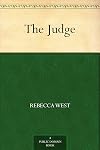
The Judge
by Rebecca West
On This Page
Description
A romantic tale that traces the generational pulls of love and fidelity. At seventeen, Ellen Melville's life is filled with passion for the suffrage movement, her mother, and Edinburgh, if not romance. Then Richard Yaverland, a successful older man, enters her life. Haunted by his own illegitimacy, Richard wants to avert the pain that left his mother a bitter woman even as he kindles a passionate romance. As Ellen and Richard tentatively try on the roles of lovers, the spark of a new show more relationship will inspire the people around them to consider their own connections. As West's clever and enchanting heroine falls in love, she inspires the reader to reflect on the different ways that love can change the course of our lives, for better or worse. show lessTags
Recommendations











Member Reviews
Rebecca West’s 1922 second novel is much longer than her wonderful first novel; The Return of the Soldier. It is a complex, densely written novel with some breath-taking descriptions of Scottish and English landscape. It is also – I can see from other reviews – one capable of dividing opinion. I suspect it is that highly descriptive dense writing that some readers dislike, while others may find the highly dramatic melodrama of the end of the novel at odds with what had come before it.
“Ellen thought herself a wonderful new sort of woman who was going to be just like a man; she would have been surprised if she had known how many of stern-browed ambitions, how much of her virile swagger of life, were not the invention of her own show more soul, but had been suggested to her by an old woman who liked to pretend her daughter was a son.”
In the early years of the twentieth century, Ellen Melville is a seventeen year old typist at a legal office. She is also a suffragette, naively innocent Ellen is unaware of her own beauty and the effect it has on others. Ellen finds herself judged and treated as an object by the men for whom she works, but has inherited a great capacity for love from her impoverished mother with whom she lives in a tiny dark house. Ellen can’t help but be dissatisfied with her life, she wants to experience all that life has to offer, she is at times outspoken, but still with a touching childishness about her which allows her to leap about her beloved Pentland hills in joy. When she meets client Richard Yaverland one day at work, she meets an older worldlier man, a successful man who has travelled widely, with liberal political views he seems to represent much of what Ellen seeks.
In Ellen and her simple good mother, Richard finds something he seeks – and is soon determined to marry Ellen. Before their marriage the couple travel back to Richard’s home to meet his mother of whom Richard has spoken to Ellen a good deal.
“‘Her body would imprison her in soft places. She would be allowed no adventures other than love, no achievements other than birth.’
Richard Yaverland comes from Essex, where he lived with his mother Marion, Marion even accompanied him on some of his expeditions abroad and the two are extraordinarily close. Richard is illegitimate, the result of his mother’s love affair with the local squire. Marion’s story – of how she was judged and ill used by the small community in which she lived, is told more than half way into the novel – yet it is the memory of this strong and controversial mother and her obsessive like love for her eldest son that pervades this novel. Marion has another son, one born following her somewhat forced marriage to an utterly odious man who offered to save her reputation when she found herself pregnant. This younger son; Roger, is a pitiful figure that the reader wants to sympathise with, and I did, however West has made his older, more selfish, more golden brother the more likeable character – although he is far from flawless. Roger’s childhood was sacrificed so that Marion could live the solitary life she desired with Richard. It is Roger, not Richard who is Marion’s guilt made flesh. The ending is gloriously melodramatic – it is at odds with the first part of the novel but I loved it.
“Every mother is a judge who sentences the children for the sins of the father.”
The judge of the title then is everyone, each character and certainly the reader themselves. Marion is a very harsh judge of herself, she has reason to be, and although the reader is able to sympathise with this strong and unusual woman, they can’t condone her actions. The judge is a fascinating exploration on what early nineteenth century society perceives as sin and the treatment of those who stray from the excepted path. show less
“Ellen thought herself a wonderful new sort of woman who was going to be just like a man; she would have been surprised if she had known how many of stern-browed ambitions, how much of her virile swagger of life, were not the invention of her own show more soul, but had been suggested to her by an old woman who liked to pretend her daughter was a son.”
In the early years of the twentieth century, Ellen Melville is a seventeen year old typist at a legal office. She is also a suffragette, naively innocent Ellen is unaware of her own beauty and the effect it has on others. Ellen finds herself judged and treated as an object by the men for whom she works, but has inherited a great capacity for love from her impoverished mother with whom she lives in a tiny dark house. Ellen can’t help but be dissatisfied with her life, she wants to experience all that life has to offer, she is at times outspoken, but still with a touching childishness about her which allows her to leap about her beloved Pentland hills in joy. When she meets client Richard Yaverland one day at work, she meets an older worldlier man, a successful man who has travelled widely, with liberal political views he seems to represent much of what Ellen seeks.
In Ellen and her simple good mother, Richard finds something he seeks – and is soon determined to marry Ellen. Before their marriage the couple travel back to Richard’s home to meet his mother of whom Richard has spoken to Ellen a good deal.
“‘Her body would imprison her in soft places. She would be allowed no adventures other than love, no achievements other than birth.’
Richard Yaverland comes from Essex, where he lived with his mother Marion, Marion even accompanied him on some of his expeditions abroad and the two are extraordinarily close. Richard is illegitimate, the result of his mother’s love affair with the local squire. Marion’s story – of how she was judged and ill used by the small community in which she lived, is told more than half way into the novel – yet it is the memory of this strong and controversial mother and her obsessive like love for her eldest son that pervades this novel. Marion has another son, one born following her somewhat forced marriage to an utterly odious man who offered to save her reputation when she found herself pregnant. This younger son; Roger, is a pitiful figure that the reader wants to sympathise with, and I did, however West has made his older, more selfish, more golden brother the more likeable character – although he is far from flawless. Roger’s childhood was sacrificed so that Marion could live the solitary life she desired with Richard. It is Roger, not Richard who is Marion’s guilt made flesh. The ending is gloriously melodramatic – it is at odds with the first part of the novel but I loved it.
“Every mother is a judge who sentences the children for the sins of the father.”
The judge of the title then is everyone, each character and certainly the reader themselves. Marion is a very harsh judge of herself, she has reason to be, and although the reader is able to sympathise with this strong and unusual woman, they can’t condone her actions. The judge is a fascinating exploration on what early nineteenth century society perceives as sin and the treatment of those who stray from the excepted path. show less
This is an excellent study of Marion, whom some would say was a bad mother, but she was very complex. West gives many reasons for her acting and thinking as she does. No one was harder on her than herself. She tries repeatedly to overcome feelings that it seems unfortunately reasonable for her to have. Her failing, and that of Ellen the youngest character, was that they were mired in romantic thinking (and the restrictions of a sexually repressive society). Everything that didn't exemplify perfect love was second rate. Rebecca West keeps having Richard, the Greek god love interest, say how intellectual the Scots are, and Ellen certainly got the most pleasure in life from thought and fantasy. She also, at the age of 17, 18, 19 didn't show more know what sex was - not that she hadn't experienced it, but that she didn't know how babies were made, thinking it might involve some kind of tender kiss. Kind of a strange concept. Marion, on the other hand, was very sensual, in fact too sensual when she lost the love of her life and had to devote herself to loving only her son. Who was The Judge? Everyone, including the reader. This is a great psychological and sociological study that I'm glad I read. All the characters grab the reader's attention, and when she wants to depict a person as repulsive, she does a fine enough job to make anyone reject the poor lad, and feel sorry for him while doing it. show less
This novel is primarily the story of two strong women. Ellen Melville is 17 years old, working as a typist in an Edinburgh legal office by day and participating in suffragist meetings and demonstrations nights and weekends. She is outspoken and confident, and naive enough to be surprised by hostile crowds during demonstrations. She is also completely unaware of her effect on the opposite sex. The men in the office treat her as an object, except for Richard Yaverland, a client of the firm. Richard is much older than Ellen, and more worldly, but also more liberal in his political views. When Ellen and Richard decide to marry, they journey to the south of England to meet Richard's mother, Marion.
The first half of this book is Ellen's show more story; the second half belongs to Marion. Richard and his mother are extremely close -- in fact, their relationship borders on the unhealthy. Marion has strong, mixed emotions about Richard and Ellen's relationship. She professes to love Ellen almost at first sight, and yet inwardly wrestles with the impact that marriage will have on Marion's relationship with her son. Just as I was asking myself, "What is this woman's problem?", Marion's "back story" was revealed in the form of one long, sleepless night filled with memories going back to Marion's youth. She had been in love with Harry, a young squire, who left for military service. Then Marion learned she was pregnant. She was subject to public shame, including an incident in which she was stoned by townspeople. For her own safety she entered into marriage with a man who offered her security and didn't even require that they live together. Marion doted on the illegitimate Richard, and found herself completely unable to love a second child borne of her marriage. As the two children came of age they were treated quite differently, and this had serious consequences when they reached adulthood. As Marion herself said, "Every mother is a judge who sentences the children for the sins of the father." (p.346)
Rebecca West was a pioneer in feminist literature who knew from personal experience what it meant to be an outspoken, strong woman. Published in 1922, The Judge portrays two such women and shows how society failed each of them. However, while the book is well-written, the prose is dense and requires concentration. The ending is abrupt and felt somewhat contrived. I would not consider this West's best work, but for those who would like to read more early 20th century novels written by women,it's worth a try. show less
The first half of this book is Ellen's show more story; the second half belongs to Marion. Richard and his mother are extremely close -- in fact, their relationship borders on the unhealthy. Marion has strong, mixed emotions about Richard and Ellen's relationship. She professes to love Ellen almost at first sight, and yet inwardly wrestles with the impact that marriage will have on Marion's relationship with her son. Just as I was asking myself, "What is this woman's problem?", Marion's "back story" was revealed in the form of one long, sleepless night filled with memories going back to Marion's youth. She had been in love with Harry, a young squire, who left for military service. Then Marion learned she was pregnant. She was subject to public shame, including an incident in which she was stoned by townspeople. For her own safety she entered into marriage with a man who offered her security and didn't even require that they live together. Marion doted on the illegitimate Richard, and found herself completely unable to love a second child borne of her marriage. As the two children came of age they were treated quite differently, and this had serious consequences when they reached adulthood. As Marion herself said, "Every mother is a judge who sentences the children for the sins of the father." (p.346)
Rebecca West was a pioneer in feminist literature who knew from personal experience what it meant to be an outspoken, strong woman. Published in 1922, The Judge portrays two such women and shows how society failed each of them. However, while the book is well-written, the prose is dense and requires concentration. The ending is abrupt and felt somewhat contrived. I would not consider this West's best work, but for those who would like to read more early 20th century novels written by women,it's worth a try. show less
The Judge is set in 1910s Edinburgh and focuses on the love story between a young typist and suffragette, Ellen; and Richard Yaverland, a charming explorer who has literally been all over the world. Their relationship is overshadowed by the relationship between Richard’s mother and father, creating an intricate tale about what happens when the past starts to catch up and interfere with the present.
Sigh. No matter how hard I try, I just seem to strike out with Rebecca West’s novels. I wasn’t a big fan of Harriet Hume, and I didn’t particularly like The Judge, either. I think it has something to do with West’s manner of exposition; she doesn’t focus on plot, so that all of the action tends to take place in her characters’ show more heads. She also has this fantastical ability to know exactly what each of her characters is thinking or feeling, which makes for stilted, ponderous reading and overblown prose. Even the nature of her characters’ thoughts is confusing; they all have the ability to jump all over the place when introspecting.
I know that other people love Rebecca West’s novels for their depth and complexity, but I just didn’t like any of the characters all that much, to the point where there were many places where I wanted to give up on reading this book. As it was, it was slow going. show less
Sigh. No matter how hard I try, I just seem to strike out with Rebecca West’s novels. I wasn’t a big fan of Harriet Hume, and I didn’t particularly like The Judge, either. I think it has something to do with West’s manner of exposition; she doesn’t focus on plot, so that all of the action tends to take place in her characters’ show more heads. She also has this fantastical ability to know exactly what each of her characters is thinking or feeling, which makes for stilted, ponderous reading and overblown prose. Even the nature of her characters’ thoughts is confusing; they all have the ability to jump all over the place when introspecting.
I know that other people love Rebecca West’s novels for their depth and complexity, but I just didn’t like any of the characters all that much, to the point where there were many places where I wanted to give up on reading this book. As it was, it was slow going. show less
Impossible to rate.
I thought this was a very interesting book although a failure as a novel. It really went off the rails at the end. Knowing a bit about West's life made the characters of Ellen and Marion interesting but as a writer, she really lost control of the material in the last third of the book.
I'm not sure I have ever read such beautiful descriptions of the natural world or a more truthful portrayal of the extreme emotions of motherhood.
In truth, the book scared me a little.
I thought this was a very interesting book although a failure as a novel. It really went off the rails at the end. Knowing a bit about West's life made the characters of Ellen and Marion interesting but as a writer, she really lost control of the material in the last third of the book.
I'm not sure I have ever read such beautiful descriptions of the natural world or a more truthful portrayal of the extreme emotions of motherhood.
In truth, the book scared me a little.
I wanted to like this, but I never did, although I have to wonder to what extent my struggles with this book can be attributed to the train journey when I made a start and was rather sleepy and cross about the train having some problems, so every time I picked it up afterwards I might have expected to find it a hard slog, and of course that's exactly how I felt.
I liked Ellen, and felt that we were only just getting to know her properly when the focus shifted to Marion, and her rather Freudian relationship with her son, Richard. I didn't find her likeable or interesting enough, and then oh so much drama took over what had seemed to be a not that melodramatic a book until then.
I liked Ellen, and felt that we were only just getting to know her properly when the focus shifted to Marion, and her rather Freudian relationship with her son, Richard. I didn't find her likeable or interesting enough, and then oh so much drama took over what had seemed to be a not that melodramatic a book until then.
depressing story. started as a love story, turned into can i live with my husband and his mother, ended up with murder and everyone's life, except perhaps ellen's is over. it was wordy too, but i never wanted to stop reading.
Members
- Recently Added By
Lists

Female Author
1,234 works; 66 members

Best 20th Century Books as of 1924
100 works; 6 members

50 Books by Women Authors
50 works; 10 members
Books referenced in A Very Great Profession: The Woman's Novel 1914-39
199 works; 6 members

For Further Reading: A List of 160 Novels from 15 Literatures
160 works; 4 members
Author Information

48+ Works 8,578 Members
Taking her name from one of Henrik Ibsen's strong-minded women, Rebecca West was a politically and socially active feminist all her long life. She had an intense 10-year affair with H.G. Wells, with whom she had a son. A brilliant and versatile novelist, critic, essayist, and political commentator, West's greatest literary achievement is perhaps show more her travel diary, Black Lamb and Grey Falcon: A Journey through Yugoslavia (1942). Five years in the writing, it is the story of an Easter trip that she and her husband, British banker Henry Maxwell Andrews (whom she had married in 1930), made through Yugoslavia in 1937. A historical narrative with excellent reporting, it is essentially an analysis of Western culture. During World War II, she superintended British broadcast talks to Yugoslavia. Her remarkable reports of the treason trials of Lord Haw and John Amery appeared first in the New Yorker and are included with other stories about traitors in The Meaning of Treason (1947), which was expanded to deal with traitors and defectors since World War II as The New Meaning of Treason (1964). The Birds Fall Down (1966), which was a bestseller, is the story of a young Englishwoman caught in the grip of Russian terrorists. From a true story told to her more than half a century ago by the sister of Ford Madox Ford (who had heard it from her Russian husband), West "created a rich and instructive spy thriller, which contains an immense amount of brilliantly distributed information about the ideologies of the time, the rituals of the Russian Orthodox Church, the conflicts of customs, belief, and temperament between Russians and Western Europeans, the techniques of espionage and counter-espionage, and the life of exiles in Paris" (New Yorker). Unlike that of her more famous contemporaries, her fiction is stylistically and structurally conventional, but it effectively details the evolution of daily life amid the backdrop of such historical disasters as the world wars. Her critical works include Arnold Bennett Himself, Henry James (1916), Strange Necessity: Essays and Reviews, and The Court and the Castle (1957), a study of political and religious ideas in imaginative literature. In 1949, she was made a Dame Commander of the Order of the British Empire. (Bowker Author Biography) show less
Some Editions
Series
Belongs to Publisher Series
Common Knowledge
- Canonical title
- The Judge
- Original publication date
- 1922
- People/Characters
- Ellen Melville; Marion Yaverland; Richard Yaverland; Roger Peacey
- Important places
- England, UK; Edinburgh, Scotland, UK
- Epigraph
- "Every mother is a judge who sentences the children for the sins of the father."
- Dedication
- TO
THE MEMORY OF
MY MOTHER - First words
- It was not because life was not good enough that Ellen Melville was crying as she sat by the window.
The Judge (1922), Rebecca West's second novel, is not a story of treason trials and legal intrigue. (Introduction) - Last words
- (Click to show. Warning: May contain spoilers.)She sat and looked at the island, and wondered whether it was a son or a daughter that waited for her there.
(Click to show. Warning: May contain spoilers.)Ellen Melville is a study of a kind of woman not yet fully identified: we welcome her back on the literary scene. (Introduction)
Classifications
Statistics
- Members
- 270
- Popularity
- 120,226
- Reviews
- 11
- Rating
- (3.40)
- Languages
- English
- Media
- Paper, Audiobook, Ebook
- ISBNs
- 23
- ASINs
- 9