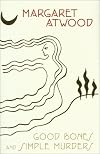
Good Bones and Simple Murders
by Margaret Atwood
On This Page
Description
Nineteen stories on the battle of the sexes. Included are Gertrude Talks Back, a monologue by Hamlet's mother, The Little Red Hen Tells All, which is on male chauvinism, and Happy Endings, a series of scenarios for finding love.Tags
Recommendations






Member Reviews
I downloaded this book from my library's OverDrive collection primarily because it was short. I love everything I've read by Margaret Atwood, but I've been in such a reading funk lately I didn't want to commit to something really long. This was a short collection of short pieces - some no more than a couple of pages. They deal with male/female relationships, feminism, social norms, fairy tales... it's a varied assortment that showcases Atwood's deft hand with a variety of styles. One of my favorites was "Unpopular Gals," told in the collective voice of the witches, evil stepmothers, and other storybook nasties. It ends:
"You can wipe your feet on me, twist my motives around all you like, you can dump millstones on my head and drown me in show more the river, but you can't get me out of the story. I'm the plot, babe, and don't ever forget it."
There is that kind of sly wit throughout, the upending of expectations and "accepted" roles. While some pieces worked better than others as is true of any collection, I enjoyed dipping into this as a reminder of just how sharp and masterful Atwood is. show less
"You can wipe your feet on me, twist my motives around all you like, you can dump millstones on my head and drown me in show more the river, but you can't get me out of the story. I'm the plot, babe, and don't ever forget it."
There is that kind of sly wit throughout, the upending of expectations and "accepted" roles. While some pieces worked better than others as is true of any collection, I enjoyed dipping into this as a reminder of just how sharp and masterful Atwood is. show less
The word that went through my head more often than any other while reading this book was "weird".
This is a collection of short stories, some that are actually poetry as well, that covers an impressively wide range of subjects, from Hamlet, fairy tales, love, the necessity of stupidity, war, and how to make a man.
The stories are very short, very quick to read, and often accompanied by illustrations from the other. All in all, it's a great little collection. Indeed, very weird, but great!
This is a collection of short stories, some that are actually poetry as well, that covers an impressively wide range of subjects, from Hamlet, fairy tales, love, the necessity of stupidity, war, and how to make a man.
The stories are very short, very quick to read, and often accompanied by illustrations from the other. All in all, it's a great little collection. Indeed, very weird, but great!
“The good bones are in here.”
I snagged a used copy of Good Bones and Simple Murders (Margaret Atwood, 1994) on Amazon, whilst shopping around for some of Atwood’s older novels. A slim collection of short stories and poetry, Good Bones is an eclectic mix, with illustrations by the author peppered throughout. The stories cover a little bit of everything: fantasy, mystery, science fiction, speculative fiction, feminism, rape culture, gender wars, dating, death - you name it.
Many of the pieces are hit and miss; my favorites are the scifi stories that hinge on an environmental or animal-friendly theme:
- “Cold-Blooded” - An alien race of matriarchal moth people visit planet earth - or as they call it, “The Planet of the Moths,” show more a nickname owing to the fact that their moth cousins outnumber us by billions - and find humans sorely lacking in both culture and intelligence;
- “My Life As a Bat” – A series of reflections on the narrator’s past life as a bat, including a disturbing (and, as it just so happens, true) anecdote about WWII-era experiments in which bats were made into unwitting suicide bombers;
- “Hardball” - A piece of dystopian speculative fiction in which humans, having decimated their environment, have retreated to live under a giant dome. Since space is limited, the population must be kept in check: for every birth, one person is chosen to die via a lottery. Care to guess what becomes of the remains?
Also enjoyable are those stories which reimagine classic literature: “Gertrude Talks Back” gives voice to Hamlet’s long-suffering mother, and “Unpopular Gals” and “Let Us Now Praise Stupid Women” celebrates those villains and “airheads” without which fairy tales would not exist.
While at times difficult to read, “Liking Men” is another standout; this is the piece that deals with sexual assault, vis à vis a woman’s journey back to coping with – and even loving – men (or rather, one man in particular) again after her rape.
A must for fans of Margaret Atwood!
(Is there a nickname for us, like HDM’s Sraffies? Atwolytes, maybe? Mad Adams and Angry Eves?)
PS – Dear Margaret: Fishes are indeed animals. Can we please stop pretending otherwise? xoxo – A vegan feminist fan.
http://www.easyvegan.info/2012/05/07/good-bones-and-simple-murders-by-margaret-a... show less
I snagged a used copy of Good Bones and Simple Murders (Margaret Atwood, 1994) on Amazon, whilst shopping around for some of Atwood’s older novels. A slim collection of short stories and poetry, Good Bones is an eclectic mix, with illustrations by the author peppered throughout. The stories cover a little bit of everything: fantasy, mystery, science fiction, speculative fiction, feminism, rape culture, gender wars, dating, death - you name it.
Many of the pieces are hit and miss; my favorites are the scifi stories that hinge on an environmental or animal-friendly theme:
- “Cold-Blooded” - An alien race of matriarchal moth people visit planet earth - or as they call it, “The Planet of the Moths,” show more a nickname owing to the fact that their moth cousins outnumber us by billions - and find humans sorely lacking in both culture and intelligence;
- “My Life As a Bat” – A series of reflections on the narrator’s past life as a bat, including a disturbing (and, as it just so happens, true) anecdote about WWII-era experiments in which bats were made into unwitting suicide bombers;
- “Hardball” - A piece of dystopian speculative fiction in which humans, having decimated their environment, have retreated to live under a giant dome. Since space is limited, the population must be kept in check: for every birth, one person is chosen to die via a lottery. Care to guess what becomes of the remains?
Also enjoyable are those stories which reimagine classic literature: “Gertrude Talks Back” gives voice to Hamlet’s long-suffering mother, and “Unpopular Gals” and “Let Us Now Praise Stupid Women” celebrates those villains and “airheads” without which fairy tales would not exist.
While at times difficult to read, “Liking Men” is another standout; this is the piece that deals with sexual assault, vis à vis a woman’s journey back to coping with – and even loving – men (or rather, one man in particular) again after her rape.
A must for fans of Margaret Atwood!
(Is there a nickname for us, like HDM’s Sraffies? Atwolytes, maybe? Mad Adams and Angry Eves?)
PS – Dear Margaret: Fishes are indeed animals. Can we please stop pretending otherwise? xoxo – A vegan feminist fan.
http://www.easyvegan.info/2012/05/07/good-bones-and-simple-murders-by-margaret-a... show less
This was like a peek into Atwood riffing on ideas, plots, themes. It was like she was auditioning them, seeing what she could do with them, exercising them, putting them through their paces, marking them off with a stopwatch -- go! Wonderful.
3.5***
This is a collection of essays on a variety of subjects. In some, Atwood turns her considerable talent to the realm of traditional fairy tales and stories, turning them on their heads and delighting the reader. What did the “little red hen” REALLY think about the other animals? How do you rewrite the typical “boy meets girl, loves, lives happily ever after” plot to arrive at a different ending? Did the ugly stepsisters get fair treatment? In other stories, she turns her scathing wit to modern issues of feminism and the roles of men and women. I particularly enjoyed the story titled “Making a Man,” which is a satire on typical “women’s magazine” how-to articles. And then there are the poignant essays on aging and show more death. The short essays / stories are inventive, interesting and droll – for the most part. But some stories (including essays dealing with aliens or vampires), didn’t resonate with me. show less
This is a collection of essays on a variety of subjects. In some, Atwood turns her considerable talent to the realm of traditional fairy tales and stories, turning them on their heads and delighting the reader. What did the “little red hen” REALLY think about the other animals? How do you rewrite the typical “boy meets girl, loves, lives happily ever after” plot to arrive at a different ending? Did the ugly stepsisters get fair treatment? In other stories, she turns her scathing wit to modern issues of feminism and the roles of men and women. I particularly enjoyed the story titled “Making a Man,” which is a satire on typical “women’s magazine” how-to articles. And then there are the poignant essays on aging and show more death. The short essays / stories are inventive, interesting and droll – for the most part. But some stories (including essays dealing with aliens or vampires), didn’t resonate with me. show less
This was like a peek into Atwood riffing on ideas, plots, themes. It was like she was auditioning them, seeing what she could do with them, exercising them, putting them through their paces, marking them off with a stopwatch -- go! Wonderful.
Occasional nice imagery and turns of phrase, but to no discernible purpose. Some of the stories dipped into already existing folktales/stories in an attempt to highlight a specific character or uncommon angle, but they were always too short for me to derive any meaning. Most of them felt like writing exercises meant to inspire new ideas or allow the author to practice but weren't strong enough for publication. The two exceptions were Simmering (great satire) and The Victory Burlesk (well demonstrated point).
Members
- Recently Added By
Author Information

291+ Works 199,845 Members
Margaret Atwood was born on November 18, 1939 in Ottawa, Canada. She received a B.A. from Victoria College, University of Toronto in 1961 and an M.A. from Radcliff College in 1962. Her first book of verse, Double Persephone, was published in 1961 and was awarded the E. J. Pratt Medal. She has published numerous books of poetry, novels, story show more collections, critical work, juvenile work, and radio and teleplays. Her works include The Journals of Susanna Moodie, Power Politics, Cat's Eye, The Robber Bride, Morning in the Buried House, the MaddAdam trilogy, and The Heart Goes Last. She has won numerous awards including the Prince of Asturias Award for Literature, the Booker Prize in 2000 for The Blind Assassin, the Giller Prize and the Premio Mondello for Alias Grace, and the Governor General's Award in 1966 for The Circle Game and in 1986 for The Handmaid's Tale, which also won the very first Arthur C. Clarke Award in 1987. She won the PEN Pinter prize in 2016 for her political activism. She was awarded the 2016 PEN Pinter Prize for the outstanding literary merit of her body of work. (Bowker Author Biography) show less
Series
Belongs to Publisher Series
Work Relationships
Is an abridged version of
Common Knowledge
- Original title
- Good Bones and Simple Murders
- Original publication date
- 1994
- First words
- This is a game I've played only twice.
- Last words
- (Click to show. Warning: May contain spoilers.)Keep on going.
- Original language
- English
- Disambiguation notice
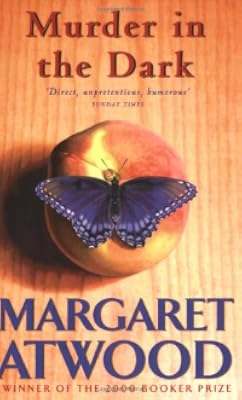
- This includes selections from both Good Bones and Murder in the Dark. Please do not combine with either of those works.
Classifications
- Genres
- Fiction and Literature, General Fiction
- DDC/MDS
- 818.5409 — Literature & rhetoric American literature in English American miscellaneous writings in English 20th Century 1945-1999
- LCC
- PR9199.3 .A8 .G67 — Language and Literature English English Literature English literature: Provincial, local, etc.
- BISAC
Statistics
- Members
- 786
- Popularity
- 35,671
- Reviews
- 17
- Rating
- (3.84)
- Languages
- English
- Media
- Paper, Audiobook, Ebook
- ISBNs
- 10
- ASINs
- 4