
The Believers
by Zoë Heller
On This Page
Description
When radical New York lawyer Joel Litvinoff is felled by a stroke, his wife, Audrey, uncovers a secret that forces her to reexamine everything she thought she knew about their forty-year marriage. Joel's children will soon have to come to terms with this discovery themselves, but for the meantime, they are struggling with their own dilemmas and doubts. Rosa has found herself drawn into the world of Orthodox Judaism and is now being pressed to make a commitment to that religion. Karla, a show more devoted social worker hoping to adopt a child with her husband, is falling in love iwth the owner of a newspaper stand outside her office. Ne'er-do-well Lenny is living at home, approaching another relapse into heroin addiction. In the end, all the family members will have to answer their own questions and decide what-if-anything they still believe in. show lessTags
Recommendations



































Member Reviews
This is a novel about a dysfunctional family, and it's also, perhaps, a satire. Lots of people don't like it because almost all the characters are unlikeable--some in fact are hugely unlikeable. The novel centers on the family of Joel Litvinoff, an womanizing activist lawyer who makes his living defending terrorists--present-day Muslims and Black Panther-like individuals in the past. As the novel opens, Joel suffers a stroke, and he lies in a coma for most of the rest of the book.
Joel's wife Audrey appears to live to support Joel, entirely burying her own wants and desires to the needs of Joel. In fact, as Heller cleverly shows us, Audrey is one of the most self-centered and mean characters to appear in the pages of a contemporary show more novel. Joel and Audrey have three children. Rosa has just returned from a Marxist fling in Cuba and is flirting with becoming a Hasidic Jew, much to the dismay of her atheist parents. Karla, an overweight "marshmallow" of a social worker married to a union organizer, bears the brunt of Audrey's snide remarks. Adopted son Lenny, a drug addict unable to hold a job, is adored by Audrey.
I think the fact that the characters are so unlikeable is what makes this book likeable. Here's a quote:
"{Audrey} was always congratulating herself on her audacious honesty, her willingness to express what everyone else was thinking. But no one...actually shared Audrey's ugly view of the world. It was not the truth of her observations that made people laugh, but their unfairness, their surreal cruelty."
3 stars show less
Joel's wife Audrey appears to live to support Joel, entirely burying her own wants and desires to the needs of Joel. In fact, as Heller cleverly shows us, Audrey is one of the most self-centered and mean characters to appear in the pages of a contemporary show more novel. Joel and Audrey have three children. Rosa has just returned from a Marxist fling in Cuba and is flirting with becoming a Hasidic Jew, much to the dismay of her atheist parents. Karla, an overweight "marshmallow" of a social worker married to a union organizer, bears the brunt of Audrey's snide remarks. Adopted son Lenny, a drug addict unable to hold a job, is adored by Audrey.
I think the fact that the characters are so unlikeable is what makes this book likeable. Here's a quote:
"{Audrey} was always congratulating herself on her audacious honesty, her willingness to express what everyone else was thinking. But no one...actually shared Audrey's ugly view of the world. It was not the truth of her observations that made people laugh, but their unfairness, their surreal cruelty."
3 stars show less
‘The Believers’ by Zoe Heller is the story of a New York family and how serious illness challenges each person to consider in what they believe. The Litvinoffs are a Jewish family used by Heller as a prism to question our beliefs, not just religious but also motherhood, fidelity and politics.
The story starts with the meeting of English student Audrey and American lawyer Joel, at a party in London in the Sixties. The action then shifts swiftly to 2002. Audrey and Joel live in New York, he is a prominent and outspoken radical lawyer, she does good works. They have two daughters, Rose and Karla, and adopted son Lenny. On the day he is due to appear in court representing a controversial defendant, Joel has a stroke. As he lays in a show more coma, Heller shows each of the family confronting the situation, its impact on their own lives, or not as the case may be. None of the characters are particularly likeable, and the storyline can be difficult in places, but I found the pages turned quickly as I wanted to know the ending. Of course, like life, there is no neat finale only more life to follow as the stories of the family continue.
Audrey is a deliciously outspoken and brutal mother to her daughters, though she mollycoddles her son to a ridiculous degree. Rosa is re-discovering her Jewish roots, having been raised in a non-observant Jewish family. We follow her exploration of the oddities of Orthodoxy, as she wrestles with the concept of accepting things she doesn’t understand. Karla, unhappily married and trying for a baby, is the recipient most frequently of Audrey’s caustic tongue. Not looking for an affair, she nevertheless stumbles into one, and has difficulty believing and accepting her suitor could possibly be attracted to her. Lenny is a drug addict who believes in nothing except his next hit. Meanwhile, Joel in his hospital bed is the cog of the wheel around which they all move.
I was left loving Heller’s writing, she has a wonderful turn of phrase. ‘Depression, in Karla’s experience, was a dull, inert thing – a toad that squatted wetly on your head until it finally gathered the energy to slither off. The unhappiness she had been living with for the last ten days was quite a different creature. It was frantic and aggressive. It had fists and fangs and hobnailed boots. It didn’t sit, it assailed. It hurt her.’
But, I finished the book dissatisfied with the story. Audrey’s Englishness did not come into play, except in the first chapter which feels unrelated to the rest of the book, and she seems unnecessarily harsh and unfair without real justification. What made her so bitter? Something which happened between the Prologue in 1962, and the main story in 2002? The big surprise, when it comes, is perhaps predictable to everyone except Audrey.
Read more of my book reviews at http://www.sandradanby.com/book-reviews-a-z/ show less
The story starts with the meeting of English student Audrey and American lawyer Joel, at a party in London in the Sixties. The action then shifts swiftly to 2002. Audrey and Joel live in New York, he is a prominent and outspoken radical lawyer, she does good works. They have two daughters, Rose and Karla, and adopted son Lenny. On the day he is due to appear in court representing a controversial defendant, Joel has a stroke. As he lays in a show more coma, Heller shows each of the family confronting the situation, its impact on their own lives, or not as the case may be. None of the characters are particularly likeable, and the storyline can be difficult in places, but I found the pages turned quickly as I wanted to know the ending. Of course, like life, there is no neat finale only more life to follow as the stories of the family continue.
Audrey is a deliciously outspoken and brutal mother to her daughters, though she mollycoddles her son to a ridiculous degree. Rosa is re-discovering her Jewish roots, having been raised in a non-observant Jewish family. We follow her exploration of the oddities of Orthodoxy, as she wrestles with the concept of accepting things she doesn’t understand. Karla, unhappily married and trying for a baby, is the recipient most frequently of Audrey’s caustic tongue. Not looking for an affair, she nevertheless stumbles into one, and has difficulty believing and accepting her suitor could possibly be attracted to her. Lenny is a drug addict who believes in nothing except his next hit. Meanwhile, Joel in his hospital bed is the cog of the wheel around which they all move.
I was left loving Heller’s writing, she has a wonderful turn of phrase. ‘Depression, in Karla’s experience, was a dull, inert thing – a toad that squatted wetly on your head until it finally gathered the energy to slither off. The unhappiness she had been living with for the last ten days was quite a different creature. It was frantic and aggressive. It had fists and fangs and hobnailed boots. It didn’t sit, it assailed. It hurt her.’
But, I finished the book dissatisfied with the story. Audrey’s Englishness did not come into play, except in the first chapter which feels unrelated to the rest of the book, and she seems unnecessarily harsh and unfair without real justification. What made her so bitter? Something which happened between the Prologue in 1962, and the main story in 2002? The big surprise, when it comes, is perhaps predictable to everyone except Audrey.
Read more of my book reviews at http://www.sandradanby.com/book-reviews-a-z/ show less
Joel Litvinoff, a prominent New York lawyer, collapses in a court room with a stroke and lapses into a coma. His family rushes to his side, but as he lapses into a coma they must come to terms with his failings and their own beliefs about their place in the world. His wife, Audrey, wonders when her feistiness turned into combative anger and her belief in her husband's Socialist ideals can be reconciled with the appearance of a long-term mistress. One daughter, Rosa, flirts with Judaism, while the other, Karla, reluctantly examines how her parents' view of her has stifled her own growth, while Lenny, the adoptive son, belatedly grows up.
Well-written and with complex and contradictory characters, this novel was hard for me to put down. show more Even the minor characters are revealed with care and subtlety. show less
Well-written and with complex and contradictory characters, this novel was hard for me to put down. show more Even the minor characters are revealed with care and subtlety. show less
As radical political activist and lawyer Joel Litvinoff lies in a coma after a major stroke, his unusual family threatens to begin it's own breakdown. Joel's wife Audrey, always razor-tongued and opinionated, must not only deal with Joel's absence from her life but also come to terms with the nasty secret that her husband has been hiding from her for years. Meanwhile, Joel and Audrey's adopted son Lenny, a wastrel and drug addict, is working his usual game of manipulation and subterfuge on the rest of the family, seemingly unconcerned that his father lies incapacitated and dying. Daughter Rosa, once a socialist and activist like her parents, has decided to begin studies as an Orthodox Jew, much to the chagrin and disappointment of her show more antitheist mother who takes her conversion as a personal affront. Rounding out the bunch is daughter Karla, an obese and unhappy woman who is struggling not only to find fulfillment, but also to become pregnant at the behest of her uncaring and oblivious husband. As days turn to weeks with no news or improvement from Joel, situations begin to heat to a rapid boil, and each member of the family comes to their own moral precipice and must decide whether to let go and jump off, or to hang on to the things that are pulling them apart. Both comically astute and morally penetrating, The Believers is Heller at her skillful and avant-garde best.
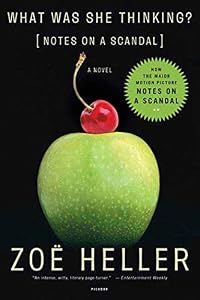
A few years back, I had the unexpected pleasure of picking up my first book written by Zoë Heller. The book was What Was She Thinking?: Notes on a Scandal, and even with my relative inexperience at writing reviews at that time, I knew this author was someone to take seriously. When the opportunity came for me to read and review this book as part of a TLC Book Tour, I jumped at the chance. The book certainly didn't disappoint, and not only did I find it really hard to tear myself away from the pages of the story, I read the book in two sittings.
First of all, I felt that in her creation of the Litvinoffs, Heller does an amazing job of capturing the idiosyncrasies of a modern family in turmoil. Each character was like the point on a star, twinkling away in disorder and confusion. Although most of the characters had a somewhat repulsive outlook on life, they were the kind of characters you love to hate and whose antics you ingest feverishly in order to see just how bizarre and recalcitrant they will become. Each character was remarkably detailed and original, and for a work of fiction, these people were crazily realistic creatures. I think Audrey fascinated me the most. She was so scathing and fierce about everyone and everything that she came in contact with. I cringed in embarrassment and discomfort whenever she opened her mouth, but Heller had a way of making her so intriguing and interesting that you couldn't help but be completely absorbed by the woman. Audrey was a true original and although I was mostly scandalized by her behavior, I was unendingly entertained by her. Although I chose to focus mainly on the qualities of Audrey, I was truly impressed by all of the characters in this book. I didn't really like most of them but I felt that there was enough character dissection and detail in their creation to be able to understand what made them tick and why they acted as they did. I also liked the fact that Heller doesn't spend a lot of time worrying over the acceptability of her characters' beliefs and morals. There are no apologies here; these characters are who they are with no holes barred and no reservations.
I thought there was a huge amount of social commentary and irony here. One of the greatest ironies in the story was the fact that although the characters (mainly Audrey) constantly spouted socialist rhetoric and worked from that mindset, in their personal worlds people were far from equal and the common man in society was somewhat peevishly denigrated. It seemed as though they aspired to much loftier ideals than they could ever attain. This came up repeatedly throughout the story in their complaints about female doctors, their opinions on the hopeless futures of children of minorities and their unhappiness with their subjugated Latin housekeepers. They would walk through the story believing that they were on the side of the working man, the minority and society, but in reality their idealism was stripped away by their everyday experiences and actions. This book was simply a satirical masterpiece and I marveled at the way Heller created such meaningful social commentary in a tale full of miscreants.
I also thought that the research Heller did for this book was interesting. In the subplot involving Rosa, the reader is given a deep and extensive look into the tenants and rituals of Orthodox Judaism. I am very green to this subject but I felt that Heller did a wonderful job of explaining and highlighting these concepts for me. The book also also had some hysterically funny moments. The humor in this book was much like the characters: scathing and searing. I found myself snorting with amusement at these people and their absurdities and idealism. I think Heller has an incredible gift in the executions of her characters, and although I have never really found any of her characters to be likable, I do find them all engrossingly cruel and wickedly amusing.
If you are the type of reader who doesn't necessarily have to like the characters in a book in order to be fascinated with them, then this is definitely a book you need to read. Those who enjoy works of great satire and irony will find much to amuse themselves here as well. After completing this book, I must conclude that Heller is a writer at the top of her form. I am a huge fan of her work and can't wait to see what she offers her readers next. A highly original and entertaining read, highly recommended. show less
A few years back, I had the unexpected pleasure of picking up my first book written by Zoë Heller. The book was What Was She Thinking?: Notes on a Scandal, and even with my relative inexperience at writing reviews at that time, I knew this author was someone to take seriously. When the opportunity came for me to read and review this book as part of a TLC Book Tour, I jumped at the chance. The book certainly didn't disappoint, and not only did I find it really hard to tear myself away from the pages of the story, I read the book in two sittings.
First of all, I felt that in her creation of the Litvinoffs, Heller does an amazing job of capturing the idiosyncrasies of a modern family in turmoil. Each character was like the point on a star, twinkling away in disorder and confusion. Although most of the characters had a somewhat repulsive outlook on life, they were the kind of characters you love to hate and whose antics you ingest feverishly in order to see just how bizarre and recalcitrant they will become. Each character was remarkably detailed and original, and for a work of fiction, these people were crazily realistic creatures. I think Audrey fascinated me the most. She was so scathing and fierce about everyone and everything that she came in contact with. I cringed in embarrassment and discomfort whenever she opened her mouth, but Heller had a way of making her so intriguing and interesting that you couldn't help but be completely absorbed by the woman. Audrey was a true original and although I was mostly scandalized by her behavior, I was unendingly entertained by her. Although I chose to focus mainly on the qualities of Audrey, I was truly impressed by all of the characters in this book. I didn't really like most of them but I felt that there was enough character dissection and detail in their creation to be able to understand what made them tick and why they acted as they did. I also liked the fact that Heller doesn't spend a lot of time worrying over the acceptability of her characters' beliefs and morals. There are no apologies here; these characters are who they are with no holes barred and no reservations.
I thought there was a huge amount of social commentary and irony here. One of the greatest ironies in the story was the fact that although the characters (mainly Audrey) constantly spouted socialist rhetoric and worked from that mindset, in their personal worlds people were far from equal and the common man in society was somewhat peevishly denigrated. It seemed as though they aspired to much loftier ideals than they could ever attain. This came up repeatedly throughout the story in their complaints about female doctors, their opinions on the hopeless futures of children of minorities and their unhappiness with their subjugated Latin housekeepers. They would walk through the story believing that they were on the side of the working man, the minority and society, but in reality their idealism was stripped away by their everyday experiences and actions. This book was simply a satirical masterpiece and I marveled at the way Heller created such meaningful social commentary in a tale full of miscreants.
I also thought that the research Heller did for this book was interesting. In the subplot involving Rosa, the reader is given a deep and extensive look into the tenants and rituals of Orthodox Judaism. I am very green to this subject but I felt that Heller did a wonderful job of explaining and highlighting these concepts for me. The book also also had some hysterically funny moments. The humor in this book was much like the characters: scathing and searing. I found myself snorting with amusement at these people and their absurdities and idealism. I think Heller has an incredible gift in the executions of her characters, and although I have never really found any of her characters to be likable, I do find them all engrossingly cruel and wickedly amusing.
If you are the type of reader who doesn't necessarily have to like the characters in a book in order to be fascinated with them, then this is definitely a book you need to read. Those who enjoy works of great satire and irony will find much to amuse themselves here as well. After completing this book, I must conclude that Heller is a writer at the top of her form. I am a huge fan of her work and can't wait to see what she offers her readers next. A highly original and entertaining read, highly recommended. show less
The Believers is a story about an extremely dysfunctional family, the Litvinoffs, made up of two emotionally abusive parents, Joel and Audrey, and three very maladjusted kids, Rosa, Karla, and Lenny. (Rosa and Karla are named for the leftist heroes Rosa Luxemburg and Karl Marx; Lenny was adopted.) The parents picture themselves as paragons of socialist ideology, which to them seems to include a willingness to take drugs in front of their children, deprecating the kids with gutter language, parading their self-hating anti-Semitism like a badge of honor, spewing contempt and anger as an expression of their cynicism, and eschewing compassion and kindness as a bourgeois weakness. In other words, they are absolutely abhorrent, repulsive show more people.
Upon reaching adulthood, the children are a mess, and as their memories of growing up are revealed, it is not difficult to see why. Rosa flits from one trendy ideological commitment to another, in search of an instant moral code that will enable her to live a life “consonant with her convictions” and have a higher power of some sort define who she should be. Karla is in a loveless marriage, the pain of which she dulls with food, and then hates herself (with help from her parents) for being fat. And Lenny is a mooching, worthless drug addict, whose attempts to get his life back on track are consistently undermined by Audrey, who fights not having [abusive] control over any of her children.
The story begins when Joel has a stroke, which thankfully reduces his conscious moments in the plot. The rest of the book reveals how the other Litvinoffs will handle the departure of their figurehead, and what, if anything, they will make of their lives.
A confrontation between Rosa and Audrey encapsulates the underlying theme of this story. Audrey is excoriating Rosa for her latest ideological foray into Orthodox Judaism. Rosa tries to argue to her mother that she feels the truth has been revealed to her:
"But Mom, if it’s the truth, it has to be right for me, doesn’t it? If you thought you’d found the truth about something, would you walk away from it just because it wasn’t the truth you particularly wanted or expected to find?
Audrey shrugged. ‘I can’t answer that. The truth would never reveal itself to me in that way.’
…Rosa turned back to Audrey impatiently. ‘But what if it did, Mom?’ she asked. ‘What if the truth did reveal itself to you in that way?’
…Audrey turned to her. ‘You want to know what I’d do if the truth revealed itself to me and it wasn’t the truth I wanted to find?’
‘Yes.’
Audrey smiled. ‘I’d reject it.’”
Discussion: This is a book about emotionally damaged people who are drawn to totalitarian systems of belief so that they are personally absolved of individual responsibility for their choices. They use the belief systems to justify their dysfunctional behaviors; when the quality of their lives suffer, rather than look to themselves, they find fault with their ideological crutches and go in search of others. The characters in this story never learn any lessons about themselves, in spite of well-meaning people who occasionally try to enlighten them. Rather, they are all drawn deeper into their pathologies, until, at the end, they are veritable parodies of people.
The difficulty I have is how to evaluate a book in which all the characters are detestable to some degree and none of them are able to change. This does not necessarily reflect a lack of writing skill on the part of the author; indeed, it may be a tribute to her talent. Still, it would be difficult for me to say to anyone “you will enjoy this book.”
As an introduction to an interview with Zoe Heller on NPR, Maureen Corrigan had this to say:
"By refusing to pander, to serve up even one likeable main character, The Believers... raises implicit questions about our readerly expectations about fiction. You may not make new imaginary friends by reading The Believers but, as consolation, this smart, caustic novel reminds readers that fictional friendship can be overrated.”
I guess I don’t agree with that.
Evaluation: Why would you want to spend time reading about this horrible family? Audrey has to be one of the most execrable characters in literature I have ever encountered. Joel isn’t far behind her. Lenny is detestable, Rosa is an annoying hypocrite, and Karla only looks good in comparison with the others. You keep reading because you fully expect the characters to have some sort of epiphanies but in fact, all but Karla just get worse. It may be good writing, but to me that did not mitigate the painful experience of being with these people! My recommendation? Run in the other direction. show less
Upon reaching adulthood, the children are a mess, and as their memories of growing up are revealed, it is not difficult to see why. Rosa flits from one trendy ideological commitment to another, in search of an instant moral code that will enable her to live a life “consonant with her convictions” and have a higher power of some sort define who she should be. Karla is in a loveless marriage, the pain of which she dulls with food, and then hates herself (with help from her parents) for being fat. And Lenny is a mooching, worthless drug addict, whose attempts to get his life back on track are consistently undermined by Audrey, who fights not having [abusive] control over any of her children.
The story begins when Joel has a stroke, which thankfully reduces his conscious moments in the plot. The rest of the book reveals how the other Litvinoffs will handle the departure of their figurehead, and what, if anything, they will make of their lives.
A confrontation between Rosa and Audrey encapsulates the underlying theme of this story. Audrey is excoriating Rosa for her latest ideological foray into Orthodox Judaism. Rosa tries to argue to her mother that she feels the truth has been revealed to her:
"But Mom, if it’s the truth, it has to be right for me, doesn’t it? If you thought you’d found the truth about something, would you walk away from it just because it wasn’t the truth you particularly wanted or expected to find?
Audrey shrugged. ‘I can’t answer that. The truth would never reveal itself to me in that way.’
…Rosa turned back to Audrey impatiently. ‘But what if it did, Mom?’ she asked. ‘What if the truth did reveal itself to you in that way?’
…Audrey turned to her. ‘You want to know what I’d do if the truth revealed itself to me and it wasn’t the truth I wanted to find?’
‘Yes.’
Audrey smiled. ‘I’d reject it.’”
Discussion: This is a book about emotionally damaged people who are drawn to totalitarian systems of belief so that they are personally absolved of individual responsibility for their choices. They use the belief systems to justify their dysfunctional behaviors; when the quality of their lives suffer, rather than look to themselves, they find fault with their ideological crutches and go in search of others. The characters in this story never learn any lessons about themselves, in spite of well-meaning people who occasionally try to enlighten them. Rather, they are all drawn deeper into their pathologies, until, at the end, they are veritable parodies of people.
The difficulty I have is how to evaluate a book in which all the characters are detestable to some degree and none of them are able to change. This does not necessarily reflect a lack of writing skill on the part of the author; indeed, it may be a tribute to her talent. Still, it would be difficult for me to say to anyone “you will enjoy this book.”
As an introduction to an interview with Zoe Heller on NPR, Maureen Corrigan had this to say:
"By refusing to pander, to serve up even one likeable main character, The Believers... raises implicit questions about our readerly expectations about fiction. You may not make new imaginary friends by reading The Believers but, as consolation, this smart, caustic novel reminds readers that fictional friendship can be overrated.”
I guess I don’t agree with that.
Evaluation: Why would you want to spend time reading about this horrible family? Audrey has to be one of the most execrable characters in literature I have ever encountered. Joel isn’t far behind her. Lenny is detestable, Rosa is an annoying hypocrite, and Karla only looks good in comparison with the others. You keep reading because you fully expect the characters to have some sort of epiphanies but in fact, all but Karla just get worse. It may be good writing, but to me that did not mitigate the painful experience of being with these people! My recommendation? Run in the other direction. show less
The unlikability of the characters in _The Believers_ is exactly why I found the book so entertaining. Audrey, the matriarch of the Litvikoff family, is so monstrous and cruel to the people around her that its a bit like reading a mental horror story. I never read _Notes on a Scandal_, but I saw the film, and Judi Dench could easily play Audrey as well.
A theme of this story involve beliefs that people have and the hypocrites they become in espousing these beliefs but not living up to them. Rosa's interest in Orthodox Judaism points to this hypocrisy, as when her rabbi tells her that her professed faith does not matter as much as her actions. This is the logic behind the onerous rules surrounding women's conduct; the only point is really show more to show commitment to the religion, the kind of commitment that Audrey is unable to make to the causes to which she has supposedly given her life, in that she treats everyone around her with contempt.
This is my definition of a good beach novel - reads like a melodrama, but with enough thematic meat on its bones to provoke discussion. Ugh, I guess Ayn Rand could fall into this category as well. show less
A theme of this story involve beliefs that people have and the hypocrites they become in espousing these beliefs but not living up to them. Rosa's interest in Orthodox Judaism points to this hypocrisy, as when her rabbi tells her that her professed faith does not matter as much as her actions. This is the logic behind the onerous rules surrounding women's conduct; the only point is really show more to show commitment to the religion, the kind of commitment that Audrey is unable to make to the causes to which she has supposedly given her life, in that she treats everyone around her with contempt.
This is my definition of a good beach novel - reads like a melodrama, but with enough thematic meat on its bones to provoke discussion. Ugh, I guess Ayn Rand could fall into this category as well. show less
I received Zoë Heller's The Believers through Barnes & Noble's First Look program, and not knowing what to expect from the book, I can safely say that I was pleasantly surprised. Heller creates an incredibly interesting, if not a little strained at times, family dynamic and writes a compelling story about belief and what can happen to a family as those beliefs begin to be torn down.
The book opens with the meeting of Audrey and Joel at a party in London in 1962. Audrey catches Joel's attention, and after a second meeting between the two when Joel invites himself along to meet Audrey's parents one day and then what appears to be a subsequent one night stand, they decide to travel back to New York and get married, all on a whim. Jump show more forty years in the future to New York City in 2002 and we find Audrey and Joel happily (unhappily?) married with two daughters and one adopted son. Joel is a radical lawyer who has made a name for himself as he takes cases that he feels upholds justice in its truest form, even when these cases can cast him in a bad light. Both raised as Jews but now casting off all religious ties, Audrey and Joel have raised their children with the same beliefs. When Joel suffers a massive stroke, Audrey is left to pick up the pieces and deal with her life the best that she can. As her daughter Rosa turns to Orthodox Judaism, her other daughter Karla's marriage seems to be at odds and her adopted son Lenny's drug habits spin out of control, a secret is revealed to Audrey that will test not only her belief in her husband, but also that of her children's beliefs in their father and family as a whole.
The book has some witty moments to it, too. I don't want to call them comical, but in a way they are. The one scene that particularly stood out for me, where Heller really shows how dysfunctional this family can be at times because they are so wrapped up in themselves and what they each deem as being their own personal importance is Audrey's birthday party. On the one hand I kept wondering if the scene was ever going to end because everyone was just so sarcastic, or angry, or indifferent; but at the same time, I think this is exactly why this scene stuck with me so well. Heller took each character to the extreme of their personality, and did it so well, that the scene looped around from being a farce to actually making me feel sorry for everyone in the family.
Another aspect that I found very interesting is the information that Heller included about Orthodox Judaism. I admit a great degree of ignorance when it comes to most religion and its customs, and it was very interesting to read about some of the customs that the Orthodox Jews adhere to for their religion, and Heller does an admirable job of including this information. It appears to me to take a great amount of self-discipline to accept these sort of changes in your life, as it also appeared to Rosa, and that was them main crux of her characters growth in the book; discovering whether or not she had that discipline and was willing to give herself entirely to her beliefs or not.
The Believers is an interesting study as each member of the Litvinoff family comes to terms with the beliefs that they have held on to over the years, the beliefs that are challenged in each other as their lives begin to take on their own shapes and the beliefs that they will need to hold on to in the future. The story takes place over the course of eight months, and we watch as each character de-constructs and reconstructs their entire belief system, be it either their religious, family or social beliefs. Sometimes their actions seem a little too dramatic, but overall the characters are believable and their struggles seem genuine. show less
The book opens with the meeting of Audrey and Joel at a party in London in 1962. Audrey catches Joel's attention, and after a second meeting between the two when Joel invites himself along to meet Audrey's parents one day and then what appears to be a subsequent one night stand, they decide to travel back to New York and get married, all on a whim. Jump show more forty years in the future to New York City in 2002 and we find Audrey and Joel happily (unhappily?) married with two daughters and one adopted son. Joel is a radical lawyer who has made a name for himself as he takes cases that he feels upholds justice in its truest form, even when these cases can cast him in a bad light. Both raised as Jews but now casting off all religious ties, Audrey and Joel have raised their children with the same beliefs. When Joel suffers a massive stroke, Audrey is left to pick up the pieces and deal with her life the best that she can. As her daughter Rosa turns to Orthodox Judaism, her other daughter Karla's marriage seems to be at odds and her adopted son Lenny's drug habits spin out of control, a secret is revealed to Audrey that will test not only her belief in her husband, but also that of her children's beliefs in their father and family as a whole.
The book has some witty moments to it, too. I don't want to call them comical, but in a way they are. The one scene that particularly stood out for me, where Heller really shows how dysfunctional this family can be at times because they are so wrapped up in themselves and what they each deem as being their own personal importance is Audrey's birthday party. On the one hand I kept wondering if the scene was ever going to end because everyone was just so sarcastic, or angry, or indifferent; but at the same time, I think this is exactly why this scene stuck with me so well. Heller took each character to the extreme of their personality, and did it so well, that the scene looped around from being a farce to actually making me feel sorry for everyone in the family.
Another aspect that I found very interesting is the information that Heller included about Orthodox Judaism. I admit a great degree of ignorance when it comes to most religion and its customs, and it was very interesting to read about some of the customs that the Orthodox Jews adhere to for their religion, and Heller does an admirable job of including this information. It appears to me to take a great amount of self-discipline to accept these sort of changes in your life, as it also appeared to Rosa, and that was them main crux of her characters growth in the book; discovering whether or not she had that discipline and was willing to give herself entirely to her beliefs or not.
The Believers is an interesting study as each member of the Litvinoff family comes to terms with the beliefs that they have held on to over the years, the beliefs that are challenged in each other as their lives begin to take on their own shapes and the beliefs that they will need to hold on to in the future. The story takes place over the course of eight months, and we watch as each character de-constructs and reconstructs their entire belief system, be it either their religious, family or social beliefs. Sometimes their actions seem a little too dramatic, but overall the characters are believable and their struggles seem genuine. show less
Members
- Recently Added By
Published Reviews
ThingScore 75
The Believers is an astonishingly well-observed slow burner, its virtuoso prose compressed and beautiful. Zoë Heller possesses true brilliance as a writer. Whether this novel hangs together cohesively is another matter: its intention is at times elusive, its momentum uneven. Despite the buildup of multiple viewpoints and dilemmas, the story itself maintains only a light hold on the reader...
added by vancouverdeb
It's difficult to decide which character you loathe more in Zoë Heller's family saga The Believers..And in creating such a vivid, appallingly funny family, Heller — who delved into the fallout from a horribly misguided affair in What Was She Thinking? Notes on a Scandal, basis for the Judi Dench/Cate Blanchett movie — again proves herself a masterful chronicler of domestic drama.
added by vancouverdeb
Plenty of novelists are adept at injecting a little extra funk into dysfunctional families, but few do so with more zest than Zoë Heller. Her slyly observed books are often written with cool, satirical detachment and feature characters and situations that seem ripped from the headlines...The other members of the extended family don’t really rise above caricature, especially Lenny, the show more adopted son, and Joel’s former lover Berenice, an African-American artist whose apartment, adorned with examples of her work, exhibits a graphic picture of her private parts. And the grand finale, after Joel’s death, with one big, happy family reunion, feels like the end of a glib movie. Still, the quests of the various Litvinoffs make a compelling tale of familial self-discovery show less
added by vancouverdeb
Lists

International IMPAC Dublin Literary Award
179 works; 6 members

Book Riot's 100 must-read works of Jewish Fiction
100 works; 8 members
Author Information

7+ Works 4,679 Members
Zoe Heller has been a contributing editor of Vanity Fair and a staff member of the London Sunday Times, the Times Supplement, Esquire, Vogue, the London Review of Books and The New York Times. Her 2003 novel, What Was She Thinking?: Notes on a Scandal, earned tremendous acclaim, including a spot on the short list for the prestigious Man Booker show more Prize. The audio release coincided with the 2007 film adaptation, Notes on a Scandal, starring Cate Blanchett and Judi Dench. She was born and educated in Britain and now divides her time between Brooklyn, NY and Bucks County, PA. (Bowker Author Biography) show less
Some Editions
Awards and Honors
Common Knowledge
- Canonical title
- The Believers
- Original publication date
- 2008
- People/Characters
- Joel Litvinoff; Audrey Litvinoff; Rosa Litvinoff; Karla Litvinoff; Lenny Litvinoff; Jean Himmelfarb (show all 14); Khaled; Berenice Mason; Jamil Mason; Mike; Raphael; Daniel Leventhal; Mrs. Mee; Tanya
- Important places
- New York, New York, USA
- Epigraph
- The challenge of modernity is to live without illusions and without becoming disillusioned.
-Antonio Gramsci - Dedication
- For Mary Parvin
- First words
- At a party in a bedsit just off Gower Street, a young woman stood alone at the window, her elbows pinned to her sides in an attempt to hide the dark flowers of perspiration blossoming at the arm holes of her dress.
- Last words
- (Click to show. Warning: May contain spoilers.)She had just enough time to raise her hand in an awkward gesture of salute and farewell before the train picked up speed, and she was plunged into the darkness of the tunnel once more.
- Blurbers
- Shriver, Lionel
Classifications
Statistics
- Members
- 1,125
- Popularity
- 22,353
- Reviews
- 82
- Rating
- (3.53)
- Languages
- Dutch, English, Norwegian (Bokmål), Portuguese
- Media
- Paper, Audiobook, Ebook
- ISBNs
- 30
- UPCs
- 1
- ASINs
- 12