Buddha Stories
by Demi
On This Page
Description
A collection of ten tales from Buddha.Tags
Recommendations


















Member Reviews
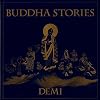
Prolific American picture book author and artist Demi retells eleven Jataka Tales—tales attributed to the Buddha—in this gorgeous picture book. Inspired by the world's first printed book—a Buddhist suttra or teaching made with woodblocks in 600 A.D., with gold print on indigo pages—Demi's text and illustrations here appear in gold, on deep, blue-black pages. The stories included are:
The Lion King, in which that leonine ruler must reassure his subjects, when a panicked rabbit leaps to the conclusion that the earth is breaking up after a coconut falls to the ground and cracks, and causes a general panic. This story, which concluded with the moral, "When one person tells a falsehood, one hundred repeat it as true," reminds me of show more folktales like Chicken Licken (AKA Henny Penny), in which the sky is falling.
The Turtle and the Geese, in which a turtle is befriended by a gaggle of geese, and offered a ride to their beautiful home, if he will promise to keep his mouth closes, and thereby not let go of the stick being used to carry him through the air. The sad ending teaches the lesson that "Disaster can come from opening you mouth at the wrong time."
The Black Bull, in which a beautiful black bull, always treated well by his human, suggests a contest that will benefit him, only to be mistreated. Refusing to comply, the bull causes the human to lose the contest, and reproaches him for his conduct afterward. Taught how to behave to one who has served him faithfully, the human wins the next contest, teaching the reader to "Treat others with kindness and your deeds will be rewarded."
The Beautiful Parrots, in which two gorgeous birds are captured and made much of in the king's palace, until the attention they are given is supplanted by a new monkey. One parrot is wise, and does not believe all attention should go to him, while the other laments his change of status. This tale teaches that "Riches and fame come and go like the wind."
The Cunning Wolf, in which a trapped wolf vows to reform his ways, but fails when tested by the Buddha, who takes the shape of a goat. The moral of this story is that "It is easier to make a promise than to keep it."
The Little Gray Donkey, in which a dishonest merchant disguises his donkey as a lion, and sets him loose in the farmers' fields at night to eat, confident that the frightened farmed will do nothing, thereby allowing his donkey to steal their grain or rice. The trick is discovered when the merchant becomes too cocky and does this during the day, teaching the listener "Don't be deceived by a donkey in a lion's skin." This was an interesting inversion of the better known (at least today) story of the wolf in sheep's clothing!
The Clever Crab, in which a crane tricks a pondful of fish into allowing him to carry them to a better residence, in the form of a nearby lake, only to eat the fish in his cave nearby. When the crane tries this trick on the crane, he soon finds the tables turned, teaching that "If you cheat on the earth, the earth will cheat on you."
The Monkey King, in which this primate leader teaches a human king a lesson, when the king and his men attempt to take all of the mangos from the monkeys' tree. By helping his subjects to escape the humans, the monkey teaches the human king what his priorities should be, imparting the moral that "If the family lives in harmony, all affairs will prosper."
The Golden Goose, in which a kindhearted goose gives his golden feathers to help an impoverished woman and her two daughters, only for the woman to become greedy, and decide the rob him of all of those feathers. Her daughters, horrified by her actions, help the goose, and are rewarded, while the mother suffers for the rest of her life, teaching that "The greatest wealth is the wealth of kindness."
The Magic Pig, in which an old woman cares for her two pigs as if they were her children, and refuses to part with them for any amount of money. When ruffians attempt to steal the pigs, one begins to recite the prayer, "The Perfection of Love," thereby taming the bad hearts of all around, and teaching that "Heaven remembers those whose hearts are true."
The Magic Elephant, in which a king becomes jealous of his beautiful white elephant, thinking it receives more praise than he does, and devises a series of tests meant to destroy the elephant. When the elephant trainer see how things are going, he exhorts the elephant to fly away and find a more worthy king, teaching that "Pride leads to a fall, but humility is rewarded in the end."
I enjoyed Buddha Stories immensely, both for the tales themselves and for the gorgeous artwork. I appreciated the unusual but striking design choice here, although it did sometimes make reading a challenge, given the dark background of the pages. I think perhaps the gold ink of the text should have been bolder (perhaps larger text?) to aid in reading, but other than this, I have no aesthetic criticism of the book, which is just beautiful. I can't critique the author for the front dust-jacket blurb which mentions Aesop as a reteller of these tales—in fact, Aesop and Buddha were roughly contemporaneous, with stories set down in print centuries later, and there is still some debate as to which culture influenced which, with many of these tale—as she is unlikely to have written the copy there. In any case, this was a wonderful collection of stories in its own right, and also a wonderful collection of Buddhist teachings. I think it would pair very nicely with Sherab Chödzin and Alexandra Kohn's The Wisdom of the Crows and Other Buddhist Tales, which I have also enjoyed. Recommended to anyone seeking Buddhist content for children, as well as to those who appreciate Demi's charming illustrations. show less
The Lion King, in which that leonine ruler must reassure his subjects, when a panicked rabbit leaps to the conclusion that the earth is breaking up after a coconut falls to the ground and cracks, and causes a general panic. This story, which concluded with the moral, "When one person tells a falsehood, one hundred repeat it as true," reminds me of show more folktales like Chicken Licken (AKA Henny Penny), in which the sky is falling.
The Turtle and the Geese, in which a turtle is befriended by a gaggle of geese, and offered a ride to their beautiful home, if he will promise to keep his mouth closes, and thereby not let go of the stick being used to carry him through the air. The sad ending teaches the lesson that "Disaster can come from opening you mouth at the wrong time."
The Black Bull, in which a beautiful black bull, always treated well by his human, suggests a contest that will benefit him, only to be mistreated. Refusing to comply, the bull causes the human to lose the contest, and reproaches him for his conduct afterward. Taught how to behave to one who has served him faithfully, the human wins the next contest, teaching the reader to "Treat others with kindness and your deeds will be rewarded."
The Beautiful Parrots, in which two gorgeous birds are captured and made much of in the king's palace, until the attention they are given is supplanted by a new monkey. One parrot is wise, and does not believe all attention should go to him, while the other laments his change of status. This tale teaches that "Riches and fame come and go like the wind."
The Cunning Wolf, in which a trapped wolf vows to reform his ways, but fails when tested by the Buddha, who takes the shape of a goat. The moral of this story is that "It is easier to make a promise than to keep it."
The Little Gray Donkey, in which a dishonest merchant disguises his donkey as a lion, and sets him loose in the farmers' fields at night to eat, confident that the frightened farmed will do nothing, thereby allowing his donkey to steal their grain or rice. The trick is discovered when the merchant becomes too cocky and does this during the day, teaching the listener "Don't be deceived by a donkey in a lion's skin." This was an interesting inversion of the better known (at least today) story of the wolf in sheep's clothing!
The Clever Crab, in which a crane tricks a pondful of fish into allowing him to carry them to a better residence, in the form of a nearby lake, only to eat the fish in his cave nearby. When the crane tries this trick on the crane, he soon finds the tables turned, teaching that "If you cheat on the earth, the earth will cheat on you."
The Monkey King, in which this primate leader teaches a human king a lesson, when the king and his men attempt to take all of the mangos from the monkeys' tree. By helping his subjects to escape the humans, the monkey teaches the human king what his priorities should be, imparting the moral that "If the family lives in harmony, all affairs will prosper."
The Golden Goose, in which a kindhearted goose gives his golden feathers to help an impoverished woman and her two daughters, only for the woman to become greedy, and decide the rob him of all of those feathers. Her daughters, horrified by her actions, help the goose, and are rewarded, while the mother suffers for the rest of her life, teaching that "The greatest wealth is the wealth of kindness."
The Magic Pig, in which an old woman cares for her two pigs as if they were her children, and refuses to part with them for any amount of money. When ruffians attempt to steal the pigs, one begins to recite the prayer, "The Perfection of Love," thereby taming the bad hearts of all around, and teaching that "Heaven remembers those whose hearts are true."
The Magic Elephant, in which a king becomes jealous of his beautiful white elephant, thinking it receives more praise than he does, and devises a series of tests meant to destroy the elephant. When the elephant trainer see how things are going, he exhorts the elephant to fly away and find a more worthy king, teaching that "Pride leads to a fall, but humility is rewarded in the end."
I enjoyed Buddha Stories immensely, both for the tales themselves and for the gorgeous artwork. I appreciated the unusual but striking design choice here, although it did sometimes make reading a challenge, given the dark background of the pages. I think perhaps the gold ink of the text should have been bolder (perhaps larger text?) to aid in reading, but other than this, I have no aesthetic criticism of the book, which is just beautiful. I can't critique the author for the front dust-jacket blurb which mentions Aesop as a reteller of these tales—in fact, Aesop and Buddha were roughly contemporaneous, with stories set down in print centuries later, and there is still some debate as to which culture influenced which, with many of these tale—as she is unlikely to have written the copy there. In any case, this was a wonderful collection of stories in its own right, and also a wonderful collection of Buddhist teachings. I think it would pair very nicely with Sherab Chödzin and Alexandra Kohn's The Wisdom of the Crows and Other Buddhist Tales, which I have also enjoyed. Recommended to anyone seeking Buddhist content for children, as well as to those who appreciate Demi's charming illustrations. show less
This was a fun book with one page budda stories. My favorite was the one about when to open your mouth and when to keep it closed. A turtle tries to go with his goose friends, hes holding a stick in his mouth. And the Geese are holding on to the stick flying. The turtle tries to yell at some kids and let goes of the stick, so he falls to his death. Very heavy!! ha I didn't expect the turtle to die, after the stories there are little morals, after the turtle story the moral is stated as "know when to keep your mouth shut"
a. Summary: Folk tales that represent a moral message fill each page. The left page is a single tale with a moral theme clearly written at the bottom. The right page is dedicated to the art. The art is from 600 A.D. Buddhist sutra and it is made with pen, ink and sometimes mouse whiskers.
b. Review: I could not put this book down. The tales were ageless and each page had a special moral lesson. The animals involved acted similar to how they are portrayed in our culture. This book contains many positive messages and I recommend it as a read aloud. I am going to buy this book it is great.
c. School Use: I would use this in my classroom as a read aloud book. Using the artwork would be great too. Have the students recreate this ancient style; show more they could trace the characters and make up stories of their own with moral themes. show less
b. Review: I could not put this book down. The tales were ageless and each page had a special moral lesson. The animals involved acted similar to how they are portrayed in our culture. This book contains many positive messages and I recommend it as a read aloud. I am going to buy this book it is great.
c. School Use: I would use this in my classroom as a read aloud book. Using the artwork would be great too. Have the students recreate this ancient style; show more they could trace the characters and make up stories of their own with moral themes. show less
A retelling of a dozen buddha stories wold in the style of the traditional format, in gold ink on dark indigo paper. With an introduction explaining some of the beliefs surrounding Buddha and his many ways of appearing to us.
This is a collection of Buddhist folk-tales illustrated in the style of the world's oldest printed book - gold on indigo.
Beautiful. Z recognized a couple of the stories from other folktale collections.
Ratings
Members
- Recently Added By
Lists

The Story of the World: History for the Classical Child: Activity Book One
291 works; 3 members
Author Information

113+ Works 11,568 Members
Awards and Honors
Common Knowledge
- People/Characters
- Buddha
Classifications
Statistics
- Members
- 219
- Popularity
- 148,407
- Reviews
- 6
- Rating
- (4.18)
- Languages
- English
- Media
- Paper
- ISBNs
- 5