On This Page
Description
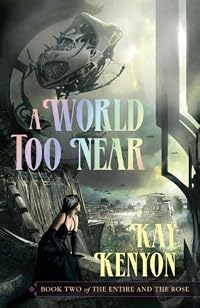
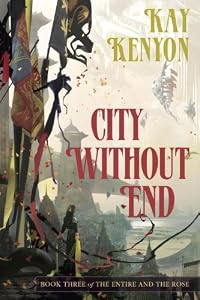
In "Bright of the Sky," Kenyon introduced former star pilot Titus Quinn, who loves the Entire, but now he must risk annihilating it by destroying the fortress of Ahnenhoon and an engine designed to turn Earth's universe into a power source.Tags
Recommendations
Member Recommendations
mentatjack One of the blurbs on the cover of A World Too Near compares The Entire and the Rose favorably to The Ringworld series by Larry Niven.
Member Reviews
Originally posted on my review blog, Stomping on Yeti, at the following location [http://yetistomper.blogspot.com/2010/03/yetireview-entire-and-rose-by-kay.html]
30 Words or Less: An undeniable triumph of world building, Kay Kenyon's The Entire and The Rose is a science fantasy tale of two worlds worth exploring despite the gradual pace dictated by occasional prose problems.
The Good: Absolutely unique world-building that combines science fiction and fantasy elements and continues to grow throughtout the entire series; Carefully plotted narrative that spans and evolves over four volumes; The world is exceptionally well integrated into the narrative rather than being adjacent to it.
The Bad: Early volumes have problems with jarring show more perspective changes; Worldbuilding often uses infodumping rather than in-narrative elements; The story isn't well segmented into individual novels, leaving readers with an all-or-none decision.
The Review: Any sufficiently advanced technology is indistinguishable from magic." Rarely is this truer than in Kay Kenyon's science fiction/fantasy hybrid quadrilogy. An undeniable triumph of world building split into four books, The Entire and the Rose is 1700 pages of complex characters and intricate narrative. The events of the series revolve around Titus Quinn, the first denizen of the Rose (our universe) to cross through into The Entire, a complex infinite world constructed by the harsh, alien Tarig and inhabited by a number of races of their creation. Several years before the series begins, Quinn and his wife and daughter were pulled into the Entire when the ship he was piloting broke apart mid-wormhole jump. Quinn returns months later in our time with no family and little recollection of what happened despite living in the Entire for over a decade. When science proves that his ravings about a second reality may in fact be true, Quinn returns to the Entire in search of his missing wife and daughter and to explore what, if any, benefit The Entire may offer Earth. As Quinn quickly becomes embroiled in the politics of the world he left behind, it becomes obvious that much more is at stake than the fate of his family. The plot only gets more complex from there, the majority of which takes place in the profoundly strange world of the Entire, although the story does take place in both universes.
To provide any more detail than that would ruin the game-changing revelations that occur frequently throughout the series, shifting plots and loyalties in unexpected but exciting ways. There are several power players on both sides of the divide and rarely is there any way of knowing who is playing who. If the Earth universe is referred to as the Rose, the other universe labeled as the Entire might be better known as the Onion. From the start of the series to the final pages, Kenyon slowly peels back layer after layer of world building, unveiling an amazingly concocted world. Religion, politics, cultural divides, a forever war, teenage cults, complex transit systems: the facets of the Entire go on and on. Kenyon details aspect after aspect of her created universe and she does an unbelievable job of unobtrusively bringing the elements she has previously cultivated back into the main plot.
It's a rare occurence but if anything there is almost too much world building. The Entire is inhabited by a number of races and species all of which are fairly unique when compared to the genre standards. However, a few of these races are almost superfluous, with not a single primary or secondary character coming from their ranks. Kenyon could have either edited them out or integrated them into the story as well as she did the primary species of Humans, Chalin, Tarig, Inyx, Hirrin, and Paion. The cultural depth of these imagined races is continually capitalized upon by Kenyon and as a result the few species that don't get starring roles ultimately fall to the wayside.
While the extraneous elements could have been handled better, the world of the Entire and the thoroughly constructed characters that inhabit it are the main attractions of the series. Kenyon's writing, on the other hand, leaves a little bit to be desired especially in the early volumes. Kenyon writes from an extremely tight third person perspective and she has an unfortunate tendency to jump perspectives mid-scene without warning, generating confusion and necessitating rereading just to confirm which character was thinking what. Kenyon gets better at this as the books go on but early on these jarring transitions occur disappointingly often especially considering a small change symbol (which is often used to switch perspectives between scenes) could have easily been used to remedy this problem. As the books progress, Kenyon does manage to reduce the frequency with which these occur. The third and fourth volumes are much stronger than the first in this regard.
Kenyon also has a propensity to take a "tell not show" approach to her worldbuilding and while the world is interesting enough, there is no in-narrative reason for the characters to lecture the way they do. Consequently, the books of The Entire and The Rose read somewhat slowly. While not a bad thing in and of itself, these are not necessarily beach reads and due to the complex nature of the world and plot, it should be read in its entirety for full effect, commanding a significant time investment on the part of the reader.
Additionally, it is important to bear in mind that this epic series would be best described as science fantasy. While Kenyon maintains the premise that all of the places and structures of her world are science-based, the science satisfies Clarke's axiom and is indistinguishable from magic. Anyone who goes into this series expecting to understand the physics underpinning the world will be sorely disappointed. Despite the trappings of science that frame the Entire, at its core it's a fantasy world; it exists and behaves the way it does because the story dictates the way it does. But it works and it works well.
Here are individual reviews of each of the four volumes in the series.
Bright of the Sky: Arguably the weakest book in the series, Kenyon's series debut suffers from exposition overload. Kenyon essentially sets up the story three times; first in the future Earth universe, than in the future Entire world, and then revealing Quinn's backstory and what occurred during his first trip to the Entire. With three full histories to explain in additional to all of the characters she introduces, it doesn't feel like a whole lot happens. The last fifty or so pages feel rushed when compared to the whole and while the end of the book comes at a natural stopping point it doesn't really resolve any of the threads introduced. With such a To-Be-Continued ending, it produces contradictory emotions - on one hand there was too little payoff after the slower prose associated with complex world building; on the other hand, A World Too Near beckoned from the shelf immediately. Bright of the Sky is also the book that suffers the most from those aforementioned perspective shifts.
A World Too Near: With A World Too Near and subsequent novels, the pace begins to pick up as Kenyon spends less time crafting her world and more time playing in it. Building on some of the surprises that emerge toward the end of Bright of the Sky, the principal conflict of the series is revealed and the battle lines are drawn. The question of who to trust is paramount and a looming decision allows Kenyon to really dig into her cast of characters. Where Bright of the Sky was about introducing the Entire, A World Too Near is really about establishing the key characters and fleshing out their motivations as they traverse the fantastic civilization. One of the most significant developments in this regard is the introduction of Helice Maki, another transplanted Earthling with an endgame that may or may not align with Quinn's. Upon entering the Entire, the plot evolves from a simple us-versus-them conflict into a more complex adventure. Although it suffers slighty from middle novel syndrome, A World Too Near really sets the stage well for the last half of the series.
A City Without End: The strongest and most science fictional of the volumes, A City Without End sees Kenyon accelerate the thread of Quinn's battle with the fearsome Tarig to a frenetic pace. Even though she still pens a few new characters, Kenyon's takes advantage of the gradual set up of the first two novels and really pushes the plot forward in unexpected directions. Unlike the other novels, A City Without Endalso includes a strong second plotline set in the Rose universe; one that could support an entire novel in and of itself. As it is, this thought provoking idea is only furthers the existing conflict. As the Rose and Entire plotlines collide on an unexpected battleground, the pages really start to turn. While the first two books were structured similar to classic "journey fantasies", A City Without End is more of a political SF thriller than a traditional fantasy. There is a great balance between closure and setup as Kenyon slams some doors and opens others, creating numerous possibilities for the direction of the concluding volume, Prince of Storms.
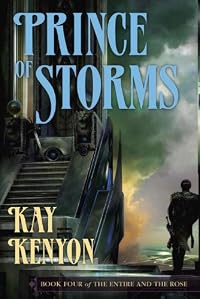
Prince of Storms: In the concluding volume of the series, Kenyon manages to wrap up the numerous threads of The Entire and The Rose while continuing to grow her characters in the face of new challenges. At first the final volume feels likes it would just be a prolonged epilogue especially after the spectacular ending of A City Without End but it's clear that Kenyon has a few more tricks up her sleeve. Prince of Storms takes a more fantastical approach to the Entire, taking advantage of some of the more unexplained intricacies of the Entire to raise the stakes once again. Reading the final book made it extremely clear how well Kenyon had planned out the entire series. Things that seemed to be throw away lines in the first two volumes were brought full circle, adding an appreciated cohesion to the story and lending credence to the final climax. Prince of Storms ends the series on a strong note, leaving the readers with a robust narrative that doesn't leave the door open for future derivative adventures.
Ultimately, The Entire and The Rose is more than a sum of its composite volumes, so much so that it was too difficult to reach a conclusion on one book before reading the others. The story flows through the pages like one of the arms of the Nigh (a river of exotic matter from the story), bearing strongly motivated characters through alternating periods of slow progress and torrential action. The narrative twists and turns unexpectedly, creating new letters to place between points A and B. At the core of Kenyon's series is her imagined Entire, rivaling any fantasy world for its complexity and surpassing the vast majority for sheer inventiveness. Despite some missteps in presentation, Kay Kenyon's The Entire and The Rose has created a unique science fantasy series that is worth reading, well, in its entirety. show less
30 Words or Less: An undeniable triumph of world building, Kay Kenyon's The Entire and The Rose is a science fantasy tale of two worlds worth exploring despite the gradual pace dictated by occasional prose problems.
The Good: Absolutely unique world-building that combines science fiction and fantasy elements and continues to grow throughtout the entire series; Carefully plotted narrative that spans and evolves over four volumes; The world is exceptionally well integrated into the narrative rather than being adjacent to it.
The Bad: Early volumes have problems with jarring show more perspective changes; Worldbuilding often uses infodumping rather than in-narrative elements; The story isn't well segmented into individual novels, leaving readers with an all-or-none decision.
The Review: Any sufficiently advanced technology is indistinguishable from magic." Rarely is this truer than in Kay Kenyon's science fiction/fantasy hybrid quadrilogy. An undeniable triumph of world building split into four books, The Entire and the Rose is 1700 pages of complex characters and intricate narrative. The events of the series revolve around Titus Quinn, the first denizen of the Rose (our universe) to cross through into The Entire, a complex infinite world constructed by the harsh, alien Tarig and inhabited by a number of races of their creation. Several years before the series begins, Quinn and his wife and daughter were pulled into the Entire when the ship he was piloting broke apart mid-wormhole jump. Quinn returns months later in our time with no family and little recollection of what happened despite living in the Entire for over a decade. When science proves that his ravings about a second reality may in fact be true, Quinn returns to the Entire in search of his missing wife and daughter and to explore what, if any, benefit The Entire may offer Earth. As Quinn quickly becomes embroiled in the politics of the world he left behind, it becomes obvious that much more is at stake than the fate of his family. The plot only gets more complex from there, the majority of which takes place in the profoundly strange world of the Entire, although the story does take place in both universes.
To provide any more detail than that would ruin the game-changing revelations that occur frequently throughout the series, shifting plots and loyalties in unexpected but exciting ways. There are several power players on both sides of the divide and rarely is there any way of knowing who is playing who. If the Earth universe is referred to as the Rose, the other universe labeled as the Entire might be better known as the Onion. From the start of the series to the final pages, Kenyon slowly peels back layer after layer of world building, unveiling an amazingly concocted world. Religion, politics, cultural divides, a forever war, teenage cults, complex transit systems: the facets of the Entire go on and on. Kenyon details aspect after aspect of her created universe and she does an unbelievable job of unobtrusively bringing the elements she has previously cultivated back into the main plot.
It's a rare occurence but if anything there is almost too much world building. The Entire is inhabited by a number of races and species all of which are fairly unique when compared to the genre standards. However, a few of these races are almost superfluous, with not a single primary or secondary character coming from their ranks. Kenyon could have either edited them out or integrated them into the story as well as she did the primary species of Humans, Chalin, Tarig, Inyx, Hirrin, and Paion. The cultural depth of these imagined races is continually capitalized upon by Kenyon and as a result the few species that don't get starring roles ultimately fall to the wayside.
While the extraneous elements could have been handled better, the world of the Entire and the thoroughly constructed characters that inhabit it are the main attractions of the series. Kenyon's writing, on the other hand, leaves a little bit to be desired especially in the early volumes. Kenyon writes from an extremely tight third person perspective and she has an unfortunate tendency to jump perspectives mid-scene without warning, generating confusion and necessitating rereading just to confirm which character was thinking what. Kenyon gets better at this as the books go on but early on these jarring transitions occur disappointingly often especially considering a small change symbol (which is often used to switch perspectives between scenes) could have easily been used to remedy this problem. As the books progress, Kenyon does manage to reduce the frequency with which these occur. The third and fourth volumes are much stronger than the first in this regard.
Kenyon also has a propensity to take a "tell not show" approach to her worldbuilding and while the world is interesting enough, there is no in-narrative reason for the characters to lecture the way they do. Consequently, the books of The Entire and The Rose read somewhat slowly. While not a bad thing in and of itself, these are not necessarily beach reads and due to the complex nature of the world and plot, it should be read in its entirety for full effect, commanding a significant time investment on the part of the reader.
Additionally, it is important to bear in mind that this epic series would be best described as science fantasy. While Kenyon maintains the premise that all of the places and structures of her world are science-based, the science satisfies Clarke's axiom and is indistinguishable from magic. Anyone who goes into this series expecting to understand the physics underpinning the world will be sorely disappointed. Despite the trappings of science that frame the Entire, at its core it's a fantasy world; it exists and behaves the way it does because the story dictates the way it does. But it works and it works well.
Here are individual reviews of each of the four volumes in the series.
Bright of the Sky: Arguably the weakest book in the series, Kenyon's series debut suffers from exposition overload. Kenyon essentially sets up the story three times; first in the future Earth universe, than in the future Entire world, and then revealing Quinn's backstory and what occurred during his first trip to the Entire. With three full histories to explain in additional to all of the characters she introduces, it doesn't feel like a whole lot happens. The last fifty or so pages feel rushed when compared to the whole and while the end of the book comes at a natural stopping point it doesn't really resolve any of the threads introduced. With such a To-Be-Continued ending, it produces contradictory emotions - on one hand there was too little payoff after the slower prose associated with complex world building; on the other hand, A World Too Near beckoned from the shelf immediately. Bright of the Sky is also the book that suffers the most from those aforementioned perspective shifts.
A World Too Near: With A World Too Near and subsequent novels, the pace begins to pick up as Kenyon spends less time crafting her world and more time playing in it. Building on some of the surprises that emerge toward the end of Bright of the Sky, the principal conflict of the series is revealed and the battle lines are drawn. The question of who to trust is paramount and a looming decision allows Kenyon to really dig into her cast of characters. Where Bright of the Sky was about introducing the Entire, A World Too Near is really about establishing the key characters and fleshing out their motivations as they traverse the fantastic civilization. One of the most significant developments in this regard is the introduction of Helice Maki, another transplanted Earthling with an endgame that may or may not align with Quinn's. Upon entering the Entire, the plot evolves from a simple us-versus-them conflict into a more complex adventure. Although it suffers slighty from middle novel syndrome, A World Too Near really sets the stage well for the last half of the series.
A City Without End: The strongest and most science fictional of the volumes, A City Without End sees Kenyon accelerate the thread of Quinn's battle with the fearsome Tarig to a frenetic pace. Even though she still pens a few new characters, Kenyon's takes advantage of the gradual set up of the first two novels and really pushes the plot forward in unexpected directions. Unlike the other novels, A City Without Endalso includes a strong second plotline set in the Rose universe; one that could support an entire novel in and of itself. As it is, this thought provoking idea is only furthers the existing conflict. As the Rose and Entire plotlines collide on an unexpected battleground, the pages really start to turn. While the first two books were structured similar to classic "journey fantasies", A City Without End is more of a political SF thriller than a traditional fantasy. There is a great balance between closure and setup as Kenyon slams some doors and opens others, creating numerous possibilities for the direction of the concluding volume, Prince of Storms.
Prince of Storms: In the concluding volume of the series, Kenyon manages to wrap up the numerous threads of The Entire and The Rose while continuing to grow her characters in the face of new challenges. At first the final volume feels likes it would just be a prolonged epilogue especially after the spectacular ending of A City Without End but it's clear that Kenyon has a few more tricks up her sleeve. Prince of Storms takes a more fantastical approach to the Entire, taking advantage of some of the more unexplained intricacies of the Entire to raise the stakes once again. Reading the final book made it extremely clear how well Kenyon had planned out the entire series. Things that seemed to be throw away lines in the first two volumes were brought full circle, adding an appreciated cohesion to the story and lending credence to the final climax. Prince of Storms ends the series on a strong note, leaving the readers with a robust narrative that doesn't leave the door open for future derivative adventures.
Ultimately, The Entire and The Rose is more than a sum of its composite volumes, so much so that it was too difficult to reach a conclusion on one book before reading the others. The story flows through the pages like one of the arms of the Nigh (a river of exotic matter from the story), bearing strongly motivated characters through alternating periods of slow progress and torrential action. The narrative twists and turns unexpectedly, creating new letters to place between points A and B. At the core of Kenyon's series is her imagined Entire, rivaling any fantasy world for its complexity and surpassing the vast majority for sheer inventiveness. Despite some missteps in presentation, Kay Kenyon's The Entire and The Rose has created a unique science fantasy series that is worth reading, well, in its entirety. show less
With this second book I'm moving up to a solid four, and the first to 3 3/4 where I can write it out that way. The first was weaker as I do think it takes time for Kenyon to figure out which characters really matter and how to write about them. It may have helped that this book has more Johanna and less Helice who is a bit too flat --even the Tarig have more depth, whatever they are. On the other hand, the sheer badness of Helice will make her demise all the more satisfying, I expect. Kenyon cleverly doles out just enough more information about the Tarig to both satisfy and whet the appetite for more. One also, in this volume begin to wonder who and what and why the Paion, the attackers in the Long War are. Deadly enemies of the Tarig? show more For good reason? Survivors perhaps of some universe or Rose star system the Tarig already destroyed? (They have a bit of the feeling of homage to the Daleks, some weird live thing inside a machine?) Not giving anything away here, as there is very little about them in this second tome. But there are little homages to this and that here and there, and they are deft and enjoyable really, not tiresome. And the surround, the Bright and the Entire are original enough to hold their own. In this one the goal is to get to the Engines that are necessary to run the Entire, to destroy them with the device that has been given to Quinn on this third foray into the Entire from Earth, as the Tarig are planning to use our universe to fuel theirs, but the question is what exactly will this device do and who can be trusted? And, as before, who and what and why, really, are the Tarig? Are they redeemable? Stay tuned. **** show less
The first book in this series, Bright of the Sky, was a little info-dump-ish but the world-building was original enough, and my initial interest in the characters high enough, that I was pretty interested in seeing where she was going with the second book.
Unfortunately, now that I'm done with it, I'm that dissenting reviewer who doesn't join the chorus of raves.
First, there's less info-dump; we already know what the alternate universe looks like. However, the larger tendency to talk at the reader rather than immerse the reader in what's going on so that they see it first-hand is still present. That's not my favorite writing style.
Second, I just didn't warm to any of the characters. I didn't like them nor empathize with them. I didn't show more even find some of them consistent with who they were in the first book. Couple that with the first point and we have a story that never enrolls me. Instead, I sit at arm's length watching a drama.
Lastly, the book felt choppy. Some of that was natural since Kenyon uses the technique of multiple, interwoven points of view. Still, there was an overall bumpiness to it where some sections felt overly long and others rushed.
I'll give her an A for originality, but count me as someone who doesn't recommend this book and, by extension, the series, to anyone but devoted fans of speculative fiction. show less
Unfortunately, now that I'm done with it, I'm that dissenting reviewer who doesn't join the chorus of raves.
First, there's less info-dump; we already know what the alternate universe looks like. However, the larger tendency to talk at the reader rather than immerse the reader in what's going on so that they see it first-hand is still present. That's not my favorite writing style.
Second, I just didn't warm to any of the characters. I didn't like them nor empathize with them. I didn't show more even find some of them consistent with who they were in the first book. Couple that with the first point and we have a story that never enrolls me. Instead, I sit at arm's length watching a drama.
Lastly, the book felt choppy. Some of that was natural since Kenyon uses the technique of multiple, interwoven points of view. Still, there was an overall bumpiness to it where some sections felt overly long and others rushed.
I'll give her an A for originality, but count me as someone who doesn't recommend this book and, by extension, the series, to anyone but devoted fans of speculative fiction. show less
More riveting than I found [b: Bright of the Sky|127262|Bright of the Sky (Entire and the Rose, #1)|Kay Kenyon|https://d.gr-assets.com/books/1388190943s/127262.jpg|993717] if only because the world building that slowed the pace of the first book has fittingly diminished here. The dynamics of this universe are so weird and cool, but there is an awful lot of traveling from here to there and not much really happens. Still, I found it an interesting and engrossing read because the sentients that inhabit the Entire are so well varied.
The second in Kay Kenyon's ambitious "The Entire and the Rose" quartet, a World Too Near brings us back to the story of Titus Quinn and the strange artificial universe of the Entire.
The first novel introduced the Entire, an artificial universe created by a powerful alien race known a the Tarig. With several races under their sway in this strangely beautiful realm, Titus Quinn, who accidentally arrived there only to return without his wife and daughter, went back on behalf of a megacorporation to see if the Entire might be exploited. The first novel follows his adventures as well as the fate of his estranged, blinded daughter, Sydney. The novel ended with his return to our universe, dubbed the Rose, with the knowledge that the Entire show more sought the destruction of our universe for fuel.
The second volume picks up at that point, with Quinn going back into the Entire to try and stop this horrific plan. Unexpectedly and much to his chagrin, the scheming corporation ladder-climber Helice Maki also comes along. She has ambitions and plans of her own for the Entire. And we finally get a view of Quinn's life, long a prisoner of the Tarig, in the very fortress that is the key to destroying Earth and the Rose...
So there is plenty to like here. I don't think its quite as fresh as the first novel, because many of the wonders from the first novel are more commonplace here. I can accept that, its hard to come up with continually new things without fear of overstuffing the bag.
Where Kenyon falls down, though is in a few areas of the novel. Kenyon is guilty of the "show and not tell" syndrome when we learn that Sydney and the Inyx learn a dread secret--but instead of being witness to the discovery, we only have her tell of the discovery, after the fact. I felt cheated by that. Another cheat is in the weapon Earth gives Quinn to deal with the threat of the Rose. The exact strength of this weapon is debated and argued by several characters--and its never quite clear who is right and wrong. Given what happens to the weapon in the denouement of the novel, I would have liked a definitive answer on who was "right".
Too, some of the characterization and motivations of characters seemed a bit off. Not quite to the point where I think the character was "broken", but I question some of their actions given their personalities established earlier in the book.
Overall, while the writing was mostly strong and the story decent, I think the book was a bit of a sophomore slump. Its not so much that I won't seek out the third volume in the series. But it definitely was a drop from the first novel in my opinion.
(And I wouldn't start the series here, you would only be lost and confused. The novel mandates reading Bright of the Sky first). show less
The first novel introduced the Entire, an artificial universe created by a powerful alien race known a the Tarig. With several races under their sway in this strangely beautiful realm, Titus Quinn, who accidentally arrived there only to return without his wife and daughter, went back on behalf of a megacorporation to see if the Entire might be exploited. The first novel follows his adventures as well as the fate of his estranged, blinded daughter, Sydney. The novel ended with his return to our universe, dubbed the Rose, with the knowledge that the Entire show more sought the destruction of our universe for fuel.
The second volume picks up at that point, with Quinn going back into the Entire to try and stop this horrific plan. Unexpectedly and much to his chagrin, the scheming corporation ladder-climber Helice Maki also comes along. She has ambitions and plans of her own for the Entire. And we finally get a view of Quinn's life, long a prisoner of the Tarig, in the very fortress that is the key to destroying Earth and the Rose...
So there is plenty to like here. I don't think its quite as fresh as the first novel, because many of the wonders from the first novel are more commonplace here. I can accept that, its hard to come up with continually new things without fear of overstuffing the bag.
Where Kenyon falls down, though is in a few areas of the novel. Kenyon is guilty of the "show and not tell" syndrome when we learn that Sydney and the Inyx learn a dread secret--but instead of being witness to the discovery, we only have her tell of the discovery, after the fact. I felt cheated by that. Another cheat is in the weapon Earth gives Quinn to deal with the threat of the Rose. The exact strength of this weapon is debated and argued by several characters--and its never quite clear who is right and wrong. Given what happens to the weapon in the denouement of the novel, I would have liked a definitive answer on who was "right".
Too, some of the characterization and motivations of characters seemed a bit off. Not quite to the point where I think the character was "broken", but I question some of their actions given their personalities established earlier in the book.
Overall, while the writing was mostly strong and the story decent, I think the book was a bit of a sophomore slump. Its not so much that I won't seek out the third volume in the series. But it definitely was a drop from the first novel in my opinion.
(And I wouldn't start the series here, you would only be lost and confused. The novel mandates reading Bright of the Sky first). show less
**SPOILER ALERT**
If you love sci-fi or fantasy, you really need to read this series!
Book 2 started out as awesome as Bright of the Sky. I really enjoyed Johanna's character. There are so many complexities of emotion and human relationship that Kay Kenyon writes so well. In Book 1 we meet Quinn 6 months after the K-tunnel disaster depressed and refusing to move on. Then near the end of this book they meet again and it's not what you expect. It was heartbreaking to see a couple that was once so in love with each other to meet again after a tragedy they couldn't have forseen... and they've both moved on.
The ending seemed very rushed. It wasn't wrapped up as tightly and satisfying as Bright of the Sky. The whole jump to Janna at the end was show more just thrown in there and felt very forced and odd. I realize the set up that happened when Johanna was dying but it was all so short and rushed. If there had been 50+ extra pages I would be happier with the ending. Maybe Lou Anders thought the book already had too many pages!
I'm definitely chewing my fingernails waiting for City in the Sky (Book 3)!! Hopefully I can give that 5 stars!
I met Kay Kenyon at OmegaCon this year. She is fun to talk to and very encouraging to aspiring writers. I can't wait to read ALL her books! show less
If you love sci-fi or fantasy, you really need to read this series!
Book 2 started out as awesome as Bright of the Sky. I really enjoyed Johanna's character. There are so many complexities of emotion and human relationship that Kay Kenyon writes so well. In Book 1 we meet Quinn 6 months after the K-tunnel disaster depressed and refusing to move on. Then near the end of this book they meet again and it's not what you expect. It was heartbreaking to see a couple that was once so in love with each other to meet again after a tragedy they couldn't have forseen... and they've both moved on.
The ending seemed very rushed. It wasn't wrapped up as tightly and satisfying as Bright of the Sky. The whole jump to Janna at the end was show more just thrown in there and felt very forced and odd. I realize the set up that happened when Johanna was dying but it was all so short and rushed. If there had been 50+ extra pages I would be happier with the ending. Maybe Lou Anders thought the book already had too many pages!
I'm definitely chewing my fingernails waiting for City in the Sky (Book 3)!! Hopefully I can give that 5 stars!
I met Kay Kenyon at OmegaCon this year. She is fun to talk to and very encouraging to aspiring writers. I can't wait to read ALL her books! show less
It took me far longer to finish the second book in Kay Kenyon's The Entire and the Rose cycle, but that's no fault of the book. Life gets in the way sometimes, you know? Anyway, I was sucked into this book as soon as I started reading, which is nice. It's not often that I can get immediately sucked back into a world when it comes to series, simply because I rarely read the books back to back.
Recommended? For sure, especially if you like science-fantasy (of an epic sort) and don't mind the fact that this story TAKES ITS TIME. Kenyon's strengths are definitely in the world-building and her characterization, but her POV, which is a loose omniscient, can be off-putting until you get used to it.
And if you haven't yet read Bright of the Sky, show more you must start there. These books aren't stand-alone. They build on each other, so it's important to start at the beginning so you as a reader understands everything that's happening, especially in regards to the world-building.
However, if you've already read Bright of the Sky and are interested in A World Too Near, the review's in my LJ. Just be warned, there will be spoilers.
As always, comments and discussion are most welcome.
REVIEW: Kay Kenyon's A WORLD TOO NEAR
Happy Reading! show less
Recommended? For sure, especially if you like science-fantasy (of an epic sort) and don't mind the fact that this story TAKES ITS TIME. Kenyon's strengths are definitely in the world-building and her characterization, but her POV, which is a loose omniscient, can be off-putting until you get used to it.
And if you haven't yet read Bright of the Sky, show more you must start there. These books aren't stand-alone. They build on each other, so it's important to start at the beginning so you as a reader understands everything that's happening, especially in regards to the world-building.
However, if you've already read Bright of the Sky and are interested in A World Too Near, the review's in my LJ. Just be warned, there will be spoilers.
As always, comments and discussion are most welcome.
REVIEW: Kay Kenyon's A WORLD TOO NEAR
Happy Reading! show less
Members
- Recently Added By
Lists

ALA The Reading List
490 works; 28 members
Author Information

45+ Works 2,334 Members
Awards and Honors
Awards
Series

Common Knowledge
- Canonical title
- A World Too Near
- Original publication date
- 2008
- People/Characters
- Titus Quinn; Helice Maki; Stefan Polich; Sydney Quinn; Johanna Arlis; Riod (show all 11); Yulin; Anzi; Lady Chiron; Depta; Zhiya
- First words
- Above the fortress the sky dimmed to lavender, a time that passed for night in this world.
- Publisher's editor
- Anders, Lou
- Blurbers
- Resnick, Mike
Classifications
Statistics
- Members
- 190
- Popularity
- 171,436
- Reviews
- 11
- Rating
- (3.73)
- Languages
- English
- Media
- Paper, Ebook
- ISBNs
- 5
- ASINs
- 2