On This Page
Description
Discusses life in ancient Rome and presents the myths that civilization has bequeathed us.Tags
Recommendations




















Member Reviews
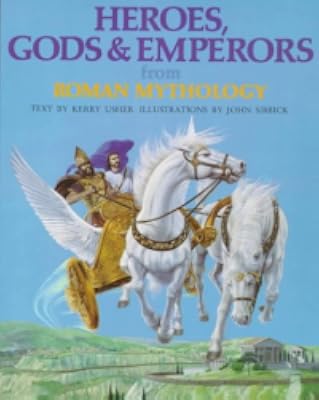
Usher, Kerry. Illustrated by John Sibbick. Heros, Gods & Emperors from Roman Mythology. New York: Schocken Books, 1983.
Hero’s Tale: The story of Aeneas
Characters: Aeneas
Setting: begins in Troy and ends in Italy (the Mediterranean region)
Theme: hero’s journey; Roman hero; classical Roman mythology; war and warfare
Genre: Traditional literature; hero’s tale
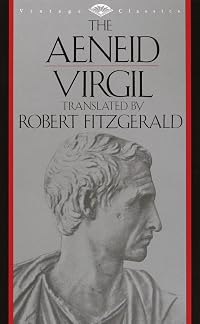
Golden Quote: “”I tell a tale of war and of a hero. This hero was chosen by Fate to an exile and it was he who first set out from Troy and reached the Lavinian shore of Italy…It was from this city that the whole Latin nation sprang, the kings of Alba and of Rome itself.’” –Virgil from The Aeneid
Summary: The epic journey of the Trojan hero, Aeneas, who eventually show more founded the Roman civilization after many trials and tribulations along the way to his final destination – Italy.
Audience: Grades 5 and up
Curriculum ties: literature units on classic mythology (Greek and Roman), folklore; after reading the stories of the heroes, how does Aeneas compare?; why do you think the gods and goddesses tend to be cruel and selfish?; what does it say about society?
Awards: None
Personal response: As with all stories in classic Greco-Roman mythology, there is never a dull moment and Aeneas’s proves to be quite the same- very dramatic and compelling. I chose to read about the story of Aeneas because I wanted to know more about the man behind the myth. What I found the most fascinating about Aeneas was that he was written about by both Greek and Roman writers; connecting him to both cultures respectively. Born to the king Anchises and the goddess Venus, Aeneas was destined for greatness. His story is nothing short of adventure, romantic, and tragic; accounting a voyage that includes specifics about navigation and geography as well as intense descriptions of war. And, of course, you can’t have a great mythological story without a trip to the Underworld, which in Aeneas’s case, is when he learns about the future greatness of his people- the Romans. While reading Virgil's The Aeneid would be the best, I felt this book gave a thorough breakdown of the hero's journey in language that is appropriate for children in upper elementary and older. show less
Hero’s Tale: The story of Aeneas
Characters: Aeneas
Setting: begins in Troy and ends in Italy (the Mediterranean region)
Theme: hero’s journey; Roman hero; classical Roman mythology; war and warfare
Genre: Traditional literature; hero’s tale
Golden Quote: “”I tell a tale of war and of a hero. This hero was chosen by Fate to an exile and it was he who first set out from Troy and reached the Lavinian shore of Italy…It was from this city that the whole Latin nation sprang, the kings of Alba and of Rome itself.’” –Virgil from The Aeneid
Summary: The epic journey of the Trojan hero, Aeneas, who eventually show more founded the Roman civilization after many trials and tribulations along the way to his final destination – Italy.
Audience: Grades 5 and up
Curriculum ties: literature units on classic mythology (Greek and Roman), folklore; after reading the stories of the heroes, how does Aeneas compare?; why do you think the gods and goddesses tend to be cruel and selfish?; what does it say about society?
Awards: None
Personal response: As with all stories in classic Greco-Roman mythology, there is never a dull moment and Aeneas’s proves to be quite the same- very dramatic and compelling. I chose to read about the story of Aeneas because I wanted to know more about the man behind the myth. What I found the most fascinating about Aeneas was that he was written about by both Greek and Roman writers; connecting him to both cultures respectively. Born to the king Anchises and the goddess Venus, Aeneas was destined for greatness. His story is nothing short of adventure, romantic, and tragic; accounting a voyage that includes specifics about navigation and geography as well as intense descriptions of war. And, of course, you can’t have a great mythological story without a trip to the Underworld, which in Aeneas’s case, is when he learns about the future greatness of his people- the Romans. While reading Virgil's The Aeneid would be the best, I felt this book gave a thorough breakdown of the hero's journey in language that is appropriate for children in upper elementary and older. show less
Ratings
Members
- Recently Added By
Author Information
3 Works 100 Members
All Editions
Awards and Honors
Series

Common Knowledge
- Canonical title
- Heroes, Gods & Emperors from Roman Mythology
- Original title
- Heroes, Gods & Emperors from Roman Mythology
- Original publication date
- 1983
Classifications
- Genres
- Nonfiction, Tween
- DDC/MDS
- 292.13 — Religion Other religions Greek & Roman Mythology Religious mythology, general classes of religion, interreligious relations and attitudes, social theology Mythology and mythological foundations
- LCC
- BL802 .U83 — Philosophy, Psychology and Religion Religions. Mythology. Rationalism Religions. Mythology. Rationalism History and principles of religions European. Occidental Classical (Etruscan, Greek, Roman)
Statistics
- Members
- 96
- Popularity
- 336,715
- Reviews
- 1
- Rating
- (3.78)
- Languages
- 7 — Catalan, English, Finnish, French, Italian, Spanish, Swedish
- Media
- Paper
- ISBNs
- 11
- UPCs
- 1
- ASINs
- 1