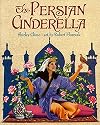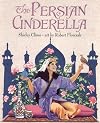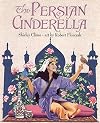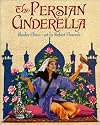
The Persian Cinderella
by Shirley Climo
On This Page
Description
A retelling of the traditional Persian tale in which Settareh, neglected and abused by her stepmother and stepsisters, finds her life transformed with the help of a little blue jug.Tags
Recommendations


Member Reviews
Motherless Settareh, so named because of the star-shaped birthmark on her cheek ("Settareh" meaning "star" in Persian), grows up in the women's quarters of her father's house, alternately ignored or harassed by her stepmother, stepsisters, aunts, and female cousins. Given a gold coin by her father, in order to buy new clothes for Prince Mehrdad's upcoming No Ruz (New Year) celebration, Settareh instead gives most of her holiday money to a beggar, using what little is left to buy an cracked old bottle. Her kinswomen are convinced that, contrary to her father's instruction, she has not chosen wisely. But the pari - a magical fairy - residing in her bottle proves differently, producing gorgeous clothing that allows Settareh to attend the show more No Ruz celebration after all...
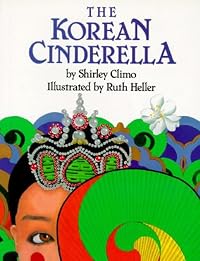
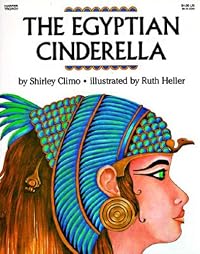
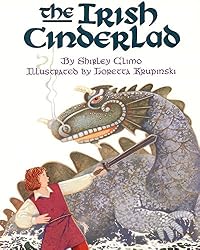
As mentioned in my review of Shirley Climo's The Korean Cinderella, another of her four Cinderella retellings (see also: The Egyptian Cinderella and The Irish Cinderlad), I find the titles used for these books, including The Persian Cinderella, rather problematic. This tale, after all, is no more "the Persian Cinderella" than Cinderella is "the French Settareh," and while I understand the need for marketing, and for reader appeal (what better way to draw in fairytale lovers young and old, than to describe this as a "Cinderella" story?), I wish that a culturally specific name had been used, with any parallel to other traditions confined either to the description, or to a subtitle. Something after the fashion of Petrosinella: A Neopolitan Rapunzel, which happens to be my favorite variant of the "Rapunzel" tale-type.
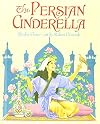
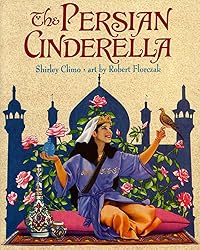
That said, I did find the actual story here, taken from that classic collection, Tales from the Thousand and One Nights, where it is known as The Anklet, very engaging. I also appreciated that, this time around, Climo actually named her textual source material! The cultural details - Settareh lives in the women's quarters; Prince Mehrdad is unable to search for the mysterious anklet-owner, because he cannot visit women in their homes - offer a fascinating glimpse of another place and time. The illustrations by Robert Florczak, which a friend has astutely compared to the work of Maxfield Parrish, are appealing. All in all, despite my critique of the title, this is a book I would recommend to young fairytale lovers, and to readers interested in international variants of the "persecuted heroine" tale-type. show less
As mentioned in my review of Shirley Climo's The Korean Cinderella, another of her four Cinderella retellings (see also: The Egyptian Cinderella and The Irish Cinderlad), I find the titles used for these books, including The Persian Cinderella, rather problematic. This tale, after all, is no more "the Persian Cinderella" than Cinderella is "the French Settareh," and while I understand the need for marketing, and for reader appeal (what better way to draw in fairytale lovers young and old, than to describe this as a "Cinderella" story?), I wish that a culturally specific name had been used, with any parallel to other traditions confined either to the description, or to a subtitle. Something after the fashion of Petrosinella: A Neopolitan Rapunzel, which happens to be my favorite variant of the "Rapunzel" tale-type.
That said, I did find the actual story here, taken from that classic collection, Tales from the Thousand and One Nights, where it is known as The Anklet, very engaging. I also appreciated that, this time around, Climo actually named her textual source material! The cultural details - Settareh lives in the women's quarters; Prince Mehrdad is unable to search for the mysterious anklet-owner, because he cannot visit women in their homes - offer a fascinating glimpse of another place and time. The illustrations by Robert Florczak, which a friend has astutely compared to the work of Maxfield Parrish, are appealing. All in all, despite my critique of the title, this is a book I would recommend to young fairytale lovers, and to readers interested in international variants of the "persecuted heroine" tale-type. show less
My kids and I enjoyed this one, and I liked that it gave a glimpse into gender divisions in other cultures (the festival is segregated by gender instead of being a coed ball, and the queen goes looking for the owner of the anklet on her son's behalf because "How can a man look for a maiden?"). I do have mixed feelings about the passive protagonist. All things, good and bad, just happen to her. If things work out well for her, it's not because she had any active hand in them but because she sat and waited and was "good." Good fodder for discussion, though.
I would highly recommend this book for younger children, and I think it would be a great addition to the classroom. I really like that this book incorporates another culture into a very familiar tale. I think it is really important for children to have exposure to other cultures, and this is a delightful way to introduce that.
This author must really love Cinderella as she has done several retellings of this story, but this is a relatively refreshing take on a old story, with beautiful illustrations and several twists.
"The Persian Cinderella" as written by Shirley Climo captures the rich traditions of the Persians and the colorful illustrations by artist Robert Florczak are vivid and beautiful. The author provides fascinating insights into the Persian culture of old, e.g. the separate living quarters for men and women, the celebration of the No Ruz festival, and also the elaborate costumes worn by the people, especially during important celebrations. This is a wonderful addition to the Cinderella lore.
I really enjoyed this book. It was a very informative book that was both familiar, because of the classic story line of Cinderella, and new, because of the twists in the story and the cultural differences. The book was exactly what I predicted it to be in terms of content. I expected this book to be very informative of Persian culture and the lifestyle of the Persian people. This book included many interesting facts in a way that made the story flow and was not too obvious. For example, the author included information on the gender differences of people and the emphasis placed on gender: “She lived with her stepmother [and] two stepsisters…in the women’s part of the house…Settareh seldom saw her father, for he was busy in the show more world of men.” Due to the cultural differences between the original Cinderella story and this story, there were many unexpected plot twists and changes in the story that made it more realistic. For example, during the time period in which this story takes place, and the societal standards that the Persian people place on gender, the Queen was the one who sought Settareh, the main character, out. She also “gave Settareh a mirror so that she might gaze upon the prince’s reflection without the embarrassment of facing him,” when they first meet. The story was both familiar, yet engaging due to the unexpected plot twists that made me really enjoy reading the book. Finally, the illustrations in the book really enhanced the story and gave a visual representation of what was being described by the author. Since it is another culture, the pictures really helped me to see exactly what they were saying in the story. They helped me especially when I didn't know what kinds of garments and traditional clothing was worn by Persian people in the time period in which the story takes place. show less
The Persian Cinderella is similar to the typical Disney Cinderella story. However, there are some differences in them. This story has a magic pari inside of a pot that grants the girl all her wishes. Settareh has two stepsisters who are rude to her and make fun of her. Before the holiday, the pari gave Settareh her wishes and granted her with new clothes and diamond anklets. The prince in this story found one of the anklets. The mother of the prince went out to find out whom they belonged to. Eventually she found Settareh and the stepsisters realized there was a pari in the jar. The stepsisters wished evil things upon the girl, but the prince saved her in the end. I liked how there were similar elements to the other Cinderella, but the show more author still made it different. For example, one of my favorite parts was the pari. I liked how the author made the godmother different in this story and it created a genie or a fairy that granted wishes. The main message was to be confident in yourself and not allow others to control your life. Settareh did not allow her sisters to control her and she bought whatever she wanted at the market. Overall, I enjoyed this story because it was a different version of Cinderella and the plot was very interesting. show less
Members
- Recently Added By
Lists

A Child's Book Tour of Persia
22 works; 3 members

The Story of the World: History for the Classical Child: Activity Book One
291 works; 3 members
Author Information

23+ Works 4,835 Members
Shirley Climo was born in Cleveland, Ohio in 1928. She attended DePauw University until her mother died unexpectedly in 1949. She dropped out of college and took up her mother's work writing scripts for the weekly WGAR-Radio children's program Fairytale Theatre. During her lifetime, she wrote 24 books including The Korean Cinderella; Magic and show more Mischief: Tales from Cornwall; A Treasury of Princesses: Princess Tales from Around the World; A Treasury of Mermaids: Mermaid Tales from Around the World; and Someone Saw a Spider: Spider Facts and Folktales. She died on August 25, 2012 at the age of 83. (Bowker Author Biography) show less
All Editions
Awards and Honors
Awards
Common Knowledge
Classifications
Statistics
- Members
- 521
- Popularity
- 57,211
- Reviews
- 28
- Rating
- (3.70)
- Languages
- English
- Media
- Paper
- ISBNs
- 7
- ASINs
- 1