On This Page
Description
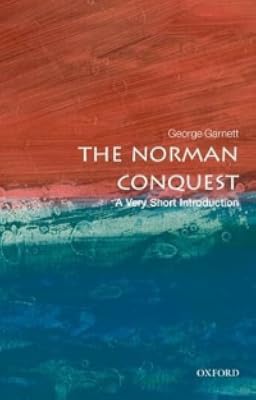
The Norman Conquest in 1066 was the last time England was successfully invaded, and was one of the most profound turning points in English history. This title focuses on the differing ways the invasion was viewed by those who witnessed it, and how its legacy has been interpreted by generations since.Tags
Recommendations



















Member Reviews
Thought-provoking, provocative (Garnett begins by drawing explicit parallels between the Norman Conquest and modern-day attempts at "regime change"), and emphatically not a good fit for the "Very Short Introduction" series. There's no way I could assign this to a class of American first year college students most of whom have never heard of Hastings or 1066 (which was why I was checking it out) without them being rather bewildered. Garnett presumes a certain familiarity with English history, and even with at least the vague outlines of bigger historiographical disputes about the Conquest and its aftermath. The Harrying of the North, for instance, barely gets a look in.
The broad sweep of Garnett's argument—about the all-encompassing show more and successful nature of the Norman Conquest of England—would make for stimulating fodder for an upper-level undergrad discussion, but only if careful attention was paid to the ways in which Garnett avoids or glosses over some evidence which doesn't bolster his argument. It's possible that the abbreviated VSI format meant that he didn't have the space to address these issues, or to deal more overtly with opposing academic points of view, but they are frustrating lapses nonetheless. An engaging book, but flawed. show less
The broad sweep of Garnett's argument—about the all-encompassing show more and successful nature of the Norman Conquest of England—would make for stimulating fodder for an upper-level undergrad discussion, but only if careful attention was paid to the ways in which Garnett avoids or glosses over some evidence which doesn't bolster his argument. It's possible that the abbreviated VSI format meant that he didn't have the space to address these issues, or to deal more overtly with opposing academic points of view, but they are frustrating lapses nonetheless. An engaging book, but flawed. show less
This book begins with a relation of the Battle of Hastings and the issues surrounding it, and then goes into a detailed discussion of the legal issues surrounding the changes in tenure and landholding, followed by a look at changes in architecture and ecclesiastical organisation. It lacks, however, any section on the methods by which the Normans completed and consolidated their conquest of England after Hastings, which is frustrating.
Ratings
Members
- Recently Added By
Lists

In Our Time books
4,934 works; 2 members
Author Information
11+ Works 171 Members
Series

Common Knowledge
- Canonical title
- The Norman Conquest: A Very Short Introduction
- First words
- 'Regime change' is a current, inelegant euphemism for the removal and replacement of a foreign government by force.
- Last words
- (Click to show. Warning: May contain spoilers.)Or as Eadmer might have put it, the 'plausible lie' had prevailed, and the English had in truth been treated much as the haughty William de Longchamp felt free to imply.
Classifications
- Genres
- History, Nonfiction, General Nonfiction
- DDC/MDS
- 942.021 — History & geography History of Europe England and Wales England Norman 1066-1154 William I 1066-87
- LCC
- DA195 .G37 — History of Europe, Asia, Africa and Oceania Great Britain History of Great Britain England History By period Early and medieval to 1485 Celts. Romans. Saxons. Danes. Normans
- BISAC
Statistics
- Members
- 112
- Popularity
- 285,293
- Reviews
- 2
- Rating
- (3.55)
- Languages
- English
- Media
- Paper, Ebook
- ISBNs
- 4
- ASINs
- 2