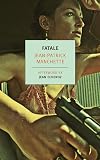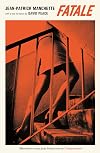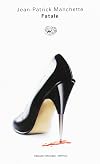
Fatale
by Jean-Patrick Manchette
On This Page
Description
Fiction. Literature. Mystery. HTML:A New York Review Books OriginalWhether you call her a coldhearted grifter or the soul of modern capitalism, there’s no question that Aimée is a killer and a more than professional one. Now she’s set her eyes on a backwater burg—where, while posing as an innocent (albeit drop-dead gorgeous) newcomer to town, she means to sniff out old grudges and engineer new opportunities, deftly playing different people and different interests against each other show more the better, as always, to make a killing. But then something snaps: the master manipulator falls prey to a pure and wayward passion.
Aimée has become the avenging angel of her own nihilism, exacting the destruction of a whole society of destroyers. An unholy original, Jean-Patrick Manchette transformed the modern detective novel into a weapon of gleeful satire and anarchic fun. In Fatale he mixes equal measures of farce, mayhem, and madness to prepare a rare literary cocktail that packs a devastating punch. show less
Tags
Recommendations







Member Reviews
A short, superbly written French noir, whose passions and tensions simmer until they build to a violent crescendo. Comparisons to a French Kill Bill, where the victims represent capitalism and society wealth, are not without merit. A lot of people dismiss Manchette as a pulp hack with pretentions of polictical radicalism, but I enjoyed his wry black wit masquerading under layers of detail, and the punchiness of his delivery.
It's a fun read and I look forward to exploring more of his work as it gets reissued.
It's a fun read and I look forward to exploring more of his work as it gets reissued.
The back of my ARC describes Manchette's crime novels as being "indictment[s] of post-war complacency," and Fatale definitely fits that bill. Aimee, the central character, is introduced as a cold-hearted mercenary who cares only about money: at the beginning, she's just killed several men out hunting and is glorying in the cash she's received for the murders. Yet as the story progresses, the reader sees little glimpses that her heart is not entirely made of solid stone. Don't be confused by the "pure and wayward passion" that the blurb mentions, however - there's no romantic interest in the story. Manchette packs a lot of events into one short book (my ARC is less than 100 pages), but his story is well developed. His near-obsessive show more dedication to little details can be a bit irritating at first, but, as with most crime novels, the little details are just as important as the plotline. I found the ending slightly disappointing (I didn't think it was as gripping and OMG surprising as the conclusions to most crime/mystery novels), but it fits Manchette's style and his purpose in writing the book. This is the first NYRB book I've read (about half of their catalog is on my wishlist), and it didn't let me down. While Fatale was much different from the mysteries I usually read, it was just as good in its own way and an interesting (I would use enjoyable, but it IS rather dark fiction) read. show less
This review was written for LibraryThing Member Giveaways.
The woman at the center of this story has definitely take a page from Hammett's Continental Op in her manipulation of a whole town. Engrossing from start to finish, with great action scenes, dialogue, and a nihilistic world view that is actually quite refreshing. Really a novelette, which is the perfect length for Manchette's near-perfect story. This is my third Manchette book and he has to be near the top of noir writers. Those who are trying to read this like they would an Agatha Christive novel--or even one by Dashiell Hammett are missing the point entirely. If you are fed up with the way the world works, read this--or any of his other works you come across.
I never thought I’d be rooting for a killer-for-hire woman--and a psychopathic one at that--but, the beautiful, sexy Aimee is one of those unforgettable characters who’s very rare in noir fiction. I’ve never read anything quite like this brilliant novella. The writing is tight and it flies by. I couldn’t put it down.
The best line was delivered by the baron when he was showing Aimee around his home.
“My bedroom,” he said. “I’m not going to invite you in there to copulate; we are not well enough acquainted for that.”
If you are a fan of crime fiction in the James M. Cain tradition, this one's for you.
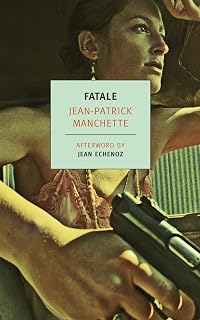
And, what a fantastic cover on the paperback edition!
The best line was delivered by the baron when he was showing Aimee around his home.
“My bedroom,” he said. “I’m not going to invite you in there to copulate; we are not well enough acquainted for that.”
If you are a fan of crime fiction in the James M. Cain tradition, this one's for you.
And, what a fantastic cover on the paperback edition!
“I shouldn’t do this,” said Aimée. “It’s a vice. But you know what they say: the only reason we don’t surrender completely to a vice is that we have so many others.”
Holy crap, is this book brutal. And nihilistic. And funny. And horrifying. And impossible to predict. And . . . what the fuck just happened? The protagonist (?), ironically named Aimée, is a nice counterpart to Banyan from my own novel of revenge: 𝘚𝘵𝘺𝘨𝘪𝘢𝘯 𝘉𝘭𝘶𝘦. But then, I’m not so sure that this is a revenge novel. Or even properly a crime novel. I’m not exactly sure what the hell it is, except a riptide-riding read with genuine, choppy surprises. And the blood, like I’ve said.
I mean, check out this scene:
“Fire, show more for Christ’s sake!” she cried
The baron opened his eyes. Aimée pulled the trigger. She did not see where the spray of shot landed. The baron, clad in striped pajamas, sprang from the bed with an extraordinary bellow. He really sounded like a cow in distress.
“What a hash! Fuck it all!” Aimée was jumping up and down in frustration.
She emptied the second barrel of the superposed. This time the baron was sprayed on the side of his head. Scarlet blood spattered the white wall, trickled into weblike patterns but was quickly absorbed by the plaster, while the man pirouetted, then fell lengthwise with a dull thud onto the bed, where he crouched on knees and forearms. The baron’s legs stretched out convulsively, then he pulled them up once more.”
This closing out the chapter, only to lead to yet another surprise at the next chapter’s opening. And then a string of inventive and bloody and, sometimes, hilarious executions. I don’t know what exactly to glean from this or say about it that isn’t already self-apparent on the gore-smeared pages—except, maybe, that I really dug it and would relish more experiences like this. Apparently, this writer has a penchant for the crime novel, evocative violence, and forcing the main character into inevitable destruction—just like most noir films from the 50s. And there seems to be a whole host of this kind of fiction out of France from this era—plenty of those with English translations, so . . . yay, blood! show less
Holy crap, is this book brutal. And nihilistic. And funny. And horrifying. And impossible to predict. And . . . what the fuck just happened? The protagonist (?), ironically named Aimée, is a nice counterpart to Banyan from my own novel of revenge: 𝘚𝘵𝘺𝘨𝘪𝘢𝘯 𝘉𝘭𝘶𝘦. But then, I’m not so sure that this is a revenge novel. Or even properly a crime novel. I’m not exactly sure what the hell it is, except a riptide-riding read with genuine, choppy surprises. And the blood, like I’ve said.
I mean, check out this scene:
“Fire, show more for Christ’s sake!” she cried
The baron opened his eyes. Aimée pulled the trigger. She did not see where the spray of shot landed. The baron, clad in striped pajamas, sprang from the bed with an extraordinary bellow. He really sounded like a cow in distress.
“What a hash! Fuck it all!” Aimée was jumping up and down in frustration.
She emptied the second barrel of the superposed. This time the baron was sprayed on the side of his head. Scarlet blood spattered the white wall, trickled into weblike patterns but was quickly absorbed by the plaster, while the man pirouetted, then fell lengthwise with a dull thud onto the bed, where he crouched on knees and forearms. The baron’s legs stretched out convulsively, then he pulled them up once more.”
This closing out the chapter, only to lead to yet another surprise at the next chapter’s opening. And then a string of inventive and bloody and, sometimes, hilarious executions. I don’t know what exactly to glean from this or say about it that isn’t already self-apparent on the gore-smeared pages—except, maybe, that I really dug it and would relish more experiences like this. Apparently, this writer has a penchant for the crime novel, evocative violence, and forcing the main character into inevitable destruction—just like most noir films from the 50s. And there seems to be a whole host of this kind of fiction out of France from this era—plenty of those with English translations, so . . . yay, blood! show less
J.P. Manchette's Fatale is an elegant little book, beautifully adapting noir forms and conventions to high literary effect. It's wonderfully entertaining, and well worth the NYRB Classics treatment -- if only because it previously may have escaped notice. And this translation (unlike many such efforts) is superb, almost to the point of making a reader in English forget the novella's French origin.
Starting from a general premise that all noir protagonists are fundamentally flawed, living and "working" (such as it may be) in shadows or on the wrong side of the law, Manchette here drops his reader into the midst of his femme fatale's life and "work," with little context or fanfare. It doesn't take long, however, to begin piecing together show more some of who she is and what she's up to -- at least to the extent we'll ever know. With the note, " ... the young woman had chosen to call herself Aimée Joubert, and that is what I shall call her from now on," we're fairly warned both that this narrator is not omniscient, and that our protagonist is unreliable. In short order, however, we also see the tides turn, as Aimée is embroiled in something far bigger than her carefully calculated and orchestrated schemes can contain.
I suspect Fatale is an excellent introduction to Manchette's work, and I'm anxious to see more of it. show less
Starting from a general premise that all noir protagonists are fundamentally flawed, living and "working" (such as it may be) in shadows or on the wrong side of the law, Manchette here drops his reader into the midst of his femme fatale's life and "work," with little context or fanfare. It doesn't take long, however, to begin piecing together show more some of who she is and what she's up to -- at least to the extent we'll ever know. With the note, " ... the young woman had chosen to call herself Aimée Joubert, and that is what I shall call her from now on," we're fairly warned both that this narrator is not omniscient, and that our protagonist is unreliable. In short order, however, we also see the tides turn, as Aimée is embroiled in something far bigger than her carefully calculated and orchestrated schemes can contain.
I suspect Fatale is an excellent introduction to Manchette's work, and I'm anxious to see more of it. show less
This review was written for LibraryThing Member Giveaways.
Femme Fatales of the world, unite! Read French author Jean-Patrick Manchette’s ninety-page coolest of the cool noir novel Fatale to have a sense of what it would really be like to take control of your life.
The author gets right to the point, as in prose as sharp as a well-tempered stainless steel knife. And speaking of knives, here is the slim, athletic, fetching thirty-year-old main character Aimée Joubert on the topic of killing, reflecting back on how she plunged a knife into the liver of her first victim -- her abusive husband, “It was a genuine revelation, you see,” said Aimée to the baron. “They can be killed. The real assholes can be killed. Anyway, I needed money but I didn’t want to work.”
Aimée, you’re such a show more sweetie. I love you, babe.
As we learn very quickly, the real assholes of the world are those mustachioed, potbellied, moneygrubbing capitalists forever reading their newspapers, sloshing down their beer and cheating everyone in sight. In this respect, nothing much has changed in nearly 100 years: refined aesthete Des Esseintes in Joris-Karl Huysmans’ 1884 novel Against Nature is similarly nauseated by all those mutton-chopped bourgeoisie.
But Aimée's response to these odious bastions of mediocrity is entirely opposite to Des Esseintes – rather than retreating in isolation, she infiltrates their social circles; rather than becoming progressively weaker, she uses martial arts and exercise equipment to become progressively stronger; instead of reading Baudelaire’s poetry, she reads crime novels (I imagine her reading Jean-Patrick Manchette crime novels!); and, most dramatically, instead of wishing her enemies dead, she shoots them dead.
This is noir crime fiction but none of that pandering to macho male readers, thank you. Any sensuality is not sexual or even in the presence of men. More to the point, Aimée is most sensual when she is by herself. For example, here’s our hero (or anti-hero) in her own compartment on a train, “She went on eating and drinking and progressively lost control of herself. She leaned over, still chewing, and opened the briefcase and pulled out fistfuls of banknotes and rubbed them against her sweat-streaked belly and against her breasts and her armpits and between her legs and behind her knees. Tears rolled down her cheeks even as she shook with silent laughter and kept masticating.”
Make no mistake, action drives plot; there is very little delving below the surface, after all, who has time for in-depth self-examination when you are, like Aimée, forever recording the patterns and habits of your future victims and calculating your next move. In this respect, Fatale is only one notch removed from cinema, cinema as in Pulp Fiction or Kill Bill, that is. Even relaxing in her bathroom, Aimée primes herself for action: “Lying in her hot bath, she opened the crime novel she has bought. She read ten pages. It took her six or seven minutes. She put the book down, masturbated, washed, and got out of the water. For a moment, in the bathroom mirror, she looked at her slim, seductive body. She dressed carefully; she aimed to please.”
Although Fatale has the hard-boiled flavor of such American noir crime fiction as Hammitt’s The Maltese Falcon and Cain’s The Postman Always Rings Twice, there is also a decidedly political dimension. Recall how Jean-Patrick Manchette was an active Marxist in Paris but became frustrated when the revolution in the late sixties stalled out. One on level his novel is a cool, supercharged critique of corroded capitalism. With searing irony, the enamel plaque KEEP YOUR TOWN CLEAN! appears again and again in the story’s small French town.
Since this is such a jazzy-cool novel, one last action from our sweet Aimée, this from the opening chapter, where she walks up to a fat pharmacist who is out hunting with his fat bourgeois buddies and has sauntered off by himself to take a rest under a tree. “He declared himself greatly astonished to see her here – first because she never went shooting and secondly because she had said her goodbyes to everyone the previous afternoon and taken a taxi to the station. “As surprises go, this beats all. And such a pleasant one too,” he exclaimed, and she unslung her 16-gauge shotgun, turned it on him, and before he had finished smiling emptied both barrels into his gut.”
Jean-Patrick Manchette (1942-1995) - French novelist of hyper-cool crime fiction with political overtones show less
Members
- Recently Added By
Lists

Unshelved Book Clubs
579 works; 5 members

100 Best Thrillers of All Time
100 works; 6 members

Take Four Books
130 works; 1 member

Favorite French Fiction
154 works; 66 members
Author Information

42+ Works 3,052 Members
Some Editions
Series
Belongs to Publisher Series
Work Relationships
Is contained in
Has the adaptation
Common Knowledge
- Canonical title
- Fatale
- Original title
- Fatale
- Original publication date
- 1977
- People/Characters
- Aimée
- Important places
- France; Bléville, Normandy, France
- Dedication
- To my beloved
- First words
- The hunters were six in number, men mostly fifty or older, but also two younger ones with sarcastic expressions.
- Last words
- (Click to show. Warning: May contain spoilers.)SENSUAL WOMEN, PHILOSOPHICALLY MINDED WOMEN, IT IS TO YOU THAT I ADDRESS MYSELF.
- Original language
- French
Classifications
- Genres
- Fiction and Literature, General Fiction, Mystery
- DDC/MDS
- 843.914 — Literature & rhetoric French Literature French fiction 1900- 20th Century 1945-1999
- LCC
- PQ2673 .A452 .F313 — Language and Literature French, Italian, Spanish and Portuguese literatures French literature Modern literature 1961-2000
- BISAC
Statistics
- Members
- 542
- Popularity
- 55,110
- Reviews
- 33
- Rating
- (3.53)
- Languages
- 6 — English, French, German, Italian, Spanish, Swedish
- Media
- Paper, Ebook
- ISBNs
- 19
- ASINs
- 3