On This Page
Description
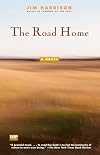
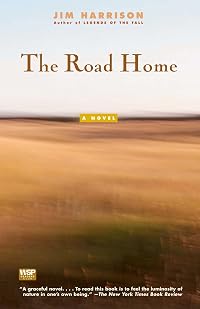
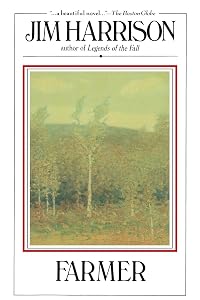
A man who was offered for adoption at birth because he was an illegitimate child searches for his mother in this novel on a Nebraska family. In the process, Nelse Carlson, 30, discovers he is the grandson of a powerful rancher.Tags
Recommendations


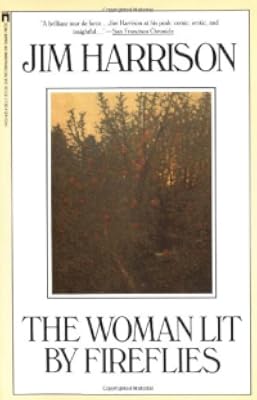








Member Reviews
This is one of the few books I have read more than once! And for good reason. Harrison's understanding of the history and natural history of this region, fantastic use of multiple perspectives, and characterisation make this such a rewarding read. I'll admit, I struggled with it at times, particularly the prose style of Dalva's grandfather, but it was worth it. This sounds sad, but you actually miss the characters when you finish it, which shows how well developed they are. I need to dig out my copy of Dalva now which I fear may be lost! Problem is it's q-hard to get hold of Harrison's writing over in the UK. Damm shame!
Stunning. This book left me shaken and wishing the characters could stay with me just a bit longer. My grandfather introduced me to Jim Harrison this winter and I will always be incredibly grateful. One of the best location/genealogical centered novels I've read since One Hundred Years of Solitude. Harrison knows his characters and the Nebraska country well. Nothing is romantic or overdrawn about this. Just raw, beautiful and devastating.
A plus
A plus
Phew...after reading the last page I felt like I needed to read the first half of the book again. Perhaps I'll skim it. A sweeping saga spanning 40 is years, maybe more if you include the memories of family included in the 1st half. It definitely left me wanting more and I'm reassured knowing there is a book written about one of the characters. Also, he has about 20 books I'm looking forward to reading. I haven't been so excited about an author since discovering Ellen Gilchrist.
I registered this book at BookCrossing.com!
http://www.BookCrossing.com/journal/7424506
A story of a family. In it we meet, through their own words, John Wesley Northridge II,his son Paul, his daughter-in-law Naomi, Naomi's daughter Dalva, and Dalva's son Nelse. Other members of the family are mentioned by these five to fill out the family tree.
All of the entries are in the form of journals, journals that others know are being kept. The story begins with large entries by JW II, who is nearing death and writing about the past. We learn about his love of nature, his thoughts for his granddaughter Dalva and his son JW III. We learn that he has accumulated much in his life and is ready to leave it behind.
Interestingly, others in the show more family do not see JW II the same way he himself does. He is described as cold and demanding. Certainly there is some affection there but it is tempered.
Each of the entries brings us into the life of that person and his or her feelings for others and for nature. They all share, to different extents, a love of the outdoors and of birds in particular. Nelse even methodically makes notes of the birds he encounters on his wanderings, as if for a study (yet he does not undertake official studies).
I found that the writing style was much the same for all, yet that did not bother me. I have read other books where the different characters are created with very different voices yet I don't think this book suffers from the similarity in voice. The thoughts differ, even as they are expressed in similar sentence forms. There is enough detail that I felt I had entered each life and was there with that family member for that time.
It is a beautifully written book. One that I think should not be hurried. It is, as much as anything, a book about how to die, yet it is much more than that. It lingers, along with its lessons. show less
http://www.BookCrossing.com/journal/7424506
A story of a family. In it we meet, through their own words, John Wesley Northridge II,his son Paul, his daughter-in-law Naomi, Naomi's daughter Dalva, and Dalva's son Nelse. Other members of the family are mentioned by these five to fill out the family tree.
All of the entries are in the form of journals, journals that others know are being kept. The story begins with large entries by JW II, who is nearing death and writing about the past. We learn about his love of nature, his thoughts for his granddaughter Dalva and his son JW III. We learn that he has accumulated much in his life and is ready to leave it behind.
Interestingly, others in the show more family do not see JW II the same way he himself does. He is described as cold and demanding. Certainly there is some affection there but it is tempered.
Each of the entries brings us into the life of that person and his or her feelings for others and for nature. They all share, to different extents, a love of the outdoors and of birds in particular. Nelse even methodically makes notes of the birds he encounters on his wanderings, as if for a study (yet he does not undertake official studies).
I found that the writing style was much the same for all, yet that did not bother me. I have read other books where the different characters are created with very different voices yet I don't think this book suffers from the similarity in voice. The thoughts differ, even as they are expressed in similar sentence forms. There is enough detail that I felt I had entered each life and was there with that family member for that time.
It is a beautifully written book. One that I think should not be hurried. It is, as much as anything, a book about how to die, yet it is much more than that. It lingers, along with its lessons. show less
The conclusion of Dalva. Dalva walks her road from Nebraska to the Keys. Written mostly from a female's point of view Harrison's oblique view of people and places provides material for rumination and his descriptive writing provides a definite sense of place.
My favorite book. While my list of "favorites" is usually fluid, this book is always #1. Harrison was at the top of his considerable game with this generational saga.
A decade after the stunning Dalva, Harrison returns to the Northridge family of Nebraska in a saga that spans three generations of stoic loss, intermittent happiness and a healing proximity to the natural world. Tough old patriarch John Northridge narrates the first and strongest section, an apologia for the life he has led, first as a youth between two cultures (he is the son of a white father and a Lakota Sioux mother), then as a sensitive art student and, for most of his life, as a formidable rancher and cattle farmer, husband, father and grandfather. Northridge's life has paralleled the development of the Great Plains, and his intimate connection with the land humanizes his often cruel behavior to his wife, who left him, and his show more surviving son, Paul (his favorite son, Dalva's father, was killed in the Korean war). Other narrators are nomadic Nelse, the son Dalva gave up for adoption when she was 15, who finds her when he is 30; Naomi, Dalva's mother; Paul; and the still headstrong Dalva herself. As one expects of Harrison, the characters all share an instinctive love for the their native landscape and for the horses, dogs and birds that evoke their most treasured memories. With an unforced lucidity, the novel explores the tension between the Native American and white cultures, the effects of art and poetry on one's conception of existence and the very purpose of existence viewed from "the grace of the divinely ordinary" life. Two miscalculations flaw the novel. One is the sameness of the narrative voice, with all the characters, male and female, speaking in the same indistinguishable Midwestern cadences. The other is that, in attempting to reflect the quality of Nebraskan life, Harrison lets his characters describe their mundane experiences in meticulous but often pedestrian detail. While he thus stitches a fabric of impressive strength and depth, the narrative sometimes becomes tedious. Yet readers who let themselves be captured by the novel's breadth?from the late 1800s to 1987?and the memorable depictions of stalwart people striving to understand their destinies, will be rewarded by a deep and nourishing story.
Copyright 1998 Reed Business Information, Inc. (Publishers Weekly) show less
Copyright 1998 Reed Business Information, Inc. (Publishers Weekly) show less
Members
- Recently Added By
Author Information

81+ Works 11,877 Members
James Thomas Harrison was born on December 11, 1937 in Grayling, Michigan. After receiving a B.A. in comparative literature from Michigan State University in 1960 and a M.A. in comparative literature from the same school in 1964, he briefly taught English at the State University of New York at Stony Brook. During his lifetime, he wrote 14 show more collections of poetry, 21 volumes of fiction, two books of essays, a memoir, and a children's book. His collections of poetry included Plain Song, The Theory and Practice of Rivers, Songs of Unreason, and Dead Man's Float. He received a Guggenheim fellowship for his poetry in 1969. His essays on food, much of which first appeared in Esquire, was collected in the 2001 book, The Raw and the Cooked. His memoir, Off to the Side, was published in 2002. His first novel, Wolf, was published in 1971. His other works of fiction included A Good Day to Die, Farmer, The Road Home, Julip, and The Ancient Minstrel. His novel, Legends of the Fall, was adapted into a feature film starring Anthony Hopkins and Brad Pitt. Harrison wrote the screenplay for the movie. His novel, Dalva, was adapted as a made-for-television movie starring Rod Steiger and Farrah Fawcett. He died on March 26, 2016 at the age of 78. (Bowker Author Biography) show less
Some Editions
Awards and Honors
Awards
Series

Belongs to Publisher Series
Common Knowledge
- Canonical title*
- Licht über dem Land
- Original title
- The road home
- Original publication date
- 1998 (1e édition originale américaine) (1e édition originale américaine); 1998-08-26 (1e traduction et édition française, Fictives, Christian Bourgois) (1e traduction et édition française, Fictives, Christian Bourgois); 1999 (Réédition française, Domaine étranger, 10/18) (Réédition française, Domaine étranger, 10/18)
- Important places
- USA; Nebraska, USA
- Dedication
- To Peter and Molly Phinny
- First words
- It is easy to forget that in the main we die only seven times more slowly than our dogs.
- Last words
- (Click to show. Warning: May contain spoilers.)Naomi, Paul, Lundquist, Nelse and J.M. I hope I m going to join my lover.
- Original language*
- Amerikanisch
*Some information comes from Common Knowledge in other languages. Click "Edit" for more information.
Classifications
Statistics
- Members
- 593
- Popularity
- 49,648
- Reviews
- 8
- Rating
- (4.14)
- Languages
- English, French, German, Spanish
- Media
- Paper, Audiobook, Ebook
- ISBNs
- 20
- ASINs
- 8