Roma Eterna
by Robert Silverberg
On This Page
Description
From multiple Hugo and Nebula Award–winning author Robert Silverberg, Roma Eterna takes an in-depth look at an alternative history in which the Roman Empire survives into the twenty-first century and beyond. What would happen if Imperial Rome never fell? Roma Eterna, spanning fifteen hundred years of global history, follows the reign of the Roman Empire from its inception to the present day. Empire continues to expand, creeping across the globe and through the annals of history from the show more conquest of the Mayans to the first circumnavigational voyage, and finally the attempt of the Hebrews to flee Rome's tyranny by escaping to another planet. Originally published as a series of short stories, Roma Eterna presents a powerful new world written by an endlessly imaginative writer. show lessTags
Recommendations











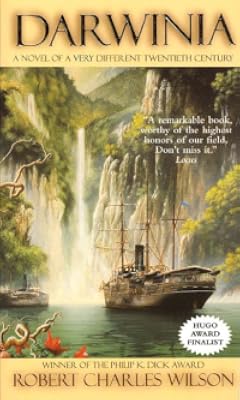
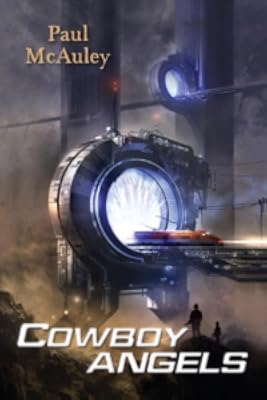





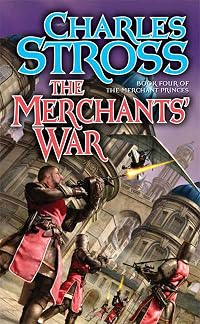


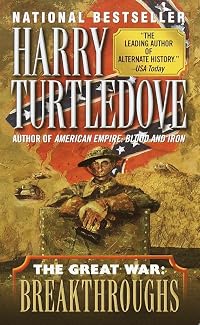

Member Reviews
A "fix-up" novel comprised of previously published short stories, novellas and novelettes -- the only new piece here is the four-paged prologue -- Roma Eterna is an alternate history based on the premise that the Western Roman Empire never fell; the reason that Silverberg posits for the Roman Empire's continuation is sure to anger those who take issue with Chapters XV and XVI of Edward Gibbon's The History of the Decline and Fall of the Roman Empire, wherein Gibbon places the lion's share of the blame for Rome's collapse on the shoulders of Christianity's triumph. Silverberg most explicitly lays this out in his prologue, which consists of two Roman historians discussing their researches; one of them reveals to the other his fascination show more for "the Hebrews of Aegyptus," and his notion that, had the Hebrew chieftain Mosaeus -- "Moshe, in their language" -- been successful in leading his people out of Aegyptus and settling them in Syria Palaestina, the Hebrews could well have come to shake the foundations of the Roman world -- as in fact they did in ours.
Owing to its scope -- Roma Eterna spans from 450 A.D. to 1970 A.D. -- there are no continuing characters that the reader can fix upon and follow through the course of the book; as a result, Roma Eterna never entirely escapes its disjointed, detached feel: the stories here remain intellectual exercises in the parlor game of "What If..?," and some stories are inevitably more interesting than others.
The story or novelette with perhaps the greatest poignancy is "A Hero of the Empire," whose premise boils down to the Roman Empire vs. Muhammad. Though written pre-"9/11" -- it was originally published in the October/November 1999 issue of The Magazine of Fantasy and Science Fiction -- this story is likely to carry an added weight with many American readers in the wake of "9/11." It is also very likely to irritate, if not outrage, many Muslims, much as Silverberg's mythographic treatment of the Judeo-Christian tradition is apt to vex, if not outrage, many Christians.
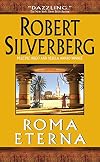
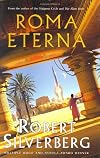
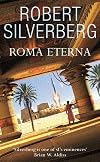
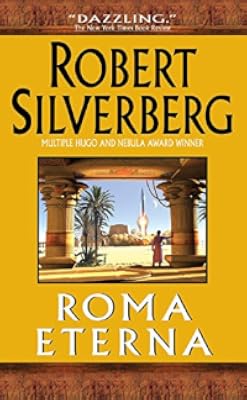
The cover of the U.S. edition -- showing a man in Egyptian dress leaning against a column watching a rocket blast off in the distant desert -- is grossly misleading. There are no typical sci-fi trappings to be found here, and no steampunk noodlings either: just mostly sound speculations on what a world dominated by the Roman Empire for two thousand years might look like. The most fantastical element in Roma Eterna comes in the first story/chapter -- "With Caesar in the Underworld" -- which is set for a goodly portion of its length in what must be a fictional city-under-The-City: a series of tunnels, grottoes, catacombs and caves under the streets of Rome itself where most of the lowlifes, thieves, degenerates, murderers, smugglers, spies, weirdo cultists and terrorists of Rome congregate. This story is set in 529 A.D.; the Underworld doesn't get a return engagement.
On the whole, I much preferred Silverberg's novel Gilgamesh the King, which was a largely rational retelling of the famous epic that remained open-minded enough to allow some seemingly fantastical elements to breathe. show less
Owing to its scope -- Roma Eterna spans from 450 A.D. to 1970 A.D. -- there are no continuing characters that the reader can fix upon and follow through the course of the book; as a result, Roma Eterna never entirely escapes its disjointed, detached feel: the stories here remain intellectual exercises in the parlor game of "What If..?," and some stories are inevitably more interesting than others.
The story or novelette with perhaps the greatest poignancy is "A Hero of the Empire," whose premise boils down to the Roman Empire vs. Muhammad. Though written pre-"9/11" -- it was originally published in the October/November 1999 issue of The Magazine of Fantasy and Science Fiction -- this story is likely to carry an added weight with many American readers in the wake of "9/11." It is also very likely to irritate, if not outrage, many Muslims, much as Silverberg's mythographic treatment of the Judeo-Christian tradition is apt to vex, if not outrage, many Christians.
The cover of the U.S. edition -- showing a man in Egyptian dress leaning against a column watching a rocket blast off in the distant desert -- is grossly misleading. There are no typical sci-fi trappings to be found here, and no steampunk noodlings either: just mostly sound speculations on what a world dominated by the Roman Empire for two thousand years might look like. The most fantastical element in Roma Eterna comes in the first story/chapter -- "With Caesar in the Underworld" -- which is set for a goodly portion of its length in what must be a fictional city-under-The-City: a series of tunnels, grottoes, catacombs and caves under the streets of Rome itself where most of the lowlifes, thieves, degenerates, murderers, smugglers, spies, weirdo cultists and terrorists of Rome congregate. This story is set in 529 A.D.; the Underworld doesn't get a return engagement.
On the whole, I much preferred Silverberg's novel Gilgamesh the King, which was a largely rational retelling of the famous epic that remained open-minded enough to allow some seemingly fantastical elements to breathe. show less
This is quite a good alternative history book. It does use the "Great Man" view of history. The story visits several important figures from the past in the new environment of an on-going Roman Empire. It was a fairly interesting read.
This is a mildly interesting story of a Roman Empire that avoided collapse until modern times. I can't say I found it very enjoyable as a story, though, and the ending was less than satisfying.
Devient répétitif, mais l'idée reste rigolote, et puis ça permet de recycler des tas de références de ses années de latin qu'on ne mobilise pas tous les jours.
Although this is called a novel, it's actually a collection of stories charting the history of a roman empire that never fell - the point of departure is the destruction of the Jews in their Egyptian exile, therefore no Christianity. Given the vast sweep of history covered in this book, the complete breaks between stories is to be expected. If you are trying to match back dates to our time line, don't forget that dayes here are given in the Roman fashion; from the date of the founding of Rome, so you need to subtract 753 from these dates to get the CE dates.
Cool concept, but it got tedious for me after the first few chapters.
J'ai vraiment passé un bon moment avec la Roma aeterna de Silverberg ! Bon, je suis historienne de formation et ça explique peut-être pourquoi j'ai tant apprécié cette histoire fictive d'un empire romain fictif. La structure épisodique du livre ne m'a pas dérangée et, au contraire, par son aspect parfois répétitif, renvoie bien je trouve à la notion d'éternité . Guerre - paix, décadence - renaissance, unité - diversité : les vagues se succèdent sans faillir, comme un éternel retour.
Silverberg écrit bien : dans les différentes nouvelles qui constituent le livre, il plante en quelques mots un riche décor pour l'épisode qu'il rapporte et ses personnages, bien que souvent pris dans les filets du pouvoir, sont show more suffisamment différents les uns des autres pour qu'on ne les confonde pas. Ça reste certes un plaisir intellectuel plus qu'autre chose car nous n'avons pas vraiment le temps de nous attacher aux personnages avant qu'ils ne disparaissent mais ça ne m'a pas gênée. show less
Silverberg écrit bien : dans les différentes nouvelles qui constituent le livre, il plante en quelques mots un riche décor pour l'épisode qu'il rapporte et ses personnages, bien que souvent pris dans les filets du pouvoir, sont show more suffisamment différents les uns des autres pour qu'on ne les confonde pas. Ça reste certes un plaisir intellectuel plus qu'autre chose car nous n'avons pas vraiment le temps de nous attacher aux personnages avant qu'ils ne disparaissent mais ça ne m'a pas gênée. show less
Dec 24, 2019French
Members
- Recently Added By
Lists

Books Set in Rome
98 works; 2 members
Author Information

989+ Works 62,534 Members
Awards and Honors
Awards
Work Relationships
Contains
Common Knowledge
- Canonical title
- Roma Eterna
- Original title
- Roma Eterna
- Original publication date
- 2003-06
- Dedication
- For Frank and Renee Kovacs—for whom much of this is a twice-told tale
And with special thanks to Gardner Dozois for his encouragement of this project across many years - First words
- The historian Lentulus Aufidius, whose goal it was to write the definitive biography of the great Emperor Titus Gallius, was now in his third year of research in the Imperial archives at the Palatine Library.
- Last words
- (Click to show. Warning: May contain spoilers.)God has sent His Son, and God has called Him home, and one day we will all leave the iron rule of this eternal Roma behind and follow him on wings of flame, up from the land of bondage into the heavens where He dwells eternally.
Classifications
Statistics
- Members
- 647
- Popularity
- 44,783
- Reviews
- 10
- Rating
- (3.14)
- Languages
- 5 — English, French, Polish, Portuguese, Spanish
- Media
- Paper, Ebook
- ISBNs
- 17
- UPCs
- 1
- ASINs
- 5