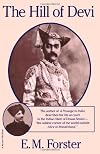
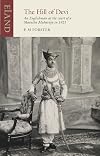
The Hill of Devi
by E. M. Forster
On This Page
Description
An essential companion to A Passage to India, a collection of the author's own letters that read like "a close personal friend has shared his impressions" ( Kirkus Reviews ). In 1912, a young E.M. Forster traveled to India to serve as a secretary to the Maharajah of Dewas, a small Indian state. He was elevated to the rank of a minor noble, and eventually given the state's highest honor, the Tukoji Rao III gold medal. This brief episode in Forster's life became the basis for his masterwork, A show more Passage to India. In the letters included in The Hill of Devi, he shares his personal journey of discovering his beloved India for the first time. Forster paints a vivid, intimate picture of Dewas State-a strange, bewildering, and enchanting slice of pre-independence India. In this collection, Forster shares insight into the lives of Indian royalty and accounts of the stark contrast between their excesses and the poverty he encounters. From letters that set the scene for Forster's lifelong friendship with the Maharaja, to an essay on the Maharaja himself and Forster's experiences as the Maharaja's personal secretary, The Hill of Devi is a fascinating chronicle of the author's experience in the land he called "the oddest corner of the world outside Alice in Wonderland." show lessTags
Recommendations


















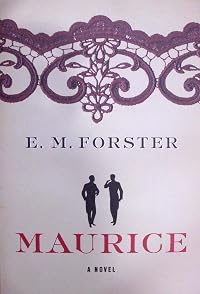

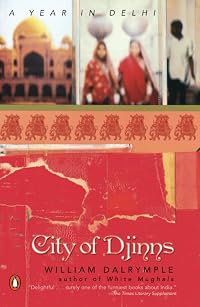

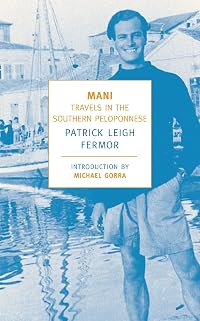

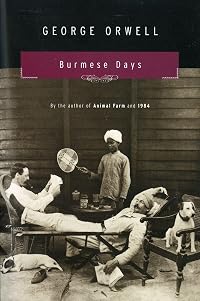





Member Recommendations
Member Reviews
E. M. Forster, Morgan to his friends, sits down after WWII and puts together this slim volume collecting letters and remembrances of two visits to India. In 1912 he is introduced to the Maharajah of Dewas Senior and nine years later is employed for a brief time as his private secretary. He recollects the time with minimal self-consciousness, his brief mentions of unrest and Gandhi relegated to his letters, and a tinge of antiquated nostalgia. In 1921 he already sees Dewas gone, absorbed into Madhya Bharat, before it actually happens. The India he visited in 1949, for the modern reader, has already changed dramatically. Sharing similar culture, having the history, but this India as different for us as pre-WWI India was for Forster.
I show more don't make it a secret that E.M. Forster is my favorite author, despite the fact that I've read only one of his novels. His style, openly visible in the letters he wrote home, is comfortable and focused, filling us in with only a few words, pulling us in and sharing with us an intimate friendship with a man very few new, while many knew of him. The casual modern reader will not be familiar with His Highness, the Maharajah of Dewas Senior, known as Bapu Sahib before he was king - and how he is known to his friend Morgan. You will also be unlikely to be familiar with the catastrophe that occurred after Forster left his service - but not as a result thereof. I would encourage you not to familiarize yourself but to experience India through Forster's eyes.
It is the catastrophe, and the small instances, discrepancies and hallows of everyday life that distinguish themselves to Forster. He omits the 'isn't India quaint!' but leaves the references to shoddy roads, holy cows, bad English, eagerness, affection and incompetence. His writing of India is not what I would consider quaint, not unless the definition has changed.
Instead, the humor and affection, despite his dislike of the unremarkable landscape of Dewas, shines though. He is bemused by the elderly pug, Lady, which accompanies the Maharajah everywhere. He is baffled by India in general, remarking:
"The arrangement must have been unique, and an authoritative English lady, who knew India inside out, once told me that it did not and could not exist, and left me with the feeling that I had never been there." p33
I was amused but frustrated by the intimacy with which his letters were written, we had no idea to whom he wrote, though most of his letters were written to his mother, I assume. The Maharajah's own mother was sorely missed and because of his familiarity with her son, the Maharajah would be affectionate in his own letters to her, knowing the worth of such a figure in his own life:
"Years after her death, he still mourned her, and one day he lamented to me, while tying a turban, that he no longer took pleasure in tying it, now that the beloved voice which could praise his skill had gone. 'It is only for the sake of those who love us that we do thing.' A dangerous creed." p37
Speaking of turbans, Forster was, for one reason or another, fond of relaying not only the unique fashions of India in his letters, but fabrics, colors and result effects thereof. While he might find a particular combination displeasing, it often works well among his peers in the royal court. He remarks on the colors and lovely dress of his friend's wife and his concubine, the intrigue and gossip easily following behind. The drama between the Maharajah and his courtiers, between the Dowager, his aunt, and Bai Saher, his 'diamond' concubine, is almost as ridiculous as what you might expect at any royal court - but H.H. gets himself as readily involved as the next man, suspecting a poison plot anytime he is forced from the Old Palace to the New Palace in the city, and chillingly comfortable around the spies sent to his court.
This slim volume is a collection of letters from a time in India, commentary and expansion upon his letters added thirty years later, but Forster amends himself in the end: it is the study of a man. I might even go so far to say it is the story of an uncertain and intimate friendship between intellectuals, men who respect each other and are comfortable with each other.
The subsequent tale of 'catastrophe' was carried by the Times of India and the London Times, but herein Morgan remembers a man who was complex and saintly, affectionate to those whom he judged sincere. He was intellectual and spiritual, even while unwise and prone to believing gossip. A wonderful effort.
175pp. Penguins Books. 1965. show less
I show more don't make it a secret that E.M. Forster is my favorite author, despite the fact that I've read only one of his novels. His style, openly visible in the letters he wrote home, is comfortable and focused, filling us in with only a few words, pulling us in and sharing with us an intimate friendship with a man very few new, while many knew of him. The casual modern reader will not be familiar with His Highness, the Maharajah of Dewas Senior, known as Bapu Sahib before he was king - and how he is known to his friend Morgan. You will also be unlikely to be familiar with the catastrophe that occurred after Forster left his service - but not as a result thereof. I would encourage you not to familiarize yourself but to experience India through Forster's eyes.
It is the catastrophe, and the small instances, discrepancies and hallows of everyday life that distinguish themselves to Forster. He omits the 'isn't India quaint!' but leaves the references to shoddy roads, holy cows, bad English, eagerness, affection and incompetence. His writing of India is not what I would consider quaint, not unless the definition has changed.
Instead, the humor and affection, despite his dislike of the unremarkable landscape of Dewas, shines though. He is bemused by the elderly pug, Lady, which accompanies the Maharajah everywhere. He is baffled by India in general, remarking:
"The arrangement must have been unique, and an authoritative English lady, who knew India inside out, once told me that it did not and could not exist, and left me with the feeling that I had never been there." p33
I was amused but frustrated by the intimacy with which his letters were written, we had no idea to whom he wrote, though most of his letters were written to his mother, I assume. The Maharajah's own mother was sorely missed and because of his familiarity with her son, the Maharajah would be affectionate in his own letters to her, knowing the worth of such a figure in his own life:
"Years after her death, he still mourned her, and one day he lamented to me, while tying a turban, that he no longer took pleasure in tying it, now that the beloved voice which could praise his skill had gone. 'It is only for the sake of those who love us that we do thing.' A dangerous creed." p37
Speaking of turbans, Forster was, for one reason or another, fond of relaying not only the unique fashions of India in his letters, but fabrics, colors and result effects thereof. While he might find a particular combination displeasing, it often works well among his peers in the royal court. He remarks on the colors and lovely dress of his friend's wife and his concubine, the intrigue and gossip easily following behind. The drama between the Maharajah and his courtiers, between the Dowager, his aunt, and Bai Saher, his 'diamond' concubine, is almost as ridiculous as what you might expect at any royal court - but H.H. gets himself as readily involved as the next man, suspecting a poison plot anytime he is forced from the Old Palace to the New Palace in the city, and chillingly comfortable around the spies sent to his court.
This slim volume is a collection of letters from a time in India, commentary and expansion upon his letters added thirty years later, but Forster amends himself in the end: it is the study of a man. I might even go so far to say it is the story of an uncertain and intimate friendship between intellectuals, men who respect each other and are comfortable with each other.
The subsequent tale of 'catastrophe' was carried by the Times of India and the London Times, but herein Morgan remembers a man who was complex and saintly, affectionate to those whom he judged sincere. He was intellectual and spiritual, even while unwise and prone to believing gossip. A wonderful effort.
175pp. Penguins Books. 1965. show less
"E. M. Forster, Morgan to his friends, sits down after WWII and puts together this slim volume collecting letters and remembrances of two visits to India. In 1912 he is introduced to the Maharajah of Dewas Senior and nine years later is employed for a brief time as his private secretary. He recollects the time with minimal self-consciousness, his brief mentions of unrest and Gandhi relegated to his letters, and a tinge of antiquated nostalgia. In 1921 he already sees Dewas gone, absorbed into Madhya Bharat, before it actually happens. The India he visited in 1949, for the modern reader, has already changed dramatically. Sharing similar culture, having the history, but this India as different for us as pre-WWI India was for Forster. show more ..."
Read the rest of my review on my blog or on Booklikes.
I'm sorry about this, but I'm not yet comfortable having my reviews backed up to the Amazon cloud servers. Maybe I'll get over it. show less
Read the rest of my review on my blog or on Booklikes.
I'm sorry about this, but I'm not yet comfortable having my reviews backed up to the Amazon cloud servers. Maybe I'll get over it. show less
Ratings
Members
- Recently Added By
Author Information

185+ Works 56,849 Members
Edward Morgan Forster was born on January 1, 1879, in London, England. He never knew his father, who died when Forster was an infant. Forster graduated from King's College, Cambridge, with B.A. degrees in classics (1900) and history (1901), as well as an M.A. (1910). In the mid-1940s he returned to Cambridge as a professor, living quietly there show more until his death in 1970. Forster was named to the Order of Companions of Honor to the Queen in 1953. Forster's writing was extensively influenced by the traveling he did in the earlier part of his life. After graduating from Cambridge, he lived in both Greece and Italy, and used the latter as the setting for the novels Where Angels Fear to Tread (1905) and A Room with a View (1908). The Longest Journey was published in 1907. Howard's End was modeled on the house he lived in with his mother during his childhood. During World War I, he worked as a Red Cross Volunteer in Alexandria, aiding in the search for missing soldiers; he later wrote about these experiences in the nonfiction works Alexandria: A History and Guide and Pharos and Pharillon. His two journeys to India, in 1912 and 1922, resulted in A Passage to India (1924), which many consider to be Forster's best work; this title earned the James Tait Black Memorial Prize. Forster wrote only six novels, all prior to 1925 (although Maurice was not published until 1971, a year after Forster's death, probably because of its homosexual theme). For much of the rest of his life, he wrote literary criticism (Aspects of the Novel) and nonfiction, including biographies (Goldsworthy Lowes Dickinson), histories, political pieces, and radio broadcasts. Howard's End, A Room with a View, and A Passage to India have all been made into successful films. (Bowker Author Biography) show less
Series
Belongs to Publisher Series
Work Relationships
Is contained in
Common Knowledge
- Important places
- Dewas Senior, India
- First words
- This book has grown up round two visits which I paid to the Indian state of Dewas Senior.
- Last words
- (Click to show. Warning: May contain spoilers.)He has the rare quality of evoking himself, and I do not believe that he is here doing it for the last time.
Classifications
Statistics
- Members
- 219
- Popularity
- 148,484
- Reviews
- 2
- Rating
- (3.36)
- Languages
- 5 — English, French, Italian, Russian, Spanish
- Media
- Paper, Audiobook, Ebook
- ISBNs
- 13
- ASINs
- 15