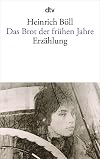
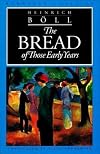
The Bread of Those Early Years
by Heinrich Böll
On This Page
Description
This masterful early work of the Nobel laureate tells the story of one day in the life of Walter Fendrich, a 23-year-old washing machine repairman. Wry, ironic, yet intensely felt, the story is set in post-World War II Germany, amid the growing materialism and spirtual wreckage left behind by the tide of the war. Fendrich, a young man torn by insecurity and despair, obsessed with hunger, finds himself and his world transformed when he becomes involved with the daughter of a high school show more principal. show lessTags
Recommendations






















Member Reviews
As so often with Böll, this charming short novel about a day in the life of a washing-machine repair technician turns out to pack an unexpected punch. It's all about how the demands of survival in difficult times distort moral values. Walter has forgotten how to be a real human being in the state of permanent hunger he found himself in as a teenager in the postwar years, and has thrown all his energy into a job he’s good at, but which means nothing to him. It's only his encounter with Hedwig, a young woman he has been asked to collect from the station, that makes him realise that there is more to life than bread. Böll creates a very vivid picture of Germany in the early fifties and of what it's like to be young and hungry. As usual show more he’s a little too enthusiastic with the symbolism - colours in this case - but this is really a very enjoyable little book, still well worth reading sixty years on. show less
Walter Fendrich wakes up on a Monday. On his mind are his to-do list: fix washing machines for the clients that he couldn’t get to yesterday, one more who is crying on the phone to this landlady as he lies in bed, dinner with his girlfriend at 6, but before any of this, need to do a favor for his dad and pickup his boss’ daughter from the train station. Simple, right? By the end of the day, he’s determined that he hates his job, money isn’t everything, his girlfriend and her family are heartless scums, and he is madly in love with the girl from the train station and is marrying her, Hedwig Muller. So, what happened?!? ;)
Published in 1955, this novel examines a time in Germany that is healing from war traumas. It is my rare show more glimpse on the German citizens where they remember the dark days – black markets, ration coupons, air raid shelters, and post-war effects of habitual hoarding, limited housing, and grenade scars on a colleague’s arms – and death, those he remembered and appreciated most. Pain, often hunger pangs, and suffering leave such a physical imprint that it propelled Walter’s actions for seven years before being awaken in this one-day novel.
Heinrich Boll took a very unique approach to express Walter’s day and transformation; everything is quantified via bread, the unit of measure to illustrate comfort, fulfillment, desire, love, care, generosity, greed, and forgiveness. Words of bread made me hungry (reminding me of my own bread-fed college years), stirred hostility in me, and moved me to near tears. The turns of events throughout the day are often accompanied by a tangential side story to give background thus expanding the one day tale into seven years, the total length of time that Walter moved out of his family home since age 16 to be an apprentice. At times these side stories feel distracting as I am eager to learn more of ‘today’; at other times, they gave much needed context. Overall, I’m pleased to have been touched by this book.
Some quotes:
On bread and hunger – desire and yearning:
“I came to know the price of everything – because I could never pay it – when I moved to the city, alone, as an apprentice of sixteen: hunger taught me the prices. The thought of fresh bread put me in a daze, and I would often roam the streets for hours in the evening thinking of nothing but – bread. My eyes smarted, my knees were weak, and I felt something wolfish inside me. Bread. I was addicted to bread…”
On infatuation:
“I was outside of my senses, and I seemed to understand what it means to be outside one’s senses… I was jealous of the ticket collector who briefly touched her hand as she held out her season ticket – jealous of the station floor beneath her feet…”
On ghosts of the past:
“…we had made more money, and good money, by selling on the black market some of the scrap I salvaged, with the aid of a whole crew of workmen, from ruins slated for demolition. Many of the rooms we reach by long ladders had been completely intact… hooks with towels still hanging on them, glass shelves still holding lipstick and razor side by side, bathtubs still full of bath water… with rubber toys still floating in it, toys played with by children before they suffocated in the cellar, and I had gazed into mirrors in which people had looked a few minutes before they died, mirrors in which, filled with rage and disgust, I shattered my own face with a hammer…”
On greed:
“’Examine the payrolls again, payrolls you kept. Read the names again – out loud, reverently, like you’d read a litany – call them out, and after each name say: ‘Forgive us’ – then add up all the names, multiply the number by a thousand loaves of bread – and that result again by a thousand: then you’ll have the number of curses heaped on your father’s bank account. The unit is bread, the bread of those early years, years that lie in my memory as if under a dense fog: that soup that was doled out to us slopped around feebly in our stomachs, it would rise in us, hot and sour, as we rode home in the evening on the swaying streetcar: it was the belch of impotence, and the only pleasure we had was hatred – hatred.”
On unconditional love and unspoken forgiveness – it’s beautiful:
“…I used to steal books from my father to buy myself bread – books he loved, that he had collected, that he’d gone hungry for as a student – books for which he’d paid the price of twenty loaves of bread and I sold for the price of half a loaf… My father had so many, I thought he’d never notice – it was much later that I realized he knows every single one of them as well as a shepherd knows his flock – and one of those books was quite small and shabby, nothing to look at – I sold it for the price of a box of matches – but later I found out it was worth a whole carload of bread. Later my father asked me, blushing as he did so, to leave the selling of his books to him – and he sold them himself, sending me the money, and I bought bread…” show less
Published in 1955, this novel examines a time in Germany that is healing from war traumas. It is my rare show more glimpse on the German citizens where they remember the dark days – black markets, ration coupons, air raid shelters, and post-war effects of habitual hoarding, limited housing, and grenade scars on a colleague’s arms – and death, those he remembered and appreciated most. Pain, often hunger pangs, and suffering leave such a physical imprint that it propelled Walter’s actions for seven years before being awaken in this one-day novel.
Heinrich Boll took a very unique approach to express Walter’s day and transformation; everything is quantified via bread, the unit of measure to illustrate comfort, fulfillment, desire, love, care, generosity, greed, and forgiveness. Words of bread made me hungry (reminding me of my own bread-fed college years), stirred hostility in me, and moved me to near tears. The turns of events throughout the day are often accompanied by a tangential side story to give background thus expanding the one day tale into seven years, the total length of time that Walter moved out of his family home since age 16 to be an apprentice. At times these side stories feel distracting as I am eager to learn more of ‘today’; at other times, they gave much needed context. Overall, I’m pleased to have been touched by this book.
Some quotes:
On bread and hunger – desire and yearning:
“I came to know the price of everything – because I could never pay it – when I moved to the city, alone, as an apprentice of sixteen: hunger taught me the prices. The thought of fresh bread put me in a daze, and I would often roam the streets for hours in the evening thinking of nothing but – bread. My eyes smarted, my knees were weak, and I felt something wolfish inside me. Bread. I was addicted to bread…”
On infatuation:
“I was outside of my senses, and I seemed to understand what it means to be outside one’s senses… I was jealous of the ticket collector who briefly touched her hand as she held out her season ticket – jealous of the station floor beneath her feet…”
On ghosts of the past:
“…we had made more money, and good money, by selling on the black market some of the scrap I salvaged, with the aid of a whole crew of workmen, from ruins slated for demolition. Many of the rooms we reach by long ladders had been completely intact… hooks with towels still hanging on them, glass shelves still holding lipstick and razor side by side, bathtubs still full of bath water… with rubber toys still floating in it, toys played with by children before they suffocated in the cellar, and I had gazed into mirrors in which people had looked a few minutes before they died, mirrors in which, filled with rage and disgust, I shattered my own face with a hammer…”
On greed:
“’Examine the payrolls again, payrolls you kept. Read the names again – out loud, reverently, like you’d read a litany – call them out, and after each name say: ‘Forgive us’ – then add up all the names, multiply the number by a thousand loaves of bread – and that result again by a thousand: then you’ll have the number of curses heaped on your father’s bank account. The unit is bread, the bread of those early years, years that lie in my memory as if under a dense fog: that soup that was doled out to us slopped around feebly in our stomachs, it would rise in us, hot and sour, as we rode home in the evening on the swaying streetcar: it was the belch of impotence, and the only pleasure we had was hatred – hatred.”
On unconditional love and unspoken forgiveness – it’s beautiful:
“…I used to steal books from my father to buy myself bread – books he loved, that he had collected, that he’d gone hungry for as a student – books for which he’d paid the price of twenty loaves of bread and I sold for the price of half a loaf… My father had so many, I thought he’d never notice – it was much later that I realized he knows every single one of them as well as a shepherd knows his flock – and one of those books was quite small and shabby, nothing to look at – I sold it for the price of a box of matches – but later I found out it was worth a whole carload of bread. Later my father asked me, blushing as he did so, to leave the selling of his books to him – and he sold them himself, sending me the money, and I bought bread…” show less
I hated this book when I first had to read it in German. I knew hardly any German - it was an A level set book - and I knew little about post-war Germany. I have read it several times since and its evocation of the post-war period is wonderful.
i have no read it again and had a further thought: The bread of those early years is an excellent book. The main character is a washing machine repair man. It is set in Germany just after the Second World War. You can feel the hunger of the character whether it is food or love. The smell of the bread comes through the pages; the characters are greedy for it and tear at it like animals. The coup de foudre love affair of two ordinary people with ordinary names Hedwig and Walter and drab clothes show more lights up the atmosphere of poverty, greed and bitterness. I have re-read it more times than any other book I have. show less
i have no read it again and had a further thought: The bread of those early years is an excellent book. The main character is a washing machine repair man. It is set in Germany just after the Second World War. You can feel the hunger of the character whether it is food or love. The smell of the bread comes through the pages; the characters are greedy for it and tear at it like animals. The coup de foudre love affair of two ordinary people with ordinary names Hedwig and Walter and drab clothes show more lights up the atmosphere of poverty, greed and bitterness. I have re-read it more times than any other book I have. show less
Das Brot der frühen Jahre is an uneventful novella that portrays the hardship of life in post-war Germany, as a constant struggle for food, even the meagre portion of everyday bread. This struggle is described with a certain nostalgia, as it seems to be the only legitimate connection to the past. The novella describes a day in the life of the unnamed main character. On this day, he must arrange to meet Hedwig Muller, a young woman he has known since his early days from his hometown. She forms another legitimate connection to the past. The arrival of Hedwig in his life, marks a turning point of which the earliest moments are indicated in this short novel. The young man awakens to the sense that he must take responsibility and care for show more another person, no longer hoard money and only live to secure his basic needs, but spend money, for her, on her, even waste money, perhaps.
Das Brot der frühen Jahre, in English The Bread of Those Early Years, is a hopeful novella, about new life, emerging from the darkness. show less
Das Brot der frühen Jahre, in English The Bread of Those Early Years, is a hopeful novella, about new life, emerging from the darkness. show less
I definitely need to re-read this one to appreciate all its deeper meanings,, 5 February 2015
This review is from: The Bread of Those Early Years (European classics) (Paperback)
Verified Purchase(What is this?)
One of those books that's seemingly simply written, yet has a lot of deeper meanings, this is one that I immediately felt would benefit from a second reading. It follows one day in the life of a washing-machine repairman in postwar Germany - 'the day Hedwig arrived' - from the moment he gets up, having to fetch a girl whom he's not seen since childhood who's coming to the big city.
Walter talks of his life, through which his main memory seems to be the lack of food rather than the expected thoughts of war. Recollections of wonderful show more visits to a soup kitchen. And although food is plentiful now, the awareness that those who provide it now were not always so kind:
(in a chocolate shop) 'I tried to imagine what she would have said had I come here seven years ago and asked for some bread - and I saw those eyes get narrower still, hard and dry like those of a goose, and I saw those charming, daintily spread fingers contract like claws, saw that soft manicured hand grow wrinkled and yellow with greed.'
The final paragraph of the book was an utter summing up of what the War must have felt like for the German people. show less
This review is from: The Bread of Those Early Years (European classics) (Paperback)
Verified Purchase(What is this?)
One of those books that's seemingly simply written, yet has a lot of deeper meanings, this is one that I immediately felt would benefit from a second reading. It follows one day in the life of a washing-machine repairman in postwar Germany - 'the day Hedwig arrived' - from the moment he gets up, having to fetch a girl whom he's not seen since childhood who's coming to the big city.
Walter talks of his life, through which his main memory seems to be the lack of food rather than the expected thoughts of war. Recollections of wonderful show more visits to a soup kitchen. And although food is plentiful now, the awareness that those who provide it now were not always so kind:
(in a chocolate shop) 'I tried to imagine what she would have said had I come here seven years ago and asked for some bread - and I saw those eyes get narrower still, hard and dry like those of a goose, and I saw those charming, daintily spread fingers contract like claws, saw that soft manicured hand grow wrinkled and yellow with greed.'
The final paragraph of the book was an utter summing up of what the War must have felt like for the German people. show less
This is a brilliant book. I read it at school - or attempted to - when I was learning German. It captures post war Germany, the poverty, the despair, the hunger - everything is grey and miserable. The name, Hedwig, always intrigued me too,
So this guy really likes bread because during or right after WWII he was poor and hungry. And he really hates his job. He fixes washing machines. And he likes the boss' daughter. Then he meets a girl he used to know when he was younger and he goes crazy with love. He really likes bread. He really hates his job. He doesn't like his boss' daughter anymore. And he remembers things. I think he should die. The dying part is how I ended the book.
Böll does interesting things with weaving color throughout his description. Green is a good color. And he kept the book short. And he made me want to eat bread. That's 3 things... so three stars.
Böll does interesting things with weaving color throughout his description. Green is a good color. And he kept the book short. And he made me want to eat bread. That's 3 things... so three stars.
Members
- Recently Added By
Lists

Favorite Literary Love Stories
182 works; 100 members

German Literature
518 works; 56 members

Short and Sweet
246 works; 24 members
Author Information

Heinrich Böll was born in Cologne, Germany on December 21, 1917. He studied German at the University of Cologne. He was drafted into military service in 1938 shortly after he finished his schooling and served several years in the infantry before his demobilization in 1945. His first novel, Der Zug war pünktlich (The Train Was on Time), was show more published in 1949. His other works include Billiards at Half-Past Nine, The Clown, Absent without Leave, Enter and Exit, and The Lost Honor of Katharina Blum. He received numerous awards including the Georg Büchner Prize in 1967 and the Nobel Prize for Literature in 1972. He died on July 16, 1985 at the age of 67. (Bowker Author Biography) show less
Some Editions
Awards and Honors
Notable Lists
Series
Belongs to Publisher Series
Work Relationships
Is contained in
Has as a student's study guide
Common Knowledge
- Canonical title
- The Bread of Those Early Years
- Original title
- Das Brot der frühen Jahre
- Original publication date
- 1955
- People/Characters
- Walter Fendrich; Hedwig Muller
- Epigraph*
- /
- Dedication*
- /
- First words
- Der Tag, an dem Hedwig kam, war ein Montag, und an diesem Montagmorgen, bevor meine Wirtin mir Vaters Brief unter die Tür schob, hätte ich mir am liebsten die Decke übers Gesicht gezogen, wie ich es früher oft tat, als ic... (show all)h noch im Lehrlingsheim wohnte.
The day Hedwig arrived was a Monday, and that Monday morning, before my landlady slipped my father's letter under the door, I wanted more than anything to pull the covers up over my face, the way I often used to do when I was... (show all) still living at the apprentices' hostel. - Last words
- (Click to show. Warning: May contain spoilers.)Bilder kamen aus der Dunkelkammer herauf: Ich sah mich selbst wie einen Fremden mich über Hedwig beugen, und ich war eifersüchtig auf mich selbst; ich sah den Mann, der sie angesprochen hatte, seine gelben Zähne, seine Aktentasche, sah Mozart, wie er Fräulein Klontick, der Klavierlehrerin, die neben uns gewohnt hatte, zulächelte, und die Frau aus der Kurbelstraße weinte in alle Bilder hinein, und immer noch war Montag, und ich wußte, daß ich nicht vorwärtekommen wollte, zurückkommen wollte ich, wohin wußte ich nicht, aber zurück.
(Click to show. Warning: May contain spoilers.)Pictures floated up out of the darkroom: I saw myself as a stranger bending over Hedwig, and I was jealous of myself; I saw the man who had accosted her, his yellow teeth, his briefcase, saw Mozart smiling at Miss Klintick, the piano teacher who used to live next door to us, and the woman from Kurbel Street was weeping into all these pictures, and still it was Monday, and I knew I didn't want to get ahead; I wanted to get back - where, I didn't know, but back. - Original language*
- Deutsch
*Some information comes from Common Knowledge in other languages. Click "Edit" for more information.
Classifications
- Genres
- General Fiction, Fiction and Literature
- DDC/MDS
- 833.914 — Literature & rhetoric German & related literatures German fiction 1900- 1900-1990 1945-1990
- LCC
- PT2603 .O394 — Language and Literature German, Dutch and Scandinavian literatures German literature Individual authors or works 1860/70-1960
- BISAC
Statistics
- Members
- 462
- Popularity
- 66,372
- Reviews
- 11
- Rating
- (3.56)
- Languages
- 11 — Catalan, Dutch, English, French, German, Hungarian, Italian, Russian, Spanish, Swedish, Turkish
- Media
- Paper, Ebook
- ISBNs
- 29
- ASINs
- 32