On This Page
Description
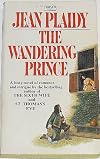
Charles II, the most fascinating rake in England's history. The story of the years he spent in exile as a young man is seen through the eyes of two women. Charles' sister Minette and his mistress Lucy Walter are brought vividly to life in this enthralling story of romance, escape and the youth of a king for whom love always came first.Tags
Recommendations
























Member Reviews
A more appropriate title would be The Wandering Princess as the book follows the sister of Charles II more than it does Charles II. The main character in this book is Henriette who is smuggled to France when she is two years old. The book chronicles her childhood and eventual dismal marriage to Prince Philippe. Plaidy also chronicles the eventual reign of Charles II after his exile, the early part of the reign of Louis XIV -- and of course the affairs of both men.
The book is a wonderfully complex and detailed historical fiction. While the sexual escapes are rampant, the author wisely leaves the details to the reader's imagination which saves from having to read pages and pages of ridiculously described sex scenes. The weakest points are show more how Plaidy writes children. The dialogue in those bits is unrealistic and rather silly. The book improves as the characters age. show less
The book is a wonderfully complex and detailed historical fiction. While the sexual escapes are rampant, the author wisely leaves the details to the reader's imagination which saves from having to read pages and pages of ridiculously described sex scenes. The weakest points are show more how Plaidy writes children. The dialogue in those bits is unrealistic and rather silly. The book improves as the characters age. show less
“The Wandering Prince” refers to Charles II of England, though the novel’s main focus is on his sister Henrietta, who’s more commonly known by the French version of her name: Henriette.
Most of the story takes place in France where Louis XIV is king. The narrative covers much of Henriette’s life through to her untimely demise.
The opening pages feature Henriette as a small child disguised as a boy with a small group trying to escape England for France. For me, this is the best part of the book. Sadly, when the story moves on from this scenario, my interest wavered for the rest of the novel.
Too much “telling”, not “showing”, is the biggest problem. Don’t explain what characters are like; show it via action and show more dialogue.
The narrative is slow moving, partly because of the lack of action, and partly because of the consistent use of the passive voice. It’s dry information that we get, rather than a lively story. The author uses a lot of reported speech, which she would’ve been better off changing to dialogue to bring the characters to life, rather than explain what they said.
Like with all Plaidy novels, certain info or themes are over-repeated. In this case, Charles and Henriette's unconditional love for each other is brought up again and again. it’s not so bad when the characters express this love for one another via dialogue, but when the third-person narrator keeps telling us that Henritte loves nobody more than Charles, and vice versa, it becomes boring and annoying. A talented author would find ways to *show* this mutual love without constantly having to *tell* the reader about it.
I liked the characterisations of Charles and Henriette but wasn’t as impressed with the author’s portrayal of Louis XIV. Having read a lot about Louis, the depiction of him here doesn’t fit with the image I’ve built up about him. I could be wrong, of course, but this is how it felt to me.
This had potential to be an exciting novel, but for reasons noted already, I only found it to be mildly interesting.
Something about Jean Plaidy’s books keep me coming back for more. Perhaps it’s her obvious love for English and French history, which I share, that draws me back. I wish she’d focused less on turning out as greater quantity of novels as possible and concentrated more on quality writing. A novel like this one should be revised about 20 times, yet this feels like a fifth draft at best. show less
Most of the story takes place in France where Louis XIV is king. The narrative covers much of Henriette’s life through to her untimely demise.
The opening pages feature Henriette as a small child disguised as a boy with a small group trying to escape England for France. For me, this is the best part of the book. Sadly, when the story moves on from this scenario, my interest wavered for the rest of the novel.
Too much “telling”, not “showing”, is the biggest problem. Don’t explain what characters are like; show it via action and show more dialogue.
The narrative is slow moving, partly because of the lack of action, and partly because of the consistent use of the passive voice. It’s dry information that we get, rather than a lively story. The author uses a lot of reported speech, which she would’ve been better off changing to dialogue to bring the characters to life, rather than explain what they said.
Like with all Plaidy novels, certain info or themes are over-repeated. In this case, Charles and Henriette's unconditional love for each other is brought up again and again. it’s not so bad when the characters express this love for one another via dialogue, but when the third-person narrator keeps telling us that Henritte loves nobody more than Charles, and vice versa, it becomes boring and annoying. A talented author would find ways to *show* this mutual love without constantly having to *tell* the reader about it.
I liked the characterisations of Charles and Henriette but wasn’t as impressed with the author’s portrayal of Louis XIV. Having read a lot about Louis, the depiction of him here doesn’t fit with the image I’ve built up about him. I could be wrong, of course, but this is how it felt to me.
This had potential to be an exciting novel, but for reasons noted already, I only found it to be mildly interesting.
Something about Jean Plaidy’s books keep me coming back for more. Perhaps it’s her obvious love for English and French history, which I share, that draws me back. I wish she’d focused less on turning out as greater quantity of novels as possible and concentrated more on quality writing. A novel like this one should be revised about 20 times, yet this feels like a fifth draft at best. show less
This was, in my humble opinion, an exceptional read. I truly loved this book. I was a little put off when I saw that it was written in 1956 (even before this old lady was born!), but it was so good I could hardly put it down. Characters came to life and just the perfect amount of dialogue vs. description. Can't wait to start reading Book 2!
Read this book again because it is part of the Stuart Saga which I am now reading. Loved it just as much!
Read this book again because it is part of the Stuart Saga which I am now reading. Loved it just as much!
Jean Plaidy was an old-fashioned writer and her historical novels are well-researched and accurate to the surrounding historical events, if not necessarily to the conversations and actions of her characters. This volume, the first in her Charles II trilogy tells of the time of Charles' exile before the Restoration and his relationship with his first significant mistress, Lucy Waters (the mother of the Duke of Monmouth) and his youngest sister Henriette who married the Duc d'Orleans.
This is the perfect escapist summer read.
This is the perfect escapist summer read.
Ratings
Members
- Recently Added By
Lists

al.vick-series
381 works; 2 members
Author Information

258+ Works 37,285 Members
Jean Plaidy was a British writer who wrote under various pen names. Her real name is Eleanor Alice Burford Hibbert. She was born in London on September 1, 1906. Most of the books written as Jean Plaidy are historical romances based on English history featuring historical figures. The first, Beyond the Blue Mountains, was published in 1947. Hibbert show more also wrote five nonfiction histories and two children's books. Besides Jean Plaidy, Hibbert wrote under Victoria Holt, Phillipa Carr, Elbur Ford, Kathleen Kellow, Ellalice Tate, and her maiden name, Eleanor Burford. Hibbert died on January 18, 1993. (Bowker Author Biography) show less
Some Editions
Series

Work Relationships
Is contained in
The Loves of Charles II (The Wandering Prince / A Health Unto His Majesty / Here Lies Our Sovereign Lord) by Jean Plaidy
Victoria Victorius, Sixth Wife, In the Shadow of the Crown, Queen and Lord M, Godess of the Green Room, Myself my Enemy, Regents Daughter, Beyond the Blue Mountains, Queen from Provence, Revolt of Eagles, Queens Husband, Star of Lancaster, Passionate Enemies, Louis the Well Beloved, Wandering Prince, Murder in the Tower, Health Unto his Majesty#, Courts of Love, Red Rose of Anjou, Queen of Scots, Here Lies our Soveriegn Lord, Madame Serpent #, by Jean Plaidy
Common Knowledge
- Canonical title
- The Wandering Prince
- Original publication date
- 1956
- People/Characters
- Charles II, King of England, Scotland, and Ireland; Henriette of England; Lucy Walter
Classifications
Statistics
- Members
- 114
- Popularity
- 282,065
- Reviews
- 4
- Rating
- (3.71)
- Languages
- English, Spanish
- Media
- Paper
- ISBNs
- 5
- ASINs
- 8