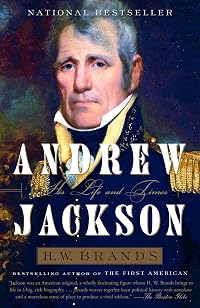
Andrew Jackson: His Life and Times
by H. W. Brands
On This Page
Description
The first "common man" to rise to the presidency, Jackson embodied the spirit and the vision of the emerging American nation; the term "Jacksonian democracy" is embedded in our national lexicon. Historian Brands follows Jackson from his days as rebellious youth, risking execution to free the Carolinas during the Revolutionary War, to his years as a young lawyer and congressman from the newly settled frontier state of Tennessee. As general of the Tennessee militia, his famous rout of the show more British at the Battle of New Orleans during the War of 1812 made him a national hero. But it is Jackson's presidency that won him a place among America's greatest leaders. A man of the people, he sought to make the country a genuine democracy, governed by and for the people. Although respectful of states' rights, when his home state threatened to secede, he promised to march down with 100,000 federal soldiers should it dare.--From publisher description. show lessTags
Recommendations







Member Reviews
Andrew Jackson was a destitute frontier orphan at the age of 14, an Indian fighter, reluctant politician, enthusiastic and hugely successful general, and two-term President late in life during the tumultuous 1830s, when the boundaries between Texas and Mexico were in flux and Texas declared independence. He was also a farmer, slave holder, dedicated duelist, loyal husband, father of an adopted son and of several foster Indian children, and devoted to preserving and expanding the Union against foreign incursions and internal strife. He was an errand boy during the Revolution yet lived long enough to be photographed. He believed that the people (i.e., white males) were able to make the best decisions for themselves, an issue which divided show more early leaders, many of whom thought the uneducated were not knowledgeable enough to make informed decisions. (I can't imagine what he and other leaders would make of the ability of today's talk media to sway the masses.) When Jackson died, arguments over states' rights and the issue of slavery in new states was heating up towards what astute observers realized would be a war. Jackson feared for the future of the Union, not foreseeing a Lincoln to save it.
Brands' book is quite long (650+ pages) and seemed to take me forever to read it, but none of it is wasted space. Jackson is used to link our earliest history as a nation and the war that almost tore us apart, and Brands does a good job of explaining how important Jackson was in simultaneously expanding and protecting our borders and encouraging some policies, such as slavery, which led to the Civil War. Jackson could be brutal, especially in his treatment of Indians, whom he felt should get out of the way of the conquerors or face extinction. He seemed to feel badly about the possibility of wiping them out, but he felt they were responsible for their own safety and should stay out of the way of the settlers, whom he didn't expect to take the high road. (Isn't this the argument made by apologists in societies that keep women hidden away: the dominant group can't be trusted so rather than police them, the powerless group should in effect be punished?)
The book is very readable, with a good mix of anecdotes, discussion of policy and politics, and quotes from letters and documents. There were some topics which could have been treated in more depth, and I'd have liked to hear more of what happened to the various native children Jackson fostered (one apparently died of TB at the age of 16, but that isn't mentioned). But Jackson was an important participant in so many pivotal events that to do them all justice would have been impossible without a multi-volume treatment. Extensive source notes and a bibliography provide ideas for expanded reading. In the Kindle edition there was no index (although Kindle searching is much more comprehensive than with a print index), and I don't know if there is an index in the print volume. Highly recommended. show less
Brands' book is quite long (650+ pages) and seemed to take me forever to read it, but none of it is wasted space. Jackson is used to link our earliest history as a nation and the war that almost tore us apart, and Brands does a good job of explaining how important Jackson was in simultaneously expanding and protecting our borders and encouraging some policies, such as slavery, which led to the Civil War. Jackson could be brutal, especially in his treatment of Indians, whom he felt should get out of the way of the conquerors or face extinction. He seemed to feel badly about the possibility of wiping them out, but he felt they were responsible for their own safety and should stay out of the way of the settlers, whom he didn't expect to take the high road. (Isn't this the argument made by apologists in societies that keep women hidden away: the dominant group can't be trusted so rather than police them, the powerless group should in effect be punished?)
The book is very readable, with a good mix of anecdotes, discussion of policy and politics, and quotes from letters and documents. There were some topics which could have been treated in more depth, and I'd have liked to hear more of what happened to the various native children Jackson fostered (one apparently died of TB at the age of 16, but that isn't mentioned). But Jackson was an important participant in so many pivotal events that to do them all justice would have been impossible without a multi-volume treatment. Extensive source notes and a bibliography provide ideas for expanded reading. In the Kindle edition there was no index (although Kindle searching is much more comprehensive than with a print index), and I don't know if there is an index in the print volume. Highly recommended. show less
Brands' biography makes it possible both to feel taken aback by Jackson's intense and often brutal decisions, while still glimpsing humanity through the cracks.
That is what made this book readable: humanity. The first two-thirds of the book are a challenging but entertaining read about the sinews of early American politics. For someone as ignorant of 19th-century American history as I am, there was a lot to learn. The boyhood saga of Jackson is readable and evocative.
Jackson is not a subtle man, shaped by his rough-and-ready upbringing. Nor is he particularly introspective or reflective. His executive actions are one-sided, simple and blunt. This is not a man plagued by ambivalence.
I don't have a strong interest in political science, so show more the last third of the book, when Jackson had gained national office, was not my favorite, especially the long section about the struggles with the National Bank. But the first two-thirds really helped to fill in my history gaps with some nice, thick brushwork.
Brands has a nice habit, for the most part, of selecting quotes from sources that are interesting and illustrative. He does fall in the trap occasionally of sounding as if he is defending or glossing over Jackson's missteps (The Trail of Tears gets but short shrift, for example). There are some side trips, but mostly interesting ones, like Sam Houston's Texas.
Overall, a good read for those trying to learn the basics about Old Hickory. show less
That is what made this book readable: humanity. The first two-thirds of the book are a challenging but entertaining read about the sinews of early American politics. For someone as ignorant of 19th-century American history as I am, there was a lot to learn. The boyhood saga of Jackson is readable and evocative.
Jackson is not a subtle man, shaped by his rough-and-ready upbringing. Nor is he particularly introspective or reflective. His executive actions are one-sided, simple and blunt. This is not a man plagued by ambivalence.
I don't have a strong interest in political science, so show more the last third of the book, when Jackson had gained national office, was not my favorite, especially the long section about the struggles with the National Bank. But the first two-thirds really helped to fill in my history gaps with some nice, thick brushwork.
Brands has a nice habit, for the most part, of selecting quotes from sources that are interesting and illustrative. He does fall in the trap occasionally of sounding as if he is defending or glossing over Jackson's missteps (The Trail of Tears gets but short shrift, for example). There are some side trips, but mostly interesting ones, like Sam Houston's Texas.
Overall, a good read for those trying to learn the basics about Old Hickory. show less
In the course of reading biographies for the US Presidents Challenge, I made it to Andrew Jackson this month. My first instinct was to read American Lion, since a new release of a softbound version is being marketed right now and like David McCullough's biography of John Adams, that's the one people seem to be reading. But I decided to look into other options, since I had read it a few years back when originally released in hardback. And I'm glad I did. As good as American Lion is, H. W. Brands' Andrew Jackson: His Life and Times also fills the bill for a highly readable, thoroughly enjoyable biography of one of our most interesting presidents.
I hadn't realized how driven Jackson was. At least as portrayed by Brands, he was completely show more focused on preserving the Union in his career, as a politician early in life, as a military commander and as President. He gave fits to those above him in the hierarchy because his focus (and the inability to easily communicate across distances at the time) led him to risk war with Spain in invading Florida, antagonize Britain by executing agents he believed were stirring the Indians to war against the United States, etc. He knew he was right and those who disagreed were his enemies. But his decisions also made him very popular with the common man - and he rode this wave of popularity into the White House and changed the way the US is governed to something much more like a true democracy.
Brands' portrayal of Jackson makes him come alive. His love of and devotion to his wife and family shine throughout the book. But Jackson's a tough character to write about. He was a product of his times - slave owner, military man, Indian fighter. He believed that the native population should be relocated west of the Mississippi, but he honestly believed it was for their own safety in avoiding conflict with white settlers. His scorched-earth tactics wiped out entire native towns and Spanish or British encampments. And yet he adopted children orphaned by his battles on two separate occasions. I can't imagine trying to figure out how to present what from our viewpoint seems so contradictory in a way that gives a full picture of the man. Brands does this remarkably well.
My biggest issue with Brands' book is that he spends lots of time with Jackson's military years, but seems to skim through the Presidency. Jackson took on the national bank, the Mexican government over Texas, and relocation of the native population to reservations across the Mississippi River, but these events only take up two or three chapters in the whole work. The Trail of Tears relocation only took up a few paragraphs. The fight over the structure of the US banking system brought about significant economic crisis, yet the discussion felt very shallow. Another 50 or so pages to allow more detailed discussion of some of these major issues would have been better, I think. Still, it's a very good introduction to the life of this very interesting, very dificult man. show less
I hadn't realized how driven Jackson was. At least as portrayed by Brands, he was completely show more focused on preserving the Union in his career, as a politician early in life, as a military commander and as President. He gave fits to those above him in the hierarchy because his focus (and the inability to easily communicate across distances at the time) led him to risk war with Spain in invading Florida, antagonize Britain by executing agents he believed were stirring the Indians to war against the United States, etc. He knew he was right and those who disagreed were his enemies. But his decisions also made him very popular with the common man - and he rode this wave of popularity into the White House and changed the way the US is governed to something much more like a true democracy.
Brands' portrayal of Jackson makes him come alive. His love of and devotion to his wife and family shine throughout the book. But Jackson's a tough character to write about. He was a product of his times - slave owner, military man, Indian fighter. He believed that the native population should be relocated west of the Mississippi, but he honestly believed it was for their own safety in avoiding conflict with white settlers. His scorched-earth tactics wiped out entire native towns and Spanish or British encampments. And yet he adopted children orphaned by his battles on two separate occasions. I can't imagine trying to figure out how to present what from our viewpoint seems so contradictory in a way that gives a full picture of the man. Brands does this remarkably well.
My biggest issue with Brands' book is that he spends lots of time with Jackson's military years, but seems to skim through the Presidency. Jackson took on the national bank, the Mexican government over Texas, and relocation of the native population to reservations across the Mississippi River, but these events only take up two or three chapters in the whole work. The Trail of Tears relocation only took up a few paragraphs. The fight over the structure of the US banking system brought about significant economic crisis, yet the discussion felt very shallow. Another 50 or so pages to allow more detailed discussion of some of these major issues would have been better, I think. Still, it's a very good introduction to the life of this very interesting, very dificult man. show less
Considered by some the most dangerous man to be President and others as one of their own that deserved the office, he ushered in a sea change in Washington and American politics. Andrew Jackson: His Life and Times by H.W. Brands follows the future President of the United States from his birth in the South Carolina backcountry to frontier town of Nashville to the battlefields of the Old Southwest then finally to the White House and how he gave his name to an era of American history.
Brands begins with a Jackson family history first from Scotland to Ulster then to the Piedmont region of the Carolina where his aunts and uncles had pioneered before his own parents immigrated. Fatherless from birth, Jackson’s childhood was intertwined with show more issues between the American colonies and Britain then eventually the Revolutionary War that the 13-year old Jackson participated in as a militia scout and guerilla fighter before his capture and illness while a POW. After the death of the rest of his family at the end of the war through illness, a young Jackson eventually went into law becoming one of the few “backcountry” lawyers in western North Carolina—including Tennessee which was claimed by North Carolina—before moving to Nashville and eventually becoming one of the founders of the state of Tennessee and become one of it’s most important military and political figures especially with his marriage to Rachel Donelson. Eventually Jackson’s status as the major general of the Tennessee militia led him to first fight the Creek War—part of the overall War of 1812—then after the successful conclusion of the campaign was made a major general of the regular army in charge of the defending New Orleans from British attack which ultimately culminated in the famous 1815 battle that occurred after the signing of the peace treaty in Ghent. As “the” military hero of the war, Jackson’s political capital grew throughout the Monroe administration even with his controversial invasion of Florida against the Seminole. After becoming the first U.S. Governor of Florida, Jackson left the army and eventually saw his prospects rise for the Presidency to succeed Monroe leading to the four-way Presidential contest of 1824 which saw Jackson win both the popular vote and plurality of electoral college votes but lose in the House to John Quincy Adams. The campaign for 1828 began almost immediately and by the time of the vote the result wasn’t in doubt. Jackson’s time in the White House was focused on the Peggy Eaton affair, the battle over Bank of the United States, the Nullification Crisis with South Carolina, Indian relations, and finally what was happening in Texas. After his time in office, Jackson struggled keeping his estate out of debt and kept up with the events of around the country until his death.
In addition to focusing on Jackson’s life, Brands make sure to give background to the events that he would eventually be crucial part of. Throughout the book Brands keeps three issues prominent: Unionism, slavery, and Indian relations that dominated Jackson’s life and/or political thoughts. While Brands hits hard Jackson’s belief in the Union and is nuanced when it comes with slavery, the relations with Indians is well done in some areas and fails in some (most notably the “Trail of Tears”). This is not a biography focused primarily on Jackson’s time in the White House and thus Brands only focused on the big issues that is primarily focused on schools instead of an intense dive into his eight years.
Andrew Jackson: His Life and Times is a informative look into the life of the seventh President of the United States and what was happening in the United States throughout his nearly eight decades of life. H.W. Brands’ writing style is given to very easy reading and his research provides very good information for both general and history specific readers, though he does hedge in some areas. Overall a very good biography. show less
Brands begins with a Jackson family history first from Scotland to Ulster then to the Piedmont region of the Carolina where his aunts and uncles had pioneered before his own parents immigrated. Fatherless from birth, Jackson’s childhood was intertwined with show more issues between the American colonies and Britain then eventually the Revolutionary War that the 13-year old Jackson participated in as a militia scout and guerilla fighter before his capture and illness while a POW. After the death of the rest of his family at the end of the war through illness, a young Jackson eventually went into law becoming one of the few “backcountry” lawyers in western North Carolina—including Tennessee which was claimed by North Carolina—before moving to Nashville and eventually becoming one of the founders of the state of Tennessee and become one of it’s most important military and political figures especially with his marriage to Rachel Donelson. Eventually Jackson’s status as the major general of the Tennessee militia led him to first fight the Creek War—part of the overall War of 1812—then after the successful conclusion of the campaign was made a major general of the regular army in charge of the defending New Orleans from British attack which ultimately culminated in the famous 1815 battle that occurred after the signing of the peace treaty in Ghent. As “the” military hero of the war, Jackson’s political capital grew throughout the Monroe administration even with his controversial invasion of Florida against the Seminole. After becoming the first U.S. Governor of Florida, Jackson left the army and eventually saw his prospects rise for the Presidency to succeed Monroe leading to the four-way Presidential contest of 1824 which saw Jackson win both the popular vote and plurality of electoral college votes but lose in the House to John Quincy Adams. The campaign for 1828 began almost immediately and by the time of the vote the result wasn’t in doubt. Jackson’s time in the White House was focused on the Peggy Eaton affair, the battle over Bank of the United States, the Nullification Crisis with South Carolina, Indian relations, and finally what was happening in Texas. After his time in office, Jackson struggled keeping his estate out of debt and kept up with the events of around the country until his death.
In addition to focusing on Jackson’s life, Brands make sure to give background to the events that he would eventually be crucial part of. Throughout the book Brands keeps three issues prominent: Unionism, slavery, and Indian relations that dominated Jackson’s life and/or political thoughts. While Brands hits hard Jackson’s belief in the Union and is nuanced when it comes with slavery, the relations with Indians is well done in some areas and fails in some (most notably the “Trail of Tears”). This is not a biography focused primarily on Jackson’s time in the White House and thus Brands only focused on the big issues that is primarily focused on schools instead of an intense dive into his eight years.
Andrew Jackson: His Life and Times is a informative look into the life of the seventh President of the United States and what was happening in the United States throughout his nearly eight decades of life. H.W. Brands’ writing style is given to very easy reading and his research provides very good information for both general and history specific readers, though he does hedge in some areas. Overall a very good biography. show less
Andrew Jackson, His Life and Times by H.W. Brands 2005
The primary reason I bought this book was to compare the only other "populist" president I knew of, with the current one. I know Jackson did some nasty things in his life--but was he as despised and loved in his time as "the current president"? Are there any lessons to be made from the comparison?
In the Introduction we see Jackson's life summarized: "He had been fighting for the people's right to direct their own affairs since the Revolutionary War, when, as a mere boy, he took up arms against Britain. A gash to the head from a British sword left him with a permanent crease in his skull and an abiding hostility to all things British; smallpox contracted in a British prison marked show more the beginning of a lifetime of compromised health. The war also cost him his mother and brothers, throwing him orphaned upon a turbulent, threatening world."
Before his mother went off to try to save their cousins from British prisons (and died in the attempt) she told him:
"In this world you will have to make your own way. To do that you must have friends. You can make friends by being honest, and you can keep them by being steadfast. You must keep in mind that friends worth having will in the long run expect as much from you as they give to you. To forget an obligation or be ungrateful for a kindness is a base crime—not merely a fault or a sin, but an actual crime. Men guilty of it sooner or later must suffer the penalty. In personal conduct be polite, but never obsequious. No one will respect you more than you esteem yourself. Avoid quarrels as long as you can without yielding to imposition. But sustain your manhood always. Never bring a suit at law for assault and battery of for defamation. The law affords no remedy for such outrages that can satisfy the feelings of a true man. Never wound the feeling of others. Never brook wanton outrage upon your own feelings. If you ever have to vindicate your feelings or defend your honor, do it calmly. If angry at first, wait till your wrath cools before you proceed."
Brands says "the memory of his mother—whether accurate or embellished—became his guiding star.
"…her last words have been the law of my life… " Jackson said. "I might about as well have been penniless, as I already was homeless and friendless. The memory of my mother and her teachings were after all the only capital I had to start in life, and on that capital I have made my way."
So, in the first 40 pages of this biography I find the defining difference between the two "populist" presidents over a century apart.
"After three months in the House and another three in the Senate, Jackson discovered he wasn't cut out for politics, at least not legislative politics. He could make decisions far more easily than he could make compromises. He had much greater confidence in his own judgment than in that of others. He was a born leader who couldn't make himself into a follower."
Thomas Jefferson is quoted as saying "I feel much alarmed at the prospect of seeing General Jackson President. He is one of the most unfit men I know of for such a place. He has very little respect for law or constitutions….He is a dangerous man."
"…a lesson [Jackson] had learned in the Revolutionary War, one that would inform his military policy—and in fact his whole political philosophy—for the rest of his life. 'The poor always make the best soldiers,' he said. The rich were unreliable."
Sam Houston: "Nearly every young man who served under Jackson came to view the general as a second father, but for none did the paternal element matter more than for Houston….Andrew Jackson—now there was a model for any lad. He was fearless as Houston hoped he himself would be, as principled, as devoted to cause and country. From the moment they were introduced, during that difficult winter of the campaign against the Creeks, the young lieutenant sought to attract the general's attention and win his favor."
In general, I find that this book gives a good overview of Jackson's actions; but much less of his thoughts and feelings. For that I recommend "American Lion" by Jon Meacham. In both books I've found some intriguing comparisons with a modern President. show less
The primary reason I bought this book was to compare the only other "populist" president I knew of, with the current one. I know Jackson did some nasty things in his life--but was he as despised and loved in his time as "the current president"? Are there any lessons to be made from the comparison?
In the Introduction we see Jackson's life summarized: "He had been fighting for the people's right to direct their own affairs since the Revolutionary War, when, as a mere boy, he took up arms against Britain. A gash to the head from a British sword left him with a permanent crease in his skull and an abiding hostility to all things British; smallpox contracted in a British prison marked show more the beginning of a lifetime of compromised health. The war also cost him his mother and brothers, throwing him orphaned upon a turbulent, threatening world."
Before his mother went off to try to save their cousins from British prisons (and died in the attempt) she told him:
"In this world you will have to make your own way. To do that you must have friends. You can make friends by being honest, and you can keep them by being steadfast. You must keep in mind that friends worth having will in the long run expect as much from you as they give to you. To forget an obligation or be ungrateful for a kindness is a base crime—not merely a fault or a sin, but an actual crime. Men guilty of it sooner or later must suffer the penalty. In personal conduct be polite, but never obsequious. No one will respect you more than you esteem yourself. Avoid quarrels as long as you can without yielding to imposition. But sustain your manhood always. Never bring a suit at law for assault and battery of for defamation. The law affords no remedy for such outrages that can satisfy the feelings of a true man. Never wound the feeling of others. Never brook wanton outrage upon your own feelings. If you ever have to vindicate your feelings or defend your honor, do it calmly. If angry at first, wait till your wrath cools before you proceed."
Brands says "the memory of his mother—whether accurate or embellished—became his guiding star.
"…her last words have been the law of my life… " Jackson said. "I might about as well have been penniless, as I already was homeless and friendless. The memory of my mother and her teachings were after all the only capital I had to start in life, and on that capital I have made my way."
So, in the first 40 pages of this biography I find the defining difference between the two "populist" presidents over a century apart.
"After three months in the House and another three in the Senate, Jackson discovered he wasn't cut out for politics, at least not legislative politics. He could make decisions far more easily than he could make compromises. He had much greater confidence in his own judgment than in that of others. He was a born leader who couldn't make himself into a follower."
Thomas Jefferson is quoted as saying "I feel much alarmed at the prospect of seeing General Jackson President. He is one of the most unfit men I know of for such a place. He has very little respect for law or constitutions….He is a dangerous man."
"…a lesson [Jackson] had learned in the Revolutionary War, one that would inform his military policy—and in fact his whole political philosophy—for the rest of his life. 'The poor always make the best soldiers,' he said. The rich were unreliable."
Sam Houston: "Nearly every young man who served under Jackson came to view the general as a second father, but for none did the paternal element matter more than for Houston….Andrew Jackson—now there was a model for any lad. He was fearless as Houston hoped he himself would be, as principled, as devoted to cause and country. From the moment they were introduced, during that difficult winter of the campaign against the Creeks, the young lieutenant sought to attract the general's attention and win his favor."
In general, I find that this book gives a good overview of Jackson's actions; but much less of his thoughts and feelings. For that I recommend "American Lion" by Jon Meacham. In both books I've found some intriguing comparisons with a modern President. show less
**rating is actually 4.5 out of 5 stars**
So I really did enjoy this book; I always enjoy reading books that make me think - really think - about how people, society, and times were/might have been versus how I see them.
I’m giving this book a 4.5 out of 5 star rating. I just think that there were certain parts that could have been broken down and/or explained better, but then again - as with any of my historical nonfiction reading - clarity may come with a reread.
I think that H.W. Brands did a fantastic job in constructing Andrew Jackson’s life; I’ve never really liked Jackson, but I always find it nice learning more about someone or something I didn’t know much about.
So I really did enjoy this book; I always enjoy reading books that make me think - really think - about how people, society, and times were/might have been versus how I see them.
I’m giving this book a 4.5 out of 5 star rating. I just think that there were certain parts that could have been broken down and/or explained better, but then again - as with any of my historical nonfiction reading - clarity may come with a reread.
I think that H.W. Brands did a fantastic job in constructing Andrew Jackson’s life; I’ve never really liked Jackson, but I always find it nice learning more about someone or something I didn’t know much about.
Brands does a fantastic job enlightening on a president who had previously been for me a rather mysterious and ambiguous character. This study reveals him to be a much more sympathetic, if still rough and flawed, character. Brands presents him as a man whose public life was relentlessly dedicated to two central goals; protecting the interest and liberty of the common man, and neutralizing any potential threat to the nation which made that liberty possible, whether that threat come from Indians, foreign nations (ie, Britain), or secession. Brands reveals the private Jackson as well, and the man's devotion to his family and wife in particular was especially revealing, surprising and touching. A worthy biography.
Members
- Recently Added By
Lists

Best Biographies
216 works; 26 members

Best Biographies of U.S. Presidents
61 works; 6 members

Presidential Books
15 works; 2 members

Books Read in 2012
816 works; 34 members
Biographies of American Presidents
39 works; 4 members
Author Information

55+ Works 12,093 Members
H.W. Brands was born Henry William Brands in Oregon. He graduated from Stanford University in 1975 with a B.A. in history, and from Jesuit High School in Portland, Oregon. He went on to earn his graduate degree in mathematics and history in Oregon and Texas. He taught at Vanderbilt University and Texas A&M University before he joined the faculty show more at the University of Texas at Austin. He acquired the title of Dickson Allen Anderson Centennial Professor of History at the U of Texas. He specializes in American History and politics, with books including Traitor to His Class, Andrew Jackson, The Age of Gold, the First American, and TR. Several of his books have been best sellers, including one recently published, The General vs. the President. Two of them - Traitor to His Class and The First American were finalist for the Pulitzer Prize. He lectures often on historical and current events and he can be seen and heard on national television and radio programs. (Bowker Author Biography) H. W. Brands lives in Austin, Texas. (Publisher Provided) H. W. Brands is Distinguished Professor of History and Ralph R. Thomas '21 Professor in Liberal Arts, Texas A&M University. (Bowker Author Biography) show less
Common Knowledge
- Canonical title
- Andrew Jackson: His Life and Times
- Alternate titles
- Andrew Jackson
- People/Characters
- Andrew Jackson; Rachel Jackson; John Quincy Adams; John C. Calhoun; Henry Clay; Thomas Jefferson (show all 9); James Madison; James Monroe; Martin van Buren
- Important events
- Battle of New Orleans; Jacksonian Era; War of 1812 (1812-1815); Creek War; United States presidential election (1828)
- Blurbers
- Winik, Jay; Brinkley, Douglas
- Original language
- English
Classifications
- Genres
- History, Biography & Memoir, Nonfiction, General Nonfiction
- DDC/MDS
- 920 — History & geography Biographies, Genealogy, Healdry Biographies
- LCC
- E382 .B83 — History of the United States United States Revolution to the Civil War, 1775/1783-1861 By period Early nineteenth century, 1801/1809-1845 Jackson's administrations, 1829-1837
- BISAC
Statistics
- Members
- 1,058
- Popularity
- 24,317
- Reviews
- 24
- Rating
- (3.98)
- Languages
- English
- Media
- Paper, Audiobook, Ebook
- ISBNs
- 11
- ASINs
- 5