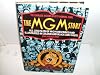
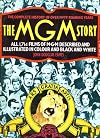
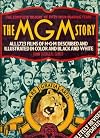
The MGM Story: The Complete History of Fifty Roaring Years
by John Douglas Eames
The Hollywood Studio Series
On This Page
Description
The major Hollywood movie company's successes and failures are traced in numerous stills and brief sketches of actors, plots, and the public reception of more than seventeen hundred films.Tags
Recommendations





















Member Recommendations


Member Reviews
“Make it good…make it big…give it class!”
The MGM Story was the first in that string of all-encompassing film books about each studio. It set the template for the others, with a listing of each fabulous film, and at least a small but lush photo taken from the film. It does differ from the others in a few minor ways, however.
The index at the back is not separated into personnel and film sections, as it is in the RKO book. This makes it a shade slower to find something — or someone — you wish to look up. This continued in The WB Story. It’s a minor quibble, but it’s such a wealth of information for researchers of the studio, that it is worth a casual mention.
The text at the beginning is a basic overview of the forming of show more MGM. It is a story of theater chains and mergers. Once Mayer and the wunderkind, Irving Thalberg took the reins, it became an icon marked by prestige and profits. MGM was a studio with more stars than in the heavens, and boasted the world’s largest — at the time — film laboratory. However, I didn’t find it particularly insightful — or critical — as was the overview of the tumultuous RKO.
For example, the often contentious relationship between Thalberg and Mayer, two men who needed each other yet were often at odds, is given short thrift here. While Mayer’s business acumen and Thalberg’s film instincts and production genius are touched upon, the massive gap between their personalities, sense of taste, and foresight is not given much ink.
The staggering blow to the studio when the sickly Thalberg died young in 1936, gets a mention, as does Mayer’s ability to keep MGM on top for another decade-plus, even without the production genius of Irving Thalberg. Just a few more pages about their relationship, however, and the years following Thalberg’s death, could have filled in some gaps for the novice. Mayer’s wish for everyone working there to feel like family became a reality. It didn’t mean everyone in the family was always happy, or that Papa Mayer wasn’t sticking it to you at times, but it was, more than any other studio, a family. It was also an organization like no other studio. Almost like baseball scouts, MGM had people scouring around to find new talent. Garbo was found in Berlin, Greer Garson in London, and little Judy Garland in their own backyard.
The final difference between The MGM Story and the others, might be the size and quality of the photos. Gadzooks! Like the other books, this is glossy, good quality stuff, perfect for photos of the gazillion films MGM made in both America and Britain (unlike The RKO Story, the British films are given photos and commentary along with the more familiar Hollywood films). The photos are not only magnificent, some of them take up entire pages! They’re beautiful shots of so many stars and films it makes any film buff salivate. The frequency as you turn pages of the larger photos popping up is surprising, and a delight. Were it not for destroying the book, fans might be tempted to frame some of them.
There is a shot of James Craig and little Margaret O’Brien in Lost Angel that is particularly wonderful. Another is a quarter-page shot of Robert Walker and Judy Garland in The Clock. My favorite, perhaps, is a half-page photo from Three Comrades. It is the scene under the pier, as Margaret Sullavan and Robert Taylor curl up together on the sand against the dock pillars. The expression on Sullavan’s face — which Taylor can’t see — tells you that her character knows something sad that Taylor does not yet know.
The weight of this one, with all these photos, is hefty. It encompasses the silent film era also, covering MGM from 1924 - 1981 (I believe there have been updates, but that’s the version I own). When you open up the book, you immediately get a shot of the sprawling acres of sets, and a kind of outline of the backlot. At the back is a section of photos from musicals, and it’s the only section I found disappointing. Some are blurry, especially the color ones — the rest of the book’s photos are black and white, of course. It’s like someone decided to throw them in at the last second, and they don’t match up in quality or tone with the rest of the book.
The MGM Story is an invaluable resource for anyone who loves film. For fans, it’s as close to heaven on earth as you’re likely to get. Just a fabulous book every person who loves the movies should own. show less
The MGM Story was the first in that string of all-encompassing film books about each studio. It set the template for the others, with a listing of each fabulous film, and at least a small but lush photo taken from the film. It does differ from the others in a few minor ways, however.
The index at the back is not separated into personnel and film sections, as it is in the RKO book. This makes it a shade slower to find something — or someone — you wish to look up. This continued in The WB Story. It’s a minor quibble, but it’s such a wealth of information for researchers of the studio, that it is worth a casual mention.
The text at the beginning is a basic overview of the forming of show more MGM. It is a story of theater chains and mergers. Once Mayer and the wunderkind, Irving Thalberg took the reins, it became an icon marked by prestige and profits. MGM was a studio with more stars than in the heavens, and boasted the world’s largest — at the time — film laboratory. However, I didn’t find it particularly insightful — or critical — as was the overview of the tumultuous RKO.
For example, the often contentious relationship between Thalberg and Mayer, two men who needed each other yet were often at odds, is given short thrift here. While Mayer’s business acumen and Thalberg’s film instincts and production genius are touched upon, the massive gap between their personalities, sense of taste, and foresight is not given much ink.
The staggering blow to the studio when the sickly Thalberg died young in 1936, gets a mention, as does Mayer’s ability to keep MGM on top for another decade-plus, even without the production genius of Irving Thalberg. Just a few more pages about their relationship, however, and the years following Thalberg’s death, could have filled in some gaps for the novice. Mayer’s wish for everyone working there to feel like family became a reality. It didn’t mean everyone in the family was always happy, or that Papa Mayer wasn’t sticking it to you at times, but it was, more than any other studio, a family. It was also an organization like no other studio. Almost like baseball scouts, MGM had people scouring around to find new talent. Garbo was found in Berlin, Greer Garson in London, and little Judy Garland in their own backyard.
The final difference between The MGM Story and the others, might be the size and quality of the photos. Gadzooks! Like the other books, this is glossy, good quality stuff, perfect for photos of the gazillion films MGM made in both America and Britain (unlike The RKO Story, the British films are given photos and commentary along with the more familiar Hollywood films). The photos are not only magnificent, some of them take up entire pages! They’re beautiful shots of so many stars and films it makes any film buff salivate. The frequency as you turn pages of the larger photos popping up is surprising, and a delight. Were it not for destroying the book, fans might be tempted to frame some of them.
There is a shot of James Craig and little Margaret O’Brien in Lost Angel that is particularly wonderful. Another is a quarter-page shot of Robert Walker and Judy Garland in The Clock. My favorite, perhaps, is a half-page photo from Three Comrades. It is the scene under the pier, as Margaret Sullavan and Robert Taylor curl up together on the sand against the dock pillars. The expression on Sullavan’s face — which Taylor can’t see — tells you that her character knows something sad that Taylor does not yet know.
The weight of this one, with all these photos, is hefty. It encompasses the silent film era also, covering MGM from 1924 - 1981 (I believe there have been updates, but that’s the version I own). When you open up the book, you immediately get a shot of the sprawling acres of sets, and a kind of outline of the backlot. At the back is a section of photos from musicals, and it’s the only section I found disappointing. Some are blurry, especially the color ones — the rest of the book’s photos are black and white, of course. It’s like someone decided to throw them in at the last second, and they don’t match up in quality or tone with the rest of the book.
The MGM Story is an invaluable resource for anyone who loves film. For fans, it’s as close to heaven on earth as you’re likely to get. Just a fabulous book every person who loves the movies should own. show less
Ratings
Members
- Recently Added By
Author Information
4 Works 384 Members
Series

Common Knowledge
- Canonical title
- The MGM Story: The Complete History of Fifty Roaring Years
- Important places
- Hollywood, Los Angeles, California, USA
- Epigraph*
- The complete history of sixty-five roaring years. Ars Gratia Artis.
- Dedication
- This book is for JANE WILLIAMS
*Some information comes from Common Knowledge in other languages. Click "Edit" for more information.
Classifications
- Genres
- Nonfiction, General Nonfiction, History
- DDC/MDS
- 791.43 — Arts & recreation Recreation, sports, and performing arts Movies, TV, Video Motion pictures, radio, television, podcasting Motion pictures
- LCC
- PN1999 .M4 .E2 — Language and Literature Literature (General) Literature (General) Drama Motion pictures
Statistics
- Members
- 267
- Popularity
- 120,672
- Reviews
- 1
- Rating
- (4.09)
- Languages
- Dutch, English, French
- Media
- Paper
- ISBNs
- 10
- ASINs
- 7