On This Page
Description
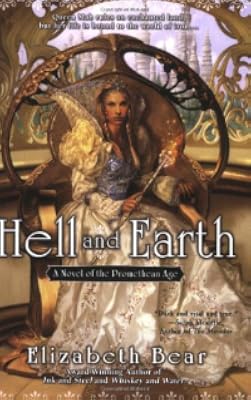
Kit Marley and William Shakespeare are playwrights in the service of Queen Elizabeth, employed by the Prometheus Club. Their words, infused with magic, empower Her Majesty's rule. But some of the Prometheans, comprised of England's most influential men and mages, conspire to usurp the Queen. Able to walk in both worlds, Kit seeks allies to aid him in his mission to protect Elizabeth - only to encounter enemies, mortal and monster, who will stop at nothing to usher in a new age. But despite show more the might of his adversaries, Kit possesses more power than even he can possibly imagine. show lessTags
Recommendations










Member Reviews
Rating: 3.5* of five
The Book Description: Kit Marley and William Shakespeare are playwrights in the service of Queen Elizabeth, employed by the Prometheus Club. Their words, infused with magic, empower Her Majesty's rule. But some of the Prometheans, comprised of England's most influential men and mages, conspire to usurp the Queen.
Able to walk in both worlds, Kit seeks allies to aid him in his mission to protect Elizabeth only to encounter enemies, mortal and monster, who will stop at nothing to usher in a new age. But despite the might of his adversaries, Kit possesses more power than even he can possibly imagine.
My Review: I can't believe I so spectacularly failed to pay attention to the position this book occupies I a series! I am show more usually completely obsessive about reading series in order. I dislike intensely the feeling of not understanding why something is a climactic moment, when the structure so clearly says that it is...and then, going back to fill in the backstory, I run across the cliffhanger or set-up for the later climax and it's just completely ruined by foreknowledge.
Anyway. This is the fourth book of “The Promethean Age” series Bear wrote in an alternate England still touching the Faerie lands ruled by the Mebd (given to us by Shakespeare, our primary POV character, as Queen Mab). The reason for Queen Elizabeth I's greatness and enduring fame are given as her England's intertwined destiny with Faerie, and her own shadowing of the Mebd's rise to power.
Christopher Marlowe, Richard Baines, Ben Jonson, Thomas Walsingham and a host of other factual figures are used cleverly in this fictional story of intrigues resolved and debts of dishonor paid. It's a wonderful, creative beast stitched together like a Faerie bard's patchwork cloak from bits and snatches of fact and hints of facts gleaned by the careful between-the-lines reading of the author. The conspirators of the Gunpowder Plot, which was a Catholic effort to blow King James I and his family to Glory at the opening of a Parliamentary session, are revealed to have been making a Royal sacrifice, one that would spill Royal blood to sustain the order of the Universe as it was and therefore to prevent change from coming to the material world.
The dark machinations of the Prometheans are all in service of giving the world a vengeful, angry God that will enforce the power and influence of the Prometheans themselves and their evil legatees The poets and playwrights Shakespeare, Marlowe, Jonson et alii are allied against the Prometheans in these designs, gifted with the most extraordinary ability to write the world in the image they'd have it take. Their loyalty is to Elizabeth, Gloriana as she was then known to her world, the strongest Royal ruler England was ever to know. Their plays and poems are all calculated to give her reign the full force and power she needs to guide England through its rejection of world-straddling Catholicism and its dominion over Faerie.
It's a very frustrating read at first because the book is written in faux-Shakespeearean English, with “thee” and “thou” and “sitteth” heaved around with seeming randomness. The effort I made to read past this stylistic tic was too much, and I would have abandoned ship early on, except I love the story itself. As I slogged on, I realized Bear isn't being random in her use of the old-fashioned English forms. She's pointing up, subtly and nicely (in the oldest sense of that word), the shift that Shakespeare and Marlowe were leading into modern forms of English I shifted from tooth-gritted impatience to a mellower judgment, followed closely by a respectful half-awe at the subtlety of this device and its deployment. Oh, well done, I found myself thinking many times as Lucifer and angel Mehiel and Marlowe would converse Will Shakespeare and Kit Marlowe, here lovers of the most passionate sort, are the only characters who never use anything but the familiar “thee” to each other. It's exactly right for them. It's so quiet that it might easily go unremarked, but if you read this series, be on the lookout for this trope. It will add something good and large to your appreciation of the writing.
Homosexuality. Big topic. I am on record as finding the modern desire to “out” people in history as “gay” before such an identity existed as absurd. These men, though, aren't gay in the modern identity sense They're in love with each other, and the married one (Shakespeare) is deeply and lastingly troubled by his infidelity to his wife with Marlowe. They reach an accommodation, one reached by many, many people caught in that situation before and since, of acknowledging their love, not acting on it. Cold comfort for the spouse of the one, terrible pain for all, and nothing to be done about it. Well, that's the nature of marriage, isn't it? Making choices, sticking to them as best one can, cobbling together the most workable solution for all the parties. It's a ringingly true part of this writer's repertoire to explore the love and the passion and the needs of people in ordinary situations. She's done so in every one of her books that I've read, and it's a good reason to try her books out if you haven't yet.
I remain annoyed that I know the end of the story before I've read the beginning. I wish like fury I'd started at the start and only reached this point after going where Bear wanted me to go first. But, unless something very weird has happened here, I'd recommend that you go read the books in their proper order: Blood and Iron, Whiskey and Water, Ink and Steel, and lastly Hell and Earth. The ending is one helluva (pardon, please, the pun after you read the books) bang that is really worth the buck. show less
The Book Description: Kit Marley and William Shakespeare are playwrights in the service of Queen Elizabeth, employed by the Prometheus Club. Their words, infused with magic, empower Her Majesty's rule. But some of the Prometheans, comprised of England's most influential men and mages, conspire to usurp the Queen.
Able to walk in both worlds, Kit seeks allies to aid him in his mission to protect Elizabeth only to encounter enemies, mortal and monster, who will stop at nothing to usher in a new age. But despite the might of his adversaries, Kit possesses more power than even he can possibly imagine.
My Review: I can't believe I so spectacularly failed to pay attention to the position this book occupies I a series! I am show more usually completely obsessive about reading series in order. I dislike intensely the feeling of not understanding why something is a climactic moment, when the structure so clearly says that it is...and then, going back to fill in the backstory, I run across the cliffhanger or set-up for the later climax and it's just completely ruined by foreknowledge.
Anyway. This is the fourth book of “The Promethean Age” series Bear wrote in an alternate England still touching the Faerie lands ruled by the Mebd (given to us by Shakespeare, our primary POV character, as Queen Mab). The reason for Queen Elizabeth I's greatness and enduring fame are given as her England's intertwined destiny with Faerie, and her own shadowing of the Mebd's rise to power.
Christopher Marlowe, Richard Baines, Ben Jonson, Thomas Walsingham and a host of other factual figures are used cleverly in this fictional story of intrigues resolved and debts of dishonor paid. It's a wonderful, creative beast stitched together like a Faerie bard's patchwork cloak from bits and snatches of fact and hints of facts gleaned by the careful between-the-lines reading of the author. The conspirators of the Gunpowder Plot, which was a Catholic effort to blow King James I and his family to Glory at the opening of a Parliamentary session, are revealed to have been making a Royal sacrifice, one that would spill Royal blood to sustain the order of the Universe as it was and therefore to prevent change from coming to the material world.
The dark machinations of the Prometheans are all in service of giving the world a vengeful, angry God that will enforce the power and influence of the Prometheans themselves and their evil legatees The poets and playwrights Shakespeare, Marlowe, Jonson et alii are allied against the Prometheans in these designs, gifted with the most extraordinary ability to write the world in the image they'd have it take. Their loyalty is to Elizabeth, Gloriana as she was then known to her world, the strongest Royal ruler England was ever to know. Their plays and poems are all calculated to give her reign the full force and power she needs to guide England through its rejection of world-straddling Catholicism and its dominion over Faerie.
It's a very frustrating read at first because the book is written in faux-Shakespeearean English, with “thee” and “thou” and “sitteth” heaved around with seeming randomness. The effort I made to read past this stylistic tic was too much, and I would have abandoned ship early on, except I love the story itself. As I slogged on, I realized Bear isn't being random in her use of the old-fashioned English forms. She's pointing up, subtly and nicely (in the oldest sense of that word), the shift that Shakespeare and Marlowe were leading into modern forms of English I shifted from tooth-gritted impatience to a mellower judgment, followed closely by a respectful half-awe at the subtlety of this device and its deployment. Oh, well done, I found myself thinking many times as Lucifer and angel Mehiel and Marlowe would converse Will Shakespeare and Kit Marlowe, here lovers of the most passionate sort, are the only characters who never use anything but the familiar “thee” to each other. It's exactly right for them. It's so quiet that it might easily go unremarked, but if you read this series, be on the lookout for this trope. It will add something good and large to your appreciation of the writing.
Homosexuality. Big topic. I am on record as finding the modern desire to “out” people in history as “gay” before such an identity existed as absurd. These men, though, aren't gay in the modern identity sense They're in love with each other, and the married one (Shakespeare) is deeply and lastingly troubled by his infidelity to his wife with Marlowe. They reach an accommodation, one reached by many, many people caught in that situation before and since, of acknowledging their love, not acting on it. Cold comfort for the spouse of the one, terrible pain for all, and nothing to be done about it. Well, that's the nature of marriage, isn't it? Making choices, sticking to them as best one can, cobbling together the most workable solution for all the parties. It's a ringingly true part of this writer's repertoire to explore the love and the passion and the needs of people in ordinary situations. She's done so in every one of her books that I've read, and it's a good reason to try her books out if you haven't yet.
I remain annoyed that I know the end of the story before I've read the beginning. I wish like fury I'd started at the start and only reached this point after going where Bear wanted me to go first. But, unless something very weird has happened here, I'd recommend that you go read the books in their proper order: Blood and Iron, Whiskey and Water, Ink and Steel, and lastly Hell and Earth. The ending is one helluva (pardon, please, the pun after you read the books) bang that is really worth the buck. show less
This is the sequel to _Ink and Steel_, and readers should definitely start there first.
Kit Marley has made a deal with the devil and Will Shakespeare is freed from Hell. But Elizabeth's health is failing, those who intrigue against her are as strong as ever, spreading plague and killing poets such as Spenser who defend the Queen with the magic of their words, and events are echoed in Faerie where Queen Mebd is also threatened by intrigue. Kit continues to act for the Queen of Faerie, as well traveling to London to aid his friends, and he is searching for the killer of Shakespeare's son. He also needs to deal with his past, when he was captured and tortured by the same enemies who threaten the sovereignty of England now.
An Elizabethan show more age, full of plots and treason and dark magic comes alive in this conclusion to The Stratford Man story. Even more marvelous are the characters; aside from Marley and Shakespeare (who are enough to fill any tale by themselves), there are their fellow poets and playwrights, Ben Jonson and George Chapman; there is Burbage and the players; Elizabeth's nobles and ministers--the Cecils, Walsinghams, Oxford, Essex, Raleigh, and various friends and relations. And the creatures of Faerie are also a natural fit to the world of this book, with the Queen and her sister Morgan, Puck, and the sleeping Arthur, and the unquiet trees. There is also Lucifer and an angel. And because words and poetry have power and import, the language is luxurious and quotations abound, making this rich, strange world even more complex and beautiful. There is also not a little action and suspense and a worthy climax or two or three. And there is a necessary Epilogue wherein we are sad and talk of the death of kings... of repentance and salvation.
This duology is beautiful and horrific, sorrowful and amusing, gripping and fun. It's well worth a first read along with a second or third. Writing like this is one of the joys of life. show less
Kit Marley has made a deal with the devil and Will Shakespeare is freed from Hell. But Elizabeth's health is failing, those who intrigue against her are as strong as ever, spreading plague and killing poets such as Spenser who defend the Queen with the magic of their words, and events are echoed in Faerie where Queen Mebd is also threatened by intrigue. Kit continues to act for the Queen of Faerie, as well traveling to London to aid his friends, and he is searching for the killer of Shakespeare's son. He also needs to deal with his past, when he was captured and tortured by the same enemies who threaten the sovereignty of England now.
An Elizabethan show more age, full of plots and treason and dark magic comes alive in this conclusion to The Stratford Man story. Even more marvelous are the characters; aside from Marley and Shakespeare (who are enough to fill any tale by themselves), there are their fellow poets and playwrights, Ben Jonson and George Chapman; there is Burbage and the players; Elizabeth's nobles and ministers--the Cecils, Walsinghams, Oxford, Essex, Raleigh, and various friends and relations. And the creatures of Faerie are also a natural fit to the world of this book, with the Queen and her sister Morgan, Puck, and the sleeping Arthur, and the unquiet trees. There is also Lucifer and an angel. And because words and poetry have power and import, the language is luxurious and quotations abound, making this rich, strange world even more complex and beautiful. There is also not a little action and suspense and a worthy climax or two or three. And there is a necessary Epilogue wherein we are sad and talk of the death of kings... of repentance and salvation.
This duology is beautiful and horrific, sorrowful and amusing, gripping and fun. It's well worth a first read along with a second or third. Writing like this is one of the joys of life. show less
All of the reversals, betrayals, unexpected good fortune, and tragic love a girl could ask for. The Stratford Man as a whole turns out to be a thoughtful exploration of love and loyalty and the nature of storytelling, and comes out to a perfectly satisfying conclusion.
There are some particularly good bits regarding Lucifer - his motives, his methods, and his philosophy, presented wrapped in some rather stunning language and imagery. The Elizabethan idiom throughout worked really well for me - it was a nice compromise between readability and accuracy. Lovely overall, and now I have to go find the rest of the Promethean Age books.
There are some particularly good bits regarding Lucifer - his motives, his methods, and his philosophy, presented wrapped in some rather stunning language and imagery. The Elizabethan idiom throughout worked really well for me - it was a nice compromise between readability and accuracy. Lovely overall, and now I have to go find the rest of the Promethean Age books.
In the sequel to Ink and Steel, the poets Christopher Marlowe and William Shakespeare contend with intrigues by rebels, sorcerers, faeries, and the Devil himself to control the future of England and of all humanity. The tale spans the final years of Elizabeth I's reign and continues into that of James I, and covers darker material than Ink and Steel.
Bear continues her excellent job of depicting a different era without requiring that we resort to reference material or copious footnotes; the only word I had to look up was "ceruse".
This is a fine tale in its own right, and not mere backstory to Whiskey and Water; if someone already enjoys historical settings, I think starting them on this pair of books before moving on to the ones set in show more the modern era would be a fine idea. show less
Bear continues her excellent job of depicting a different era without requiring that we resort to reference material or copious footnotes; the only word I had to look up was "ceruse".
This is a fine tale in its own right, and not mere backstory to Whiskey and Water; if someone already enjoys historical settings, I think starting them on this pair of books before moving on to the ones set in show more the modern era would be a fine idea. show less
Very satisfying read, as I've come to expect from Bear. While the intrigues could have been explained a bit more (especially on the fae side), I felt a kinship with the characters who were never quite certain as to what was going on. There was much less angst about who might be doing whom in this volume than in the last, which was a relief.
Hell and Earth is Elizabeth Bear’s sequel to Ink and Steel. Kit Marlowe is dead and living in Faerie. Will Shakespeare is writing good plays and dealing with conspiracies. Elizabeth dies. James takes over. Faerie is disturbed. Angels and demons are involved. Of course. Will Marlowe go to Hell? Will Will? Is Will’s wife jealous of dead Kit? Yes, it’s complicated. Elizabeth Bear is having such fun. Just go with it. Four stars.
I love this book more than I can say.
Members
- Recently Added By
Lists

Best Urban Fantasy
634 works; 79 members

Author Information

176+ Works 16,470 Members

Elizabeth Bear is a LibraryThing Author, an author who lists their personal library on LibraryThing.
Some Editions
Awards and Honors
Awards
Series


Common Knowledge
- Canonical title
- Hell and Earth
- Original publication date
- 2008-08
- People/Characters
- Christopher Marlowe; William Shakespeare
- Important places
- Faerie; London, England, UK; Hell
- Epigraph
- Touchstone: If thou beest not damn'd for this, the devil himself will have no shepherds; I cannot see how else thou shouldst scape.
– WILLIAM SHAKESPEARE, As You Like It, Act III, scene ii - Dedication
- This book is dedicated to William Shakespeare, Christofer Marley, and Benjamin Jonson--a glover's boy, a cobbler's son, and a bricklayer's redheaded stepchild--for building the narrative foundations upon which we poor moderns... (show all) now twist our own stories, as Ovid and others laid flagstones for them.
May this humble effort honor their memories, and what they have left us.
William Shakespeare
Christopher Marlowe
Ben Jonson - First words
- London had never seemed so gray and chill, but Will was warm enough in the corner by the fire, at the Mermaid Tavern.
- Last words
- (Click to show. Warning: May contain spoilers.)She nearly smiled, and touched Kit on the shoulder lightly. And Will almost imagined he heard, nearby, the flicker and settle of massive wings.
Classifications
Statistics
- Members
- 340
- Popularity
- 92,827
- Reviews
- 12
- Rating
- (4.34)
- Languages
- English
- Media
- Paper
- ISBNs
- 2
- ASINs
- 1