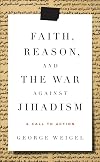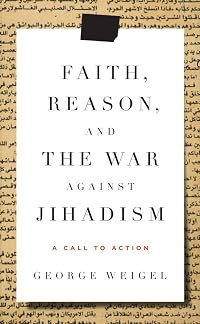
Faith, Reason, and the War Against Jihadism: A Call to Action
by George Weigel
On This Page
Description
This manifesto urges all Americans to recognize and confront the religious convictions and passions that fuel Islamic jihadism, to understand its theological sources and ideological roots, and to take its global vision of the human future with the seriousness this challenge requires. The book offers fifteen prescriptions for meeting the threat of jihadist terrorism. On the far side is the brighter prospect of a world capable of genuine pluralism: a world in which freedom, while never free, show more is not in retreat, but is poised once again at the cutting edge of history, and is the foundation of peaceful society.--From publisher description. show lessTags
Recommendations
Member Reviews
In this short volume Weigel is convincing in demonstrating the threat that Islamism presents to the civilized world. Perceptively, he noted in the '90s that this was the case at one conference and then was never invited back. The book is divided into an introduction and three simple parts that are organized well. Most Americans are not willing to accept his first main premise covered in the introduction: "Deadly Serious Business." Then, in the three parts of the book he continues along these lines: "Understanding the Enemy," "Rethinking Realism," and "Deserving Victory."
Weigel points out a basic fact that needs to be grasped initially nonetheless this simple fact has eluded American policy makers. Many parts of the world are not secular show more and religion is a motivating and compelling force throughout much of the world.
Weigel opposes the three great Abrahamic monotheistic faiths trope (p. 17ff). Norman Daniel points out that the Qur'an is not the Bible for a very distinctive reason. Muhammed is justified by the Qur'an, yet in Christianity Jesus is revealed by the Bible; they are not the same (p. 183 n 12). The aggressiveness of Islam is clear historically according to Efraim Karsch (p. 186 n 22). Karsch also outlines the dhimmitude of Jews and Christians in Islam.
Weigel is pointing out that wishing jihadism did not exist will not make it go away. You must understand the enemy in order to defeat it. In addition, if the West, particularly the U.S. is to be effective in the war against terror, it must continue to provide leadership and a convincing set of confident, Western ideas to oppose the jihadists. The same program was true and needed in the Cold War should be developed. That program is critical but barely formulated. The West suffers from a cultural malaise in my thinking. But, Weigel is on the right track.
Perceptively, Weigel noticed the early accommodationist tendencies of the Obama regime and it may decline even further (pp. 162-163).
Weigel describes the program of Christian Troll, a key advisor to Benedict, who provides key insights (pp. 166ff). Troll attempted to outline several issues of genuine dialogue (Muslims ask, Christians answer, Christian W. Troll, S.J., translated by David Marshall, and Dialogue and Difference, Cf. http://www.answers-to-muslims.com/). The approach is reasonable, respectful, and based on the developing idea of rational thought as an inheritance of the Enlightenment.
The pope correctly identified the instructive nature of the Enlightenment for the Church: something that Islam at some point may encounter. Benedict stated:
"The church, on the basis of a renewed awareness of the Catholic tradition, took seriously and discerned, transformed and overcame the fundamental critiques that gave rise to the modern world, the Reformation and the Enlightenment. In this way the church herself accepted and refashioned the best of the requirements of modernity by transcending them on the one hand, and on the other by avoiding their errors and dead ends."
The Church has grappled with the Reformation and the Enlightenment: the fruit of this labor is Vatican II (Cf. http://www.vatican.va/holy_father/benedict_xvi/speeches/2010/may/documents/hf_be....
One of the most important points of recent contact between the Vatican and Islam were remarks made by the pope.
The Regensburg lecture was a lecture delivered on 12 September 2006 by Pope Benedict XVI at the University of Regensburg in Germany. It was entitled "Glaube, Vernunft und Universität — Erinnerungen und Reflexionen" (German: Faith, Reason and the University — Memories and Reflections). In his lecture, the pope, speaking in German, quoted an unfavorable remark about Islam made in the 14th century by Manuel II Palaiologos, a Byzantine emperor. As the English translation of the pope's lecture disseminated across the world, many Islamic politicians and religious leaders protested against what they saw as an insulting mis-characterization of Islam. The pope quoted: "Show me just what Muhammad brought that was new and there you will find things only evil and inhuman, such as his command to spread by the sword the faith he preached" (Cf. Lecture of the Holy Father - Faith, Reason and the University Memories and Reflections", Libreria Editrice Vaticana, 12 September 2006).
Although the pope clarified that he was only quoted the Byzantine Emperor, he nonetheless had his own critical comments to make on Islam. The pope stated: about Islam, which he described as being of a "startling brusqueness, a brusqueness which leaves us astounded" (ibid). The pontiff was comparing apparently contradictory passages from the Qur'an, one being that "There is no compulsion in religion", the other being that it is acceptable to "spread the faith through violence". The pontiff argued the latter teaching to be unreasonable and advocated that religious conversion should take place through the use of reason. His larger point here was that, generally speaking, in Christianity, God is understood to act in accordance with reason, while in Islam, God's absolute transcendence means that "God is not bound even by his own word", and can act in ways contrary to reason, including self-contradiction. At the end of his lecture, the Pope said, "It is to the great logos, to this breadth of reason, that we invite our partners in the dialogue of cultures."
An Open Letter to the Pope ensued regretting his critical comments about Islam. It is interesting to note that those Muslim clerics who do not oppose suicide terrorism are not signatories of the Open Letter. Only moderates attempted to open up a dialogue with the pope. The pope was addressing, and clearly lamenting, religious violence. His target was not Islam itself; Muslims responded in kind: violence flourishes.
Cf. http://en.wikipedia.org/wiki/Regensburg_lecture
Cf. other works by Weigel: http://www.librarything.com/catalog/gmicksmith&deepsearch=weigel show less
Weigel points out a basic fact that needs to be grasped initially nonetheless this simple fact has eluded American policy makers. Many parts of the world are not secular show more and religion is a motivating and compelling force throughout much of the world.
Weigel opposes the three great Abrahamic monotheistic faiths trope (p. 17ff). Norman Daniel points out that the Qur'an is not the Bible for a very distinctive reason. Muhammed is justified by the Qur'an, yet in Christianity Jesus is revealed by the Bible; they are not the same (p. 183 n 12). The aggressiveness of Islam is clear historically according to Efraim Karsch (p. 186 n 22). Karsch also outlines the dhimmitude of Jews and Christians in Islam.
Weigel is pointing out that wishing jihadism did not exist will not make it go away. You must understand the enemy in order to defeat it. In addition, if the West, particularly the U.S. is to be effective in the war against terror, it must continue to provide leadership and a convincing set of confident, Western ideas to oppose the jihadists. The same program was true and needed in the Cold War should be developed. That program is critical but barely formulated. The West suffers from a cultural malaise in my thinking. But, Weigel is on the right track.
Perceptively, Weigel noticed the early accommodationist tendencies of the Obama regime and it may decline even further (pp. 162-163).
Weigel describes the program of Christian Troll, a key advisor to Benedict, who provides key insights (pp. 166ff). Troll attempted to outline several issues of genuine dialogue (Muslims ask, Christians answer, Christian W. Troll, S.J., translated by David Marshall, and Dialogue and Difference, Cf. http://www.answers-to-muslims.com/). The approach is reasonable, respectful, and based on the developing idea of rational thought as an inheritance of the Enlightenment.
The pope correctly identified the instructive nature of the Enlightenment for the Church: something that Islam at some point may encounter. Benedict stated:
"The church, on the basis of a renewed awareness of the Catholic tradition, took seriously and discerned, transformed and overcame the fundamental critiques that gave rise to the modern world, the Reformation and the Enlightenment. In this way the church herself accepted and refashioned the best of the requirements of modernity by transcending them on the one hand, and on the other by avoiding their errors and dead ends."
The Church has grappled with the Reformation and the Enlightenment: the fruit of this labor is Vatican II (Cf. http://www.vatican.va/holy_father/benedict_xvi/speeches/2010/may/documents/hf_be....
One of the most important points of recent contact between the Vatican and Islam were remarks made by the pope.
The Regensburg lecture was a lecture delivered on 12 September 2006 by Pope Benedict XVI at the University of Regensburg in Germany. It was entitled "Glaube, Vernunft und Universität — Erinnerungen und Reflexionen" (German: Faith, Reason and the University — Memories and Reflections). In his lecture, the pope, speaking in German, quoted an unfavorable remark about Islam made in the 14th century by Manuel II Palaiologos, a Byzantine emperor. As the English translation of the pope's lecture disseminated across the world, many Islamic politicians and religious leaders protested against what they saw as an insulting mis-characterization of Islam. The pope quoted: "Show me just what Muhammad brought that was new and there you will find things only evil and inhuman, such as his command to spread by the sword the faith he preached" (Cf. Lecture of the Holy Father - Faith, Reason and the University Memories and Reflections", Libreria Editrice Vaticana, 12 September 2006).
Although the pope clarified that he was only quoted the Byzantine Emperor, he nonetheless had his own critical comments to make on Islam. The pope stated: about Islam, which he described as being of a "startling brusqueness, a brusqueness which leaves us astounded" (ibid). The pontiff was comparing apparently contradictory passages from the Qur'an, one being that "There is no compulsion in religion", the other being that it is acceptable to "spread the faith through violence". The pontiff argued the latter teaching to be unreasonable and advocated that religious conversion should take place through the use of reason. His larger point here was that, generally speaking, in Christianity, God is understood to act in accordance with reason, while in Islam, God's absolute transcendence means that "God is not bound even by his own word", and can act in ways contrary to reason, including self-contradiction. At the end of his lecture, the Pope said, "It is to the great logos, to this breadth of reason, that we invite our partners in the dialogue of cultures."
An Open Letter to the Pope ensued regretting his critical comments about Islam. It is interesting to note that those Muslim clerics who do not oppose suicide terrorism are not signatories of the Open Letter. Only moderates attempted to open up a dialogue with the pope. The pope was addressing, and clearly lamenting, religious violence. His target was not Islam itself; Muslims responded in kind: violence flourishes.
Cf. http://en.wikipedia.org/wiki/Regensburg_lecture
Cf. other works by Weigel: http://www.librarything.com/catalog/gmicksmith&deepsearch=weigel show less
Ratings
Members
- Recently Added By
Lists

Radical Islam/Islamism
75 works; 6 members
Talk Discussions
Past Discussions
Weigel's Faith, Reason in Catholic Tradition (November 2008)
Author Information

38+ Works 4,858 Members
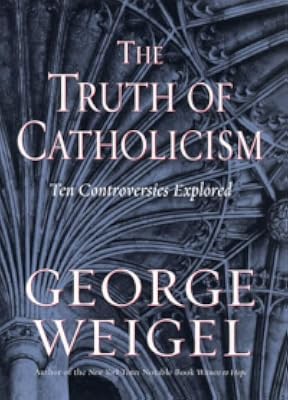
George Weigel is a Catholic theologian. Weigel was educated at St. Mary's Seminary College in Baltimore, Maryland and at the University of St. Michael's College in Toronto, Canada. Weigel moved to Seattle where he was Assistant Professor of Theology and Assistant (later Acting) Dean of Studies at the St. Thomas Seminary School of Theology in show more Kenmore. In 1977, he became Scholar-in-Residence at the World Without War Council of Greater Seattle. In 1984-85 he was a fellow of the Woodrow Wilson International Center for Scholars in Washington, D.C. Weigel is the author or editor of a number of books including Tranquillitas Ordinis: The Present Failure and Future Promise of American Catholic Thought on War and Peace (Oxford University Press, 1987); The Final Revolution: The Resistance Church and the Collapse of Communism (Oxford, 1992); The Truth of Catholicism: Ten Controversies Explored (HarperCollins, 2001); The Courage To Be Catholic: Crisis, Reform, and the Future of the Church (Basic Books, 2002); God's Choice: Pope Benedict XVI and the Future of the Catholic Church (HarperCollins, 2005); Faith, Reason, and the War Against Jihadism (Doubleday, 2007); and Against the Grain: Christianity and Democracy, War and Peace (Crossroad, 2008). His scholarly work and his journalism are regularly translated into the major European languages. Weigel has been awarded ten honorary doctorates, the papal cross Pro Ecclesia et Pontifice, and the Gloria Artis Gold Medal by the Republic of Poland. George Weigel and his wife live in North Bethesda, Maryland. (Bowker Author Biography) show less
Classifications
- Genres
- Nonfiction, Religion & Spirituality, General Nonfiction, Politics and Government
- DDC/MDS
- 320.557 — Society, government, & culture Political science Types of Government Political ideologies Religiously oriented ideologies Islamic ideologies
- LCC
- BL65 .T47 .W45 — Philosophy, Psychology and Religion Religions. Mythology. Rationalism Religions. Mythology. Rationalism Philosophy of religion. Psychology of religion. Religion
- BISAC
Statistics
- Members
- 166
- Popularity
- 198,010
- Reviews
- 1
- Rating
- (3.87)
- Languages
- English
- Media
- Paper, Ebook
- ISBNs
- 3
- ASINs
- 2