On This Page
Description
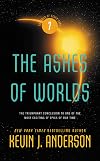
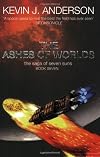
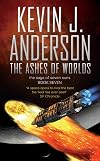
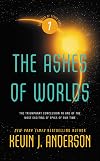
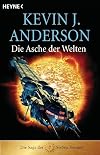
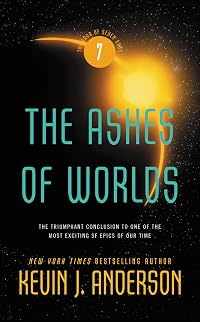
The culminating volume in The Saga of Seven Suns weaves together the myriad story lines in a spectacular grand finale. Galactic empires clash, elemental beings devastate whole planetary systems, and the factions of humanity are pitted against one another. Heroes rise and enemies make their last stands in the climax of an epic tale eight years in the making. The Saga of Seven Suns is one of the most colorful and spectacular science fiction epics of the past decade.Acclaim for The Saga of show more Seven Suns: "Anderson weaves action, romance, and science with a rousing plot reflecting the classic SF of Clarke and Herbert and the glossy cinematic influence of Lucas and Spielberg." --Publishers Weekly, starred review"Kevin Anderson has created a fully independent and richly conceived venue for his personal brand of space opera, a venue that nonetheless raises fruitful resonances with Frank Herbert's classic Dune series." --scifi.com"Everything about Anderson's latest is BIG--the war, the history, the aliens. These are elemental forces battling here, folks. Yet the characters are always the heart of the story, and their defeats and triumphs give perspective to it all." --Starlog"A soaring epic...a space opera to rival the best the field has ever seen." --Science Fiction Chronicle"Colorful stuff...bursting with incidents, concepts, and a massive cast of characters, matching well-thought-out SF ideas with melodrama and interfamily strife." --SFX show lessTags
Recommendations



Member Reviews
I normally don’t review books on the day that I finish them, but I’m making an exception because it’s night, my power is out, and I have 4% battery left on my laptop. Wish me luck.
The Ashes of Worlds is the conclusion to the Saga of Seven Suns. In this novel, the protagonists face a deadly mix of enemies—Klikiss, black robots, faeros, and the Hansa Chairman. Beloved characters who have met in passing are now thrown together in three distinct mission groups—Ildira, Earth, and Klikiss worlds.
Separated from the Mage-Imperator and under attack from the faeros, the Ildrians are forced to use innovation, ingenuity, and independence to save themselves and their home world as the faeros use the seven suns of Ildira to show more invade.
Meanwhile, the Hansa launches failed assault after failed assault against the Klikiss while also making a devil’s deal with the black robots. All the while, revolution festers on Earth. It seems only a matter of time before the walls of the Whisper Palace come crashing down. With all falling apart around them, it is the up to the human Confederation to race across the Spiral Arm cleaning up the mess made by the Hansa Chairman.
I admit, when I began the book, I was skeptical that all the myriad plot threads could be wrapped up in 650 pages. I was right to worry, and yet I wasn’t. The plotting in the seventh novel was lacking the depth and intensity of the previous books. Some of the finales felt contrived and like poor “loopholes” on 42-minute campy science fiction television shows. (Granted, I love some of those shows!) Mostly, though, the conclusions were satisfying, if predictable. I think it would have been impossible to pull an ending out of left field with a saga so focused on character development. The characters simply couldn’t let their stories end any other way than they did and still be in character.
Having finished this saga, I am comfortable calling it my favorite science fiction series. Readers of hard science fiction might not be impressed; the focus is clearly on characters, not technology. I would recommend the Saga of Seven Suns to anyone who enjoys fantasy and is interesting in trying science fiction. The series will “ease you into it.” By the seventh book, you’re reading full on sci-fi without really being aware of it. I also recommend this book to anyone who enjoys space operas and science fiction sagas.
As I finish this series, I’m both excited and saddened. I’ve read the last four books incredibly quickly, if spaced out a bit, because I desperately wanted to know how the saga ends. Now that I know, I wish there was more. It’s the mark of a great story that makes a reader pause and consider how the characters’ lives continue on from the end. show less
The Ashes of Worlds is the conclusion to the Saga of Seven Suns. In this novel, the protagonists face a deadly mix of enemies—Klikiss, black robots, faeros, and the Hansa Chairman. Beloved characters who have met in passing are now thrown together in three distinct mission groups—Ildira, Earth, and Klikiss worlds.
Separated from the Mage-Imperator and under attack from the faeros, the Ildrians are forced to use innovation, ingenuity, and independence to save themselves and their home world as the faeros use the seven suns of Ildira to show more invade.
Meanwhile, the Hansa launches failed assault after failed assault against the Klikiss while also making a devil’s deal with the black robots. All the while, revolution festers on Earth. It seems only a matter of time before the walls of the Whisper Palace come crashing down. With all falling apart around them, it is the up to the human Confederation to race across the Spiral Arm cleaning up the mess made by the Hansa Chairman.
I admit, when I began the book, I was skeptical that all the myriad plot threads could be wrapped up in 650 pages. I was right to worry, and yet I wasn’t. The plotting in the seventh novel was lacking the depth and intensity of the previous books. Some of the finales felt contrived and like poor “loopholes” on 42-minute campy science fiction television shows. (Granted, I love some of those shows!) Mostly, though, the conclusions were satisfying, if predictable. I think it would have been impossible to pull an ending out of left field with a saga so focused on character development. The characters simply couldn’t let their stories end any other way than they did and still be in character.
Having finished this saga, I am comfortable calling it my favorite science fiction series. Readers of hard science fiction might not be impressed; the focus is clearly on characters, not technology. I would recommend the Saga of Seven Suns to anyone who enjoys fantasy and is interesting in trying science fiction. The series will “ease you into it.” By the seventh book, you’re reading full on sci-fi without really being aware of it. I also recommend this book to anyone who enjoys space operas and science fiction sagas.
As I finish this series, I’m both excited and saddened. I’ve read the last four books incredibly quickly, if spaced out a bit, because I desperately wanted to know how the saga ends. Now that I know, I wish there was more. It’s the mark of a great story that makes a reader pause and consider how the characters’ lives continue on from the end. show less
Last of a seven-book series, this is space opera on a grand scale. Galactic empires clash, and elemental beings wipe out entire star systems.
The Klikiss are an insectoid, hive-mind race who were thought to have been extinct for the past several thousand years. Well, they're not extinct, and they want their old colony planets back. The Klikiss are the sort of beings who don't take No for an answer. They are also in the middle of a major "civil war" to see which hive, or breedex, will dominate. With a death toll in the tens of thousands, new genetic material is needed to replenish the ranks, like from slaughtered human colonists on one planet .
Basil Wenceslas is Chairman of the Terran Hanseatic League (Emperor of Earth). He is show more increasingly isolated and psychotic. King Peter and Queen Estarra are able to flee Earth for the planet Theroc, where they set up a rival Confederation. Many human colony planets switch their allegiance to the Confederation, so Wenceslas sends the Earth Defense Forces to make an example of several colonies. The Ildiran Empire (another humanoid race) establishes an alliance with the Confederation, reducing the number of the Chairman's allies to near zero. The Chairman kidnaps the Ildiran Mage-Imperator, the Ildiran leader, and takes him to an EDF base on Earth's moon until he reconsiders the alliance. Ildirans have a sort of telepathic connection between all members of the race. If any Ildiran is cut off from that connection for any length of time, permanent insanity is a major concern.
Chairman Wenceslas comes up with the idea for an alliance with the Klikiss. He sends one of his senior Generals to negotiate a treaty. The General does not go out of loyalty; he goes because the Chairman does not think twice about holding hostage family members of his senior officers. The general discovers, to his horror, that the Klikiss have no interest in an alliance with anyone. Later, a Klikiss battle group shows up in Earth orbit, with enough firepower to turn Earth into a burned-out cinder. They want to talk to the Chairman, in person, now. He still thinks that he can get whatever he wants, whenever he wants.
This is what good space opera is all about. There is a helpful summary of the rest of the series, so the reader does not have to read it all to understand this book. But it's a very good idea, because the writing is that good. Separately or together, this is very much recommended. show less
The Klikiss are an insectoid, hive-mind race who were thought to have been extinct for the past several thousand years. Well, they're not extinct, and they want their old colony planets back. The Klikiss are the sort of beings who don't take No for an answer. They are also in the middle of a major "civil war" to see which hive, or breedex, will dominate. With a death toll in the tens of thousands, new genetic material is needed to replenish the ranks, like from slaughtered human colonists on one planet .
Basil Wenceslas is Chairman of the Terran Hanseatic League (Emperor of Earth). He is show more increasingly isolated and psychotic. King Peter and Queen Estarra are able to flee Earth for the planet Theroc, where they set up a rival Confederation. Many human colony planets switch their allegiance to the Confederation, so Wenceslas sends the Earth Defense Forces to make an example of several colonies. The Ildiran Empire (another humanoid race) establishes an alliance with the Confederation, reducing the number of the Chairman's allies to near zero. The Chairman kidnaps the Ildiran Mage-Imperator, the Ildiran leader, and takes him to an EDF base on Earth's moon until he reconsiders the alliance. Ildirans have a sort of telepathic connection between all members of the race. If any Ildiran is cut off from that connection for any length of time, permanent insanity is a major concern.
Chairman Wenceslas comes up with the idea for an alliance with the Klikiss. He sends one of his senior Generals to negotiate a treaty. The General does not go out of loyalty; he goes because the Chairman does not think twice about holding hostage family members of his senior officers. The general discovers, to his horror, that the Klikiss have no interest in an alliance with anyone. Later, a Klikiss battle group shows up in Earth orbit, with enough firepower to turn Earth into a burned-out cinder. They want to talk to the Chairman, in person, now. He still thinks that he can get whatever he wants, whenever he wants.
This is what good space opera is all about. There is a helpful summary of the rest of the series, so the reader does not have to read it all to understand this book. But it's a very good idea, because the writing is that good. Separately or together, this is very much recommended. show less
After the first book of this seven-book saga (The Saga of the Seven Suns), I honestly didn't think I'd stick it out through the second book. But it got better, until eventually I became comfortable with the characters and was able to overlook the unlikelihood that adversaries dormant for 10,000 years would make a sudden, simultaneous comeback to wreak havoc upon the known universe. At some point, nearly every faction: human(oid) Ildirans, the Earth-centered Hansa, and the human outsiders, the Roamer clans, the giant cockroach like Klickliss, the robots they created eons ago, and elemental forces Hydrogues (electric), faeros (fire), wentals (water), and verdani (trees) were all engaged in an epic struggle.
The final volume in the story show more brings us back to peace. Evil is deposed, good wins the day. Fate plays more than an incidental role: at times, mere minutes dictated the fate of the forces of good. Loyalties were tested, some stayed true to the wrong path and paid the ultimate price, some redeemed themselves in the end.
The Saga of the Seven Suns is pure, science-fiction brain candy. Don't over think it, it will make your brain hurt. But if you're looking for some fun characters ranging from the incorrigibly corrupt to the supremely incorruptible, you'll enjoy the series well enough. show less
The final volume in the story show more brings us back to peace. Evil is deposed, good wins the day. Fate plays more than an incidental role: at times, mere minutes dictated the fate of the forces of good. Loyalties were tested, some stayed true to the wrong path and paid the ultimate price, some redeemed themselves in the end.
The Saga of the Seven Suns is pure, science-fiction brain candy. Don't over think it, it will make your brain hurt. But if you're looking for some fun characters ranging from the incorrigibly corrupt to the supremely incorruptible, you'll enjoy the series well enough. show less
Better than the 6th book. I agree with whoever compared The Chairman to the Dr. Smith character in "Lost in Space." So obnoxious, and I keep asking myself "Why don't they just lose/kill/restrain him?" and I think "Why am I still wasting my time on this?" But I know "Lost in Space" has the Robot and "The Saga of the 7 Suns" has the awesome aliens so I keep at it even though I feel like an idiot.The ending of the book began well, pulling all the diverse plot lines together and making good sense of it all. Like the series, however, it dragged on a bit too long making me wish it would just hurry up and end. A thought: The Chairman was so cartoonish, I began to wonder if this series was meant to be one of those epic Japanese space cartoon show more serials. He sure fits and the aliens are visually perfect. All the generic character types are there. Even the "adult" themes can work as PG-13. I wonder... show less
Better than the 6th book. I agree with whoever compared The Chairman to the Dr. Smith character in "Lost in Space." So obnoxious, and I keep asking myself "Why don't they just lose/kill/restrain him?" and I think "Why am I still wasting my time on this?" But I know "Lost in Space" has the Robot and "The Saga of the 7 Suns" has the awesome aliens so I keep at it even though I feel like an idiot.The ending of the book began well, pulling all the diverse plot lines together and making good sense of it all. Like the series, however, it dragged on a bit too long making me wish it would just hurry up and end. A thought: The Chairman was so cartoonish, I began to wonder if this series was meant to be one of those epic Japanese space cartoon show more serials. He sure fits and the aliens are visually perfect. All the generic character types are there. Even the "adult" themes can work as PG-13. I wonder... show less
Even though I really enjoyed reading the series Saga of the Seven Suns, this book (the last in the series) was somewhat lackluster compared to the previous six books. By the end of the book it felt like the varying story threads sort of petered out with nowhere to go. A final book in a series, at least for me, is supposed to bring it all to an end. Tying up all loose ends with a neat satisfying bow, not this book, I felt like there should be at least one more. All and all the books in the series Saga of the Seven Suns are very good reads. This one just left me feeling like the series ran out of steam with nowhere to go.
If like me you enjoy operatic Scifi you’ll love this. I’d expect it to be difficult for a newcomer to just jump right in without reading the previous books, as the number of characters and sheer complexity of the plot with all it’s sub-plots and nuances would just make it difficult to pick up, but it’s great. My trouble is that I can burn through a book like this in a couple of days when I’m enjoying it!
One frustration that becomes increasingly noticeable is that the author seems to be developing a penchant for very short chapters. Time and time again he seems to write a chapter of only 3-4 pages. The reason for this seems to be the fast moving plot, and the frequent changing of locations (jumping from one planetary location show more to another), but it does feel like it’s becoming a more frequent occurence as the book goes on.
The conclusion doesn't really feel like the end of the story however, and I was left with a feeling that perhaps KJA was trying to tie everything up in a hurry so he could get on with something else. show less
One frustration that becomes increasingly noticeable is that the author seems to be developing a penchant for very short chapters. Time and time again he seems to write a chapter of only 3-4 pages. The reason for this seems to be the fast moving plot, and the frequent changing of locations (jumping from one planetary location show more to another), but it does feel like it’s becoming a more frequent occurence as the book goes on.
The conclusion doesn't really feel like the end of the story however, and I was left with a feeling that perhaps KJA was trying to tie everything up in a hurry so he could get on with something else. show less
Members
- Recently Added By
Author Information

463+ Works 86,860 Members
Kevin J. Anderson was born on March 27, 1962. Before becoming a full-time author, he worked in California for twelve years as a technical writer and editor at the Lawrence Livermore National Laboratory. His science fiction books include Resurrection, Inc., the Star Wars Jedi Academy Trilogy, the Young Jedi Knights series, Ground Zero, Ruins, show more Climbing Olympus, Blindfold, and The Dark Between the Stars. He has also written several books with Doug Beason including Ignition, Virtual Destruction, Fallout, and Ill Wind. (Bowker Author Biography) Kevin J. Anderson has written twenty seven bestsellers and has been nominated for the Nebula Award, the Bram Stoker Award, and the SFX Reader's Choice Award. He also holds the Guinness world record for "The Largest Single-Author Signing". (Publisher Provided) show less
Series


Work Relationships
Common Knowledge
- Canonical title
- The Ashes of Worlds
- Original publication date
- 2008-07
- Epigraph
- [None]
- Dedication
- To Rebecca Moesta
Not just for this novel, but for all the books in the series
and all the novels I've written. You have helped me find my
Guiding Star not only in my writing, but in my life. - First words
- Ten Mantas and one giant Juggernaut cruised across empty space, leaving Earth behind - possibly forever, as far as Admiral Willis was concerned.
Classifications
Statistics
- Members
- 780
- Popularity
- 35,997
- Reviews
- 21
- Rating
- (3.70)
- Languages
- Czech, English, French, German
- Media
- Paper, Audiobook, Ebook
- ISBNs
- 18
- ASINs
- 8