On This Page
Description
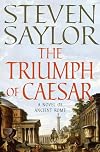
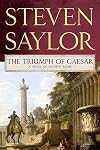
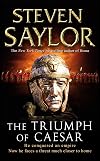
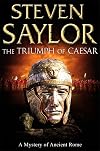
Gordianus, recently returned from Egypt with his wife Bethesda, is essentially retired from his previous profession of "Finder" but even he cannot refuse the call of Calpurnia, Caesar's wife. Troubled by dreams foretelling disaster and fearing a conspiracy against the life of Caesar, she had hired someone to investigate the rumors.Tags
Recommendations










Member Reviews
In 46 BC, while Julius Caesar is preparing a number of triumphs in honor of his military victories, his wife Calpurnia summons Gordianus the Finder to investigate the possibility that Caesar is in mortal danger from persons unknown; her seer has said this is the case and the first investigator that she hired has been murdered, evidently proof of the danger. Gordianus, now aged 65, at first demurs as he is more or less retired, but when he discovers that the earlier investigator was none other than his friend Hieronymus the Scapegoat of Massilia, he feels duty-bound to find out who killed him. But danger lurks in more than one corner of the vast city of Rome, and Caesar is by no means the only target…. One thing that I love about show more Steven Saylor’s sub Rosa series, of which this is the tenth novel, is how the author manages to combine lively and occasionally raucous depictions of life in ancient Rome with meticulous scholarship, drawing on contemporary sources to incorporate specific real-life incidents into his story. He also provides us with an author’s note detailing his research, something that the historian in me appreciates. That said, the true joy of these books is the full humanity with which he imbues his characters (both real and fictional) and the way in which he brings that ancient time to vibrant life. It is probably best to read these books in order, just in terms of keeping historical events in perspective, but it isn’t absolutely necessary to do so; recommended! show less
Saylor has written a wonderful mystery featuring Caesar, Cicero, and Cleopatra (among others), and it's quite tightly plotted. A fun romp through a Rome that writhes with death, is rife with rumors, and seethes with sex around every bend. The city comes truly alive with detail and because of our unique perspective thanks to Saylor's wonderfully-placed Gordianus.
Caesar is back in Rome as dictator for life and is planning to celebrate triumphs for his exploits in war and to reform the calendar. Calpurnia calls in Gordianus to investigate a prophecy from her pet haruspex that Caesar's life is in danger.
I must admit it was with some trepidation that I read this on the flight home. I knew it was the last in the series and wondered whether I would be having a meltdown over a deathbed scene. Fortunately this was avoided. I picked the culprit fairly early on but it was still very enjoyable except for some heavy-handed nudge-nudge moments about the real plot against Caesar which takes place after the end of the book.
I must admit it was with some trepidation that I read this on the flight home. I knew it was the last in the series and wondered whether I would be having a meltdown over a deathbed scene. Fortunately this was avoided. I picked the culprit fairly early on but it was still very enjoyable except for some heavy-handed nudge-nudge moments about the real plot against Caesar which takes place after the end of the book.
Steven Saylor returns to the Roma Sub Rosa series for his twelfth volume featuring Gordianus the Finder, a private eye in Rome around the end of the Roman Republic. This volume finds the now 64-year-old Gordianus returned from Egypt and, as always, rubbing elbows with people several levels above his pay grade.
On the eve of Caesar's long-delayed four Triumphs, Gordianus is hired by Caesar's wife, Calpurnia, to investigate what she fears is death plot against the dictator. Gordianus reluctantly takes the job and sleuths his way across Roman society - we meet Cicero, Caesar, and Mark Antony, as well as numerous lesser known Romans, such as Fulvia (with her sights set on Antony), the young Octavius (later and better known as Augustus show more Caesar), and a playwright named Laberius. Gordianus also interviews Vercingetorix, the imprisoned leader Gallic chieftain awaiting his imminent execution, Cleopatra, in town for the Egyptian triumph with her young son Caesarion, and her defeated sister Arsinoe who is slated for execution.
Saylor weaves a page-turner mystery with fascinating details of Roman political and social life (including the development of the Julian calendar). Highly recommended. show less
On the eve of Caesar's long-delayed four Triumphs, Gordianus is hired by Caesar's wife, Calpurnia, to investigate what she fears is death plot against the dictator. Gordianus reluctantly takes the job and sleuths his way across Roman society - we meet Cicero, Caesar, and Mark Antony, as well as numerous lesser known Romans, such as Fulvia (with her sights set on Antony), the young Octavius (later and better known as Augustus show more Caesar), and a playwright named Laberius. Gordianus also interviews Vercingetorix, the imprisoned leader Gallic chieftain awaiting his imminent execution, Cleopatra, in town for the Egyptian triumph with her young son Caesarion, and her defeated sister Arsinoe who is slated for execution.
Saylor weaves a page-turner mystery with fascinating details of Roman political and social life (including the development of the Julian calendar). Highly recommended. show less
I was a little put off this work by the scads of mildly negative reviews here on grs, however, I found it to be on par with the earlier Gordianus adventures. It is true that the four triumphs celebrated by Caesar (46 BCE) dominate the novel, but Saylor weaves his tale of intrigue and murder with his usual skill between these public elements to create an entertaining story.
Here Gordianus uncovers, just in the nick (literally) of time, a plot to assassinate Caesar, and manages to save the Dictator's life (thought, of course, he was fated to die another day, as are all men). Along the way we meet several of the more important figures of the time: Cleopatra, Vercingetorix, Cicero, Brutus, and of course, Caesar and Calpurnia.
From many show more observations made by the characters in the novel it may well be that our noble Finder is to retire, and the subsequent novels in the series to feature his daughter Diana as the protagonist, assisted by her husband (the muscle). Should the Finder be allowed to "fade away" as did Sherlock Holmes, or should he die in some noble and grandiose manner?
What I found interesting in Saylor's portrayal of his characters was how they differ from those of other historical novelists. What leaps into my mind is McCullough's depiction of Caesar as a near superman, able to deal with each and every problem with near preternatural ability, while Caesar's wife, the quiet Calpurnia, is a mere cypher. Not so with Saylor. His Caesar is all too much a man, befuddled by events, and surprised by outcomes, while Saylor's Calpurnia does the plotting and scheming behind his back.
Which understanding of events two millennia in the past is correct, I do not know, however, both provide an entertaining read, and one more window into the nature of ourselves. show less
Here Gordianus uncovers, just in the nick (literally) of time, a plot to assassinate Caesar, and manages to save the Dictator's life (thought, of course, he was fated to die another day, as are all men). Along the way we meet several of the more important figures of the time: Cleopatra, Vercingetorix, Cicero, Brutus, and of course, Caesar and Calpurnia.
From many show more observations made by the characters in the novel it may well be that our noble Finder is to retire, and the subsequent novels in the series to feature his daughter Diana as the protagonist, assisted by her husband (the muscle). Should the Finder be allowed to "fade away" as did Sherlock Holmes, or should he die in some noble and grandiose manner?
What I found interesting in Saylor's portrayal of his characters was how they differ from those of other historical novelists. What leaps into my mind is McCullough's depiction of Caesar as a near superman, able to deal with each and every problem with near preternatural ability, while Caesar's wife, the quiet Calpurnia, is a mere cypher. Not so with Saylor. His Caesar is all too much a man, befuddled by events, and surprised by outcomes, while Saylor's Calpurnia does the plotting and scheming behind his back.
Which understanding of events two millennia in the past is correct, I do not know, however, both provide an entertaining read, and one more window into the nature of ourselves. show less
This appears to be the final Gordianus novel in terms of the character's chronology (though the author has written a prequel set in the Finder's youth published this year). Back in Rome after the previous novel's Alexandrian setting, this centres around Caesar's triumphal processions to celebrate his victories in Gaul, Egypt, Asia and Africa. It is as usual full of dramatic Roman imagery, though I didn't find the plot and the killer's motive convincing. The action of the novel concludes with Caesar poised on the brink of supreme power, having vanquished every conceivable enemy at home and abroad. This is probably an appropriate juncture to end the series, if indeed it is the end (I hope it isn't, though the character is now in his mid show more 60s); but this is probably one of the weaker books in the series, so not a great ending in that sense and I didn't enjoy this anywhere near as much as The Judgement of Caesar. 3.5/5. show less
Stephen Saylor is totally back on form with this new Gordianus mystery, after the potboiler Roma. It's 46BC, and Calpurnia summons Gordianus to investigate, when she suspects a plot on Caesar's life. Caesar's triumphs are being celebrated, Cleopatra is in town, Vercingetorix is due for execution. It's dead centre of the great 1st century BC turmoil of Roman history, as the republic slowly falls.
Saylor is a historian and really knows his stuff. He doesn't whitewash the bloodiness of the period, or hero-worship Caesar. It's a fascinating read, like all the others in the series. They do stand on their own - you don't have to read earlier ones, though I recommend you do!
Saylor is a historian and really knows his stuff. He doesn't whitewash the bloodiness of the period, or hero-worship Caesar. It's a fascinating read, like all the others in the series. They do stand on their own - you don't have to read earlier ones, though I recommend you do!
Members
- Recently Added By
Published Reviews
ThingScore 75
The pattern feels familiar, because it’s essentially the same plot as that of A Mist of Prophecies (2002), the eighth book in the Roma Sub Rosa series: Gordianus investigating the life of a friend he didn’t really know that well by talking to a cast of the rich and powerful. Gordianus is tired -- he can’t climb the stairs to Hieronymus’ rooftop apartment very easily, for example -- and show more The Triumph of Caesar feels a little drowsy, too.
Saylor’s vivid character sketches of historical figures are just as strong as always, with bright cameos by Arsinoë (Cleopatra’s younger sister) and, for the first time in this series, the aloof, reserved Octavius (the future emperor Augustus). But Saylor’s acute historical sensibility is aware that his readers already know how the story ends: Caesar is going to be assassinated. show less
Saylor’s vivid character sketches of historical figures are just as strong as always, with bright cameos by Arsinoë (Cleopatra’s younger sister) and, for the first time in this series, the aloof, reserved Octavius (the future emperor Augustus). But Saylor’s acute historical sensibility is aware that his readers already know how the story ends: Caesar is going to be assassinated. show less
added by SnootyBaronet
Author Information

61+ Works 13,624 Members
Steven Saylor (born March 23, 1956) is an American author of historical novels. He is a graduate of the University of Texas at Austin, where he studied history and Classics. Although he also has written novels about Texas history, Saylor's best-known work is his Roma Sub Rosa series, set in ancient Rome. The novels' hero is a detective named show more Gordianus the Finder, active during the time of Sulla, Cicero, Julius Caesar, and Cleopatra. He divides his time residing in California and texas. (Bowker Author Biography) show less
Series

Common Knowledge
- Canonical title
- The Triumph of Caesar
- Original publication date
- 2008-05-13
- People/Characters
- Gordianus the Finder; Julius Caesar (Roman Emperor); Calpurnia (Caesar's Wife); Marcus Antonius; Vercingetorix the Gaul; Bethesda (Gordianus's Wife)
- Important places
- Rome, Italy (Ancient); Ancient Rome
- Dedication
- To Keith Kahla,
a true friend of Gordianus from the very beginning - First words
- "I heard that you were dead."
- Quotations
- My own attitude toward the elite and the favors they could bestow was more problematical. Though born a Roman, I had realized from an early age that I would never become one of the so-called nobilitas, “those who are knownâ... (show all)€� for having won public office; I never expected even to be allowed into the homes of such people. Now, after a lifetime of serving them, I was still not the sort of person they cared to invite to dinner.
- Last words
- (Click to show. Warning: May contain spoilers.)Those I loved were still alive, and we were all together.
Classifications
Statistics
- Members
- 580
- Popularity
- 50,588
- Reviews
- 18
- Rating
- (3.62)
- Languages
- 7 — Dutch, English, Hungarian, Norwegian (Bokmål), Polish, Portuguese, Spanish
- Media
- Paper, Audiobook, Ebook
- ISBNs
- 23
- ASINs
- 6